Old-Time Radio Playlist: Edgar Allan Poe, Part 2

As Halloween approaches, I present more old-time radio versions of Poe stories to entertain you on chilly nights. In this and Part 1 of my Poe playlist, I’ve tried to represent a large range of Poe stories and radio programs.

“The Tell-Tale Heart”

Columbia Workshop

July 11, 1937

“The tell-tale-heart effect, which you heard, was an actual human heartbeat, amplified more than 10 billion times.”—Announcer, Columbia Workshop

NBC Presents: Short Story

“My senses sharpen. Every second makes them sharper. I can hear the rhythmic beating of the old man’s heart…the beating of his heart.”

1951 (Unaired)

About These Series: Columbia Workshop was an early radio series that experimented with the new medium’s narrative possibilities. In dramatic radio’s dying days, NBC Presents: Short Story dramatized work by some of the world’s greatest writers. Try to imagine a major TV network airing series like these now (at its own cost—neither of these shows had a sponsor). Columbia Workshop aired on CBS for eight years, but the NBC program didn’t fare as well. According to The Digital Deli Too, the network pre-empted it frequently and ultimately left 11 episodes, including this one, unaired.

Thoughts on These Episodes: Though the sound quality is better on the NBC Presents episode, I prefer the Columbia Workshop version. The voices the NBC protagonist hears—and his reaction to them—become almost comical. In contrast, the voices that cry out from the wind and the rain and walls in the CBS version are eerily effective. The police are none too swift, though. Sample exchange:

Murderer: “You’re laughing at me! You’re torturing me! You’re making believe that you don’t hear so that I’ll confess!”

Policeman: “My dear young man, you’re working yourself into a frenzy. I think we better leave you to yourself.”

These officers should really lay off the wine.

Read “The Tell-Tale Heart

“Metzengerstein”

Columbia Workshop

December 16, 1937

“Tonight is the end of the house of Metzengerstein!”

Thoughts on This Episode: This episode does a good job capturing the story’s creepy atmosphere. Castles, curses, horses, fire—what more do you need for an exciting half hour?

Read “Metzengerstein

“Narrative of Arthur Gordon Pym”

Weird Circle

September 19, 1943

“The wind was screaming through the sails like an insane witch on a broomstick.”

About This Series: Many radio series explored horror and suspense. One thing that differentiated The Weird Circle was its source material; it frequently presented “literary” horror stories, including several of Poe’s tales.

Thoughts on This Episode: I’ve tried to read Poe’s Narrative of Arthur Gordon Pym of Nantucket, his only novel-length work, but just can’t plow through it. I think I’m allergic to nautical adventures. I’ve read enough, though, to know that this adaptation takes major liberties with the story. It also abandons the 19th century setting for a modern one. Phrases like “The captain’s nuts!” and “Awww, shut up!” jar in a Poe story. I would still rather listen to this than try to read the novel again, though.

Read The Narrative of Arthur Gordon Pym of Nantucket

“The Pit and the Pendulum”

Suspense

November 10, 1957

“Minutes…hours…days… Who can say how long it was? It might have been many days before that hideous blade swept so closely as to fan me with its acrid breath.”

About This Series: Suspense billed itself, with ample justification, as “radio’s outstanding theater of thrills.” Extremely popular, it ran for 22 years (1940-1962). For much of that time, it attracted top Hollywood stars, who often got the chance to play roles that contrasted with their on-screen image. By 1957, the show’s star power was diminishing, but it was still presenting outstanding radio drama.

Thoughts on This Episode: Vincent Price and Edgar Allan Poe—an unbeatable combination! I think this is my favorite Poe story—it’s exciting and has a merciful lack of beautiful dead women. It needs little elaboration to succeed as a radio drama, and Vincent Price (who would star in the Roger Corman film version of The Pit and the Pendulum four years later) gives a good performance.

Read “The Pit and the Pendulum

“Berenice”

CBS Radio Mystery Theater

January 9, 1975

“The teeth! The teeth! The terrifying teeth!”

About This Series: Although not exactly “old-time radio, CBS Radio Mystery Theater represented the last major gasp of network radio drama. The show ran on weeknights from 1974 to 1982. E.G. Marshall hosted, and radio veteran Himan Brown produced the program.

Thoughts on This Episode: CBS Radio Mystery Theater presented an entire week of Poe stories in January 1975. With about 45 minutes to fill in each episode (not counting commercials), the program had to expand on Poe’s shorter stories.

“Berenice” sticks with the outline of Poe’s story but adds a love triangle and lets us meet Berenice for ourselves; in Poe’s story, we only see her through the narrator’s  disordered vision. (The most interesting part of the short story, to me, is Poe’s detailed description of Egaeus’ mental illness. I wondered how modern professionals would diagnose him and found this interesting paper suggesting he was schizophrenic.) The story doesn’t benefit from these additions, but the ending still packs a punch.

Read “Berenice

“The Masque of the Red Death”

CBS Radio Mystery Theater

January 10, 1975

“Oh, wow. I mean, like, wow.”

Thoughts on This EpisodeCBSRMT transports Poe’s plague story to the apocalyptic future that is 1996 (hee) and turns it into an ecological morality play. The morality is confusing, though—I’m a liberal, card-carrying Sierra Club member, and even I don’t understand how the rich capitalist is making the world’s situation worse by protecting his family from the red death. The episode lacks the lurid atmosphere that illuminates Poe’s story, but it’s entertaining as a window into 1970s concerns.

Read “The Masque of the Red Death

Next week, I’ll be posting a bunch of Halloween-themed old-time radio!

My other old-time radio posts:

Old-Time Radio Playlist: Edgar Allan Poe, Part 1

Old-Time Radio Episode Spotlight: Those Magnificent Cats in their Flying Machines

Old-Time Radio Playlist: Till Death Do Us Part (and That Might Be Sooner Than You Think)

Old-Time Radio Episode Spotlight: A Snapped-Worthy 1920s True Story

Old-Time Radio Episode Spotlight: CSI, 1940s Style

Old-Time Radio Playlist: London Calling, Part 1

Old-Time Radio Playlist: London Calling, Part 2

It Takes a (Fisher Price Play Family) Village

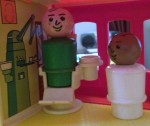
The gift I’d wished the hardest for in 1974–the Fisher Price Play Family Village.

My parents captured many Christmas morning photographs when I was young, but this one from 1974 is a little unusual. Most of our Christmas photos are candids taken in the midst of our present-opening frenzy. In this one, I’m pausing to pose in front of a half-unwrapped gift. The smile on my face shows how happy I was to uncover that gift–the Fisher Price Play Family Village.

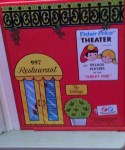
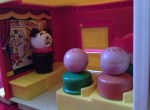
Fisher Price began producing the Village in 1973. At age 6, I longed for it as intensely as I would long for the Barbie Star Traveler a few years later. I’d loved Play Family toys since I was a toddler, and the Village was the ultimate play set, with a fire station, police station, dentist’s office, apartment, restaurant, theater, garage, and more.

I’ve been wanting to acquire a Village for years, but finding a complete one at a price I was willing to pay proved difficult. Finally, about a month ago, I was able to add this toy to my collection.

I wanted to share a few pictures of it, simply because its colorful lithography and smiling people make me happy. As much as I enjoy nostalgia, I try not to fall into the trap of pining for a simpler time. In 1974, our country was dealing with Watergate, continued involvement in Vietnam, and an oil embargo–things were anything but simple. But a toy like Play Family Village transports me to a time when my parents still stood between me and the outside world’s troubles, and daily life seemed almost as uncomplicated as a walk down Play Family Main Street.

Spin Again Sunday: Happy Days

Aaaaaayyyyyyyy. Ready for dating, drag racing, and drive-ins? Sure you are–you’re not some kind of a nerd are you?

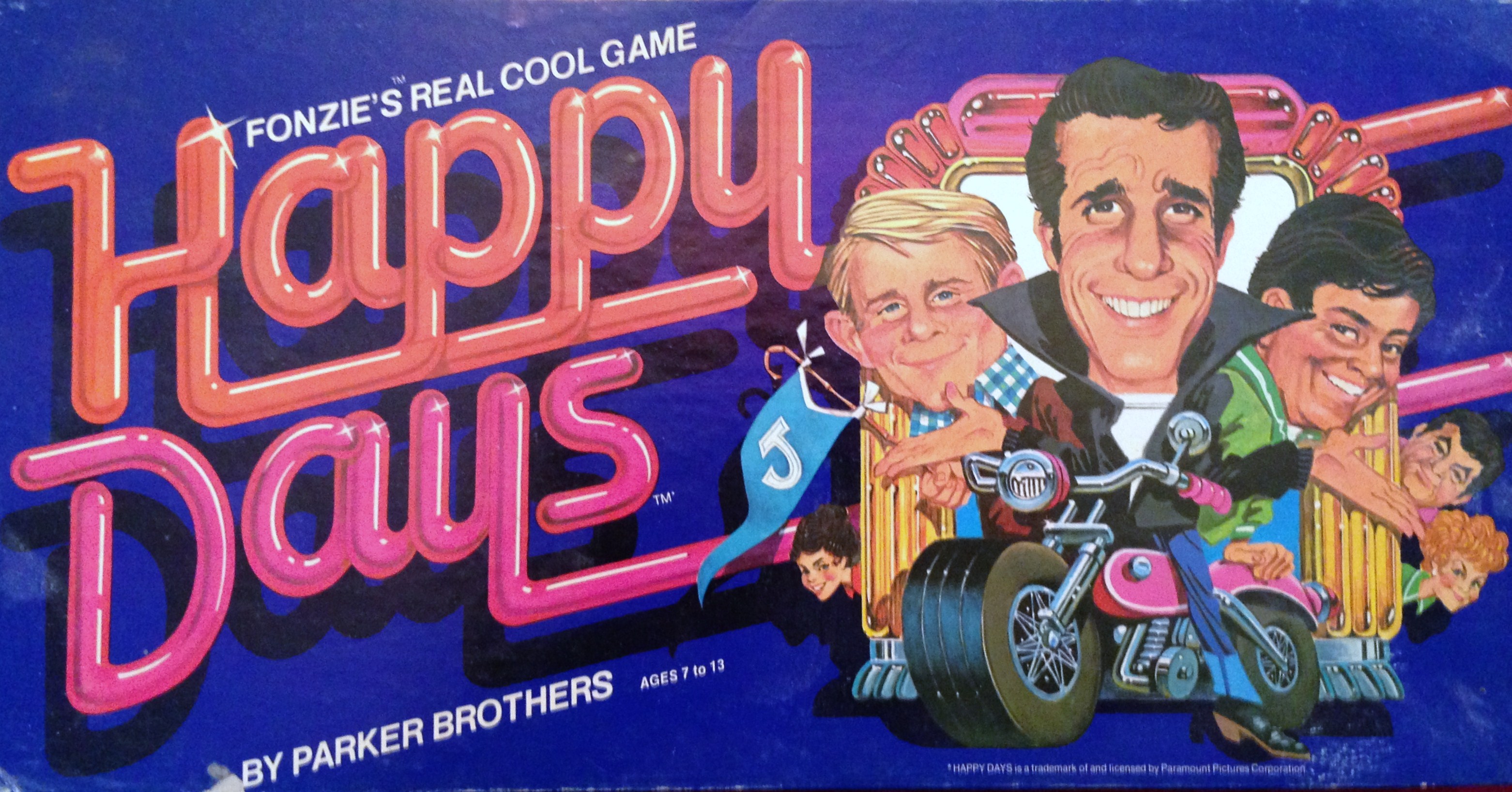
Today’s Game: Happy Days (“Fonzie’s Real Cool Game”)

Copyright Date: 1976.

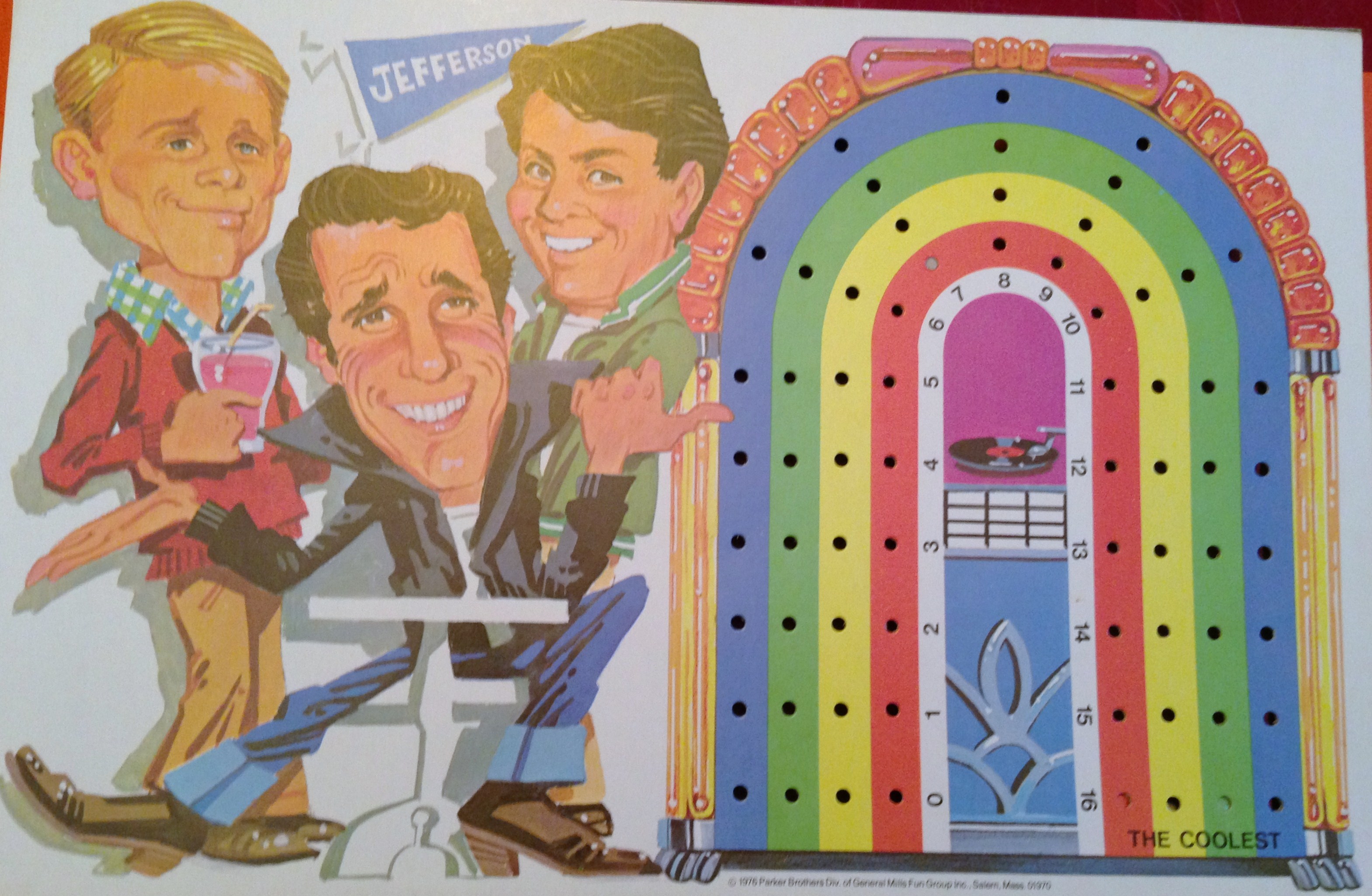
Game Box: The most striking features are neon-light-style lettering and cartoon caricatures of cast members. These caricatures are a cut above those on most games–they actually resemble their real life counterparts. Fonzie is front and center, of course, flanked by Richie and Potsie. The other Cunninghams are peeking around the jukebox. Ralph Malph is MIA.

Game Board: Colorful, if not grammatical–“Sumthin’ to do?” I do wonder why Fonzie is sitting on various houses in the corner spaces. The drag strip that cuts diagonally across the board is an original touch.

Bonus Feature: The game also includes a peg board with a rainbow-hued jukebox for tracking players’ cool points. Fonzie, Richie, and Potsie show up again here. Donny Most must have pissed off a Parker brother.

Recommended Ages: 7 to 13.

Game Play, As the Box Describes It:”See, it’s like spending time with the Fonz–you go on dates, challenge other players to drag races, or maybe just cruise down to Arnold’s. But beware, you can lose cool points as easily as you gain them. Hey, Nerd, don’t get caught hangin’ out at home. That would be uncool.”

My Thoughts: As innocent as this game is, I can’t imagine today’s parents going for it. I mean, drag racing is pretty dangerous. There are things called “score points” that you can only receive in combination with a date card–hmm. And talk about bullying–the game itself calls kids names!

Spin Again Sunday: The Muppet Show (Le Jeu des Vedettes)

Because tomorrow is Jim Henson’s birthday, my weekly series on vintage board games has a Muppety flavor this week.

Today’s Game: The Muppet Show (Parker Brothers Board Game of the Stars, AKA Le Jeu des Vedettes, par Parker Brothers)

Copyright Date: 1979

Game Box: A colorful cartoon rendering of every Muppet imaginable. That’s why I bought this game for my daughter. She loves Janice, the Electric Mayhem’s female member, and it’s rare to find merchandise that includes Janice’s picture. Not only does this box feature Janice, but the game board does as well!

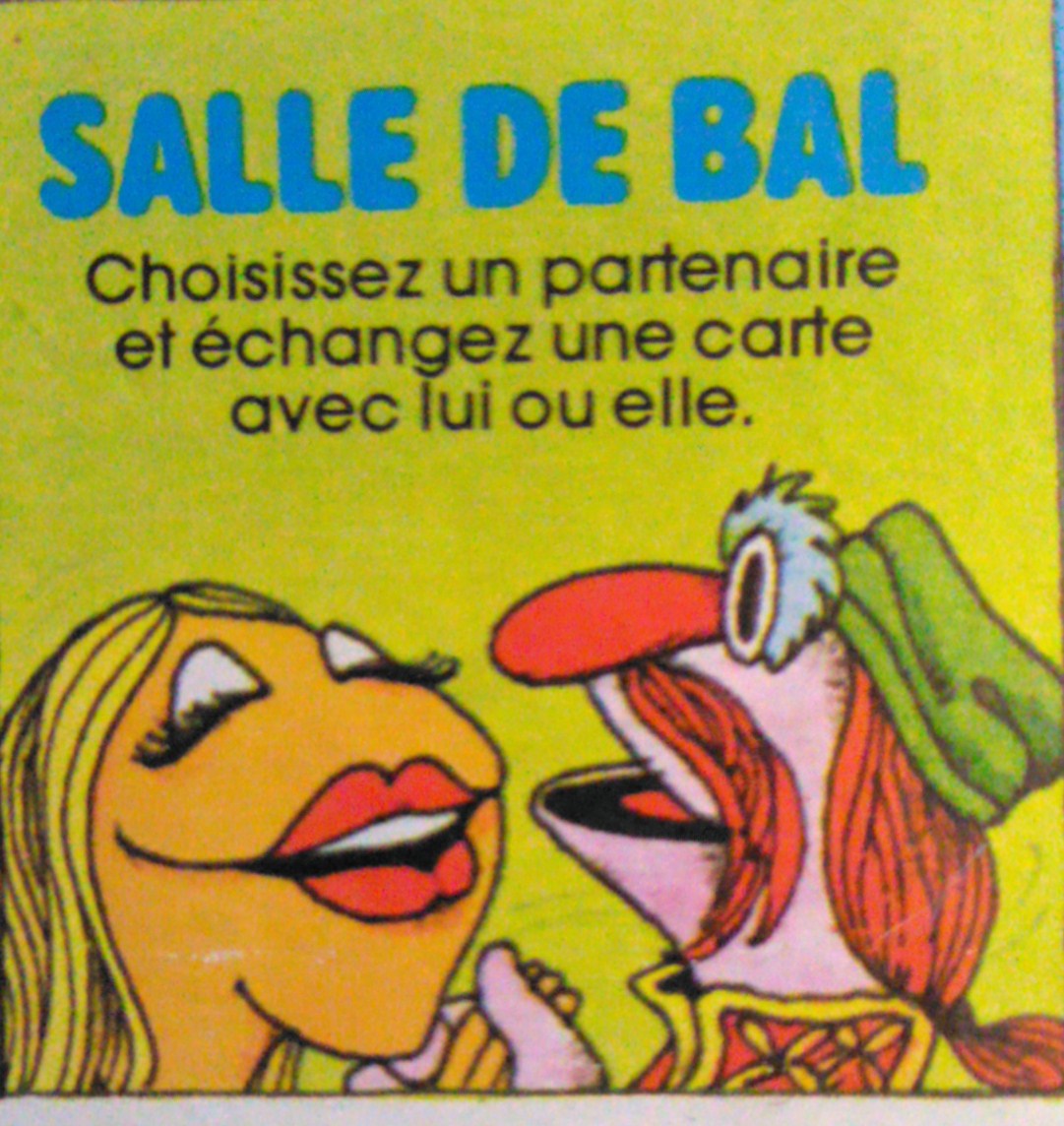
Most Interesting Feature: What I didn’t realize when I bought this game is that it was made in Canada and has a bilingual board–one side in French, one side in English. I actually felt a little peeved when I opened the box and found a French board. I only speak un peu de French and didn’t know how I would manage to play this with my daughter. When I flipped the board over and found the English side, I no longer felt peeved—just stupid for not noticing the French writing on the box.

French game instructions.

Game Pieces: Rather lame. You know how some game pieces have a plastic base, into which you slide a cardboard picture? Well, that’s what this game has, but the cardboard pieces don’t display characters—just colors. There’s a yellow one, a red one, a green one, and a blue one. Why not just use regular colored-plastic markers?

Janice, yay!

Recommended Ages: 7 to 14.

Game Play: The game designers came up with a concept relates well to The Muppet Show and its characters. Players move around the board and try to collect cards representing three judges—Miss Piggy, Sweetums, and Fozzie. Once you have all three, you can “perform” for the judges. That involves picking one of six Sam the Eagle cards and hoping that it doesn’t match the number your opponent rolls on the die. If you don’t match Sam, you receive a star; seven stars win the game. The rules have a few wrinkles—such as allowing players to “upstage” each other—that keep it from getting too repetitive. Sam is one of my favorite Muppets, so I enjoy his role as censor here.

My Thoughts: I owned a different Muppet Show game when I was little, one that dated from 1977. I don’t remember much about that game, but I can endorse this one as fun for young Muppet fans.

Guiding Light Memories

My Guiding Light memories taste like iced tea.

In my grandmother’s aluminum-sided ranch outside Pittsburgh, the iced tea was fresh-brewed, heavily sweetened, and served in 1940s gold-trimmed highball glasses. I would sip it and wait impatiently for my grandmother’s “stories” to end so I could watch Brady Bunch reruns, or Match Game, or anything else.

As the minutes passed, certain images seared themselves onto my young brain. Alan Spaulding and Hope Bauer floating on the wing of a downed plane. Barbara and Holly and Chrissie together—three redheads who caused my grandmother (a rather naïve television viewer) to wonder if the actresses were related in real life. Phillip’s adoptive and biological parents forming various marital configurations. Roger terrorizing Rita in a funhouse hall of mirrors. (By dressing up as a clown to lure Chrissie, Roger also terrorized my younger brother, who never forgot that unnerving scene.)

Later, in junior high, my best friend and I drank instant iced tea from amber crinkle glasses as we watched Guiding Light in her family room after school. While our peers who watched soaps followed General Hospital, we watched as Nola and Quint floated away toward marital bliss, Carrie broke down on the witness stand at her murder trial, and Phillip finally learned the truth about his parentage.

I started sneaking to the local convenience store to buy Soap Opera Digest with my own money because my dad considered soap magazines trash. I littered my diary with references like “GL was boring today” or “Can’t wait for GL tomorrow.”  In ninth grade, when a change in schools and a long bus ride made me miss most of the show, my absentee rate soared. I ordered a GL t-shirt by mail (and received, with it, the mid-1980s promotional brochure displayed in the gallery above). I kept watching, through Reva’s slut of Springfield speech, Bert’s death, Beth and Lujack’s romance. Once, I even convinced my dad to drive me and my best friend to a mall 20 miles away to see Vincent Irizarry in person.

I stopped watching briefly around 1986 when the show seemed adrift. Thankfully, I returned to see Michelle Forbes’ harrowing performance as Sonni/Solita and the brilliant period that followed. From about 1989 to 1994, the writing, the direction, and performances by actors like Michael Zaslow, Maureen Garrett, Beverlee McKinsey, Sherry Stringfield, Grant Aleksander, Beth Ehlers, Peter Simon, and the rest came together to create something perfect. At the end of each episode, when the announcer said, “This has been Guiding Light,” I felt sad that another hour had elapsed.

Three years ago this week, when the final GL episode aired, I cried throughout it, even though only the opening logo montage and Josh and Reva’s happy ending really resonated with me. The truth is, I was part of GL’s problem. I stopped watching in 1994 for what I thought would be a temporary break and never really found my way back. The times I tried to watch, it just didn’t capture my attention. I seemed to lose my taste for the genre’s conventions. (Bad writing didn’t help—in 2003, actors like Tom Pelphry and Gina Tognoni sucked me back in; the continuity-shredding Mary Ann Carruthers story sent me screaming for the exits.)

Hypocritcally, though, I wanted GL to last forever. I wanted to turn it on every Fourth of July to see the Bauer barbecue, to turn in on in December and watch Springfield residents preparing for Christmas while I was wrapping last-minute presents, to know that the show my grandmother had listened to on the radio was still airing every day, even if I couldn’t be bothered to watch it.

According to TV Tropes, Guiding Light “may be the longest recorded narrative in the entire history of mankind.”

Sometimes I wish entertainments could be declared historic landmarks, the way buildings are.

But, of course, entertainment is a business, and business doesn’t work that way. When tastes change, whole forms of entertainment die out. Soap opera audiences began declining sharply in the 1990s*, and now only four daytime soaps remain on the air.

When GL ended, the saddest part for me was knowing I might never be able to re-experience my favorite moments. Soap opera episodes were produced to be aired a single time and then forgotten. I’m thrilled with the Guiding Light DVDs Soap Classics has been releasing, and I will continue to gobble them up. I even ordered Guiding Light DVDs from Germany.

Watching these old episodes has helped me fall in love with the show all over again.

I only wish my grandmother was here to watch them with me, over a glass of iced tea.

*You can find an interesting discussion about the reasons for this decline here.

Spin Again Sunday: Gomer Pyle

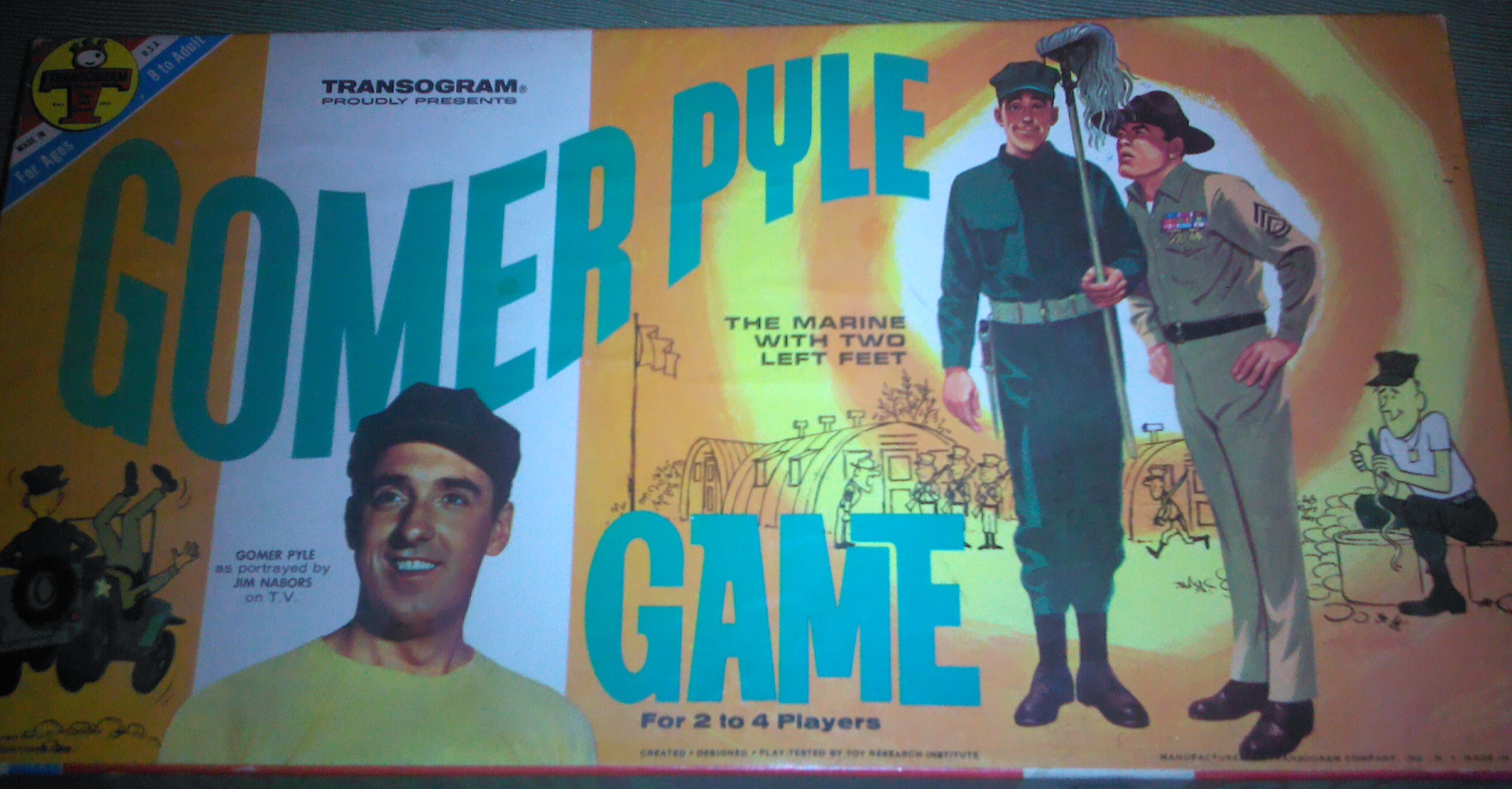
Gomer Pyle Game, 1964

Today’s Game: Gomer Pyle

Copyright Date: 1964 (I got that date from the book Spin Again by Rick Polizzi and Fred Schaefer. The box is undated.)

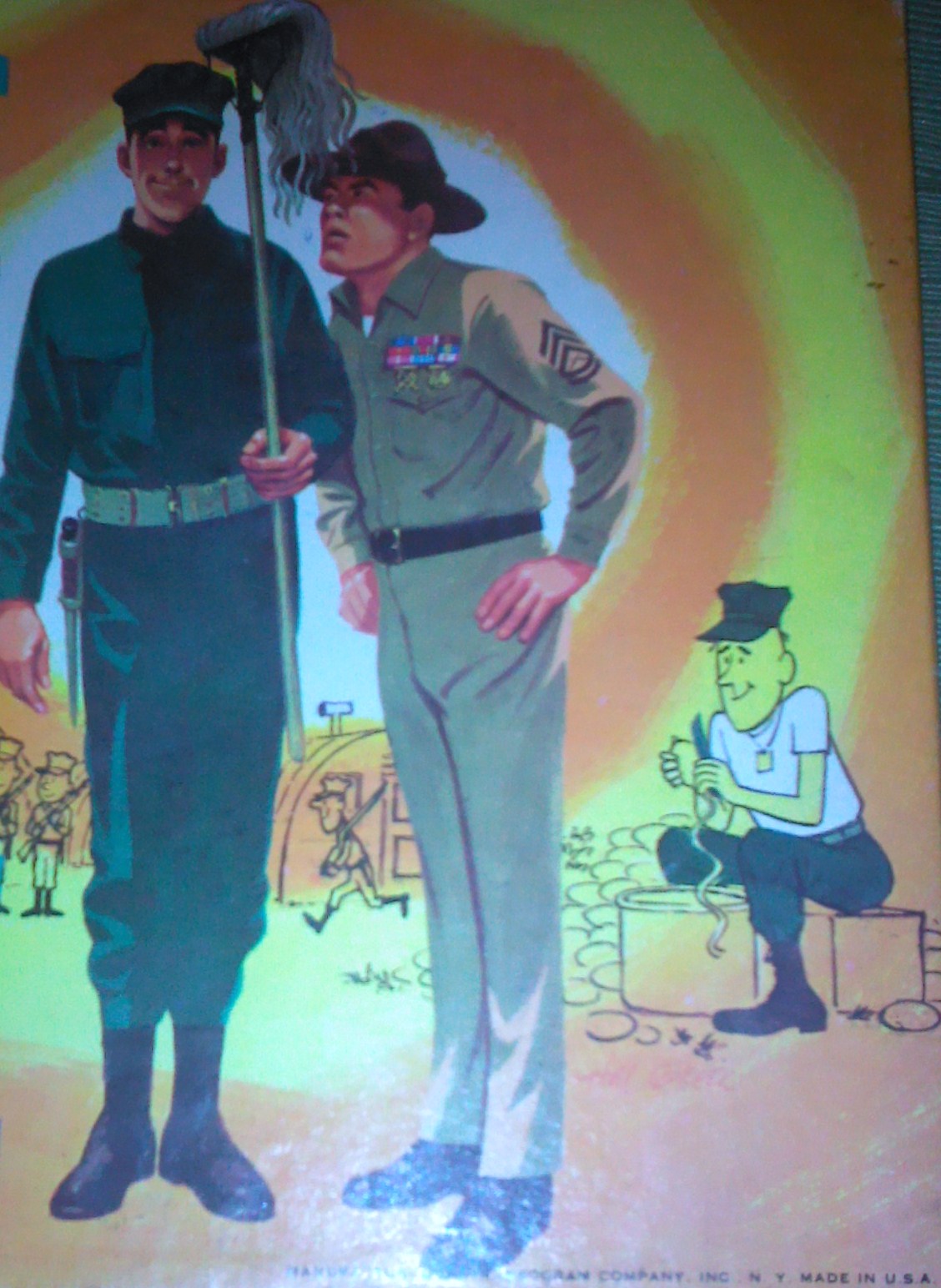
Game Board: Visually striking, with the marching Marines cutting a green swath across the mustard-yellow background, and red Sergeant Carter squares popping up regularly. The guy peeling potatoes seems to be smoking—that’s something you wouldn’t see on kids’ game today.

Game Board

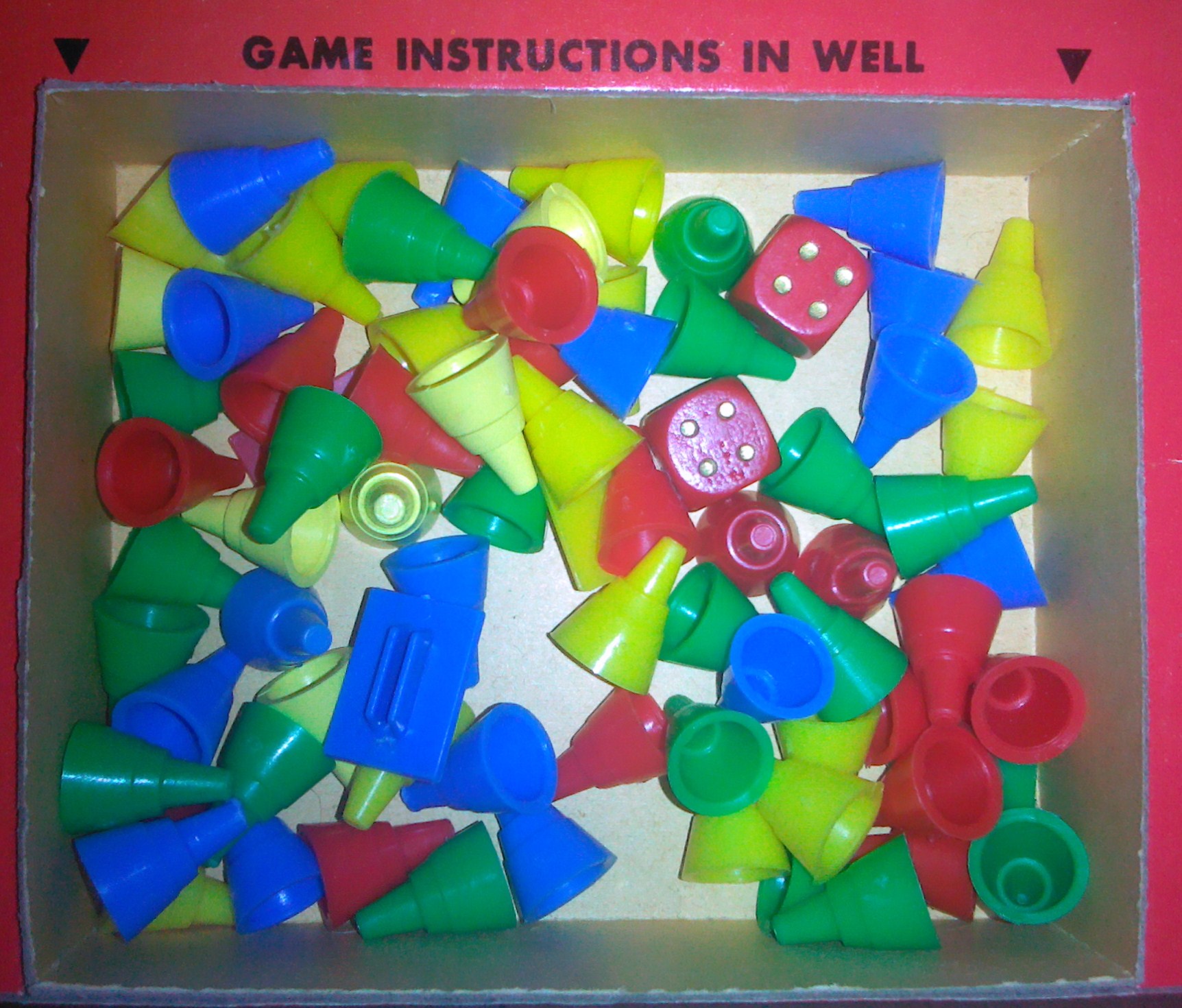
Game Pieces: Brightly colored plastic pieces and cartoon cutouts of Pyle.

Recommended Ages: 8 to Adult.

Game Play: No clue. See the well that holds the plastic pieces? See the words that say “Game instructions in well”? Well…not in my well. That’s one of the dangers of buying of vintage games—they’re often incomplete. Dice are included, so obviously Pyle has to move around the board. I’m going to assume that landing on Sergeant Carter’s head is a bad thing.

Game Designer: The box artwork is signed “Hal Greer.” I haven’t been able to find out anything about this artist. I’m guessing he’s not the same person as this Hal Greer.

A close up from the box lid–pretty nice artwork

About Transogram: Game manufacturer Transogram offered many games based on TV shows. As the Polizzi and Schaefer book says: “Transogram personified the close relationship that had developed between television and the toy industry, doing so with imaginative designs that were some of the best of the period.”

My Thoughts: I bought this game a few years ago for my husband, who was a big Gomer Pyle fan as a kid. It was never a

A close up from the game board. Is that Marine smoking?

favorite show of mine, but I would watch it occasionally when nothing else was on.  In fourth grade, our teachers would let us watch TV in the cold lunch room, and Gomer Pyle was our usual lunchtime fare. For that reason, I associate the show with salami and snack cakes.

Previous Entries in this Series:

Charlie’s Angels

Laverne & Shirley

H.R. Pufnstuf

Emily Post Popularity Game

Spin Again Sunday: Emily Post Popularity Game

Today’s Game: Emily Post Popularity Game

Copyright Date: 1970

Object: “Players learn of the rewards that come from good manners while going to parties, sports events, dinners and other activities with their friends.”

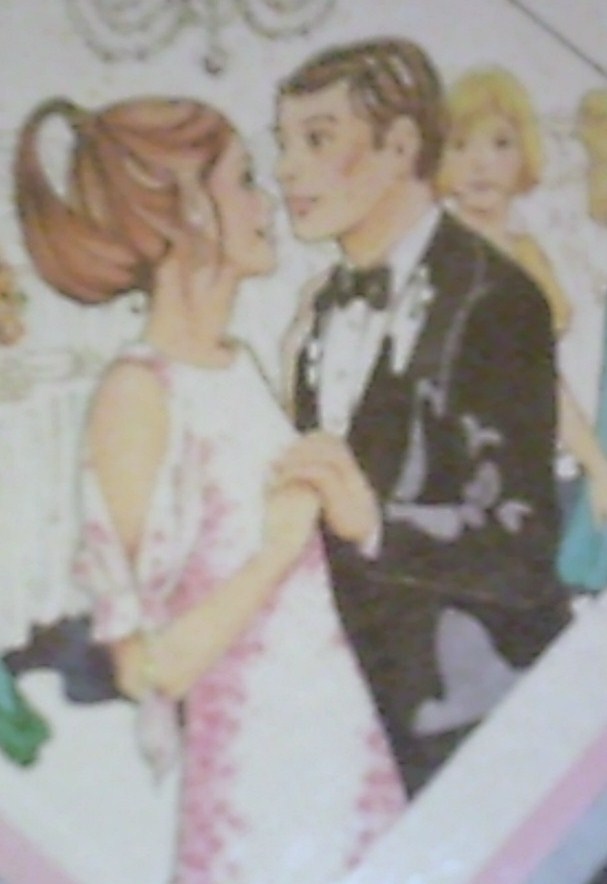
Game Board: Wispy cartoons show wholesome scenes of teenage life.

An all-too-typical teen problem

Game Pieces: Players move regular colored pegs and draw “Emily Post says…” cards that give points for good manners and issue penalties for etiquette violations.

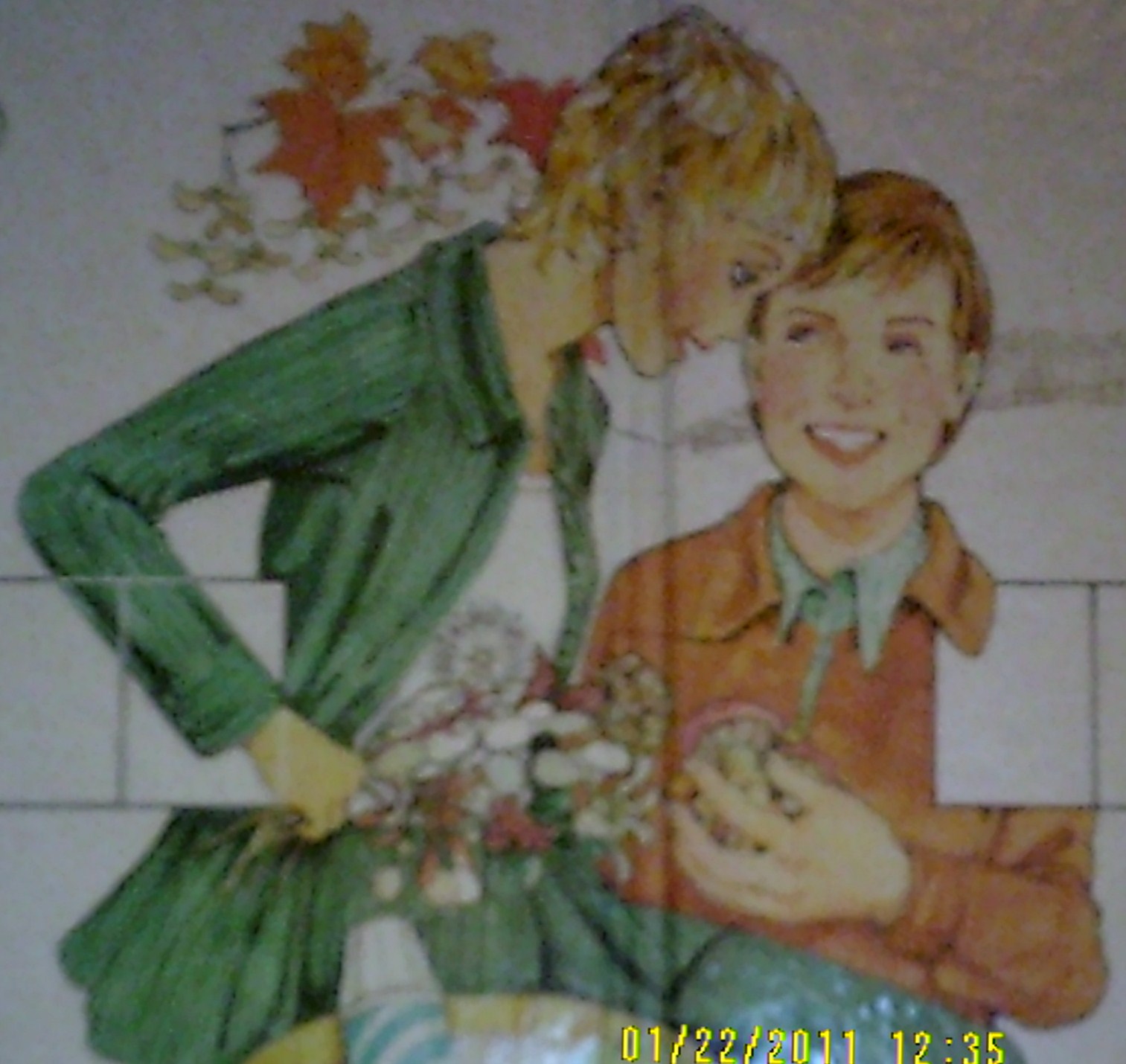
This nice young lesbian couple uses good manners while gathering psychedelic mushrooms.

Recommended Ages: “For girls 8 to 14.” I guess boys don’t need “the rewards that come from good manners.”

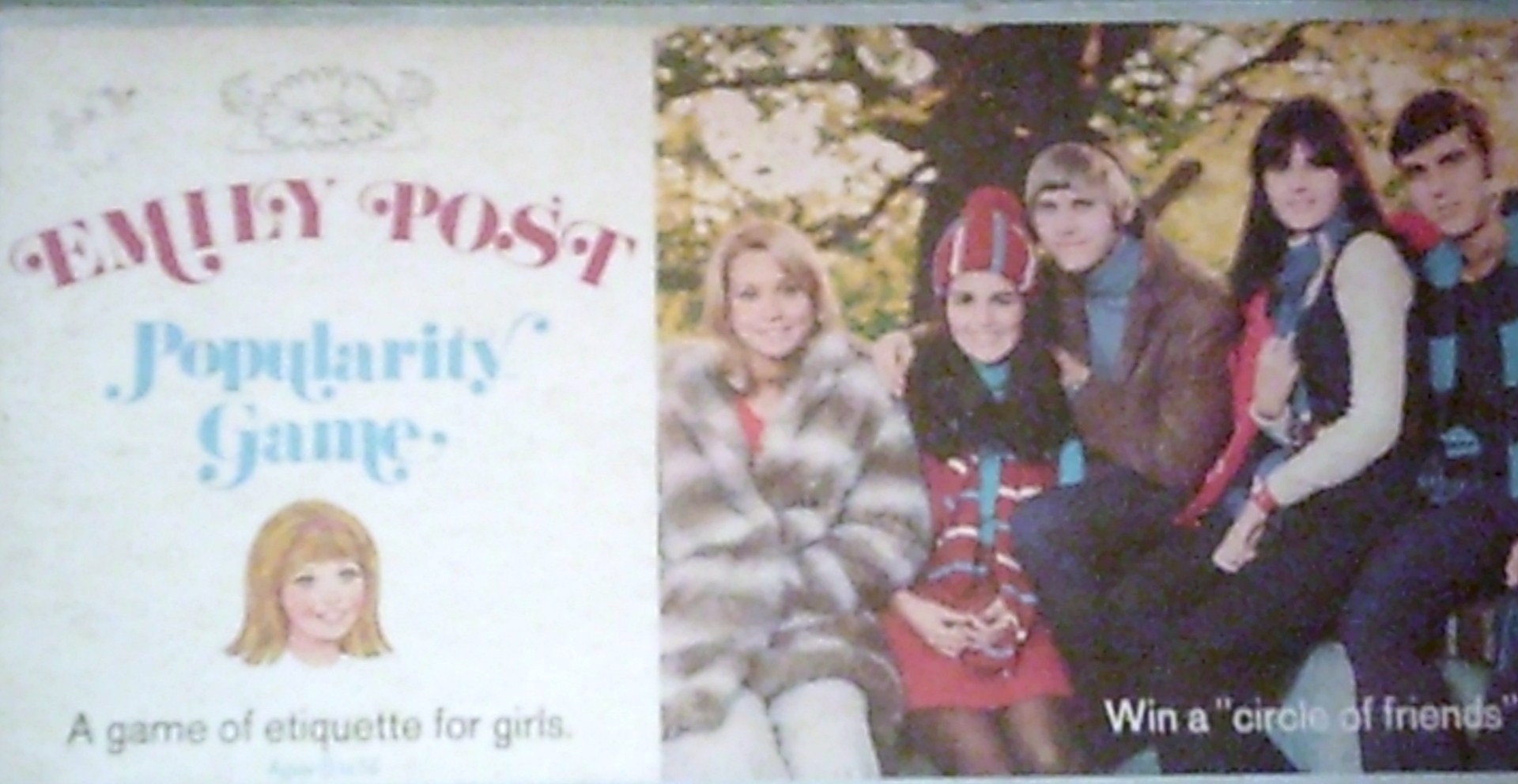
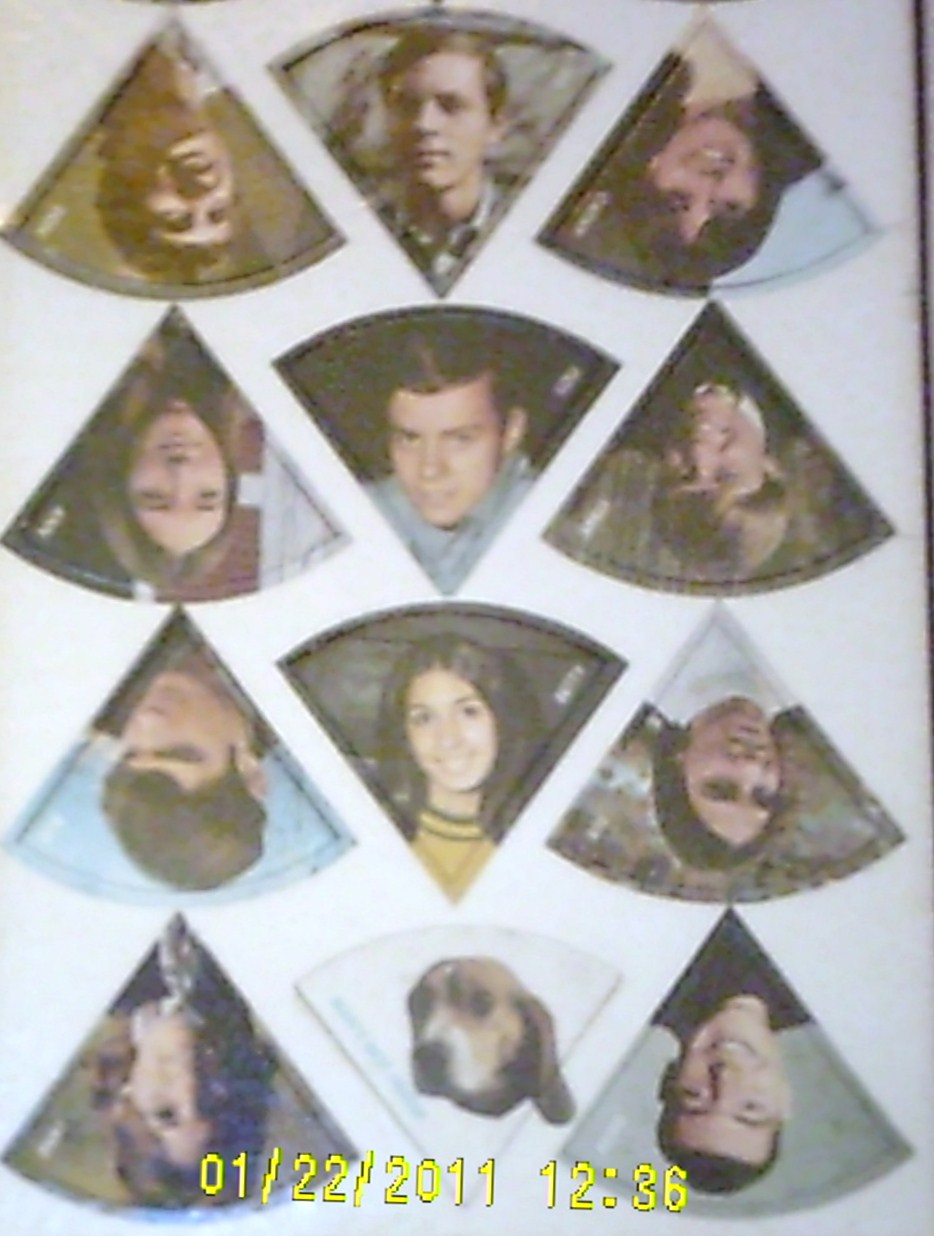
Game Play: Players compete to attract the largest circle of friends. You can’t

win if you’re holding the dog card in your hand. Personally, I’d rather befriend the dog than these humans. I mean, Cathy looks like a smug know-it-all, and Tony is clearly up to no good.

I hope this boy and girl can find a polite way to deal with the blonde girl who’s stalking them.

Final Fun Facts: Elizabeth Post, addressing players from the inside of the box lid, makes no pretense that fine inner qualities create social success. “What is it that makes a person popular?” she asks. “Is it good looks, smart clothes, or attractive manners? It is, of course, a combination of all three, but the last is surely the most important.”

The dog is the undesirable one? Really?

Elizabeth Post, the wife of Emily Post’s only grandson, assumed leadership of the Emily Post Institute after the original etiquette maven died. Several Post descendants still write about etiquette, including her great-great-grandaughter Lizzie Post.

Previous Entries in this Series:

Charlie’s Angels

Laverne & Shirley

H.R. Pufnstuf