Spin Again Sunday: The Bride Game, 1971

The Game: The Bride Game, “the exciting game of planning a wedding.”

Copyright Date: 1971.

Object: “To be the first girl to get her complete matching wedding party along with the necessary accessories for the wedding ceremony.”

Recommended For: “Girls 8 to 14.” I don’t think they really needed to specify girls.

The Box: What girl could resist that full-length portrait of wholesome bridehood? Well, lots of girls probably could and did, but it would have snared me.

The box photo immediately called Tricia Nixon to my mind.  That might have been what Selchow & Righter was going for—Tricia Nixon did marry in 1971. Tricia’s gown was downright sexy, however, compared to the prim one our box bride wears.

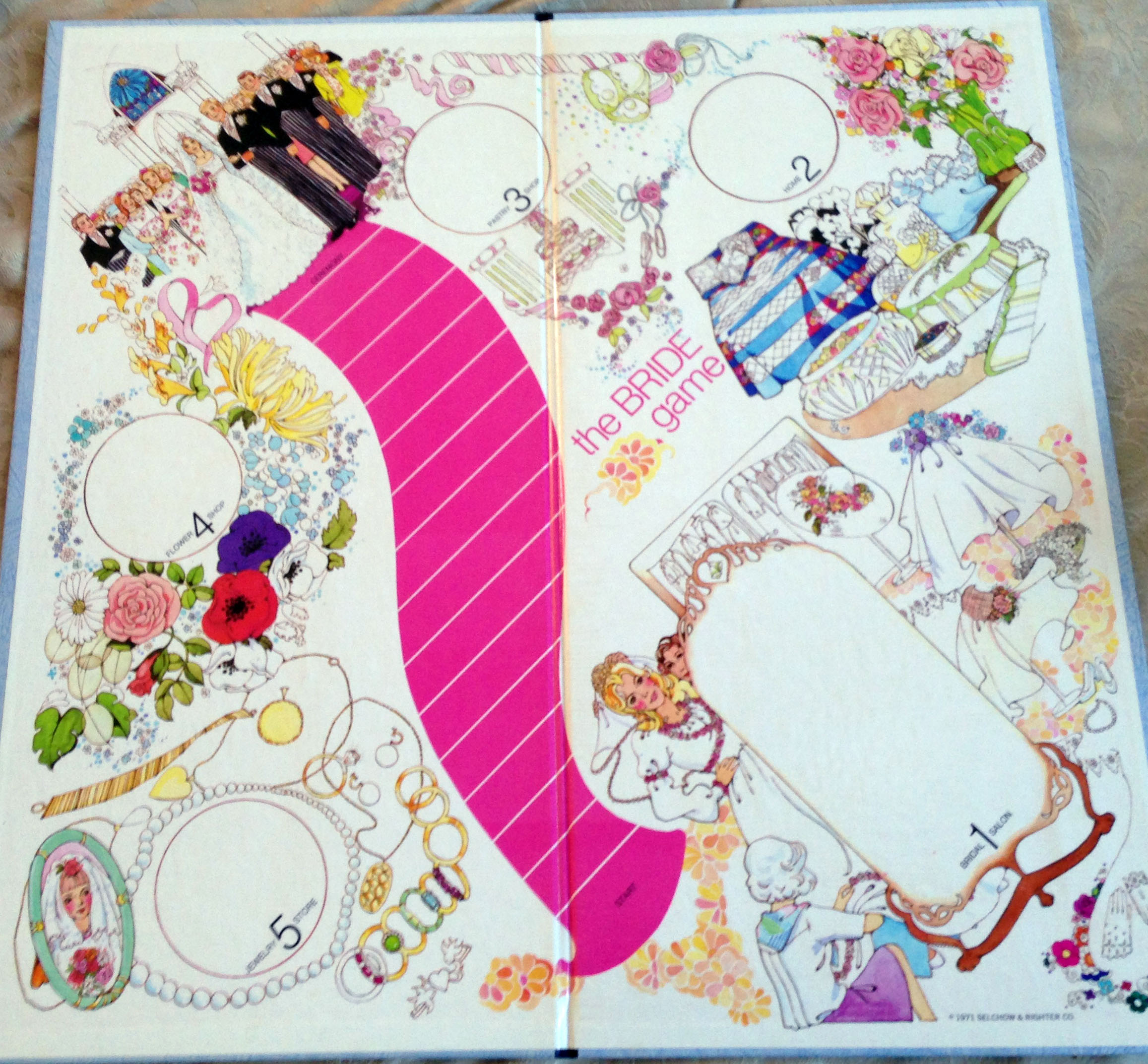
The Board: In the early 1970s, Selchow & Righter (best known for Parcheesi and Scrabble) tried to carve out a niche in girls’ games. In this series, we’ve seen another of their offerings—the Emily Post Popularity Game. Like that game’s board, this one features misty pastel graphics.

Game Pieces: Regular colored pegs, wooden rather than plastic. The die is unusual; it has a natural wooden finish and sports numerals instead of dots.

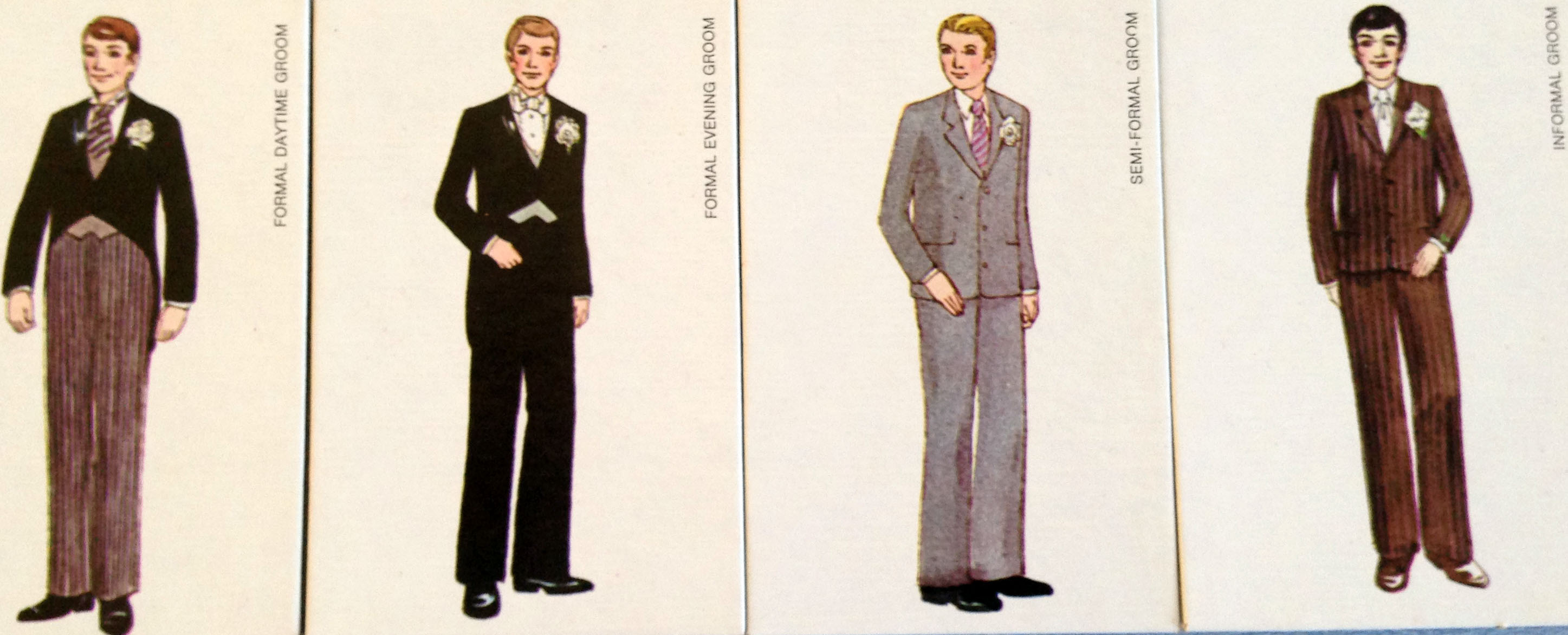
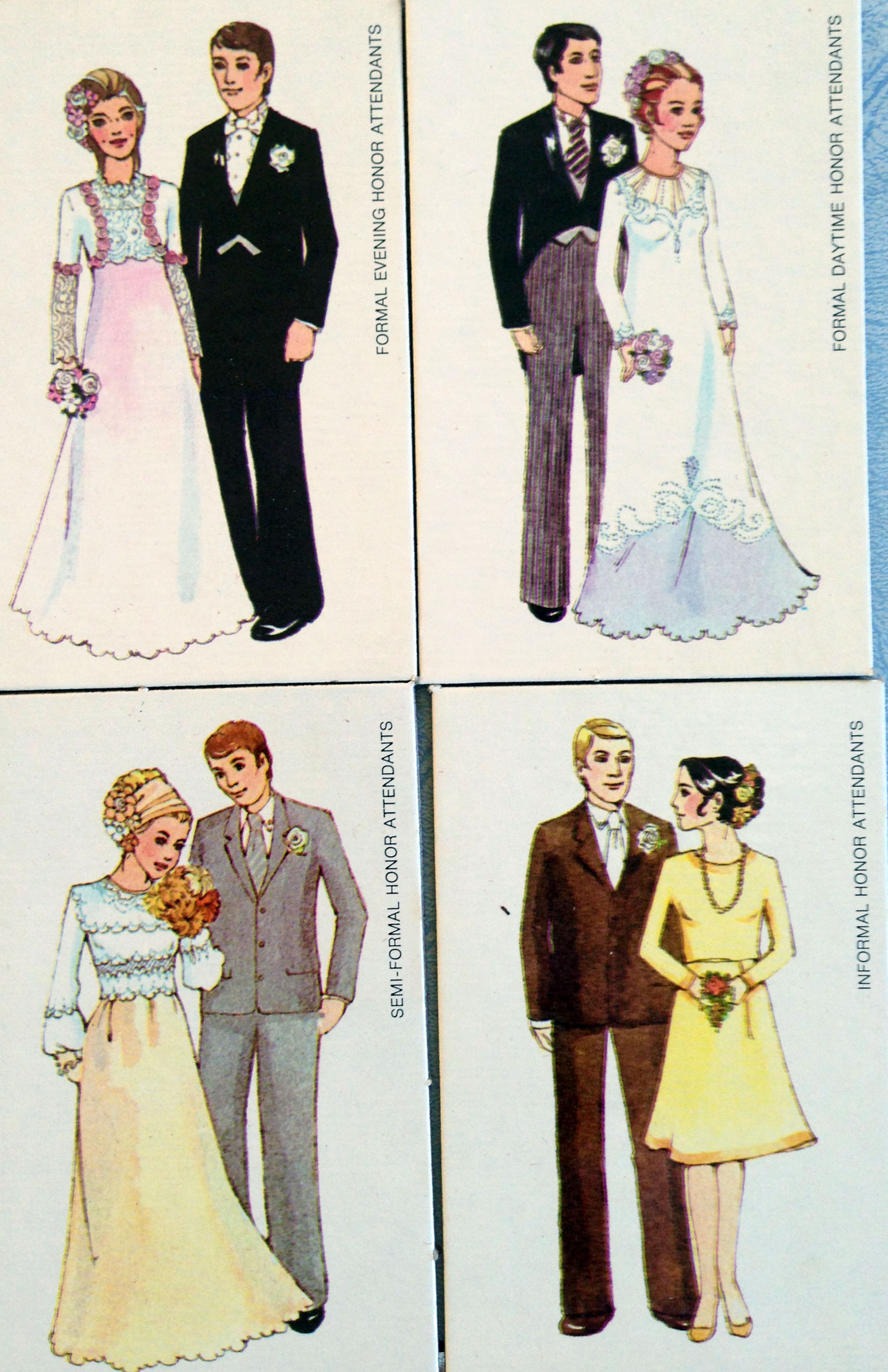
Game Play: Before she can march down the aisle, each player must collect cards representing a bride, a groom, and honor attendants ALL IN THE SAME STYLE. Yes, the instructions give that last part in all caps. You wouldn’t want to commit a disastrous faux pas by having a groom dressed in “Daytime Formal” style and a Maid of Honor dressed for a “Semi-Formal” wedding, would you?

The grooms

The attendants

The brides. So, readers, what apparel would you pick?

Some of the other game cards. I’m glad the snazzy lingerie is something new, rather than something old or, worse, borrowed.

Each player must also collect a wedding cake card, a bridal bouquet card, and a wedding ring card, as well as cards representing something old, something new, something borrowed, and something blue.

While collecting these cards, players circle the board and visit the pastry shop, flower shop, jewelry store, and bridal salon. When all the cards are in hand, players can start marching toward the altar.

Today’s Bonus Feature: When it comes to bride-related toys, this game doesn’t live up to the Bonnie Bride doll, who could actually toss her bouquet. You know it was a quality product, since it was “sold only at food markets.”

Spin Again Sunday: The Waltons (1974)

This week, my series on vintage board games is taking us to Walton’s Mountain.

The Game: The Waltons Game

Copyright Date: 1974.

Recommended Ages: 8 to 14.

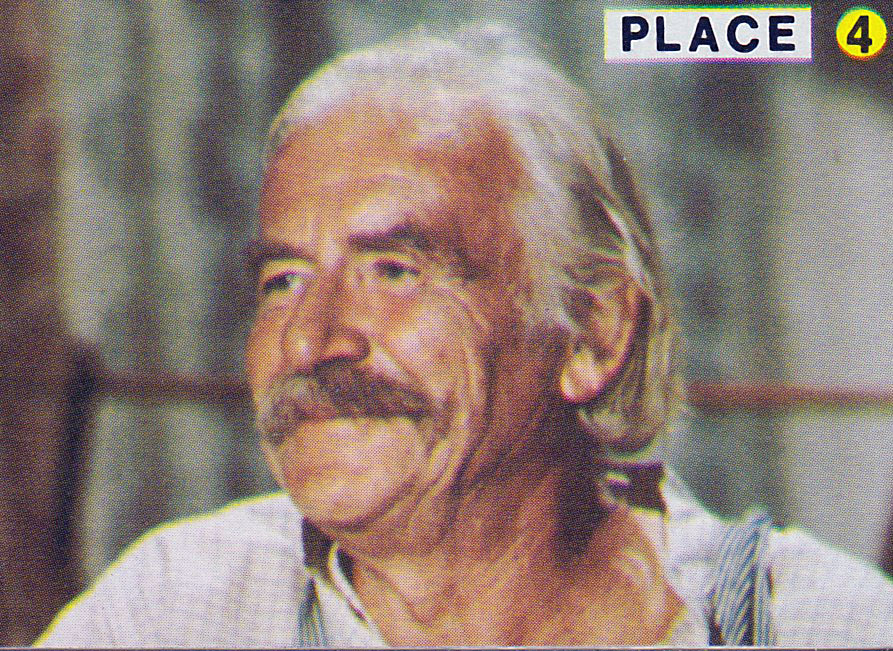
Game Box: The colors are drab, which perhaps befits the Depression setting. The actor caricatures are good, as such things go. John Boy’s head is the biggest–frequent Waltons viewers will appreciate how fitting that is.

Object: “Be the first player to get rid of all your cards.”

Game board

Game Play: Like the H.R. Pufnstuf Game, this is a card game masquerading as a board game. All the cards are dealt at the beginning of the game; playing one card each turn, players try to complete puzzles featuring Waltons characters.

Game Board: The board, which features pictures of common Waltons settings, serves as a place to complete the puzzles. (The top puzzle, strangely, includes a non-regular cast member.)

An example of a completed puzzle. Anachronism alert: It’s very unlikely that a conservative 1930s farm wife would have had pierced ears.

My Thoughts: I’m surprised I didn’t own this game as a child because my family loved The Waltons. Watching the show together was a big weekly event, and it spawned a running joke that persists to this day. During the early seasons, the show’s end signaled my bedtime. My parents always tried to hustle me off to bed as the final scene faded to black, but I wasn’t having it. Didn’t Earl Hamner’s voice always announce, “Stay tuned for scenes from our next episode?” I would argue that I needed to see “the scenes.” My parents still bring this up when my own daughter is stalling at bedtime.

A John Boy card can be used to compete any puzzle. Of course it can.

Bonus Feature: Although we loved the show, my family also loved laughing at its corniness. I remember how amused we were by this Waltons parody on The Carol Burnett Show.  I don’t think we ever referred to the series as anything other than The Walnuts from then on. (The sketch more than lives up to my memories. Vincent Price and Joan Rivers as Ma and Pa Walton? Awesome!)

Read my whole Spin Again Sunday series!

Spin Again Sunday: Barbie Miss Lively Livin’ (1970)

In this week’s edition of Spin Again Sunday, we enter the mod world of Barbie, circa 1970, through the Miss Lively Livin’ Game. (This world was so exciting that Barbie lost the ability to enunciate her Gs.)

Copyright Date: 1970.

Recommended Ages: 8-12.

Game Box: Graphics in groovy shades of hot pink, orange, and purple add pizzazz to the box. The main photos shows tween girls with unfortunate bangs playing the game while stretched out on a shag-carpeted floor.

Game Board: This rainbow-rific board doubles as an advertising vehicle for Mattel; it shows many dolls and fashions available at the time.

Game Pieces: Photographs of Barbie, her friends Christie and P.J., and her cousin Francie.

Object: To succeed in having five different kinds of fun.

That first one gave me such trouble in high school.

Game Play: Traveling through Barbie’s world, girls attend school, shop at the Unique Boutique, go on dates, and spend time “doin’ things.” They wear metal bracelets and try to earn charms representing each kind of fun.

The charms

The first person to collect two of each charm proceeds to the pageant area. Fix your hair, grab your boyfriend, and receive your crown, Miss Lively Livin’! (The game includes a paper crown, which the winner has the prerogative of wearing throughout the subsequent game.)

My Thoughts: I like this game now because it includes photos of great mod Barbie fashions.

I’m sure I would’ve loved it as a child, too–the bracelets and crown are such a nice girly touch.

Bonus Feature: Here’s a 1970 commercial for the ultra-flexible Living Barbie. The Brady Bunch‘s Maureen McCormick was also flexible, it appears.

Though the doll was called Living Barbie, she had a Lively Livin’ House, which the Miss Lively Livin’ game board mentions.

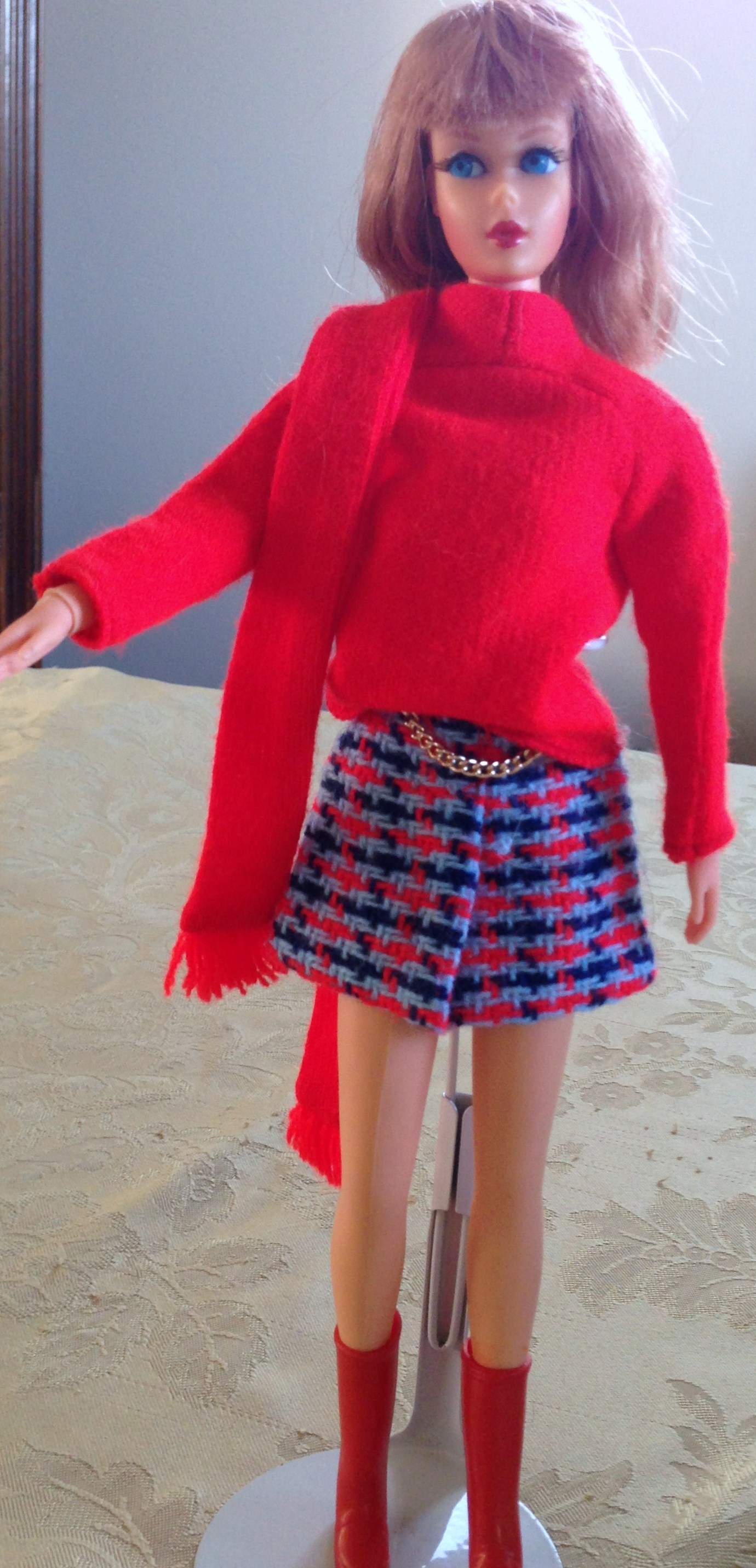
A Living Barbie from my collection. She’s wearing Super Scarf, one of the outfits shown on the game board. I love the wool miniskirt, chain belt, and boots–it reminds me of the fashions Mary Tyler Moore wore in her show’s first season.

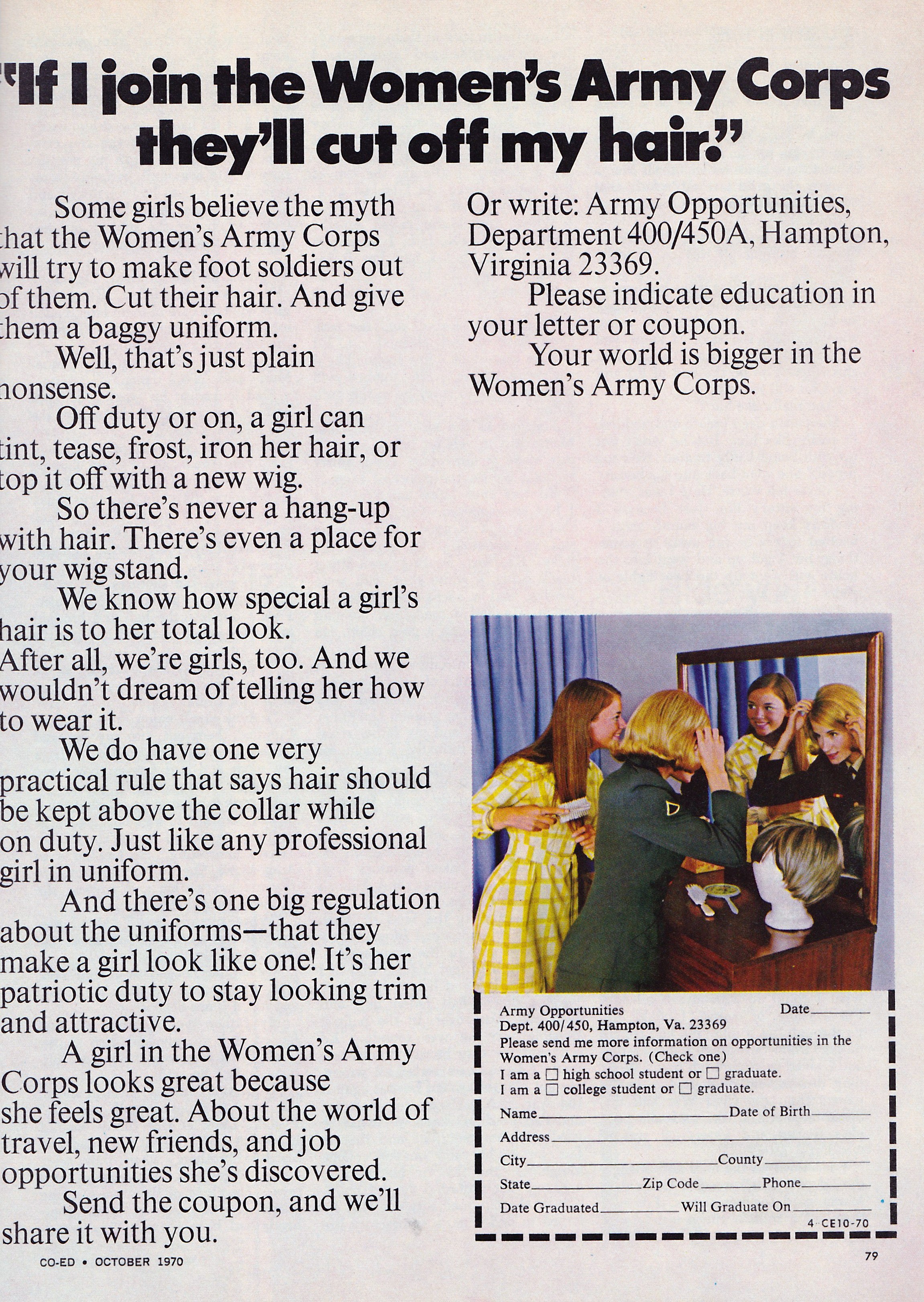
Join the Army, Gals–You Can Bring Your Wigs!

When a young woman is considering joining the military, she has lots of questions–about her hair. At least, that’s what the “girls” of the Women’s Army Corp believed in 1970. Because this is Veteran’s Day in the U.S., I would like to salute all the men and women who have served their country; the sacrifices they have made go far beyond hair care.

Weird Words of Wisdom: The 5 Types of People Who Go All the Way Edition

“Just how advisable is it for a farm girl to date a city boy? The chief concern here seems to be her ability to handle a date who is more sophisticated than she is. The old story of the traveling salesman and the farmer’s daughter has some basis in the tendency of certain urban males to try to exploit the presumably more naïve country girl.”

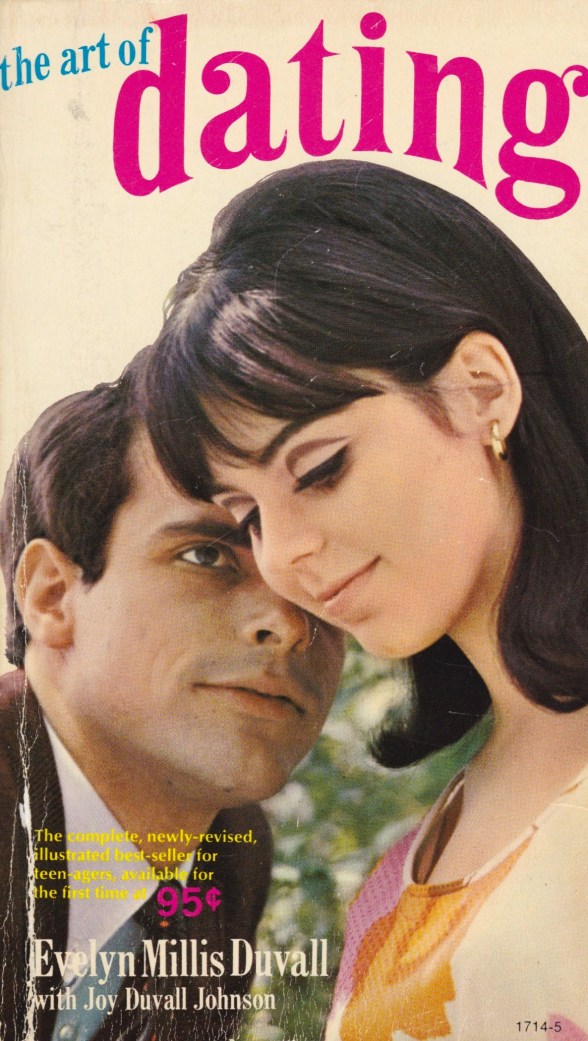
The Art of Dating, 1967 (1969 printing) By Evelyn Millis Duvall with Joy Duvall Johnson

About the Authors: Evelyn Millis Duvall, according to this book’s back cover, was “known nationally and internationally as a top-ranking authority on sex and family life education.” She was no intellectual slouch—she earned a Ph.D. in Human Development from the University of Chicago, and she was a Fellow of the American Sociological Association, which sounds impressive. Her earlier book The Facts of Life and Love for Teenagers went through many printings in the 1950s and 1960s. Her daughter, Joy Duvall Johnson, assisted her in writing this book. She was a University of Chicago graduate, too, with a master’s degree in “social group work.”

About This Book: Having read both this book and The Facts of Life and Love for Teenagers, I’ve found that two qualities distinguish Duvall in the advice-giving game: She has a research-based approach and an obsessive love of detail.

You can see the first quality in the many studies that she cites and statistics that she offers. Here is a fairly typical Duvall passage:

“Professors Kirkpatrick and Caplow found that the most usual course of love is one starting with mutual indifference and moving upward through attraction to love, and either dropping again to indifference, with the broken love affair, or remaining in love at a high level of mutual involvement. One out of every five love affairs studied is irregular in its course, with unpredictable shifts from love to hate to indifference to liking in various combinations throughout the history of the relationship. Somewhat fewer young men and women experience an even more vacillating kind of love that is off-again-on-again, with ups and downs like a roller coaster’s.”

Her love of detail pervades the entire book, which explores dating from every possible angle. Take her guidelines, for instance, about a movie date:

  • Paying for the tickets: “While the fellow buys the tickets, the girl steps aside and looks at the stills outside to avoid the boy any embarrassment he may feel at the ticket window.”
  • Walking in to the theater: “If there is no usher, the boy precedes the girl down the aisle, finds two seats, and steps aside so that the girl may be seated first; he then follows and seats himself behind her.”
  • During the film: “…throwing popcorn or paper, or otherwise behaving like a nuisance, is rude and crude.
  • Getting refreshments: “At (intermission) the boy may ask his date what she would like, then excuse himself while he gets it…If his budget doesn’t call for this extra, a boy should come prepared with some little offering to take the place of purchased refreshments, such as candy from a roll or mints or a stick of gum. The girl accepts the offer graciously without hinting that she would like something else.”
  • Acceptable affection: “The boy may hold the girl’s hand if she has no objection or place his arm over the back of her seat.”
  • Talking: “They may whisper their reactions to the picture or comment to each other about the characters or plot, so long as they neither embarrass each other nor annoy their neighbors.”
  • Leaving the Theater: “…the boy helps the girl into her wraps and waits is the aisle until the girl emerges and precedes him out of the theater. Then, the boy may suggest stopping at a soda fountain, if he wishes, or if it’s early, the girl may invite him to her home for ‘cake and milk’ or whatever she and her family have agreed upon for an evening snack.”

Whew! I was the most socially awkward teenager who ever lived, and even I wouldn’t have needed that much help to get through a simple movie.

Despite her scientific bent, Duvall occasionally lapses into flights of fancy that seem to be inspired by movies rather than real life, circa 1967. In addition to warning about the great urban-rural dating schism, she predicts soap-opera-esque consequences for dating outside one’s social class. She even cites the 1940 movie (or 1939 novel) Kitty Foyle to demonstrate the latter situation’s pitfalls!

Decoding a Previous Owner: A previous owner of my book went crazy underlining passages and scribbling in his or her own, sometimes smug, notes. At first I assumed this mad scribbler was a teenage reader, and it surprised me that any teen was taking this book so seriously in 1969. Then I started to notice that the underlinings included portions aimed at both girls and boys, and I wondered if the reader was a parent, teacher, or some kind of minister. Finally, I hit upon a note that confirmed a church affiliation: Below a passage that described church ladies hosting an after-prom party, my scribbler wrote, “Possibility for our women.” Oh, the fun of reading used books!

More quotes from The Art of Dating

“When the boy on the hill dates the girl from across the tracks, the general public is apt to assume that it’s because she is willing to let him take more liberties with her than would a girl from his own social group.”

Possible dating activity: “An old-fashioned taffy pull lends itself to hilarious, if sticky, informality.”

“Currently some segments of the young adult population try to express their individuality by extremes in hair style and dress. However young people respond to this, most want an attractive date. On one college campus, the men revolted against the trend of certain co-eds to be unkempt. They protested that they wanted girls to look feminine. Most fellows would agree.”

Dating costs: “College men find it often costs close to $5 for a ‘movie and malt’ date.”

Really? Just as responsible?: When you step into a car, you are just as responsible as the driver for what goes on…If (a girl) lets the boy drive too fast, she shares the guilt if an accident occurs.

Warning—writing about illegal drugs may be a gateway to abusing quotation marks: “Some teen groups have ‘parties’ where drugs provide ‘entertainment.’ At these parties teens are often exploited by dope peddlers who ‘contribute’ marijuana. Young people might be tempted to try a ‘reefer.'”

Smart girls: “Boys worry less about dating girls inferior to them in intellect, since it is generally expected that a girl won’t be as intelligent as the boy she dates. Indeed this is emphasized so strongly that a superior girl may find that if she has a reputation as a ‘brain,’ boys are afraid to date her. Such a girl may pretend to be dumber than she is on a date…But there are girls who resent having to ‘put their brains on ice,’ so they only go out with boys who like them as they are, who admire intelligence and are not threatened by a girl’s superior mental ability. A girl who dates a boy who is not her intellectual equal must decide whether she dares to be herself or whether she must put on an act.”

(You would think that two female, University-of-Chicago-educated social scientists might take a firmer stand on which is the right choice, but they let matters rest there.)

The five kinds of people who “go all the way” before marriage:

1. “The Unconventional person with few or no religious roots.”

2. Young people from the lower socioeconomic classes. (“In general, the middle-class girl or boy values chastity more highly.”)

3. People desperate for love and acceptance.

4. Rebellious types.

5. People who are deeply in love but, for some reason, cannot marry.

“The more mature girl knows that she doesn’t need to resort to either slapping or running in order to deal with the too amorous boyfriend. She wards off unwelcome behavior with a firm refusal to cooperate, accompanied by a knowing smile and a suggestion of some alternate activity. She may say, “Not now, Ambrose—let’s go get a hamburger; I’m hungry.”

Read the whole Weird Words of Wisdom series

Spin Again Sunday: Planet of the Apes Game + Old-Time Radio Bonus

Because my husband’s birthday is approaching, I’ve chosen The Planet of the Apes Game for this week’s installment of my vintage board game series.

My husband loves The Planet of the Apes and all its sequels. I, on the other hand, have always had an aversion to monkey-and-ape-based entertainment. I may have inherited this from my grandmother, who cringed whenever a chimp appeared on a TV sitcom (an all-too-common occurrence in the ’70s), or I may have developed it after a series of gorilla-related nightmares at age 3 (a Playskool Zoo started it all, but that’s a blog entry for another day).

Through marriage to an ape fan, I’ve managed to overcome my prejudices–at least to the extent of buying him ape memorabilia like this.

Today’s Game: Planet of the Apes

Copyright Date: 1974

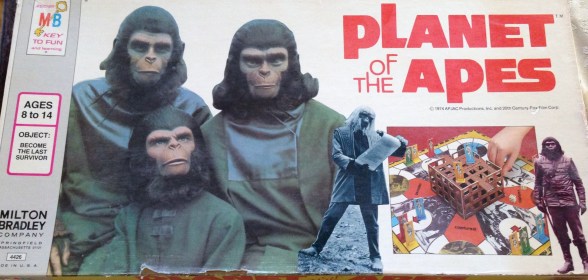
Game Box: Pretty appealing to a Planet of the Apes fan, I suppose. All the major apes are represented. I’m not sure why Dr. Zaius is in black and white when everyone else is in color.

Recommend Ages: 8 to 14.

Game Board: Simple, with lots of photos from the movie. The unique part is the cage that stands in the center.

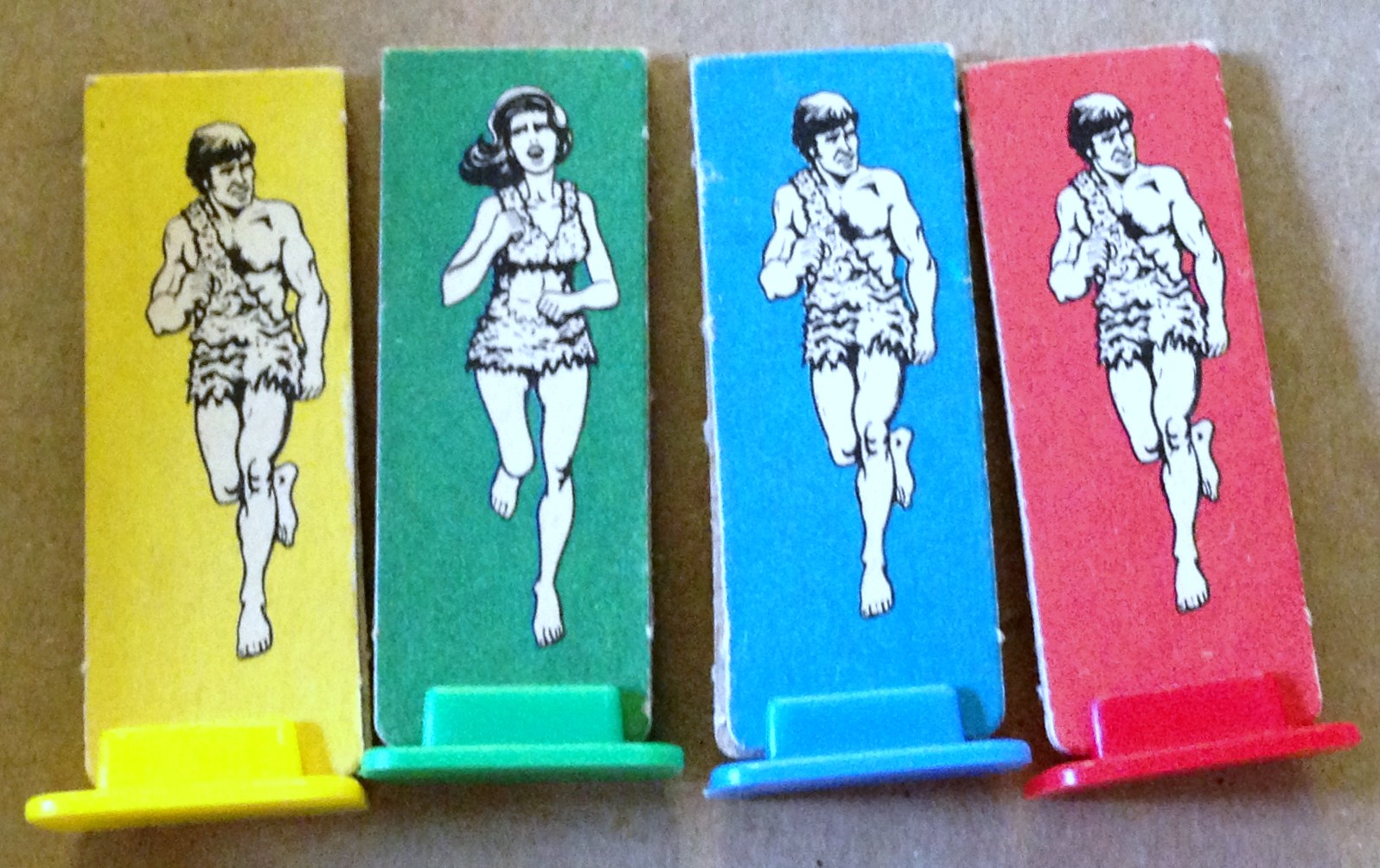
Game Pieces: Generic-looking male and female humans. At least we get front and back views.

Game Play: Each player gets four humans. You move them along the path until they land on a “Captured” space. Then you have to place your human atop the cage and let your opponent turn the cage’s knob. If the human falls in, he or she is captured. If not, they’re safe—for the moment.

Cage Fail: My cage is missing some key parts, so it doesn’t function. You can see how should work from this box closeup.

Object: “Become the last survivor.” Very cool object, my opinion. My husband kind of over-identifies with the movie’s apes, though. I think he’d rather see all his humans caged.

Today’s Bonus Feature: With my own stance on apes softening, I’ve developed an affinity for ape-themed old-time radio episodes. At least in those, you don’t have to see the apes. Sometime in November, I plan to post a whole playlist of ape episodes, but for now please enjoy this delightful example.

“Ape Song,” Murder at Midnight, March 31, 1947

“You treated me like an animal, Cecily–now an animal will treat you the way you deserve!”

Murder at Midnight has become a guilty pleasure of mine. It’s cheesy, but in a very entertaining way. This episode had me smiling all the way through.

Read more Spin Again Sunday
Listen to more Old-Time Radio

Room 222 Call Sheet: A Day in the Life of a 1970s Sitcom

Room 222 call sheet, 1970

When it comes to collecting, I’ve always admired people who have a laser-like focus. I’ve been a collector all my adult life, but the resulting collection is eclectic, to say the least. Today, I present one of the more interesting pieces of ephemera I own—a call sheet from the sitcom Room 222, which ran on ABC from 1969 to 1974.

The call sheet is interesting to me, anyway. (The fact that I was the only one to bid on it when it appeared on Ebay 10 or so years ago suggests the interest might not be widespread. That worked to my advantage though—I only paid $2 for it.) It provides a fascinating window into television production in the 1970s.

A call sheet, as Webster’s defines it, is simply “a daily schedule of filming for a movie or television show.” This call sheet dates from August 7, 1970, when filming was under way for two season two episodes. “Adam’s Lib,” a feminist story about a girl trying out for the boys’ basketball team, would air October 14, 1970; “What Would We Do Without Bobbie?,” an ugly duckling story, wouldn’t air until December 23, 1970.

The “Adam’s Lib” scene featured three day players—Tracy Carver as the basketball player, Terri Messina as the feminist activist, and “Darrell Carson” as the boy who helps them advance their plan to infiltrate the boys’ team. According to the Imdb, the actor’s name is Darrell Larson, and he’s the only one of the three who has acted steadily since then.

Larson, Messina, and Carver

This basketball court scene was shot at a playground in Los Angeles’ Rancho Park neighborhood. The female actors had to arrive at 7 a.m. for makeup that day, with Larson arriving 30 minutes later. It looks like they met up at 8 a.m. on Stage 10, Room 222’s usual filming location on the Twentieth Century Fox lot.

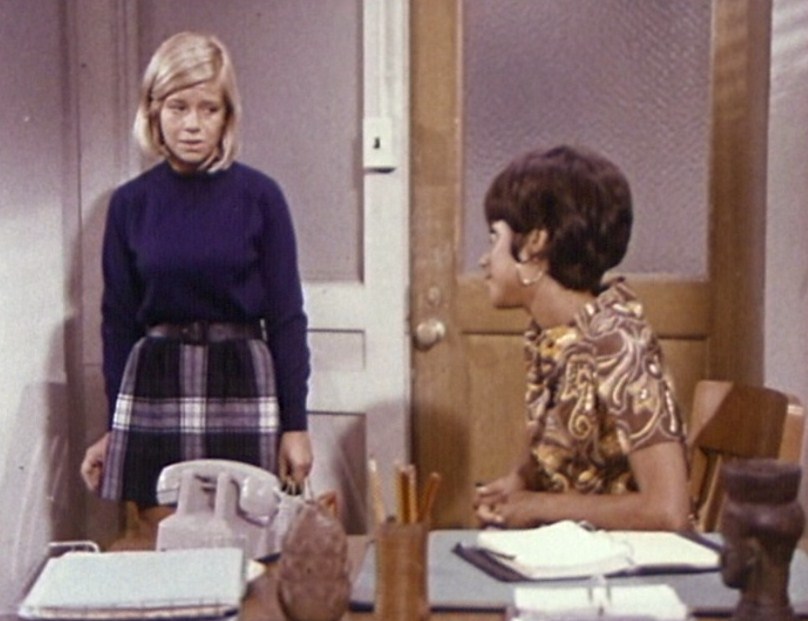
The “Bobbie” scenes, filmed on Stage 10, required the presence of series star Denise Nicholas as Liz McIntyre, recurring actor Howard Rice as Richie, and day player Nicole Jaffe as Bobbie.  Once again, the women reported for makeup 30 minutes earlier than the male actor. This group got a more leisurely start to their day; filming didn’t start until 10 a.m.

Jaffe and Nicholas in one of the office scenes. You might not recognize Jaffe’s face, but you would know her voice. She was the original Velma on Scooby-Doo.

At the bottom of the call sheet, we get a glimpse at what the cast would be doing the following week—reading and rehearsing on Monday, shooting a Walt Whitman exterior scene at Los Angeles High on Tuesday, and shooting more studio scenes on Wednesday (including a scene outside the “Berman Bungalow,” which would represent Bobbie’s house.)

William Wiard directed the filming on this day. Mike Salamunovich was the unit production manager. Both had long and prolific careers in television.

Room 222 call sheet, 1970, reverse side

The call sheet’s reverse side details the day’s production requirements. Those requirement were modest on August 7, 1970. They didn’t need any birds, livestock, wranglers, registered nurses, or firemen—not even any coffee or doughnuts. They did need one Los Angeles policeman, a stretch-out bus, a crab dolly and grip, and a “dialogue man.” (The call sheet almost consistently uses “man” in its crew terminology—mechanical effects men, camera men, prop men, makeup men. The only exception is “body makeup woman.”)

This little piece of TV history delights me so much that it might have launched me on a whole new field of collecting. Unfortunately, I haven’t had any luck finding similar items.

To close, I present the Room 222 opening, just because I love the music and the fashions.