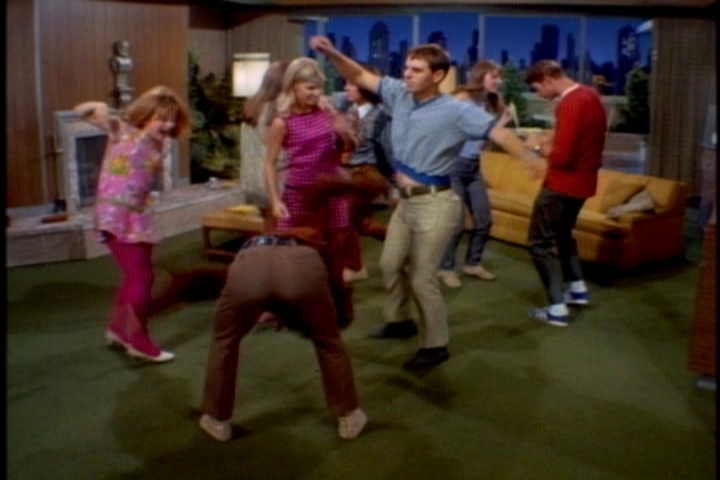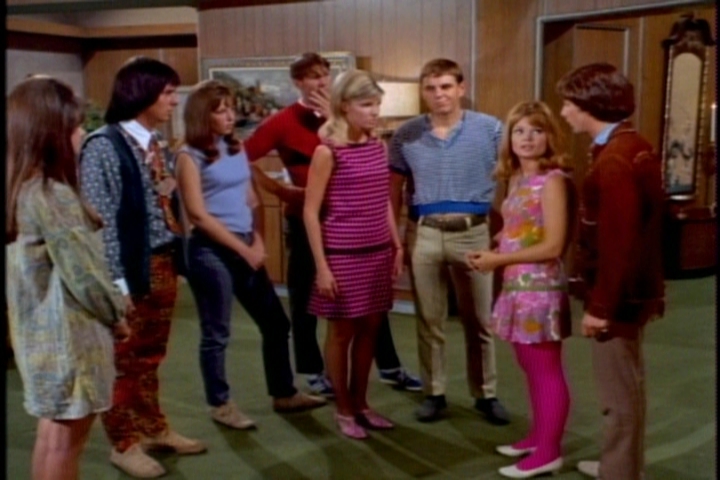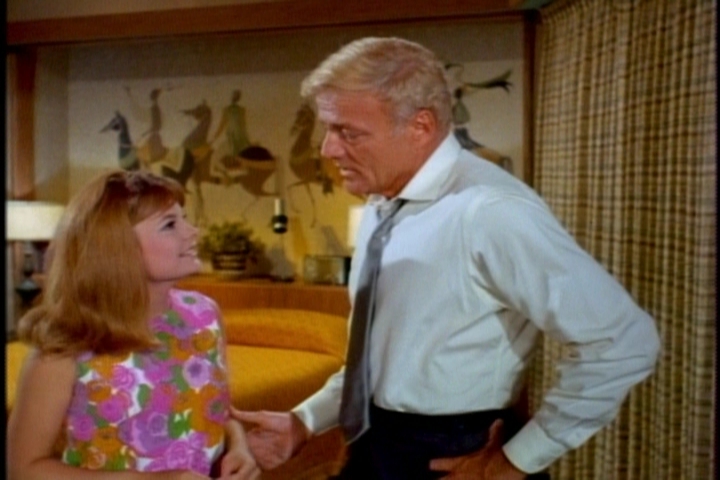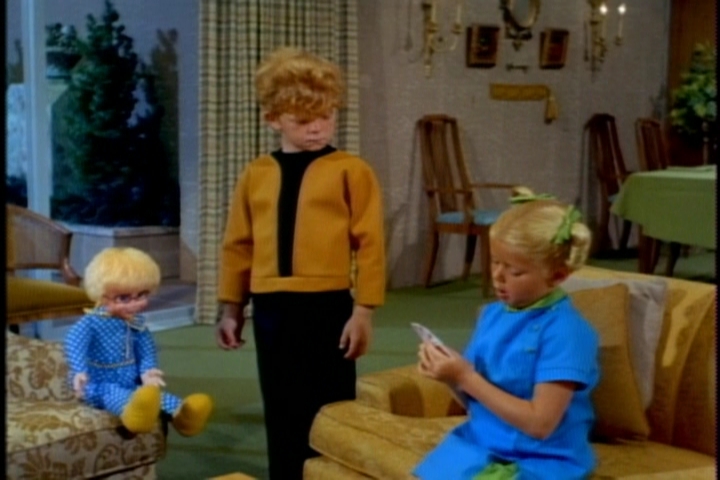
Leave it to Beaver: A Father’s Journey

403X403-SOCTVBLOGWard Cleaver: “When I was a boy, if I’d broken a window, I’d have had to pay for it…Not only that but I’d have gotten a pretty good taste of the strap, too.”

Beaver: “Gee, Dad—you must have had a real mean father.”

Years ago, when I was watching my way through Leave it to Beaver for the billionth time, I noticed an interesting pattern. In many episodes, after Beaver’s troubles resolve themselves, Ward and June share a quiet moment. Almost invariably, she asks him how his father would have handled a situation like Beaver’s. And almost invariably, Ward describes his father reacting with less understanding—and more hitting.

From Leave It to Beaver’s premier in 1957, TV critics recognized a small innovation that the show introduced to TV—its point of view.

“With Beaver, we aimed at showing the child’s view of this world,” Joe Connelly told the Associated Press in 1960. Connelly, with Bob Mosher, created and produced the series.

In my opinion, however, the show’s perspective is more complicated than that. Leave it to Beaver shows a child’s world as filtered through the perspective of a warm but bewildered father—a father who is groping toward a new model for fatherhood, quite different from the one he experienced growing up.

This dual perspective came naturally for Mosher and Connelly, who had eight children between them when Leave It to Beaver premiered. For story ideas, they drew upon their real families. The episode in which Aunt Martha forces Beaver to wear short pants to school, and the episode where the boys break Ward’s car window and attempt to hide it, came directly from the life of Connelly’s son Richard.

Changing Roles

470px-Cleaver_family_Leave_it_to_Beaver_1960

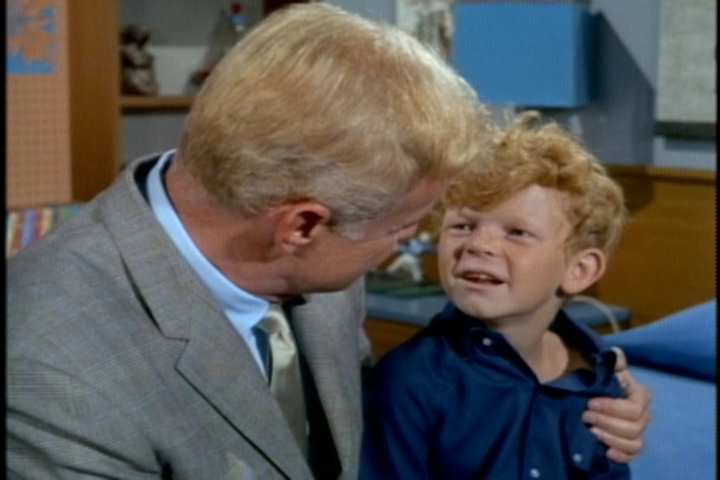
Leave It to Beaver‘s Ward Cleaver fulfilled traditional father roles as a provider and an authority figure. In almost every episode, however, he made a conscious effort to be a more warm and understanding father than his own father had been.

In the 1950s, when upper-middle-class parents like Ward and June Cleaver had a question about parenting, there was one man they turned to—Dr. Benjamin Spock, whose Common Sense Book of Baby and Child Care was published to instant acclaim in 1946. As a 1955 article in the Milwaukee Journal put it, “The words ‘Dr. Spock says,’ heard daily in households from coast to coast, have made him ‘everybody’s baby doctor.’”

Dr. Spock stressed a relaxed and tolerant attitude toward children and encouraged parents to enjoy their children.

As years passed and new editions of the book appeared, Dr. Spock increased his focus on the father’s role in parenting, but even the earliest edition encouraged fathers to play a more active and positive role than their own fathers did.

In the early editions of his book, Dr. Spock discouraged spanking, although he stopped short of condemning the practice entirely.

As a 1998 Baltimore Sun article assessing Dr. Spock’s legacy stated: “It can be argued that Dr. Spock, more than anyone, sparked a revolution in how children were raised, turning baby-boom parents away from the strict discipline and prudish standards of their own parents and grandparents in favor of a more flexible approach that stresses plenty of love, caring and attention for children.”

Ward’s Parenting Journey

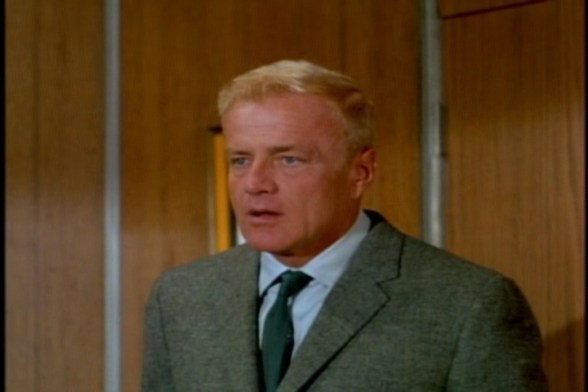
Hugh Beaumont was an ordained minister; this background might have helped him create his authoritative but compassionate portrayal of Ward.

Hugh Beaumont was an ordained minister; this background might have helped him create his authoritative but compassionate portrayal of Ward.

The words Leave It to Beaver have become a descriptive term for retrograde, sexist images of American life. It’s ironic, then, that the program actually shows a man who is working hard to become a “modern” father.

In a classic first-season episode, “The Haircut,” Ward and June discover that Beaver cut his own hair—badly—after losing his haircut money. Ward’s reaction is typical for the series:

Ward: “Boy, when I was a kid, my father would have whaled the tar out of me…Don’t worry, I’m not going to resort to physical violence. I’m tempted, though.”

Again and again, Ward rises above the temptation to discipline the boys the way he got disciplined. As other episodes show, he wants to have a warm relationship with his boys, even if he doesn’t always know how to build that relationship.

Take the first season episode “The Perfect Father,” for example. Ward grows increasingly distressed as Wally and the Beav spend all their time at the Dennisons’ house, where Mr. Dennison has installed a “regulation” basketball hoop.

Soon Ward is installing his own hoop and spending time with the boys and their friends as they play basketball. His action backfires, however, when his overbearing presence drives the neighborhood kids away.

This is certainly a departure from the all-wise, “father knows best” image presented in other early family comedies. Only when Ward runs into Mr. Dennison, and gets some advice from that more experienced father, does he realize his mistake.

Mr. Dennison: “If you ask me, the secret of getting close to your kids is to know when to stay away from them.”

In the moving second-season episode “Most Interesting Character,” we get a glimpse of Ward through Beaver’s eyes and see that Ward is succeeding in his efforts to be an involved and supportive father.

After struggling to make his father seem interesting for a school composition, and making a foray into fiction, Beaver decides to write the truth:

“He does not have an interesting job. He just works hard and takes care of all of us. He never shot things in Africa or saved anybody that was drowning, but that’s all right with me because when I am sick, he brings me ice cream, and when I tell him things or ask things, he always listens to me, and he gives up a whole Saturday to make junk with me in the garage. He may not be interesting to you, or someone else, because he’s not your father, just mine.”

Other Thoughts About Leave It to Beaver

Leave It to Beaver aired from 1957 to 1963. When CBS cancelled the show after two seasons, ABC picked it up.

Leave It to Beaver aired from 1957 to 1963. When CBS cancelled the show after two seasons, ABC picked it up.

Watching Beaver episodes in preparation for this blog post reminded what an enjoyable show this is. While the Cleavers are rather bland characters, Mosher and Connelly surround them with a hilarious collection of kids and adults, each believably annoying in his or her own way—from know-it-all Judy, whose mother was apparently one of the first helicopter parents—she threatened to call the school and complain if Judy didn’t pass her school orchestra audition—to overbearing braggart Fred Rutherford, to the ultimate in two-faced trouble-makers, Eddie Haskell.

The writers also slip some great lines into their scripts. I loved the randomness of this comment from “Train Trip”:

Ward, on how the boys could amuse themselves in a train station: “Well, you could always watch a fat lady hit a kid.”

June: “Why would they do that?”

Ward: “I don’t know…but I’ve never been in a railroad station yet where there wasn’t a fat lady hitting a kid.”

(If you substitute Wal-Mart for railroad station, this observation still holds true.)

In the early episodes, even June could bring the snark, as in The Perfect Father:

Ward, while installing the basketball hoop: “I must have put up hundreds of these all over the South Pacific when I was in the Seabees.”

June: “Well…I guess we all contributed to victory in our own way.”

So, if you haven’t seen Leave It to Beaver for a while, be sure to catch it on Me-TV—you’re sure to find it rewarding.

And when you do watch it, keep an eye on Ward and his journey to modern fatherhood.


“This post is part of Me-TV’s Summer of Classic TV Blogathon hosted by the Classic TV Blog Association. Go to http://classic-tv-blog-assoc.blogspot.com) to view more posts in this blogathon. You can also go to http://metvnetwork.com to learn more about Me-TV and view its summer line-up of classic TV shows.”
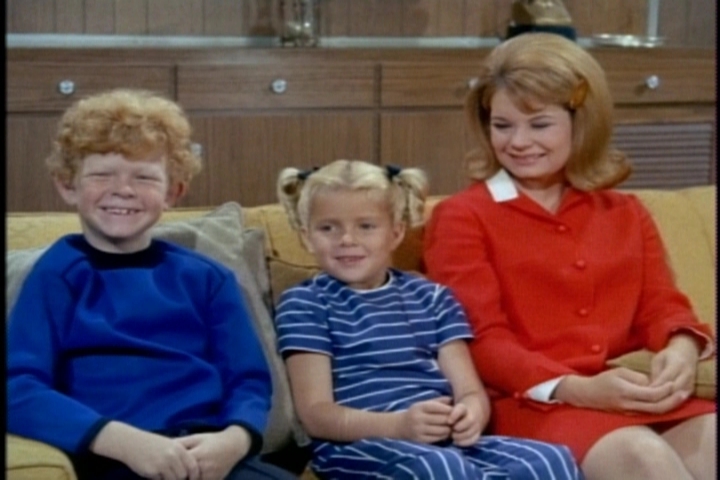
Family Affair Friday(ish): Season 2, Episode 10, “You Like Buffy Better,” 11/10/1967

403X403-SOCTVBLOGAttention classic TV fans: Don’t Miss Me-TV’s Summer of Classic TV Blogathon, starting July 15! All week long, a large collection of bloggers will be sharing their thoughts about great shows on Me-TV’s schedule, including That Girl, Bewitched, The Odd Couple, The Mary Tyler Moore Show, and many more. (Of course, I’m particularly interested in the bloggers who will be turning their attention to Family Affair.) I’ll be posting my entry, a look at Leave it to Beaver from Ward Cleaver’s perspective, on July 19.

Many thanks to the Classic TV Blog Association for hosting this event and to Me-TV for making so many classic shows available to viewers.

Now, on to Family Affair

Written by: Hannibal Coons (Seriously? Apparently so, although his real first name was Stanley.) and Harry Winkler. Directed by: Charles Barton.

This week’s episode opens as Uncle Bill prepares for a date, blissfully unaware of all the trouble that’s about to rain down on him.

That trouble begins innocently enough, when Jody requests help with a bridge he’s designing for school. Revealing that he’s learned his lesson about such projects, Bill first seeks assurance that parents are allowed to help.

As Jody and Bill talk engineering, Buffy barges in with exciting news--her dance studio has picked her to try out for a television role.

As Jody and Bill talk engineering, Buffy barges in with exciting news–her dance studio has picked her to try out for a television role.

Jody resents Buffy’s intrusion, while Buffy finds Uncle Bill less than enthralled with her news. (In fairness to him, it’s been established that he hates ballet.)

Neither kids has to worry about it for long, as Bill soon shoos them from the room in preparation for his date.

Buffy and Jody introduce themselves to the lady in question, who has some kind of tumbleweed attached to her head.

Buffy and Jody introduce themselves to the lady in question, who has some kind of tumbleweed attached to her head.

“At Uncle Bill’s age,” the kids observe, “men are just more interested in pretty ladies than in little kids.” Ouch.

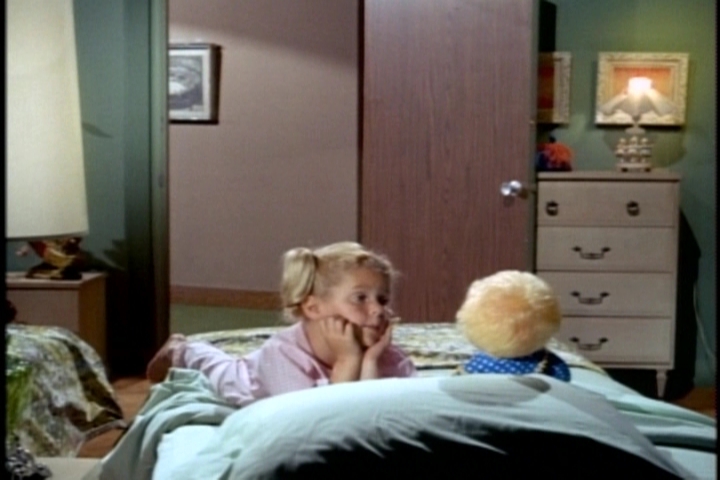
Later that night, Buffy confides her troubles to Mrs. Beasley.

Later that night, Buffy confides her troubles to Mrs. Beasley.

“I’m glad you’re not a man,” she tells the doll. “At least I have one friend.” Ouch again.
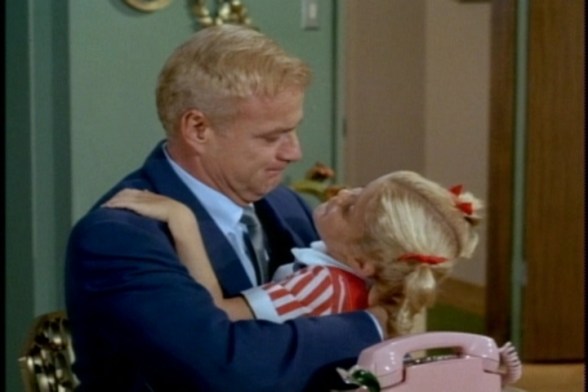
Cissy overhears Buffy’s comments and gets that concerned look on her face–that look usually bodes ill for Uncle Bill.

She waits up for him to return from his date and tells him that he needs to spend more time with Buffy.

She waits up for him to return from his date and tells him that he needs to spend more time with Buffy.

Uncle Bill agrees to do so, but when Cissy changes the subject to her latest boyfriend, Bill pleads exhaustion and heads for bed. Great–now all the kids are frustrated.

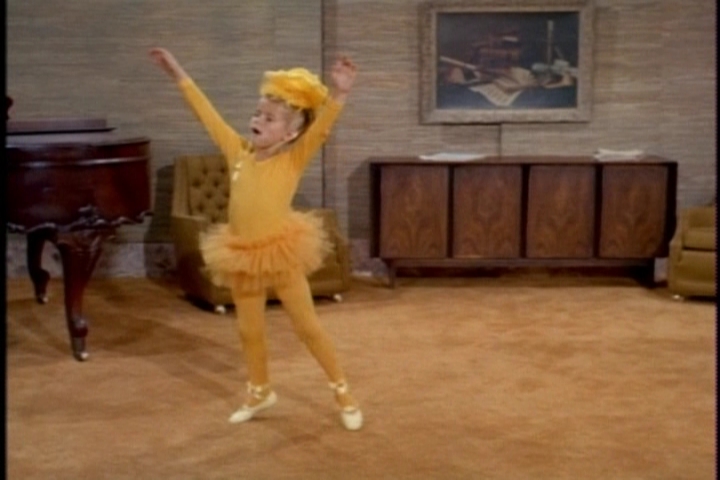
The next day, Bill makes time to talk with Buffy and to watch her "buttercup dance." But now Cissy, who was so concerned about her sister the night before, tries to monopolize Bill's attention for their delayed boyfriend discussion.

The next day, Bill makes time to talk with Buffy and to watch her “buttercup dance.” But now Cissy, who was so concerned about her sister the night before, tries to monopolize Bill’s attention for their delayed boyfriend discussion.

By the way, doesn’t the girls’ room look much more spacious than usual?

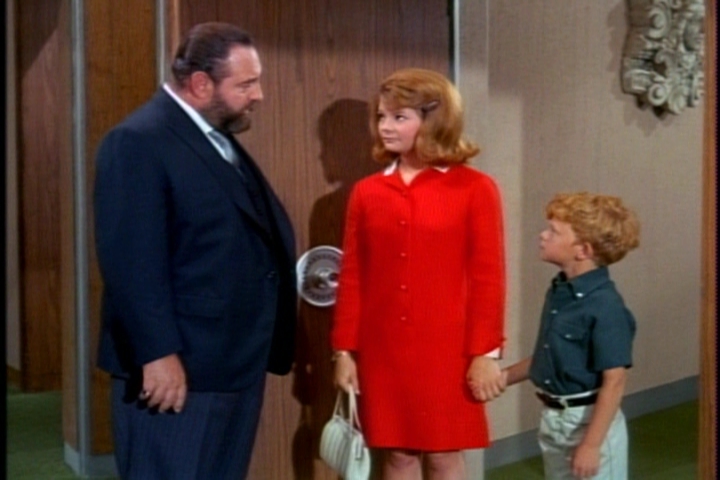
Soon, Jody enters with a request for more bridge assistance, but Bill keeps his focus on Buffy, especially when he learns that the TV producer she’ll be auditioning for is a friend of his.

VTS_01_5.VOB_000372111

Bill calls his friend to put in a good word for Buffy. (Oh, that’s why the room looked so spacious–the desk had temporarily disappeared, as desks are wont to do.)

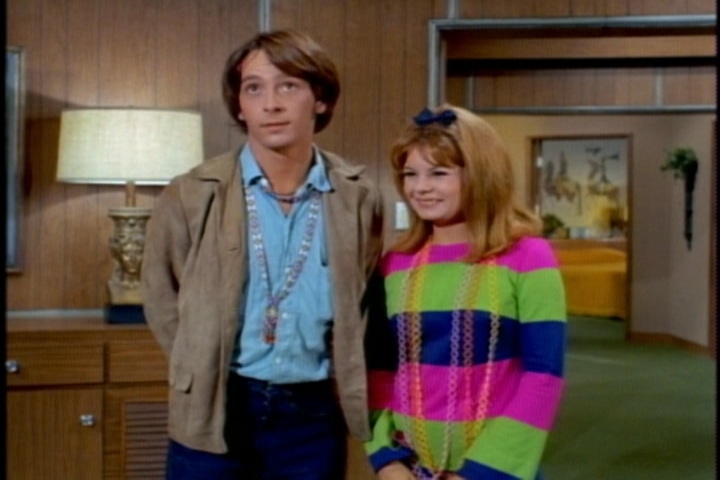
At school the next day, Ronny Bartlett questions why he hasn’t been able to meet Uncle Bill yet.

Teenage boys are always so anxious to meet their girlfriends' parents.

Teenage boys are always so anxious to meet their girlfriends’ parents.

Cissy promises that she’ll make the introduction after school, but it turns out to be a chaotic afternoon at the Davis apartment.

In Bill’s absence, French has tried to help Jody with the bridge and made a royal mess of it.

Bill finds Jody sulking and refusing to work on the project at all.

Bill finds Jody sulking and refusing to work on the project at all.

Before he can offer much help, Bill has another obligation–taking Buffy to her audition.

VTS_01_5.VOB_000763903

Buffy gives an underwhelming performance for the TV producer, who has to explain to Bill that she’s not ready for prime time.

Bill takes a dejected Buffy home, where he finds an equally dejected Jody, as well as Cissy waiting with a nervous Ronny.

VTS_01_5.VOB_000823762

Random mystery: Buffy both leaves the apartment and returns to it in her leotard, so what’s in that awesome flowered suitcase?

Cissy springs upon Bill the news that she and Ronny are going steady and planning marriage in a few years. Now, from my study of old teen advice books, I know that parents considered “going steady” a fast train to nookie-ville, which explains Bill’s harsh reaction.

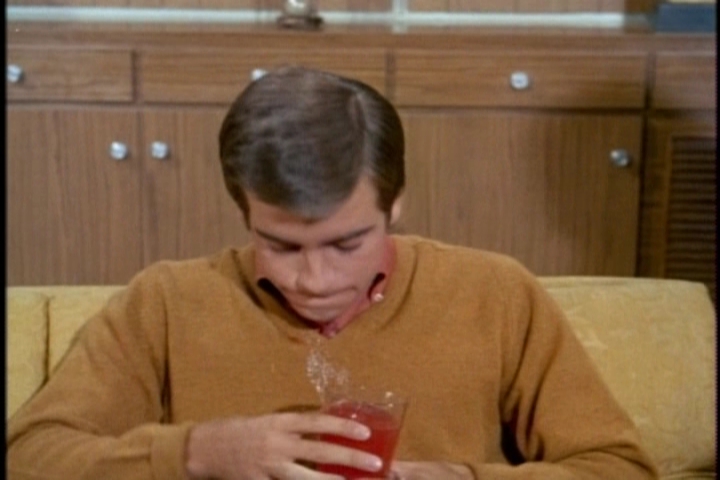
By the time Bill finishes his man-to-man talk with Ronny, fruit punch is spilling, the boy's voice is cracking, and the "going steady" is over.

By the time Bill finishes his man-to-man talk with Ronny, fruit punch is spilling, the boy’s voice is cracking, and the “going steady” is over.

Cissy takes this development in the calm fashion that any teenage girl would.

"You've ruined my life!" she screeches. "I love Ronny!"

“You’ve ruined my life!” she screeches. “I love Ronny!”

By this time, Uncle Bill feels like the challenges of parenting have defeated him (and I’m feeling glad that I have only one child).

French, however, raises an interesting possibility--maybe parenting isn't the problem. Maybe the kids are acting like little jerks.

French, however, raises an interesting possibility–maybe parenting isn’t the problem. Maybe the kids are acting like little jerks.

Bill seizes on this theory with enthusiasm and calls all the kids into the living for for a talking-to.

Unlike real kids, the Davis kids accept that they've been making unreasonable demands on Bill's attention, and everyone ends up happy.

Unlike real kids, the Davis kids accept that they’ve been making unreasonable demands on Bill’s attention, and everyone ends up happy.

Commentary

These conflicts would arise in a real family situation, especially when the time Uncle Bill spends at home is so limited. I began the episode feeling sorry for the kids and ended it feeling sorry for Bill. It’s nice to see the kids have to take responsibility for their own behavior at the end.

Guest Cast

Ronny Bartlett: Gregg Fedderson. Miss Peterson: Olga Kaya. Ballet Mother: Katey Barrett. Alicia: Kellie Flanagan. Secretary: Charlotte Askins. Eric Langley: Del Moore.

This is the second appearance by Flanagan, best known for the TV version of The Ghost and Mrs. Muir. Oh, Me-TV--any chance you could resurrect that show?

This is the second appearance by Flanagan, best known for the TV version of The Ghost and Mrs. Muir. Oh, Me-TV–any chance you could resurrect that show?

Moore’s career included a regular role on Bachelor Father–a show with a premise similar to Family Affair‘s–and a part in 1963’s The Nutty Professor.

Fedderson, the son of executive producer Don Fedderson, would make many more appearances as Cissy's date, usually named Gregg. He was the brother of Petticoat Junction's Mike Minor.

Fedderson, the son of executive producer Don Fedderson, would make many more appearances as Cissy’s date, usually named Gregg. He was the brother of Petticoat Junction‘s Mike Minor.

Fun Facts

Uncle Bill once built a bridge over the Amazon.

Notable Quotes

“I do it better with my costume on–all fluffy and buttercuppy.”–Buffy, practicing her buttercup dance.

Family Affair Friday(ish): Season 2, Episode 9, “Take Me Out of the Ballgame,” 11/13/1967

I know, I know, it’s not even close to Friday this time. My attention is currently a bit divided when it comes to classic TV, for an exciting reason that I will share with you later this week!

Written by: Henry Garson and Edmund Beloin. Directed by: Charles Barton.

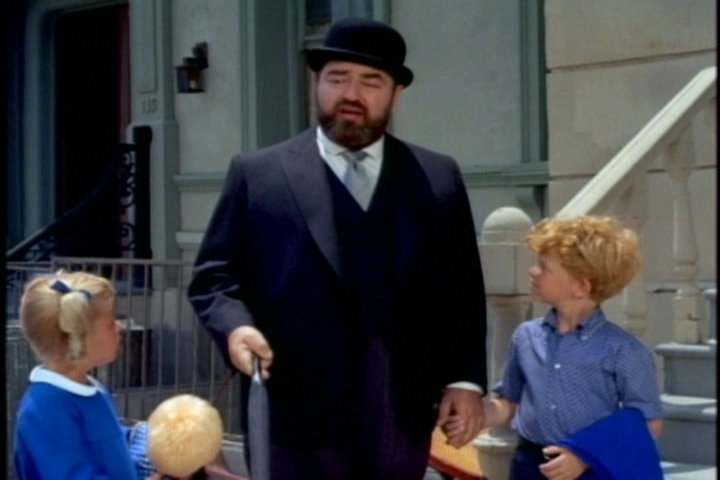
This week’s episode opens with Buffy, Jody, and Mr. French walking down a typical mid-town Manhattan street.

Actually, it appears to be an alley, which backs up to a huge, windowless wall.

Actually, it appears to be an alley, which backs up to a huge, windowless wall. Only in New York!

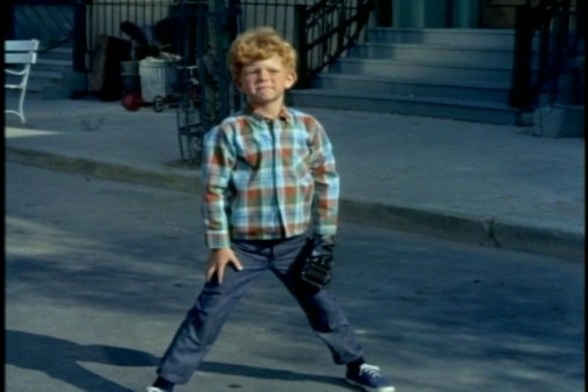
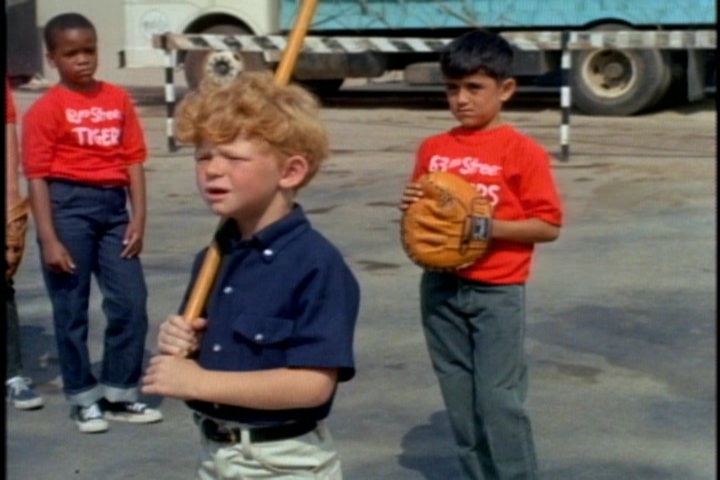
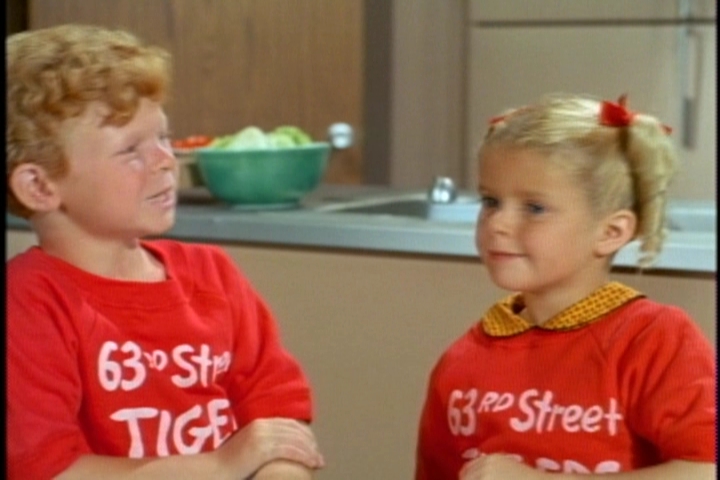
Stickball practice is in progress, and an errant ball knocks off Mr. French’s bowler. When a kid named Sam comes to retrieve the ball, Jody becomes enraptured with Sam’s team sweatshirt.

To Sam's credit, he doesn't say, "Get your hands off me, kid." Instead, he invites Jody to try out for the 63rd Street Tigers.

To Sam’s credit, he doesn’t say, “Get your hands off me, kid.” Instead, he invites Jody to try out for the 63rd Street Tigers.

French gives Jody’s plan to try out a ringing endorsement:

"If your uncle wishes Jody to play with ? amid sewer covers and garbage can lids, I shall abide by his wishes, however reluctantly.

“If your uncle wishes Jody to play with broomsticks amid sewage covers and garbage can lids, I shall abide by his wishes, however reluctantly.”

Meanwhile, at home, Bill is talking business on the phone while Cissy reviews a teen magazine. When the twins return, Jody prepares to secure Uncle Bill’s permission for a stickball try-out, while Cissy and Buffy discuss fashion ideas for Mrs. Beasley.

Cissy observes that, when it comes to fashion, "Paris is out. London is in." This is a surprisingly accurate assessment from someone whose magazine apparently dates from the 1940s.

Cissy observes that, when it comes to fashion, “Paris is out. London is in.” This is a surprisingly accurate assessment from someone whose magazine apparently dates from the 1940s.

This brief exchange serves to remind us that Buffy is a GIRL. You’ll need to keep this fact in mind to appreciate the full “hilarity” of what’s to come.

Jody finds that Uncle Bill is enthusiastic about his stickball plan.

It helps that Jody is trying out for second base, a position that Bill desperately sought throughout his youth, to no avail. (He couldn't go to his left.)

It helps that Jody is trying out for second base, a position that Bill desperately sought throughout his youth, to no avail. (He couldn’t go to his left.)

Bill’s eager to give Jody some tips, so Jody grabs a broomstick from the kitchen. Oh, dear. If classic TV has taught me anything, its that you shouldn’t play ball in the house.

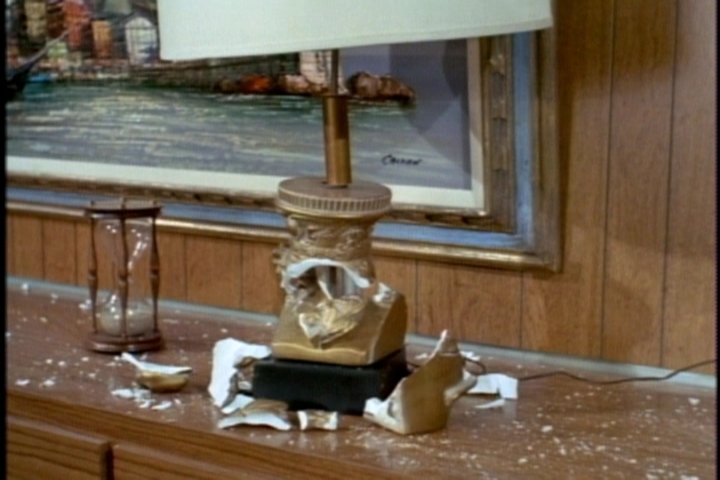
See? This is why we can't have nice things. Or even things like that.

See? This is why we can’t have nice things. Or even things like that.

Jody’s initial try-out doesn’t go any better than the living room practice session.

As French describes it later to Bill: "If the expression 'not so hot' means not hitting the ball on 14 consecutive occasions then he was indeed, sir, not so hot."

As French describes it later to Bill: “If the expression ‘not so hot’ means not hitting the ball on 14 consecutive occasions then he was indeed, sir, not so hot.”

Bill takes Jody to the park for more intensive practice.

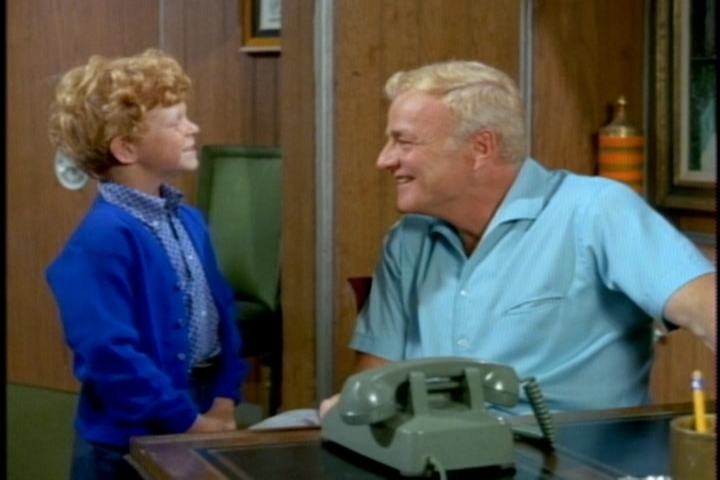
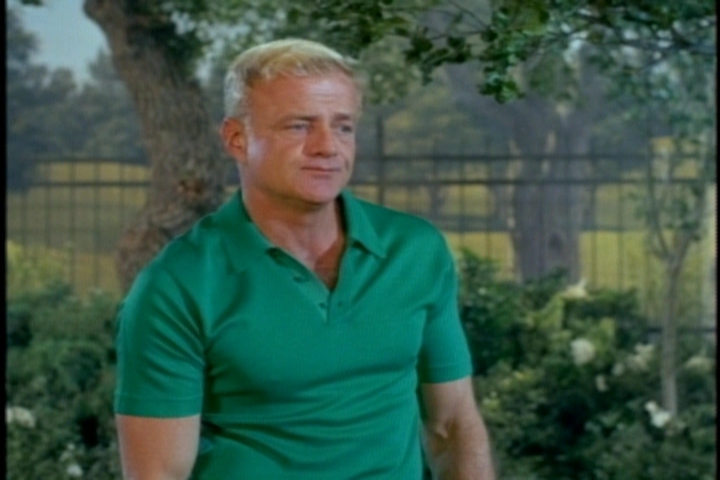
This picture doesn't serve any purpose, but I'm liking the way Bill looks in that shirt. Rowr.

This picture doesn’t serve any purpose, but I’m liking the way Bill looks in that shirt. Rowr.

Jody’s skills don’t improve, but one interesting thing does happen in the park. Buffy retrieves an errant pitch from Jody and throws the ball back with startling accuracy.

Then she goes back to cutting out fabric for doll clothes--because she's a GIRL. Are you starting to sense the comical contrast here?

Then she goes back to cutting out fabric for doll clothes–because she’s a GIRL. Are you starting to sense the comical contrast here?

Jody’s second try-out goes no better than his first.

VTS_01_4.VOB_000321397

Buffy surprises the Tigers, though, by catching a ball that comes her way.

They insist on giving her an immediate try-out and observe that she’s a powerful hitter, too.

"That's my sister," Jody says proudly. What a good-natured kid.

“That’s my sister,” Jody says proudly. What a good-natured kid.

Both twins return to the Davis apartment wearing Tigers sweatshirts.

Cissy assumes that Buffy is a team mascot and Jody is a player, but she soon learns that Buffy is an outfielder and Jody has been given jobs like bat boy and water boy.

Cissy assumes that Buffy is a team mascot and Jody is a player, but she soon learns that Buffy is an outfielder and Jody has been given jobs like bat boy and water boy.

French is just confused by all the baseball terminology, and Bill is out of town, so he can’t weigh in on the latest developments. He returns in the midst of the Tigers’ next game and suffers a series of bitter shocks about the twins’ respective team roles.

These stickball games attract a fairly large crowd of nattily dressed city folk.

Random aside: These stickball games attract a large crowd of nattily dressed city folk.

Bill assumes that Jody feels humiliated about his position with the team. He sneaks off, hoping Jody won’t realize he was there to witness this “disgrace.”

VTS_01_4.VOB_000885600

Talking to Jody later, he realizes that the boy is happy with the role he is playing and considers himself important to the team.

From the beginning, Jody only seemed to want a team sweatshirt, anyway.

Meanwhile, Buffy asks if she can skip ball practice the next day.

She's attending a tea party later in the day and can't take the risk of mussing her hair.

She’s attending a tea party later in the day and can’t take the risk of mussing her hair.

See, she’s a GIRL! A GIRL has a talent for sports! I hope you’re not hurting yourself by laughing too hard.

Buffy needn’t worry anyway–a category 5 hurricane couldn’t dislodge those pigtails.

Commentary

I love the way Jody has no problem with Buffy’s success. Buffy is equally supportive of Jody throughout the episode.

Uncle Bill acts like a tool here, but at least he realizes quickly that he’s projecting his own feelings onto Jody. It would have been nice if he’d spared a word of praise for Buffy’s ability. At least the cab driver and the police officer appreciated her talent.

This officer is a Family Affair rarity--an African American who speaks! And more than one line!

This officer is a Family Affair rarity–an African American who speaks! And more than one line!

One random comment: I just love when Jody calls his sister “Buff.”

If you want to learn more about stickball, here is an interesting article about its decline.

Guest Cast

Sam: David Brandon. Officer Wilson: Bob DoQui. Cab Driver: Johnny Silver. Randy: Stephen Liss. Roberto: Miguel Monsalve. Jose: Rudy Battaglia.

This is Brandon’s second appearance and the first of several by Monsalve. DoQui, who died in 2008, worked steadily in TV into the 1990s. He also appeared in many films, including Nashville and the Robocop movies. Silver appeared in the movie Guys and Dolls and in many episodes of The Dick Van Dyke Show. He was also Dr. Blinkey on H.R. Pufnstuf. His last TV appearance was on a Seinfeld episode. He died in 2003.

Fun Facts

Buffy is an outfielder. Uncle Bill was a good hitter, but when he threw, he couldn’t go to his left.

Notable Quotes

“Oh, for the playing fields of Eton!”–French

(French doesn’t really have a high enough social standing to have attended Eton, does he?)

VTS_01_4.VOB_000485287

One other question: Is a “Play Street” really a thing? (Note the sign.)

Spin Again Sunday: The Senior Prom Game (Circa 1950s)

senior prom box

Senior Prom–the game for girls whose parents were too cheap to spring for Barbie’s Queen of the Prom game.

In this week’s installment of Spin Again Sunday, we’re going to experience “all the thrills of a social season”–or at least as many of those thrills as a poorly made board game can provide.

This Week’s Game: The Senior Prom Game.

Copyright Date: Unknown, but the game appears to date from the 1950s.

Manufacturer: Warren Paper Products Company of Lafayette, Indiana. The company used the designation “Built-Rite” on their games (and jigsaw puzzles). If this game is any indication, they used the label ironically.

Object: To attain the status of prom queen.

Recommended Ages: 7 to 12.

Game Board: Actually, “board” is a bit of an overstatement for what is a flimsy piece of cardboard. In an unusual move, the manufacturers printed the game directions right on the board. I’m sure they did this to save money, but it does eliminate the possibility of losing the directions.

senior prom board

Game Box: The graphics are cute, with prom-goers depicted against a star-filled sky. The fact that the box brags about the “Large 15 x 18 Playing Board” may be be a hint that there’s not much here to brag about.

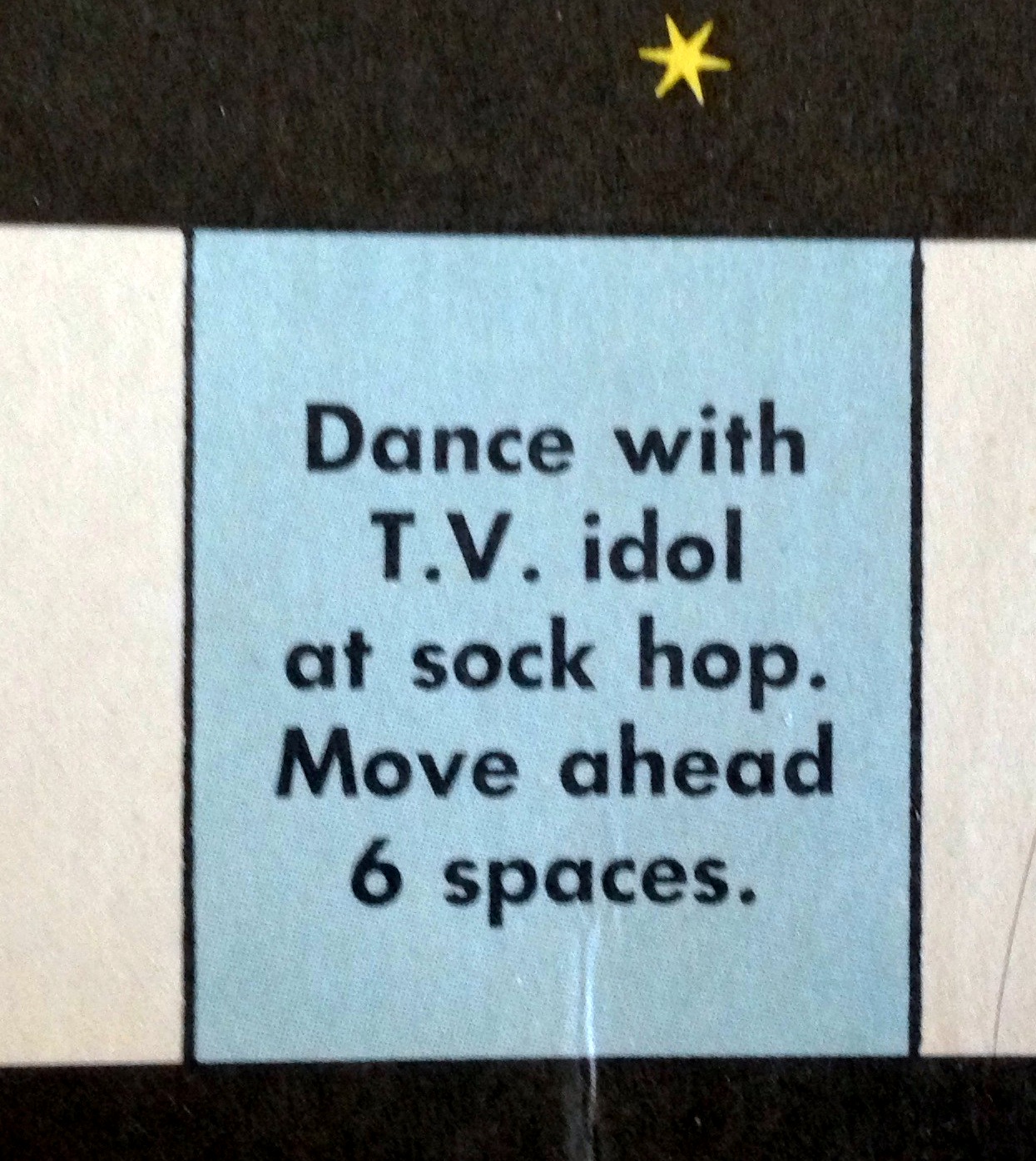
I can see why this would be worth a 6-space movement. Why would a "T.V. idol" be at your sock hop?

I can see why this would be worth a 6-space movement. Why would a “T.V. idol” be at your sock hop?

Game Markers: Square pieces of cardboard folded and inserted into round pieces of cardboard. These are supposed to represent crowns. Uh-huh.

Crowns? Really?

Crowns? Really?

Other Game Pieces: The colorful spinner has a metal arrow. Players try to collect cardboard circles marked with the words Date, Formal, Grades, or Dance.

IMG_2192

The cards players must collect.

Game Play: Players move along the board and try to collect the cardboard circles mentioned above. (I give the manufacturers credit for making good grades a pre-requisite for prom queen coronation.) With those cardboard circles in hand, a player can move to the inside track and try to land on a “Selected Candidate for Prom Queen” space. Each candidate places her marker on a numbered star; the first to make it that far and spin the number that matches her star space wins.

You can see more Warren “Built-Rite” games at the very cool Board Game Geek web site.

Other Spin Again Sunday posts you might enjoy:

What Shall I Be? (1972)

Barbie Miss Lively Livin’ (1970)

The Bride Game (1971)

Family Affair Friday(ish): Season 2, Episode 8, “The Toy Box,” 11/6/1967

Written by: Arthur Marx. Directed by: Charles Barton.

As we open, Bill is getting cozy with his latest squeeze in the Davis living room, when Cissy’s date for the evening shows up.

Oh, dear.

Oh, dear.

The boy’s appearance startles Bill, who is even more surprised to see what Cissy is wearing.

Personally, I think she looks cute--like a Twist n Turn Barbie.

Personally, I think she looks cute–like a Twist n Turn Barbie.

Bill, however, has a different reaction.

Bill, however, has a different reaction.

Coming home from work the next day, Bill confronts another parenting challenge. It seems the twins have been leaving their toys strewn about the house.

Like Jody's skateboard, for instance.

Like Jody’s skateboard, for instance.

Bill decides to institute a system he encountered in the Army–the “slob box.” Toys that aren’t put away will be confiscated, put in a box, and donated to charity.

The box starts filling up pretty quickly. (That toy stove is cute.)

The box starts filling up pretty quickly. (That toy stove is cute.)

Meanwhile, Bill shows Cissy a magazine picture of his girlfriend, a top model, and talks obliquely about the Japanese principle of shibui, or simple elegance.

Cissy is appropriately mystified.

Cissy is appropriately mystified.

After staring at the magazine picture for a while, though, she seems to get the point.

Uncle Bill wants her to dress more like a middle-aged woman!

Uncle Bill wants her to dress more like a middle-aged woman!

Ever compliant, Cissy asks French to help her lengthen her skirts. Uncle Bill is thrilled with her new attitude and even asks his girlfriend to take Cissy shopping for new clothes, presumably of the matronly variety. (Bill’s obsession with Cissy’s wardrobe started to seem a little weird around this point.)

Fully believing that Cissy has come to her senses, Bill returns home from work to this debauchery:

VTS_01_3.VOB_000096910

VTS_01_3.VOB_000098278

Honestly, it is pretty shocking.

Taken aback, Bill is curt to the point of rudeness with Cissy’s friends.

I'm not sure why he's so upset about Cissy's dress. It's the boys' outfits that are truly disturbing.

I’m not sure why he’s so upset about Cissy’s dress. It’s the boys’ outfits that are truly disturbing.

After her friends leave, Cissy calls Uncle Bill out for judging them unfairly.

He admits that he tries never to judge people by appearances and apologizes for having done so. I'm glad--I wouldn't want to lose respect for Uncle Bill. (By the way, that mural in his bedroom is really something, isn't it?)

He admits that he usually tries to avoid judging people by appearances and apologizes for having done so. What a relief–I wouldn’t want to lose respect for Uncle Bill. (By the way, that mural in his bedroom is really something, isn’t it?)

He does make Cissy to wear non-mod clothes every now and then, though.

Meanwhile, the twins have lost so many toys to the box that they're actually turning to books for entertainment.

Meanwhile, the twins have lost so many toys to the box that they’re actually turning to books for entertainment.

Well, at least Buffy still has Mrs. Beasley.

VTS_01_3.VOB_000464532

The next day, she is having a bridge party with her doll, when French calls the kids to wash up for dinner.

As they scramble, the twins accidentally brush against Mrs. Beasley.

Nooooooooooo!

Nooooooooooo!

When French finds the doll on the floor, he appreciates enormity of this moment.

To his credit, his first instinct is to sneak the doll back onto the chair, but he's interrupted by Bill and the kids entering the room.

To his credit, his first instinct is to sneak the doll back onto the chair, but he’s interrupted by Bill and the kids entering the room.

It’s all up to Bill now–is Mrs. Beasley a goner?

To Buffy's relief, Bill decides that the toy box has outlived its usefulness.

To Buffy’s relief, Bill decides that the toy box has outlived its usefulness.

From now on, he will just count on the twins to remember to pick up their toys. (As a parent, I am absolutely sure that this approach will work.)

Commentary

This is a rather slight episode, but the mod scenes make it entertaining.

Guest Cast

Joan Wilson: Cay Forester. Ronny: Dennis Olivieri.

Dennis Olivieri worked steadily throughout the sixties on television, sometimes under the name Dennis Joel. He had a regular role on an interesting-sounding 1969 series called The New People.

Dennis Olivieri worked steadily throughout the sixties on television, sometimes under the name Dennis Joel. He had a regular role on an interesting-sounding 1969 series called The New People.

Inconsistency Alert

In the bridge party scene, Mrs. Beasley moves under her own power.

In the wider shots, she's perched on the edge of the chair.

In the wider shots, she’s perched on the edge of the chair.

In the tighter shots, she's leaning back.

In the tighter shots, she’s leaning back.

Creepy.

Weird Words of Wisdom: Clean, Humorous, and Sprightly Edition

Weird Words of Wisdom is back, bringing you more sage advice from vintage teenage advice manuals!

“Have the greatest of respect for girls. Some will lose their heads and be foolish at times. Retain your poise and judgment and keep them in their place.”

Advice for Boys, 1947 (1954 printing)
By the Rev. T.C. Siekmann

About This Book and Its Author: Advice for Boys offers exactly what its title promises. The Reverend Theodore C. Siekmann was a Catholic priest, so much of the book deals with specifically Catholic topics—the Mass, the rosary, and sainthood. Fortunately for us, Siekmann includes a smattering of weird advice on more typical teenage preoccupations.

I haven’t been able to find much information about the Rev. Siekmann. He served at St. Joseph Church in Prairie Du Rocher, Illinois, from 1956 to 1968, and at St. Luke’s in Belleville, Illinois, from 1968 until retirement in 1982. He also did missionary work in Guatemala.

His book’s jacket indicates that he taught physical education and served as a sports coach as well as a religious educator. This background may explain his touching faith in athletics’ ability to keep people out of trouble. (Ask Aaron Hernandez how that’s working for him.)

Siekmann also wrote a book for girls. I haven’t been able to get my hands on it, but it sounds awesome.

Quotes from Advice for Boys

“If you are not happy, then something is wrong with you.”

“Athletics is good, very good…When you are all absorbed in a game, you think of nothing else, you want nothing else. Evil can wait.”

“Say a word of appreciation to your mother occasionally. Compliment her on her pie or cake. Praise the roast. Notice and mention the neat ironing she does for you.”

“At all times there is a supply of current slang expressions that are clean, humorous, and sprightly. A sprinkling of these innocent phrases will add zest to your conversation, without giving offense.”

“One girl among your present acquaintances may be yours till death. At any rate, she will probably be someone’s wife. Treat her even now as God’s noble gift to man, as a mother-to-be. Protect her virtue; guard her innocence. Keep her good for her future husband, whether it is you or Jack or Jim.”

“Personality may be summarized by three words: truth, cleanliness, and a smile.”

“When a room is cold, do not complain. Suffer it in a spirit of mortification. When the summer is hot and humid, smile and bear it for God. When you do not like food, do not complain.”

“Raising chickens is a fine hobby, and supplies fresh eggs for the table. If the location of your home permits, you might raise rabbits, pheasants or foxes, or other fur-bearing animals. All this will be at a considerable profit, in addition to the wholesome enjoyment which you will derive from your activity.”

On becoming a priest: “In short, almost all that you need to do is to enter a seminary and be willing to do what you are told.”

Other Weird Words of Wisdom posts you might enjoy:

Mugging, Smooching, and Flinging the Woo Edition

Embracing our Nature and Destiny Edition

Big Splendid Manhood Edition

Family Affair Friday(ish): Season 2, Episode 7, “Fat, Fat, The Water Rat,” 10/23/1967

Written by: Phil Davis. Directed by: Charles Barton.

My favorite episode! This one is a perfect mix of the silliness and sweetness that is Family Affair.

As we look in on the Davis family, Buffy is getting ready to go to dance class. French, rhapsodizing about English dancing-school girls in organdy dresses and patent leather shoes, criticizes the jeans-and-turtleneck look Buffy’s got going on.

VTS_01_1.VOB_000086853

It doesn’t seem like an ideal outfit for dancing, but in the end it doesn’t matter–Buffy gets dropped off at an empty studio, only to learn that her lesson is cancelled.

Buffy goes outside to wait for Mr French, who’s due to return in an hour.

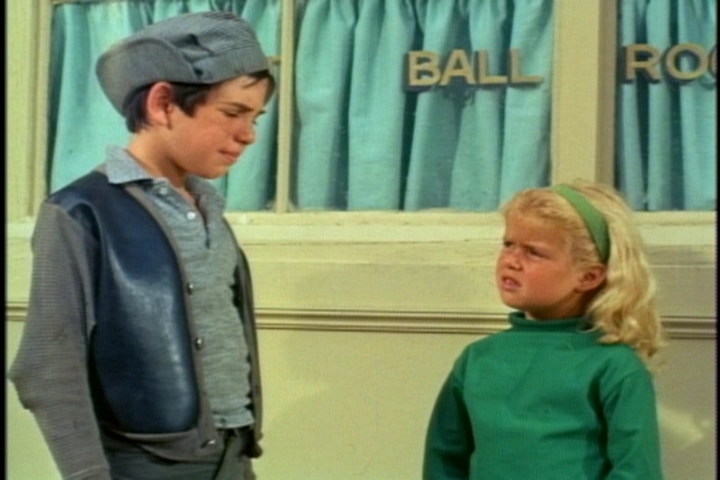
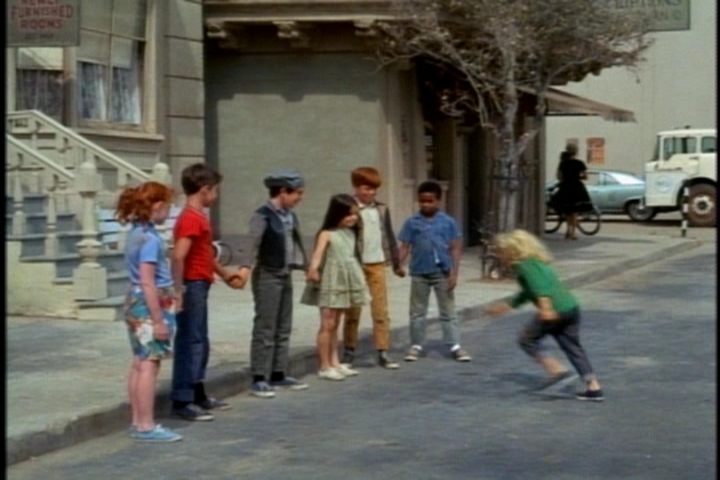
That's when we learn that Buffy's dancing school is located on the set of a 1930s Dead End Kids movie.

That’s when we learn that Buffy’s dancing school is located on the set of a Dead End Kids movie.

“Fat, fat, the water rat, fifty bullets in his hat,” group leader Mike chants as the kids march down the sidewalk. Googling suggests that this is a real schoolyard rhyme, dating back to at least the 1930s.

VTS_01_1.VOB_000149315

Mike’s wardrobe also dates back to the 1930s.

Buffy takes an  immediate liking to Mike and the gang. When they ask her to play, she jumps at the chance.

The producers want to make sure we understand that these kids are poor--so poor that Mike's sister Katie is wearing a dress about three sizes too small.

The producers want to make sure we understand that these kids are poor–so poor that Mike’s sister Katie is wearing a dress about three sizes too small.

Meanwhile, back at the Davis apartment…

Jody is getting a lecture from Mr. French on the inappropriateness of "cavorting."

…Jody is getting a lecture from Mr. French on the inappropriateness of “cavorting.”

No wonder Buffy finds the tenement kids’ messy, active playing so invigorating. She also gets a chance to enjoy a new snack–bread and butt-ah.

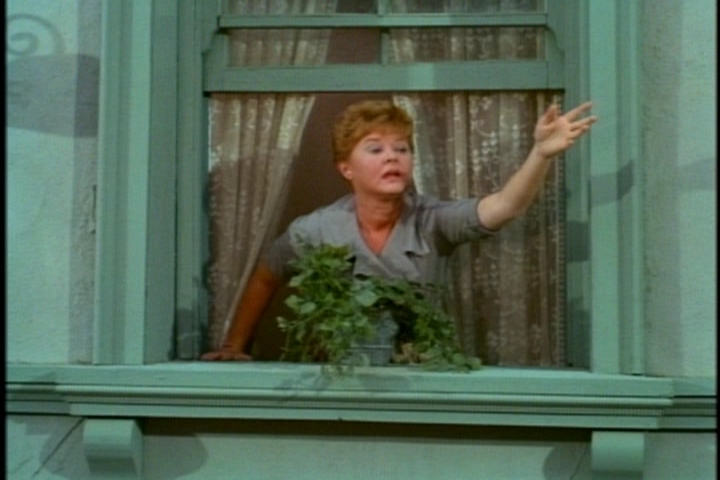
Mike's mother lovingly throws this food to her children from the window.

Mike’s mother lovingly flings this food to her children from the window.

There's only one problem on the horizon: Mike makes it clear that he hates "fancy kids."

There’s only one problem on the horizon: Mike makes it clear that he hates “fancy kids.” By this, apparently, he means kids who wear clothes that aren’t falling apart.

(Notice that by the 1960s, American TV had embraced “diversity” by including one African-American person in any large group scene. This person would never actually get to talk, of course.)

Play time ends when French shows up.

Now, having a British butler come to pick you up is pretty fancy. Luckily, the other kids don't see Mr. French's arrival.

Having a British butler come to pick you up is pretty fancy. Luckily, the other kids don’t see Mr. French’s arrival.

French is appalled at Buffy’s dirty appearance.

At home, he sends Buffy straight to the bath tub and her clothes to the incinerator.

At home, he sends Buffy straight to the bath tub and her clothes to the incinerator.

In the palatial Davis bathroom, Buffy daydreams about the wonderful time she had playing with Mike and friends. When Uncle Bill comes in to talk to her, she eagerly tells him about her adventures.

This scene looks a little squicky by modern standards.

Having Uncle Bill present during Buffy’s bath is a little squicky by modern standards.

She wants to play with the kids again, and Bill supports her, even through French is certain to disapprove, and Mike won’t like her if she shows up in her normal “fancy clothes.”

Now, Uncle Bill could say that he makes the parenting decisions for the kids, and that Mr. French, as his employee, must accept that. He could say that Buffy should wear comfortable play clothes, and if Mike doesn’t accept her because of her clothes, he’s not a real friend.

Instead, he decides that he and Buffy should both sneak behind French’s back and pose as common folk in Mike’s neighborhood.

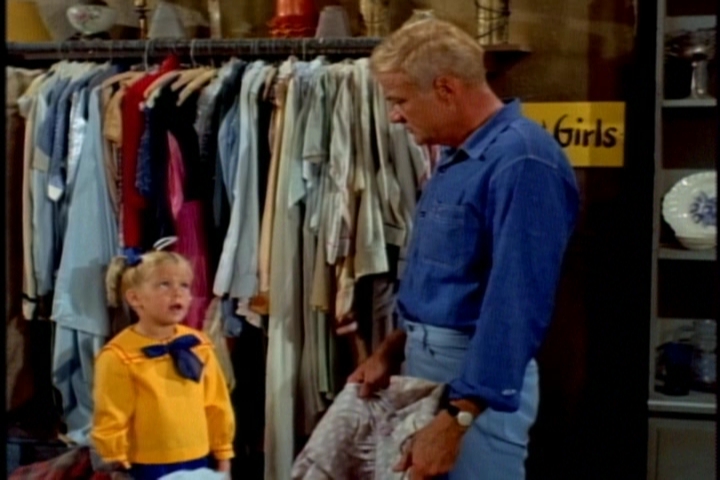
Uncle Bill dons his work clothes and takes Buffy to a rummage sale, where she finds a truly wretched outfit.

Uncle Bill dons his work clothes and takes Buffy to a rummage sale, where she finds a truly wretched outfit.

VTS_01_1.VOB_000624757

Of course, her original outfit was wretched, too, in it’s own way.

(Note that while she was in the dressing room, she changed her own hairstyle. Impressive.)

As they leave the rummage sale, Bill donates Buffy’s original outfit to charity. Nice gesture, but won’t that make it hard to sneak back into the apartment later? And won’t French notice an outfit is missing?

Oh, well, the important thing is that Buffy gets have fun...by beating on the backs of poor youths.

Oh, well, the important thing is that Buffy gets have fun…by beating on the backs of poor youths.

Uncle Bill also makes a new friend, Mike’s father.

Uncle Bill meets Uncle Fester!

Uncle Bill meets Uncle Fester!

Mr. Callahan assumes Bill is down on his luck, and Bill admits to being “between jobs.” I suppose it seems better than saying, “Funny story: I’m actually rich, but my niece likes playing with poor kids!”

VTS_01_1.VOB_000774673

Uncle Bill and Buffy even get to sample that well known slum delicacy, bread and sug-ah. (The Callahans are out of butt-ah).

At home, Bill and Buffy sneak back in, then make plans to visit the Callahans again. When they do, Bill learns that the neighbors are having a rent party for the Callahans, who can’t otherwise afford to pay their rent. The Callahans do, however, have some old dresses that their daughter Katie has outgrown, and Mr. Callahan generously offers them to Bill for Buffy.

Major cringe.

Major cringe.

Can this situation get any more awkward?

Yes. Yes it can.

Yes. Yes it can.

French has tracked Bill down with urgent messages from someone in Brazil and an under-secretary of state in Washington, D.C.

("Slumming is such a good sport," he sneers, "sort of like polo.")

“Slumming is such a good sport…sort of like polo.” sneers an understandably angry Mr. Callahan. Ouch.

And Bill has another irritated, portly gentleman to deal with at home.

Is French upset because his employer felt the need to lie and sneak around behind his back?

Is French upset because his employer felt the need to lie and sneak around behind his back?

Not really. He’s just disappointed that he’s failed to make a “gentlewoman” out of Buffy. Bill and the kids manage to convince him that it’s behavior, not clothing, that make a gentlewoman. At least, they seem to convince him of that. I bet he’d love to throw Buffy’s rummage-sale clothes in the incinerator, though.

Bill and Buffy attend the Callahans' rent party, and Bill calls out Mr. Callahan for his family reverse snobbery against fancy kids.

Bill and Buffy attend the Callahans’ rent party, and Bill calls out Mr. Callahan for his family’s reverse snobbery against fancy kids.

I would have gone with abject groveling, but Bill’s approach works with Mr. Callahan, especially when Buffy chimes in to explain how much she wanted to play with Mike and the other kids.

Everything ends well, of course. Bill finds a job for Mr. Callahan.

Jody joins the ragamuffin ranks with Buffy.

Jody joins the ragamuffin ranks with Buffy.

And French learns to stop worrying and love bread-and-sug-ah.

And French learns to stop worrying and love bread and sug-ah.

Commentary

I’m not the only one who loves this episode–it seems to linger in the minds of people who haven’t seen Family Affair since childhood. One source of its appeal might be the strangely retrograde world in which the Callahans live. Writer Phil Davis was born in 1904, which may explain the Depression-era vibe here. (Davis certainly presents a different perspective on the working classes than the episode two weeks back did.)

Anissa Jones, whose “happy” scenes sometimes seem forced to me, does a great job conveying Buffy’s delight with her new-found world; she just beams, especially in the bathtub scene.

I can’t help wondering if Jones felt a stronger connection than usual with this script. Buffy’s dilemma as a “fancy kid” reminds me of the difficulties child actors face in being cut off from normal childhood activities.

On a shallow note, I always enjoy seeing Buffy’s hair in styles other her signature one. In this episode, we get to see it…

...down....

…down…

...in an up-do...

…in an up-do…

...and in her play-time pony-tail.

…and in her play-time pony-tail.

This episode also shows Family Affair‘s continued preoccupation with confronting the various cultures of the big city. (The writer emphasizes the New-York-as-melting-pot theme by having the Callahans invite Bill to an upcoming rent party for their neighbors the Goldbergs. Mr. Callahan mentions enthusiastically that blintzes will be served.)

Guest Cast

Tim Callahan: Jackie Coogan. Mrs. Callahan: Marcia Mae Jones. Mike: Todd Baron. Miss Brown: Sandra Wirth. Woman: Lovyss Bradley. Katie: Sheila Duffy.

Coogan, of course, was a prolific child actor in the early days of film. Most memorably, he played the title role in Charlie Chaplin’s The Kid. His experiences led to the law that protects the earnings of child actors. Coogan’s later career as a character actor reached it’s apex when he played Uncle Fester on The Addams Family. Marcia Mae Jones began acting at a young age, also, and appeared in the Shirley Temple films Heidi and The Little Princess, William Wyler’s These Three and The Champ with Jackie Cooper (not Coogan). Wirth appeared in the Family Affair pilot.

Continuity Note

We know that Buffy has taken ballet lessons in the past. (If her class in this episode was ballet, though, shouldn’t she have worn a leotard?)

Inconsistency Alert

In future episodes, Buffy will wear the outfit Uncle Bill donated to the rummage sale.