Old-Time Radio Episode Spotlight: A Snapped-Worthy 1920s True Story

Eve Rablen, the real-life model for Alma in this story. Newspaper crime reporters, showing the restraint they are known for, dubbed her “the Borgia of the Sierras.”

Calling All Cars, December 11, 1934

The story you are about to hear is true. Some of the names have been changed to protect the innocent.

Fortunately, producers didn’t bother to change the name of the town, the sheriff, or the star witness in this story, enabling us to uncover the details of a Snapped-worthy 1920s murder.

Calling All Cars, which aired from 1933 to 1939, was an early police procedural show that focused on real California cases.

Tuttletown is the setting for this episode, and Tuolumne County Sheriff J.H. Dambacher opens the story of what he calls his most interesting case.

First, we hear a crotchety old man scolding his son “Herb” for corresponding with a woman named “Alma”–a woman Herb met through “that there matrimonial agency,” as Pap puts it.

Pap is comically over-the-top with his objections, which include his son’s young age (26) and Alma’s previous marriage (“God-fearing people don’t get dee-vorced!”). Herb doesn’t listen, though. He marries Alma and moves her and her young son in with him and his father.

What could possibly go wrong?

In real life, Herb and Alma were Carroll and Eva Rablen, and the radio drama presents an accurate picture of what happens next. At a school-house dance on April 27, 1929, Eva froliced on the dance floor while her husband waited in the car outside.  At one point, she brought him a cup of coffee. Shortly thereafter, he cried out in pain, told his father that his coffee had tasted bitter, and died.

Sheriff Dambacher tell listeners that the killer was “the last person one would logically suspect.”

That might be true–if one had never encountered a crime story before.

The police investigation nailed Eva pretty quickly. The prosecutor later doubted that he’d ever see such a strong circumstantial-evidence case again. The evidence included:

Post-mortem testing that showed strychnine poisoning killed Carroll.

The discovery of a bottle containing traces of strychnine near the spot where Carroll died.

A druggist’s positive identification of Eva as the woman who’d purchased the strychnine from him a few days before the murder.

Forensic testing that found strychnine present on the coffee-stained dress of another dance-goer. While Eva was taking Carroll his coffee, she bumped into this other woman and spilled some coffee on her.

Prosecutors’ star witness would be Edward O. Heinrich, a forensic science pioneer who earned the nickname “the Wizard of Berkeley.”

Newspapers had a field day with “mail-order bride” murder story, and local interest reached such a pitch that Eva’s arraignment was held outdoors to accommodate crowds.
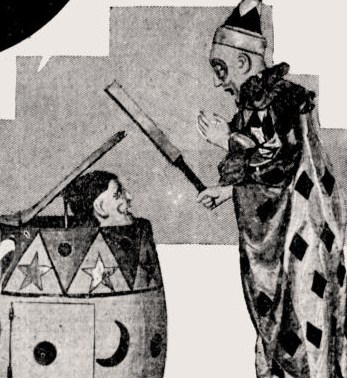
How could a newspaper make its murder coverage even more disturbing? By using this picture to illustrate Eva Rablen’s “juvenile-minded” nature.

Ultimately, her defense attorneys focused on Eva’s supposedly arrested mental development.

As one expert told the media: “The response of the ductless glands to situations varies with their congenital capacity and acquired susceptibility. In the ability of one endocrine system to inhibit another we have the germ of the unconscious. Hence the modus operandi of the repressions and the supressions, compensations and dissociations, which may unite to integrate, or refuse to integrate, and so disintegrate and deteriorate a personality.”

Well, that makes sense.

I won’t spoil the outcome of this case for you, but you can read more about the case’s resolution and what happened to Eva later in newspaper accounts.


Mr. Blandings: A Lighthearted Movie for a Somber Day

Mr. Blandings Builds His Dream House is a cute movie.

The opening narration, describing New Yorkers’ “carefree, orderly existence,” over traffic-jam footage, is cute.

The montage of Blandings family members arriving at their new home, with narrator Melvyn Douglas mimicking their responses, is cute.

The self-referential ending is downright adorable.

Some people use the word “cute” dismissively. Once, when I tried to wangle my seven-year-old daughter into a Gymboree outfit, she cried, “I don’t want to be cute; I want to be cool!” Personally, I have a higher-than-average cuteness tolerance (witness my devotion to Family Affair).

On a day like today, which holds so many somber memories, it’s comforting to escape into a lighthearted movie like Mr. Blandings.

A moment from the Blandings filming. Director H.C. Potter, left, was best known for his work on comedies.

Movie Impressions: The movie’s opening scenes, which depict a typical morning in the Blandings’ Manhattan apartment, are mostly quiet. A claustrophobic feeling builds as Jim Blandings (Cary Grant) negotiates overstuffed closets and a crowded bathroom. By the time Jim finds out that his wife Muriel (Myrna Loy) has been pricing renovations—and finds how just how pricy those renovations will be—he is ready to escape the city.

(Reviewing the movie, Time took issue with the unrealistically large set that represents a New York apartment: “You could encamp a platoon of homeless veterans in the parlor alone.” This seems to be a perennial complaint about Hollywood depictions of Manhattanites’ homes.)

Once Jim makes up his mind to buy a country house, he lets nothing stand in his way, including reason, caution, or good advice from his lawyer and best friend, Bill. He pays well over the going rate for run-down house and 50 acres of land, fails to notice a clause in the contract that reduces the property size to 35 acres, refuses to let his lawyer renegotiate the price, and then balks at having a structural engineer examine the house.

“Why is he acting so stupid?” my husband asked at this point.

I didn’t have an answer, but I do find it interesting that in the Blandings’ marriage, the husband is the emotional, impulsive one. Grant’s ebullient screen persona and Loy’s placid one work perfectly for this twist on traditional gender roles.

The Blandings end up tearing down the dilapidated house and building a new one (of course, Jim authorizes the demolition before considering the mortgage implications). The mishaps that ensue will resonate with any homeowner. (The guy who digs their well reminds me of every contractor I’ve ever known.) Loy’s paint scene is a highlight—she requests such colors as an apple red “somewhere between a healthy Winesap and an unripened Jonathan.” To the painter, this means “red.”

Adding to Jim’s distress is his growing suspicion that Bill and Muriel have feelings for each other. Critics hated this plot element, which wasn’t present in the popular novel this movie is based on.

“Eric Hodgins’ bestselling Mr. Blandings Builds His Dream House was a quietly hilarious account of a man’s troubles with a new house,” Time wrote in 1951. “Though Blandings was short on sex appeal, it sold more than 300,000 copies and was bought by the movies. Then Hollywood, which thinks sex is so important that it created a Production Code to keep sex out, added a triangle to the plot. The Cary Grant-Myrna Loy movie was advertised with leering posters: ‘Does Cary suspect the wolf at the door is his best friend?’”

This part of the movie does feel unnecessary. The saving grace is that it occurs late in the movie and doesn’t amount to much—Jim quickly realizes that he’s being silly. (And the scene in which a neighbor gets the wrong idea about Muriel and Bill, who are alone at the new house on a rainy night, is somewhat amusing.)

Historical Context: In 1948, American were starting to embark for the suburbs en masse. According to David Ames, professor of urban affairs and public policy and geography at the University of Delaware, “Post-World War II suburban growth was indeed monumental. From 1918 to 1940, suburbanites grew modestly from seventeen to twenty percent of the nation’s population. By 1960, however, they had doubled to account for forty percent of the nation’s total and far more than doubled in absolute numbers.”

The Blandings’ House: The Blandings built a Colonial-style house. As Douglas Brenner wrote in the New York Times Magazine last year, “(the Blandings) relationship with early-American style personified the hopes and struggles of moviegoers from coast to coast. The Blandings’ country home became so popular that Kellogg’s cereal boxes offered a cardboard cutout model, and Manhattan charity fund-raisers oversaw the construction of a full-scale Dream House knockoff on a vacant lot in Midtown.” In fact, RKO built 73 replica houses around the country and raffled them off to promote the movie.

Jim Blandings, Ad Man: On the spectrum of fictional ad men, Jim stands closer to Darrin Stephens than Don Draper. Distracted by domestic strife, he almost loses his job, until a woman comes up with the slogan that saves his bacon (or ham, in this case).

Supporting Cast Notes: Lurene Tuttle, who plays Jim’s secretary, appeared in character roles across the TV dial from the 1950s through the 1980s. She was also a prolific and talented radio performer. Her most famous radio role was another secretary—Sam Spade’s Effie. Lex Barker, who played a small role in Mr. Blandings, would break through the next year when he made his first of five Tarzan movies. Louise Beavers plays the maid in this movie; unfortunately, she rarely got the chance to play anything else.

Final Fun Fact: Blandings author Eric Hodgins wrote a long article for Life about his experiences on the movie set. Much discussion, he notes, went into determining Jim Blanding’s salary. Hodgins advocated $25,000; producers objected that “to the average moviegoer the man earning that amount has no troubles.” They pushed for $10,000, but ultimately changed it to $15,000. (For context, the average New York City family earned $5,105 in 1950.)

Other Posts About Classic Movies:

A Love Affair with Words: His Girl Friday

Spin Again Sunday: Emily Post Popularity Game

Today’s Game: Emily Post Popularity Game

Copyright Date: 1970

Object: “Players learn of the rewards that come from good manners while going to parties, sports events, dinners and other activities with their friends.”

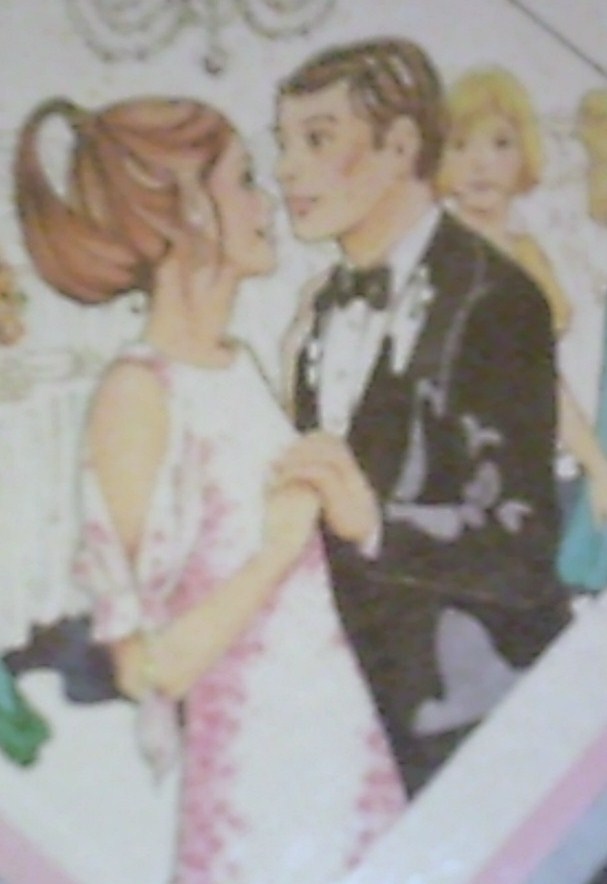
Game Board: Wispy cartoons show wholesome scenes of teenage life.

An all-too-typical teen problem

Game Pieces: Players move regular colored pegs and draw “Emily Post says…” cards that give points for good manners and issue penalties for etiquette violations.

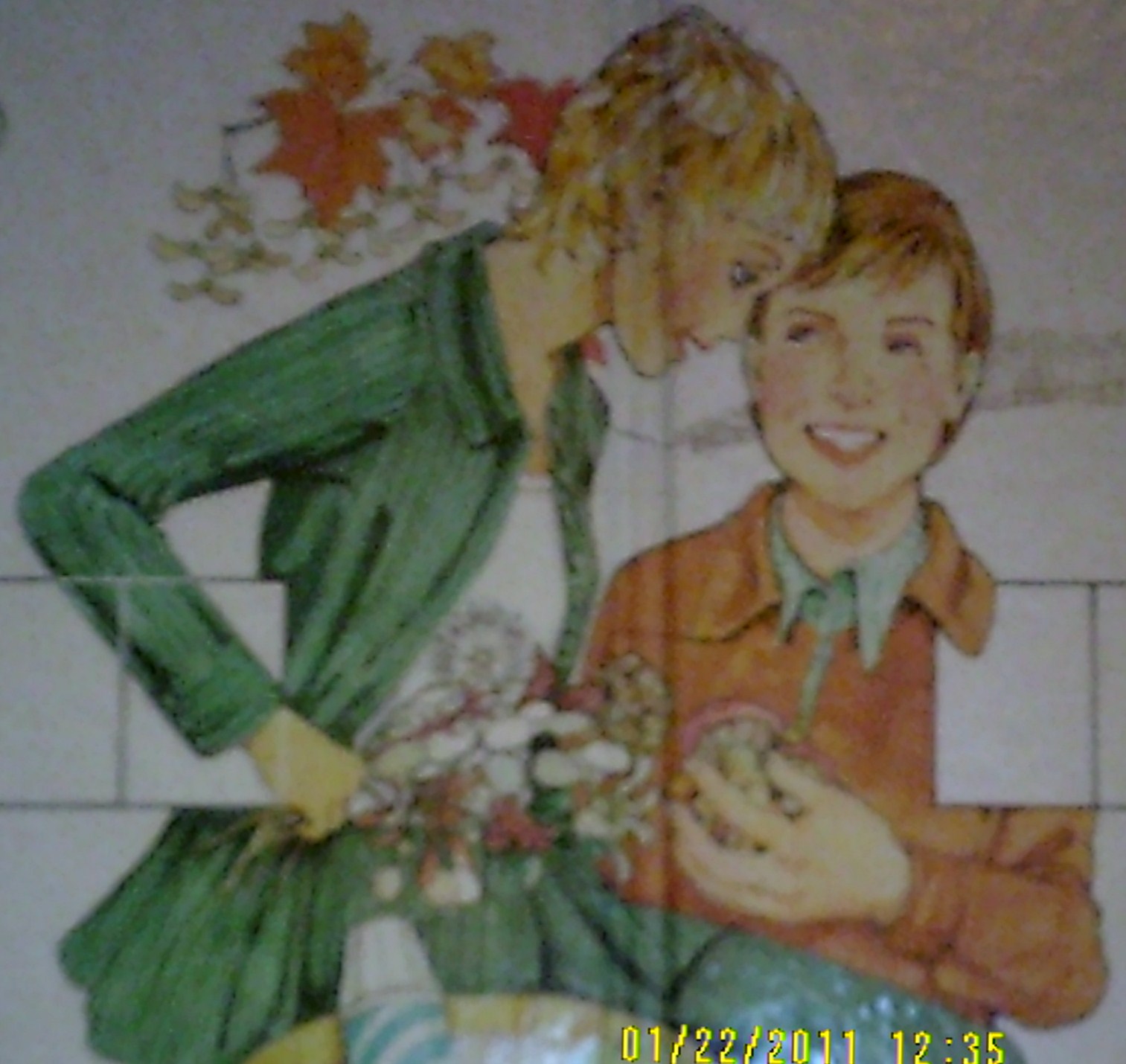
This nice young lesbian couple uses good manners while gathering psychedelic mushrooms.

Recommended Ages: “For girls 8 to 14.” I guess boys don’t need “the rewards that come from good manners.”

Game Play: Players compete to attract the largest circle of friends. You can’t

win if you’re holding the dog card in your hand. Personally, I’d rather befriend the dog than these humans. I mean, Cathy looks like a smug know-it-all, and Tony is clearly up to no good.

I hope this boy and girl can find a polite way to deal with the blonde girl who’s stalking them.

Final Fun Facts: Elizabeth Post, addressing players from the inside of the box lid, makes no pretense that fine inner qualities create social success. “What is it that makes a person popular?” she asks. “Is it good looks, smart clothes, or attractive manners? It is, of course, a combination of all three, but the last is surely the most important.”

The dog is the undesirable one? Really?

Elizabeth Post, the wife of Emily Post’s only grandson, assumed leadership of the Emily Post Institute after the original etiquette maven died. Several Post descendants still write about etiquette, including her great-great-grandaughter Lizzie Post.

Previous Entries in this Series:

Charlie’s Angels

Laverne & Shirley

H.R. Pufnstuf

Old Time Radio Episode Spotlight: CSI, 1940s Style

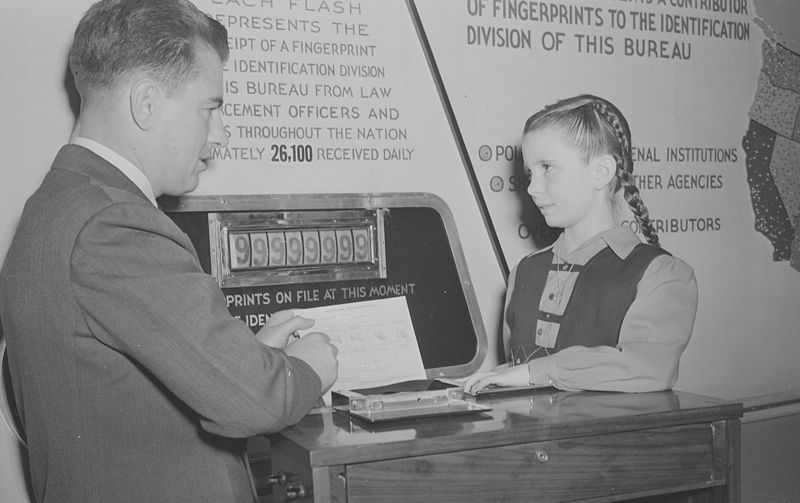
It’s always freaky when several of my interests collide. Crime, old-time radio, and classic movies–it all comes together in this photo of the FBI photographing Margaret O’Brien.

“The 91 million prints we have on file here at the FBI are the biggest man trap ever devised.”

Adventure Ahead, August 26, 1944

This is not a great radio show. In my experience, the cheese factor in old-time radio correlates directly with the number of organ flourishes a show contains. But this show’s subject–how the FBI lab helped police solve crimes in the 1940s–intrigues me.

Adventure Ahead was a Saturday morning show aimed at young boys. In this episode, a boy tours the FBI crime lab and learns how agents help solve crimes through blood and hair analysis, ballistics, and fingerprint identification.

(This show uses what TV Tropes calls the Little Jimmy trope: “Little Jimmy is a young character without any distinguishable traits other than complete ignorance related to the subject at hand. Most likely found in educational films, commercials, and public service announcements. Their only job is to represent the young and stupid viewers of the film who know nothing about common sense and would very well get into a car with a stranger offering candy unless some superhero or other fictional character comes along and tells them that it’s wrong. He’s typically young, white and freckled.” Here, our Little Jimmy is named Tommy.)

Because I live near America’s largest fingerprint database, I paid special attention to the information about FBI fingerprint files. After listening to the show, I couldn’t resist doing some research on the history of fingerprint identification and how the FBI collection has changed over the years.

Soon after J. Edgar Hoover became FBI director in 1924, the Bureau established an Identification Division.
Within nine years, it contained 5 million cards. By 1944, when this radio show aired, these numbers had soared to 91 million. Actress Margaret O’Brien provided the Bureau’s 100 millionth set of fingerprints two years later.

This radio show describes a fingerprint matching system that involved punched cards and “steel fingers.” The FBI first used computers to search fingerprint files in 1980, but didn’t establish a fully computerized system, the Integrated Automated Fingerprint Identification System, until 1999.

The FBI is now building a huge database of other biometric information, from iris scans to tattoos.

Family Affair Friday: Episode 1, Buffy (Pilot), 9/12/66

This is the first in a weekly series reviewing episodes of the classic CBS sitcom Family Affair

Episode 1, Buffy (Pilot), 9/12/66
Written by: Edmund Hartmann. Directed by: James Sheldon.

Synopsis

Successful construction engineer Bill Davis resides in what his gentleman’s gentleman French refers to as “the quiet, monastic atmosphere of the bachelor apartment.” (“Monastic” is a bit ironic–Bill’s calendar shows him dating four women in less than a week.) As we meet him, he is returning from work in India that was successful enough to land him on the cover of World magazine.

Slowest. News week. Ever.

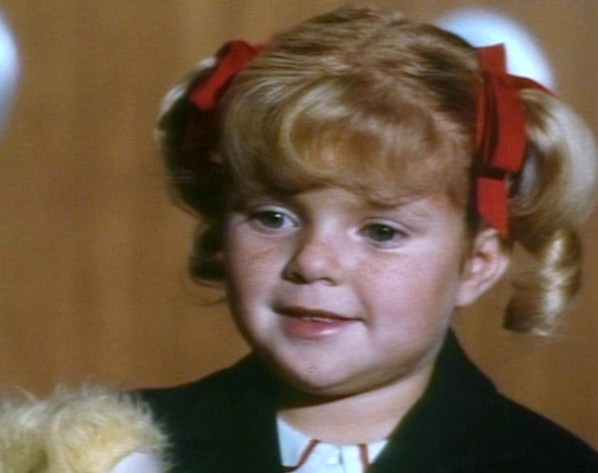
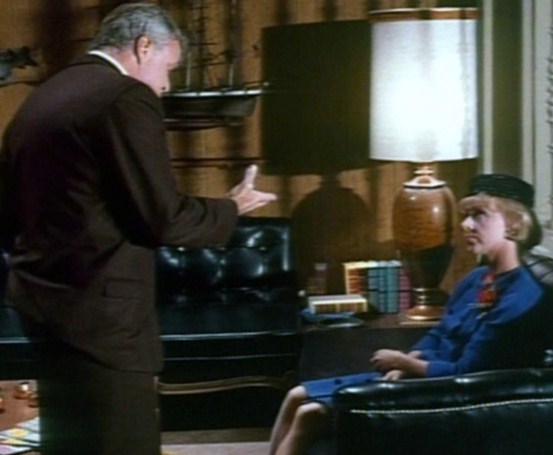
Without warning, Fran Higer arrives from Terre Haute, Ind., with Bill’s young niece, Buffy. Buffy’s parents were killed in an “accident,” presumably a car accident, about a year before. Bill was in Turkey at the time, and Buffy and her siblings were separated and placed with various relatives in Terre Haute. Fran wants Buffy to live with Bill because the child–defiant and unemotional–can’t get along with Mr. Higer. Believing that his bachelor status and frequent travels make him unsuitable as a father figure, Bill resists.

Buffy arrives.

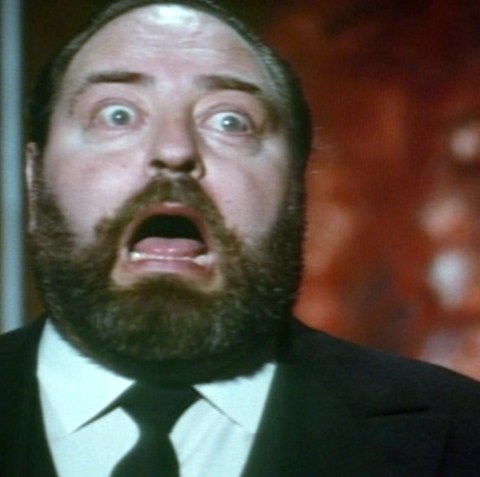
Meanwhile, French is appalled at having to perform such duties as serving milk and cookies and escorting Buffy to the bathroom. He calls her “a little clot,” and she responds by biting his leg.

French, bitten. Well, he sort of had it coming.

Bill gently reprimands Buffy and tries to make her see that living with him would not be ideal for her. “Why don’t you want me to live with you?” she asks flatly. During this conversation, Fran slips out and leaves Buffy behind. The next morning, Buffy overhears Bill telling French that he is sending her back to Terre Haute. Buffy spends the day with French in the park, where French faces teasing from a group of nannies who believe he has joined their ranks.

French: “I am no one’s nanny.”

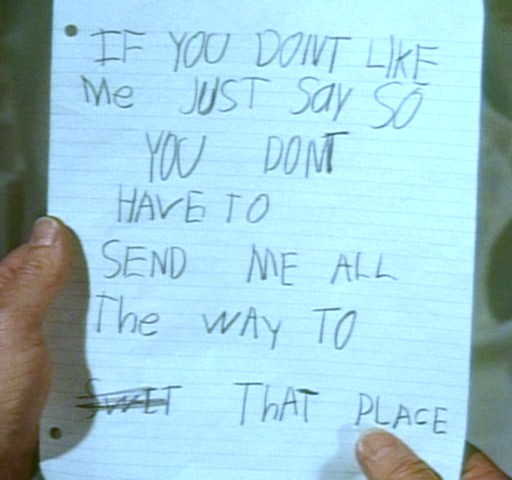
At the suggestion of his partner, Ted Gaynor, Bill decides to send Buffy to school in Switzerland rather than back to Terre Haute. When he tells Buffy, she is characteristically unresponsive, but in her room she cries and writes a farewell note.

Awww.

Years of nanny experience help French’s friend Miss Faversham lead French to Buffy’s hiding place in the basement. When Uncle Bill realizes how upset she is, he tells her she can stay. “Grown-ups always tell you things like that at night to make you go to sleep. It’s all different in the morning,” she replies. Uncle Bill assures her that he’s telling the truth and tells her that he loves her. For the first time, Buffy smiles and stops her curt “Yes, sir,” “No, sir,” answers.

Awww times 10.

Soon Uncle Bill must leave for Peru. Just as he’s leaving, Buffy’s twin Jody arrives with another relative, who thought the twins should be together. After Bill departs, the twins’ teenage sister Cissy shows up, leaving an exasperated French to remark, “Good heavens, I am a nanny.”

Awww to the infinite power.

Random Thoughts

This is a good pilot that sets up the show’s situation with equal parts comedy and pathos. Tiny Anissa Jones and Johnnie Whitaker are at their most adorable. Jones’ portrayal is mostly deadpan, but that’s appropriate for Buffy’s mental state.

Buffy’s apparently suffered some harsh treatment in her prior home, considering her remark about being stuck in a closet as punishment and her cynicism about adults’ sincerity. Fran’s behavior here–dumping Buffy at the apartment and sneaking out–is pretty disgusting. I guess a charitable interpretation is that she knew Buffy and Uncle Bill would be better off together, and that Bill would come around in time. Mr. Higer sounds like a real jerk–what kind of person can’t be patient with a recently orphaned child?

The oh-so-sensitive Aunt Fran. By the way, the books in Uncle Bill’s den seem to be of the Reader’s Digest condensed variety. I know he’s a busy man, but really.

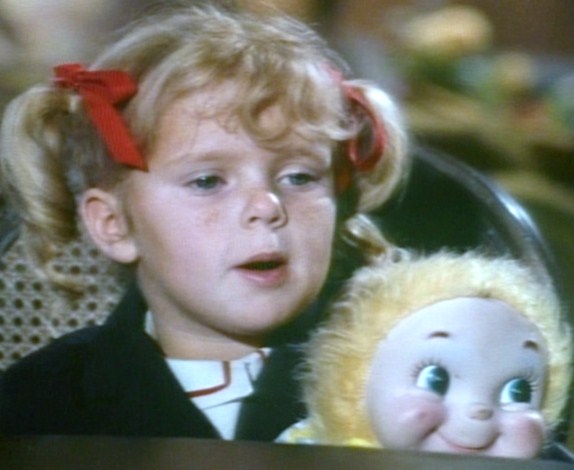
The pilot version of Mrs. Beasley lacks glasses and has a creepier face than the one used throughout the series.

Mrs. Beasley 1.0

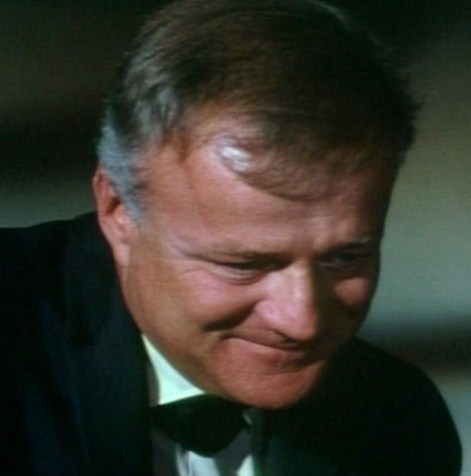
Brian Keith and Sebastian Cabot are both wonderful in this episode. Keith exudes warmth in his emotional scene with Buffy, and Cabot conveys  wonderful disgust with the whole idea of child care.

Notable Quotes

French: “May I ask, madam, what is a Buffy?”

Buffy: “Mrs. Beasley is not a doll. Mrs. Beasley is my friend.”

French, shortly after Buffy arrives, regarding Uncle Bill’s date: “Miss  Larrabee fled, sir.”

French: “Back home, in civilization, we have infancy and manhood–nothing in between.”

An exchange between Buffy and Jody about Mr. French:

Jody: Who’s he?

Buffy: He’s the maid.

Jody: Does he like kids?

Buffy: I don’t think so.

Jody: Could he run fast?

Buffy: No.

Jody: (After a thoughtful pause) Okay, I’ll stay.

Guest Cast

Ted Gaynor: Philip Ober. Among Ober’s many guest appearances were two on I Love Lucy–not surprising since he was once married to Vivian Vance. He appeared twice on Sebastian Cabot’s early 1960s series Checkmate (which is available on DVD–wow). He also appeared in many movies, including North by Northwest and From Here to Eternity.

Fran Higer: Louise Latham, who would return twice as Aunt Fran. Latham’s career spanned from Perry Mason and Gunsmoke in the ’50s to CHiPs and The Waltons in the ’70s, Designing Women and Hunter in the ’80s; E.R. in the ’90s; and The X-Files in 2000. Her first movie role was as the title character’s mother in Hitchcock’s Marnie.

Miss Faversham: Heather Angel. She appeared in many movies, including That Hamilton Woman and Suspicion. She also did voices in Disney’s Alice in Wonderland and Peter Pan. Her Family Affair role would be a recurring one.

Miss Larrabee: Lisa Seagram.

Miss Hodges: Sandra Wirth.

Bess Melville: Barbara Perry.

Miss Ponsonby: Nora Marlowe.

Mrs. Grayson: Shirley O’Hara.

Critical Reaction

Critics didn’t exactly embrace Family Affair. Though I like the show, I find this snarky Cleveland Amory review from the December 24, 1966 TV Guide pretty amusing.

Final Fun Facts

Uncle Bill is not fond of ballet. Bill’s business partner is Ted Gaynor.

Where to Watch

The whole pilot episode is available on Youtube. Here is part one:

Weird Words of Wisdom: TMI, Dick Clark! Edition

“At certain times each month you feel listless, bored or even completely knocked out. A physical change is making its presence known through menstruation. With the beginning of these days of monthly bleeding, some girls may be hit by attacks of cramps, headaches and even upset stomach. Strange, isn’t it? And frightening at first, until you begin to understand that this is part of life’s process for continuing itself. Your body will supply a son or daughter to build the world of the future.”

Your Happiest Years by Dick Clark, 1959

About the Book: Do any adults actually remember adolescence as their “happiest years?” This book by television personality Dick Clark, who would later be called “the world’s oldest teenager,” falls into that strange 1950s genre we have encountered here before—a volume of teenage advice authored by an adult celebrity. Can you imagine buying your young daughter a book in which Ryan Seacrest explains how her body will soon burst into womanhood?

Of course, when it comes to these celebrity books, it’s questionable who really authored them. Pat Boone’s book had a ring of authenticity, but this one is a pretty generic collection of 1950s wisdom for teenagers. It offers sensible advice on dealing with friends and family, while urging strict adherence to gender roles.

About the Author:  American Bandstand premiered nationally in 1957. The show “did as much as anyone or anything to advance the influence of teenagers and rock ‘n’ roll on American culture,” according to the New York Times. An immediate hit, it would run until 1989. In its early years, the Times wrote, teenagers saw Clark as “their music-savvy older brother.”

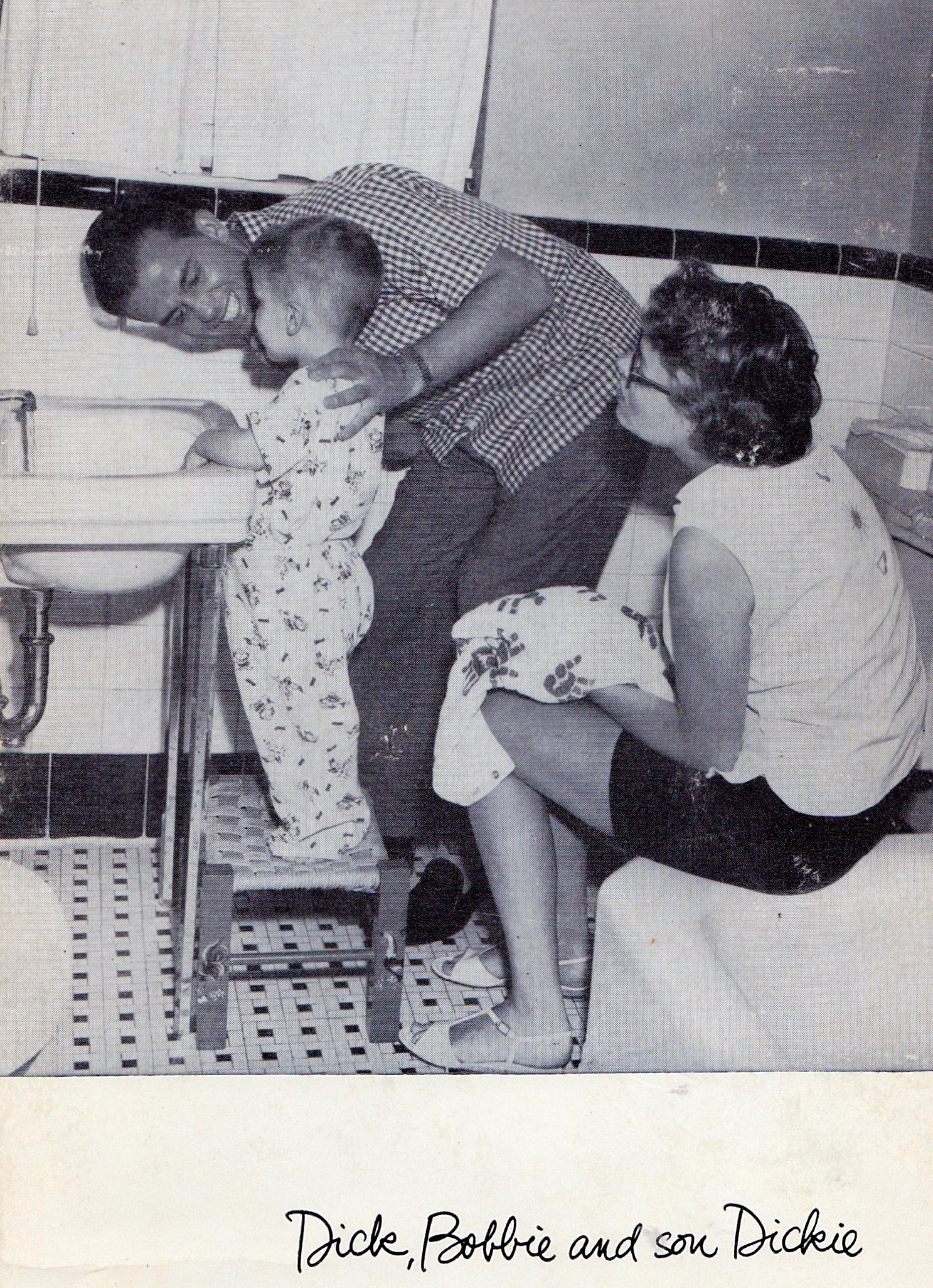
Dick’s marriage to high-school sweetheart Bobbie gave his teenage romance advice some credibility. Unfortunately, Dick and Bobbie divorced only two years after the publication of Your Happiest Years.

Clark was also a shrewd businessman, who never shied from a money-making opportunity.

”I get enormous pleasure and excitement sitting in on conferences with accountants, tax experts and lawyers,” he told the Times in 1961. It’s not surprising that he would lend at least his name to this book. Now, it is a bit surprising that he also “authored” a book for adults about bowling (scroll about 3/4 of the way down the page).

Clark wasn’t experiencing one of his happiest years in 1959. As the U.S. House Subcommittee on Legislative Oversight investigated payola in the music industry, Clark’s network bosses took pre-emptive action. As Time wrote on November 30, 1959, “ABC confronted him with a significant decision: he must get rid of his outside music interests or else quit TV…Faced with the ABC ultimatum, Clark decided to ‘divest’ himself of his interests in various music firms.” Clark denied any involvement in payola.

Celebrity Names This Book Drops: Connie Francis, Solly Hemus, Mickey Mantle, Dinah Shore.

Cautionary Tales Clark Offers:

  •         A boy who failed to overcome his shyness with girls at the appropriate age and reached the age of 19 without ever being kissed.
  •         A young ladies’ man who grew into a lonely adult when girls tired of his “gay-blade routine.”
  •         A sickly boy who resisted his parents’ curfew and came down with tuberculosis.
  •            A girl who stayed out all night, causing her worried father to head out looking for her. In his exhausted state, he crashed his car and emerged permanently crippled.

More Quotes from Your Happiest Years

“Once you’ve stepped out and found you can have a good time with girls, you are free to call any of them you know and ask for a date. They can say no, but at least you can ask. You don’t even have to feel self-conscious about it if one turns you down—you can dial another. A girl can’t do this—or certainly should not.”

“The sweaters and blouses that once flopped about you, to the despair of your mother and father, who wanted their little girl to look neat, are starting to fit snugly around your chest. Your breasts are undergoing a change as you grow into young womanhood. So are your hips, which broaden as they prepare for the function nature has marked out for you as a woman: the bearing of children.”

“It’s fine to be ‘one of the boys’ at certain ages. The teen age isn’t one of those times. The sports you played together when you were nine or ten belong only to him around thirteen or fourteen. You can know about them. In fact you should be able to talk about them—but let him star at them. You be there to cheer and he’ll notice and appreciate that.”

“A young woman should begin in her teens learning the things that keep a home running smoothly. She can watch how her mother cooks and bakes. There are also many opportunities for a daughter to observe how Mother handles Dad when he’s had a tough day at work. Mom can always use some help around the house, with dishes, cleaning, cooking, and a million other things a girl should know to qualify for that band of gold.”

On menstruation: “Accept it as you accept other signs of developing femininity and attractive womanhood. Although it may give you some discomfort and even embarrassment at first, it is a mark of special favor for you as a woman.”

Why teenage boys shouldn’t avoid dating in favor of hanging out with the guys: “A pinball machine may be a lot of fun when you’re seventeen, but at twenty-two it’s no date for a dance, and it won’t sew up those ripped shirts, when you’re thirty.”

Previous entries in this series

Weird Words of Wisdom: Prettily Bewildered Edition

Weird Words of Wisdom: Spanking New Edition

Weird Words of Wisdom: Chaperoned Edition

A Love Affair with Words: His Girl Friday

My husband balked at re-watching my favorite movie with me this weekend.

 “How can you not love this?” I asked, a few minutes into the film.

“It’s just so much…talking!” he sputtered.

His Girl Friday is, indeed, all talk. Its characters talk so much, so quickly, that their words overlap, ringing out into a musical counterpoint.  

Words attracted me to His Girl Friday the first time I encountered the movie, during my teenage years. As I flipped channels, this exchange captured my attention:

 Walter: This other fellow–I’m sorry that I didn’t get a chance to see him. I’m more or less particular about whom my wife marries. Where is he?

Hildy: Oh, he”s right on the job, waiting for me out there.

Walter. Hmm…Do you mind if I meet him?

Hildy: Oh, no, Walter. It wouldn’t do any good, really.

Walter: Now, you’re not afraid are you?

Hildy: Afraid? Of course not!

Walter: Then, come on! Let’s see this paragon. Is he as good as you say?

Hildy: He’s better!

Walter: Well, then, what does he want with you?

The Front Page, a 1928 Broadway hit written by Ben Hecht and Charles MacArthur, is His Girl Friday’s source. In the play, star reporter Hildy Johnson wants to escape the seedy world of journalism by marrying and finding “respectable” work. His managing editor, Walter Burns, thwarts him at every turn as the two collaborate on a bombshell story—a prison break by condemned murderer Earl Williams.

In His Girl Friday, Director Howard Hawks transforms Hildy Johnson into a woman, a change that raises the stakes considerably. Hildy’s choice between journalism and respectability is also a choice between a career and a traditional feminine role, and a choice between two very different men—her insurance-salesman fiancé Bruce Baldwin and her ex-husband, Walter Burns.

Two kinds of people populate His Girl Friday’s world. The journalists make up one group—a fast-talking, irreverent group. Walter Burns is this group’s apotheosis; nothing matters to him except the power and pleasure he derives from words. On the other hand, we have earnest people like Bruce; Earl Williams and his friend Molly Malloy; and prospective “city sealer” Joe Pettibone, who blows the lid off the mayor’s plan to execute a mentally ill man. These people speak slowly, mean what they say, and become lost in the journalists’ layered ironies and wise cracks.

Rosalind Russell’s Hildy operates well within both groups. Adopting a hushed interview style, she elicits Earl’s story. Showing sympathy that her male counterparts lack, she wins Molly’s trust. Admiring goodness and simplicity, she works to protect Bruce from Walter’s machinations.

In the end, though, Hildy can’t escape Walter and the lure of word craft. Words are weapons in their sparring, but also bind them in moments of shared delight that Bruce can’t comprehend. (Consider his delayed reaction, in the restaurant scene, when Hildy sees through Walter’s lies about another reporter. Bruce’s confusion produces contempt in Walter and embarrassment in Hildy.)

As James Walters wrote in the Journal of Film and Video:

“The film makes clear Hildy and Walter’s delight in controlling language, their near-delirium in playing together with the pace, tone, and rhythm of words. Their fluent use of language connects them with a world in which the ability to use words dictates a person’s status and in which, as in Molly’s case, an inability signals a person’s collapse…Indeed, there is a truthfulness in their shared vocal rhythms and patterns, as though their profound affinity emerges naturally and unavoidably whenever they are together.”

Choosing Walter’s world means giving up a lot, from little courtesies accorded to ladies, to society’s respect, to hopes of home and family and “a halfway-normal life.” For Hildy, however, giving up the mental exercise that Walter and writing provide would be a more bitter sacrifice.

His Girl Friday influenced my own choices, propelling me toward journalism school and a writing career. One day, in my college newspaper offices, the managing editor mentioned a Cary Grant movie she’d watched the night before.

“Have you ever seen His Girl Friday?” I asked.

 My reserved editor suddenly turned gushy: “Isn’t she great?!”

Hildy became a heroine ahead of her time when she announced, “I’m no suburban bridge player. I’m a newspaper man.”

Final Fun Facts: Hawks pioneered the overlapping dialog style that distinguishes His Girl Friday, but Grant and Russell made some delightful contributions to the script as well. Grant’s ad-libs include Walter’s description of Bruce as looking like “you know, that fellow in the movies…Ralph Bellamy.” Rosalind Russell, in her autobiography Life is a Banquet, described her secret hiring of a comedy writer to punch up the script. He added such bits as her murmured “slap happy” and her hand-signal-of-warning, both in the restaurant scene.

Note: His Girl Friday is available for streaming, free, at Hulu, and for free downloading and streaming at Internet Archive.