Season 1, Episode 6, “Room With A Viewpoint,” 10/17/1966
Written by: Austin and Irma Kalish. Directed by: William D. Russell.
Synopsis
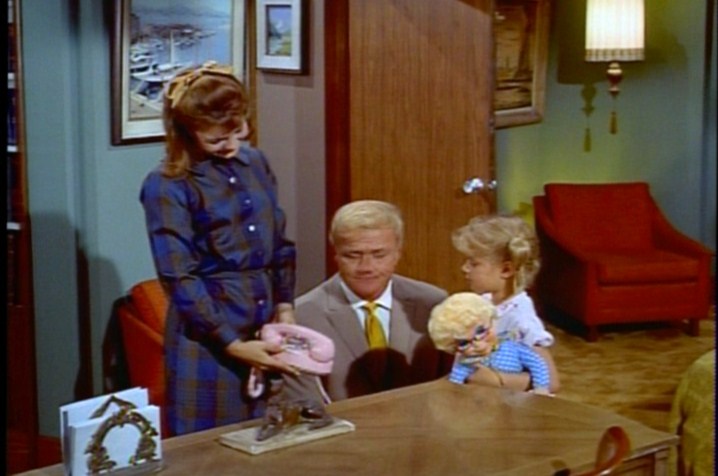
The arrival of Cissy’s pink princess phone provokes a surly reaction from Buffy.
Every 1960s girl’s dream phone.
Her mood worsens when Uncle Bill’s current girlfriend, Nedra Walcott, redecorates the girls’ room.
This is the woman who designed this living room.
Refusing to do homework or sleep in her own room, Buffy won’t tell anyone what’s bothering her. Things come to a head when a workman arrives with a room divider, and Buffy locks herself in. Finally, she confesses that the changing room is not the problem; it’s the way “the room made Cissy change.” The episode ends with some sisterly bonding.
Random Thoughts
A-ha! Uncle Bill has used Miss Walcott’s decorating services before–so now we know who is responsible for the Festival of Fug that is the Davis apartment. (Seriously, there is so much to admire in mid-century décor—and so little of that made its way onto the Family Affair set.)
Nedra Walcott decorating tip: A bunch of old Funk and Wagnalls encyclopedia sets can make any homeowner seem erudite.
Buffy’s return to deadpan “Yes, sir” and “No, sir” replies keeps the viewer guessing along with everyone else about what the problem is. Personally, I think she just had better taste than the other Davises.
This is the bedroom as Nedra designed it originally. And you’re giving her another chance?!
Nedra Walcott decorating thought process: Let’s keep the green walls and bring out their vomity properties with a gay print.
See the artwork Nedra adds to Buffy’s wall? The poor child is an orphan–hasn’t she suffered enough?!
Guest Cast
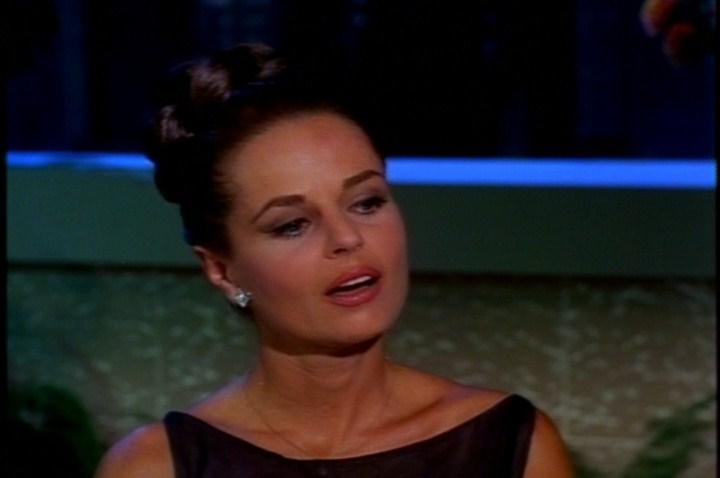
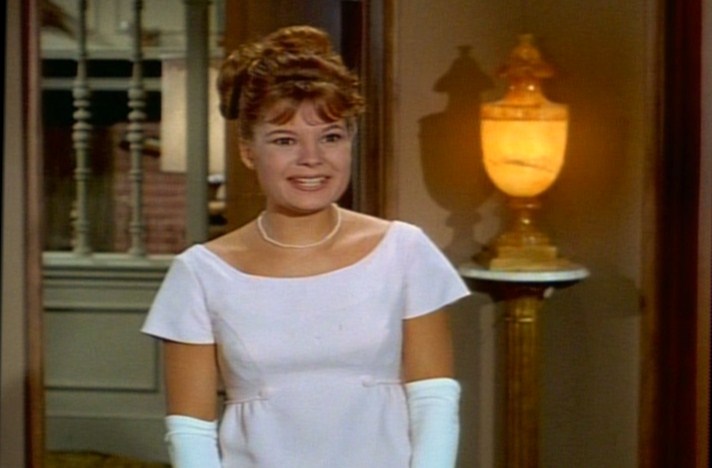
Miss Walcott: Kathleen Crowley. Ted Gaynor: John Hubbard. Telephone Man: Wayne Collier. Kathleen Crowley was Miss New Jersey 1949. She made a slew of TV appearances in the ’50s and ’60s on such shows as My Three Sons, Perry Mason, Bonanza , Batman and Maverick. She would appear in Family Affair again in “A Family Group.” I’m happy to report that she’s still alive.
Remember ladies: Remove one white glove to hold your cigarette. It’s okay to leave your cape on.
Fun Facts
The Davises live on the 27th floor, in apartment 27A. Buffy’s favorite colors are pink and green.
The Davises share a happy moment, despite their hideous surroundings.
Continuity Notes
Another Velvet Vultures reference. Dinky, Jody’s turtle, is mentioned.
Random oddity: Buffy is learning multiplication in first grade. (And she only attends half-day sessions.) Also, she does her homework on a slate.
Notable Quotes
“All this kids’ stuff is new to me, Ted. I don’t know the difference between stomachache and heartache.”—Uncle Bill (He’s also mystified by teenage slang, including “outasight.”)
Today’s Bonus Feature
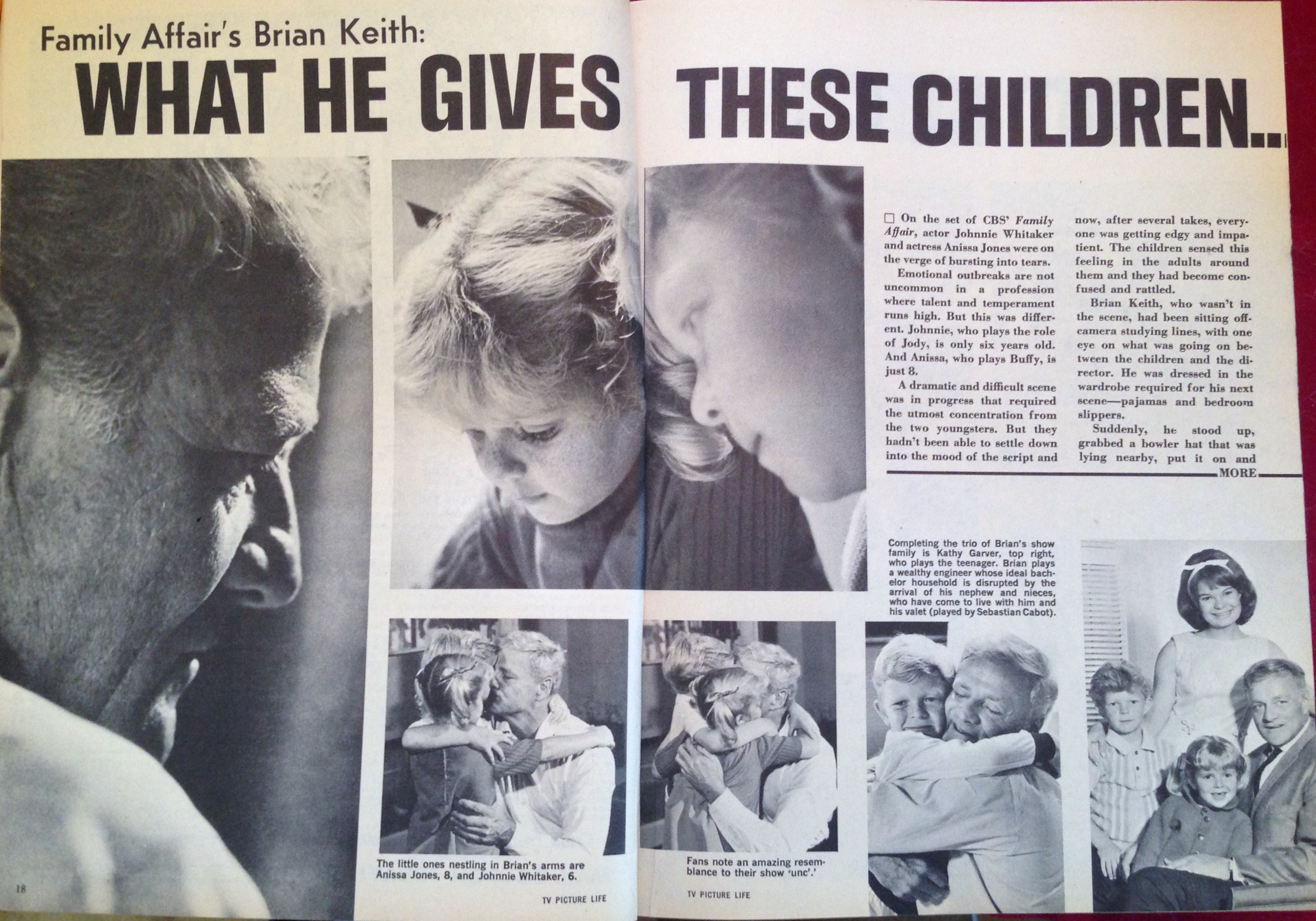
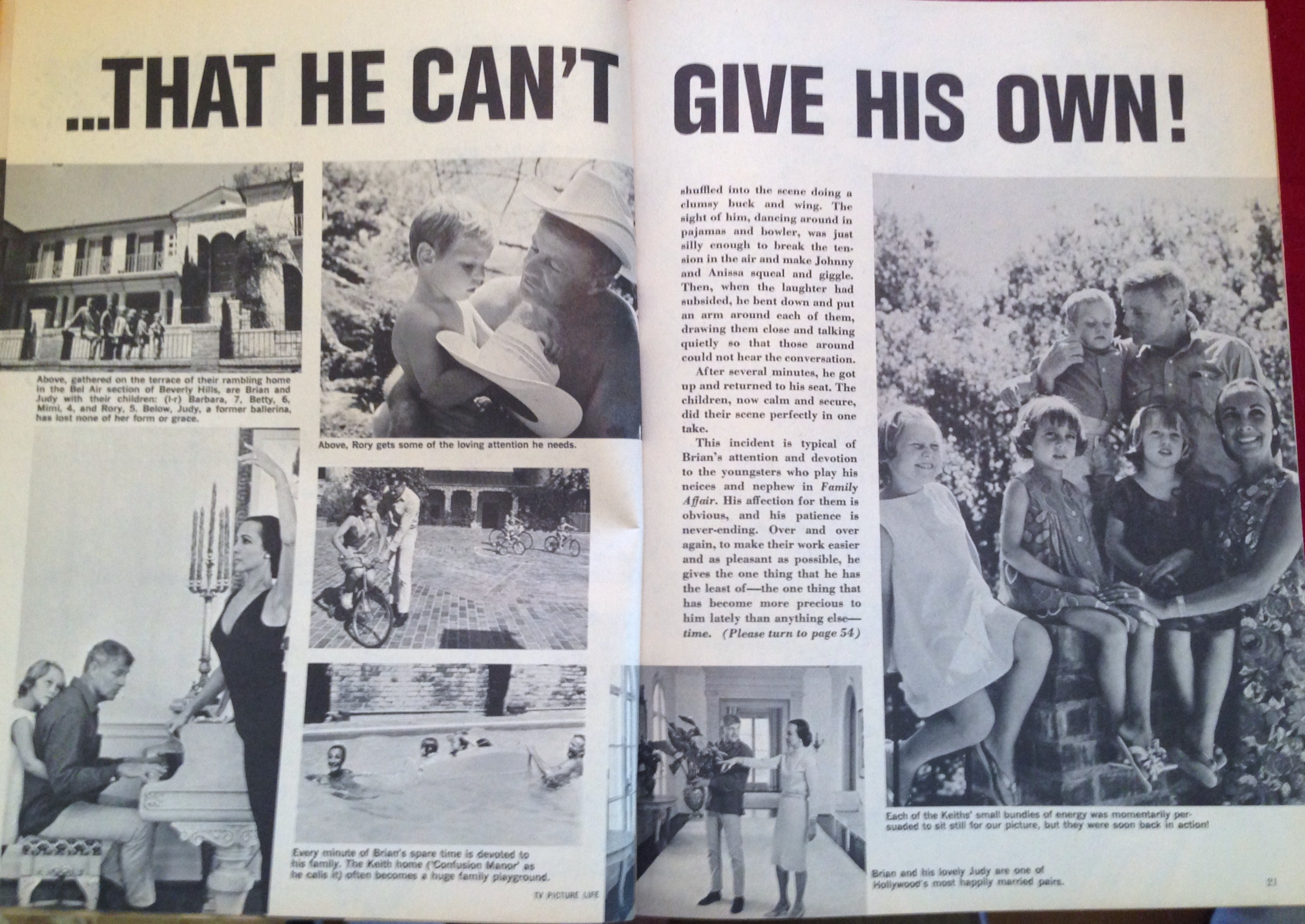
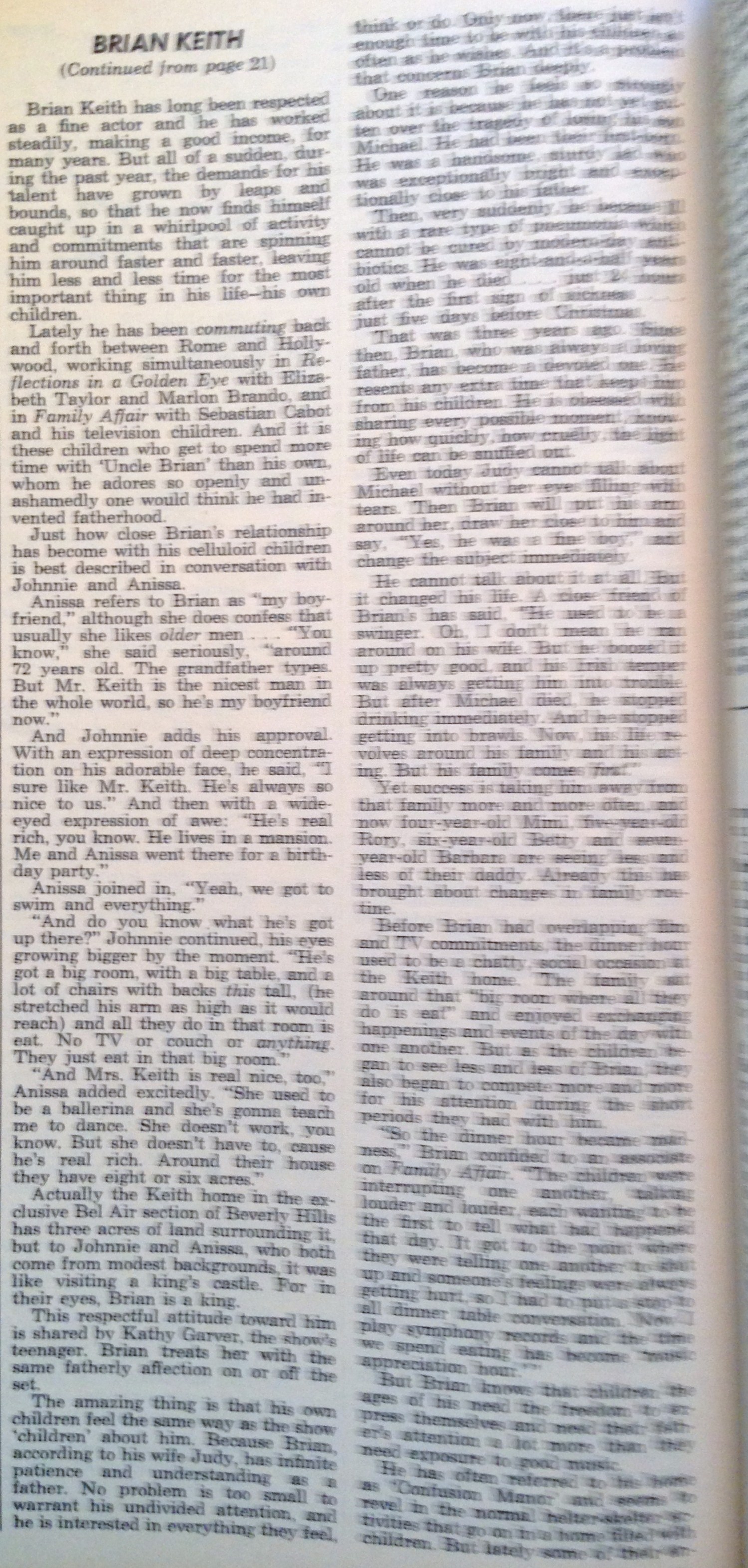
An article from TV Picture Life, May 1967. It’s best to take these fan magazine articles with a grain of salt. The photos are great, though.
“Never wear slacks on a date, unless it’s a rugged outdoor picnic or an evening at an amusement park. Otherwise, I think slacks are an insult to a boy.”
For Every Young Heart, 1963
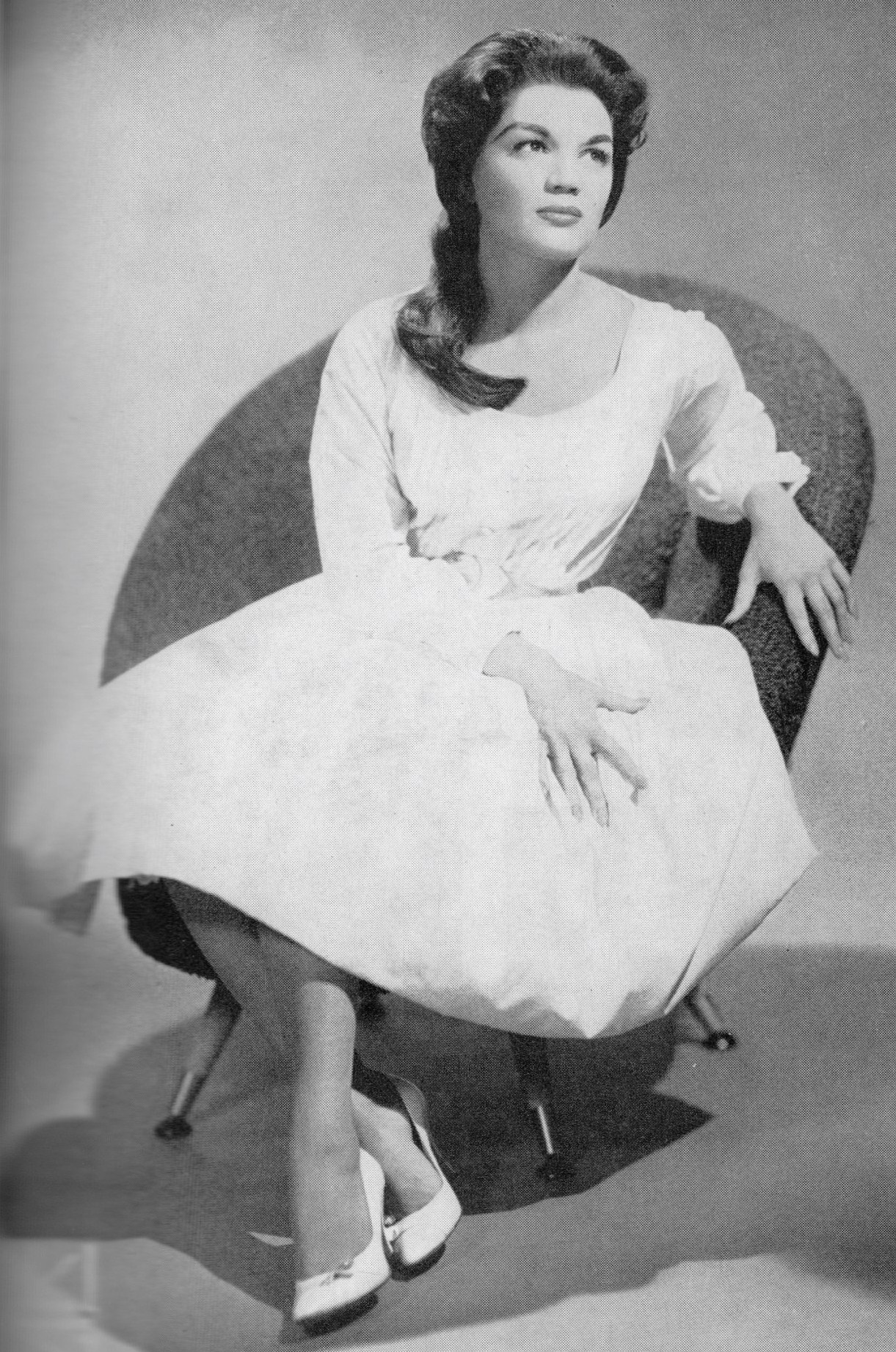
By Connie Francis
About the Book: We’ve encountered celebrity advice books before in this series, but Connie Francis is both our first female celebrity author. Of course, one always has to wonder how much “authoring” these celebrities did. Francis’ book feels more authentic than most. Her advice—both the good stuff and the weird stuff—feels specific and individual. Knowing little about Francis when I picked up this book, I quickly formed a clear mental image of her—tough, smart, moody, romantic, and ambivalent about her parents’ influence in her life.
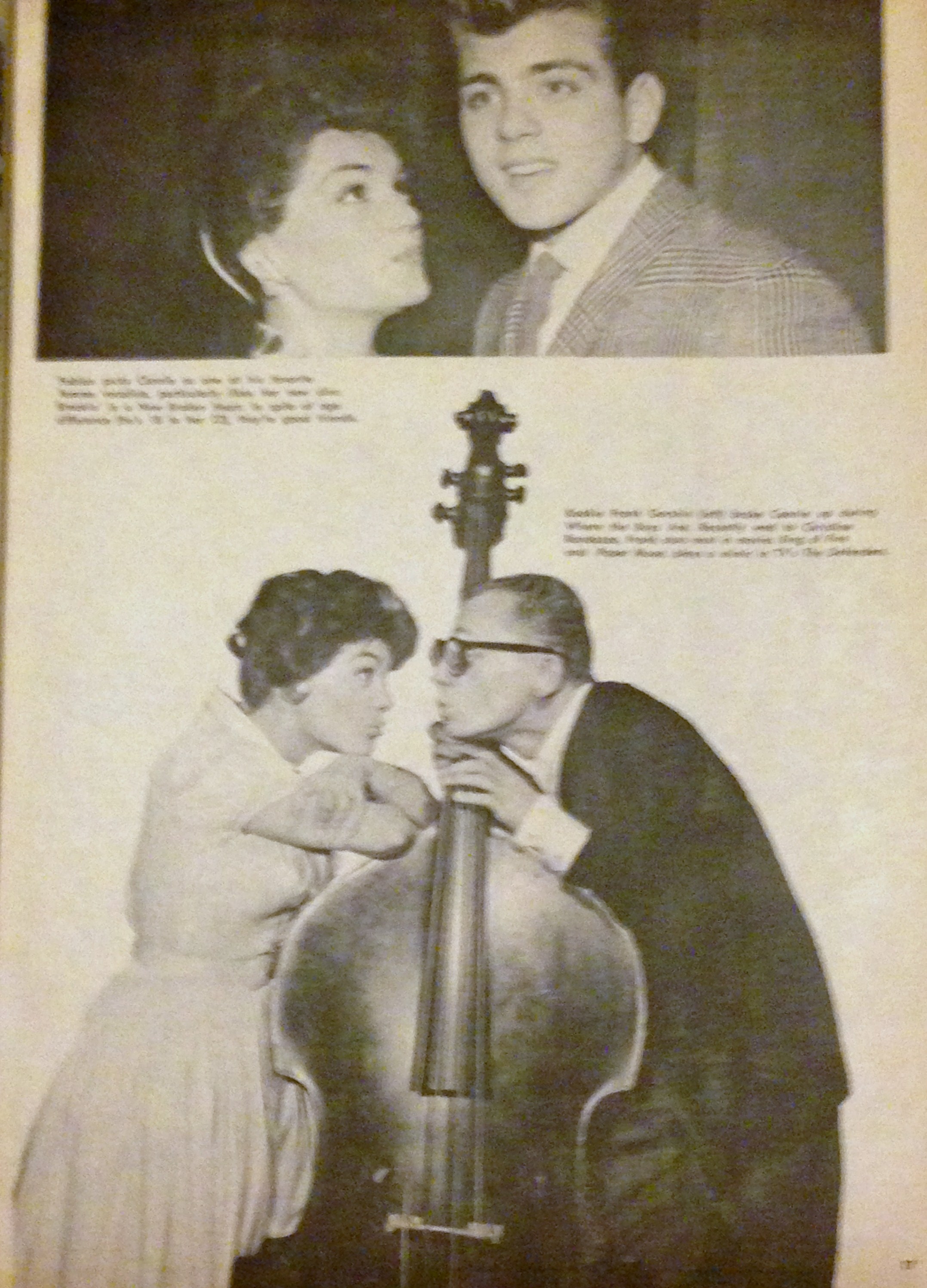
About the Author: I’m always happy to write about an author who’s still alive. Connie Francis is a survivor, in every sense of the word. As a teenager, she appeared on a TV variety show called Startime Kids, and she received much criticism about her looks and weight during those years. Her recording career was slow to take off, and she was on the verge of giving up when American Bandstand made Who’s Sorry Now? her first hit in 1958. (She had brains to fall back on—she received a scholarship to New York University and was planning to study medicine.) And as an adult, she would endure many tragedies (which I don’t want to write about here, lest it ruin the mood for laughing at her fashion, beauty, and dating tips.)
Okay, Then—Let’s Start With Hair Care: “Going to the beauty parlor is an art in itself. Some ladies lean back, close their eyes, and snooze. Others read movie magazines or daydream. This is okay if you’re over forty and have money. But it’s not for you…Sit up and take notice.”
“Wash your hair with regular shampoo, rinse thoroughly, then soak with beer just before setting. It adds tremendous body to fine or limp hair.” (Note: You have to leave the beer, open, outside the refrigerator for two or three days prior to use.)
On Teasing Your Hair: “This is one of the most useful tricks a girl can learn. It involves back-combing the hair from underneath, which adds body, so that with very little curl you can make your hair look like something special. Right this minute, my hair needs setting, but if I had to go out unexpectedly I could whip it into a definite bouffant style by teasing, hold it with hair spray and breeze out for the evening with perfect confidence.”
On Washing Your Hair, Um, Frequently?: “My hair is very oily, so every three days it gets washed.”
On Fashion: “The little black dress or navy suit is the backbone of my wardrobe. I have five or six basic outfits that can go anywhere, from the office in the morning to dinner at the Stork Club and dancing at the Peppermint Lounge at night. The only change I need is a scarf or a piece of jewelry.
On Fashion for Petite Girls: “So instead of buying three strands, you buy one. Instead of the big chalk beads, you buy little ones. And if everything you wear is small, like you, you’ll have a larger overall appearance. Stay away from medium or heavy patterns, circular designs, and two-tone outfits. Verticals give you height. Solid colors, small all-over patterns, and lightweight, clingy fabrics are most flattering.”
On Makeup: “Dark minimizes, light accentuates…For instance, my nose is too wide, so I always use a darker makeup on its sides than on the rest of my face.”
On Lipstick: “For most women, this is a good rule: Darker by night, lighter by day, and always coordinated with the color of your outfit.”
On Brows: “The outer line of the eyebrow should end a 45-degree angle from the tip of your nose.”
On Eyeliner: “This is the most valuable cosmetic I ever found. After experimenting with many kinds, I think black pancake makeup is ideal.”
Getting Along with Boys
“…from the age of nine or ten, (a girl is) more alive, happier, and more of a person with a male around. It doesn’t matter how old he is—nine or ten like herself, twenty-two or eight-five, married or single. All he has to be is male.”
How 11-Year-Old Connie Learned “a New, Improved Formula for Getting Along with Men”: At a Halloween party, she encountered a boy named Eugene who had been picking on her at school:
“And then—whether it was the costume or the lipstick or the fact that I really did feel like a gypsy princess for one wonderful night—a strange thing happened. A lovely, soft, feminine feeling crept over me, transforming the glare to an angel’s smile. Instinctively, I minced forward, lowered my eyes shyly and cooed, “Hel-loo…”
“G-g-gosh!” Eugene breathed, “you look pretty!” “Oh,” I said coyly, “do you really think so?” Half an hour later, there I sat, perched on a cold radiator, collecting kisses from the stag line—and now it was the other girls turn to glare!”
Connie’s First Real Date: A showing of should It Should Happen to You with Judy Holliday and Jack Lemmon, and a second feature of Francis Joins the WACS with Donald O’Connor. (She got so disgusted with her date’s loud guffaws that she stormed out of the theater and went home. If he was laughing at Francis Joins the WACS, I can understand her reaction.)
Telling Tales on Herself: That is one of several unflattering stories Connie tells about herself. Others include the times Connie:
• Beat up a fellow seventh-grade girl
• Got into a shoving match with an overweight male classmate on her first day of high school
• Threw a cup of coffee across the room and stormed out the studio after recording Who’s Sorry Now?
Dating Don’ts
“There are certain places a girl should never go alone, or even with another girl—certain hangouts, bowling alleys, bars, and other places where boys tend to gather and girls don’t.”
“Don’t ever stand near a bar and talk. Never drink at a bar, even if you’re drinking ginger ale.”
“Most people can tell right away who’s a lady, just by the way she talks. And the quickest way to lower yourself in the eyes of anyone—a boy, especially, is to use even one unladylike word.”
“Every man likes a woman to allow him to be a man. Unfortunately, some women, especially in the United States, don’t allow men to be men. They do everything for themselves, because they’re always trying to prove how independent they are.”
“A woman who doesn’t expect the little courtesies isn’t a lady, and a man who doesn’t perform them isn’t a gentleman…I think an unmannerly man is 95 percent the woman’s fault.”
On Sharing Expenses on a Date: “Out. Not under any circumstances should a woman touch one nickel of her own money on a date, unless she’s stranded 50 miles from home and her date needs 15 cents for a subway token. But why get in such a silly fix, anyway?”
“A girl who goes out deliberately to get picked up lives dangerously. And most boys will assume that she’s what she probably is.”
Dating Dos
“Of course, the best way for a girl to be interesting to a boy is to be interested in him. I’ve sat through many an evening not knowing what on earth my date was talking about, but just nodding and smiling and looking at him very, very intently, and occasionally putting in a word of my own like ‘Really!’ or ‘My goodness!’—and he’s walked away thinking ‘Gee, what a brilliant conversation we had!’”
“Anyhow, not only does a kiss on the first date not compromise a girl’s reputation, but nowadays a boy expects it. That doesn’t make it right, of course, but it doesn’t make it wrong, either. A girl knows instinctively the kind of boy she can trust and the kind she can’t. She can sense when a boy respects her, and if a date doesn’t have any real feeling of warmth and friendship for you, he doesn’t deserve a kiss—or a second date, either.”
“The one unfailing way to let a boy know you like him is this: Tell him. I believe letting a boy know in a very lighthearted, casual way that won’t embarrass either of us…When we’re standing in line for a movie or waiting to get into a restaurant, I’ll say: ‘Know something? I like you,’ very casually, then change the subject.”
“As far as necking is concerned, there’s nothing wrong with it in moderation, if there’s a warm, respectful feeling between two people.”
Suggested questions to get dates to open up: “Are you a lonely person? Are you Happy? If you had 48 hours to yourself, what would you like to do most?”
Putting on the Brakes
“If a boy really loves you as much as he says, he’ll want to put a ring on your finger.”
“A girl can become sexually aroused just as quickly and irrationally as any boy. She wasn’t born with any handy ‘monitor’ that automatically helps her put on the brakes, but she has to develop one in her mind in order to protect her self-respect and reputation.”
(Connie wasn’t just talking the talk about chastity. In 1984, she told People Magazine that when she married her first husband, at age 26, it was because “because I wanted to have sex.” That marriage only lasted three months.)
With the Above Said, the Most Racy-Sounding Passage in the Book, if Taken Out of Context: “I finally had to force myself to have fun. I went to Europe and Las Vegas and forced myself to date one boy after another. I kept dating until I found the feelings I had for one or two boys weren’t so fantastic after all. I found, in fact, that I could feel just as happy and have just as good a time with 25 others.”
Connie’s First Real Love (Bobby Darin?): “I was in love in my teens, and at the time it was the most important thing in the world to me. Every day, because I was in love and my parents didn’t approve, there was an argument at home. School became secondary. My singing became unimportant compared to my feelings for this boy. The day was happy or sad depending on what he said to me or what I said to him, or what my parents said or didn’t say about him or me or us. Then, when we did break up, it took me just as long or longer to get over it.”
(Connie): He wasn’t just strict — he was a vigilante with every boy I had a milkshake with. I was not allowed to date in high school or go to the prom, and even in college he had a problem.
(Musto): Is it true he broke up you and Bobby Darin?
Connie: With a gun. He learned Bobby and I were starting to elope one night. We were 18, 19. I was doing the Jackie Gleason show and Bobby and I were cuddling in a corner. He barged through the rehearsal room of the Sullivan Theater with a gun in his pocket and a fierce determination to obliterate Bobby once and for all. One of the biggest regrets of my life is I didn’t marry Bobby.
In For Every Young Heart, some of Francis’ ambivalence toward her parents comes through. She describes how she taught herself shorthand because her mother was always snooping in her diary. She also talks about how she learned a confusing version of “the facts of life” in a whispered conversation with a girlfriend because her parents never told her anything.
“Every child has a right to know about life,” she asserts. “The day a youngster asks his first question about sex is the day he deserves an answer.”
Connie’s Ideal Husband: “He shouldn’t be overemotional, yet he must be very affectionate, responsive and warm. His laugh shouldn’t be so loud that everybody turns around to look, but he has to have a wonderful sense of humor. He has to be subtle and self-contained—the type who can say two words and I’ll understand; a man who can look at me across the room, and every look will mean something. Oh, yes, and he has to be very smart, alert, witty. He has to know he’s the boss without saying, ‘Listen here, I’m the boss.’ He can’t shout at me, but he’ll know just how to tell me what to do, because every woman loves to be ordered around the right way.”
Hmm. You start to get an inkling about why none of her four marriages lasted longer than five years.
More Wisdom from For Every Young Heart:
“The opinion that smoking is a drag—on your health, most of all—is pretty modern these days. Every day, new data piles up pointing to possible links between cigarettes and lung cancer.”
“If a boy has never been in a bar or never tried to drink or smoke by the time he’s out of his teens, he would be very unusual. These are things most boys have to experience in order to feel grown up and manly.”
“The only time a boy may have a feeling of responsibility for himself and girl is when he’s deeply in love, when he has a true feeling of respect for her, and when he’s far-sighted enough to think of the future, including the day they’ll want to get married with a fresh, wholesome start toward life together. But 99 percent of the time, the boy doesn’t feel this way, and that means the girl has to.”
“A girl must always have the kind of reputation that will make a boy very, very proud to take her home and introduce her to his mother.”
“…there’s just one reason for going steady, and that’s as a prelude to engagement.”
“Not only does a wife have to be a mother, friend, advisor, and scrubwoman—she must also never let her husband feel that it’s a great burden for her.”
“In my teens, I used to think it was the most important thing in the world for a woman to be tremendously independent. But I know now that no matter how independent you are, if you really love a man, nine times out of ten his wishes are more important than yours.”
“I will want nothing less than a big wedding, in a pretty church, with all my family and all my friends there to share it. That’s a girl’s one big day, and anybody who says you’re not entitled to it because it’s corny is not going to make the greatest or most understanding husband.”
This is part of my weekly series about the classic CBS sitcom Family Affair.
Season 1, Episode 5, “Marmalade,” 10/10/66
Written by: Henry Garson and Edmund Beloin. Directed by: William D. Russell.
Synopsis
Uncle Bill’s latest love interest, Ellen Latimer, is an advertising firm employee who thinks French would be perfect in a “small” ad for Dunholt Marmalade.
The lovely Miss Latimer
French reluctantly agrees and endures the photo shoot.
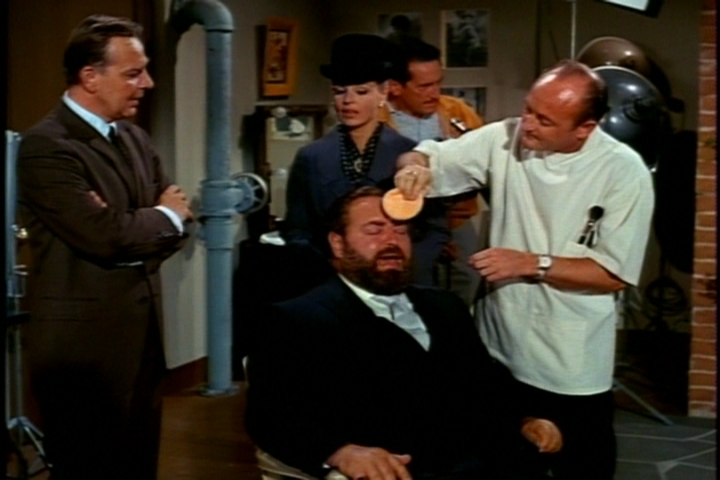
“Must I go through with this pitty-patting on my brow?”
When the resulting full-page ad attracts contempt from fellow gentleman’s gentleman Withers but adulation from the ladies, French begins to like and even court the attention.
French and his fan club
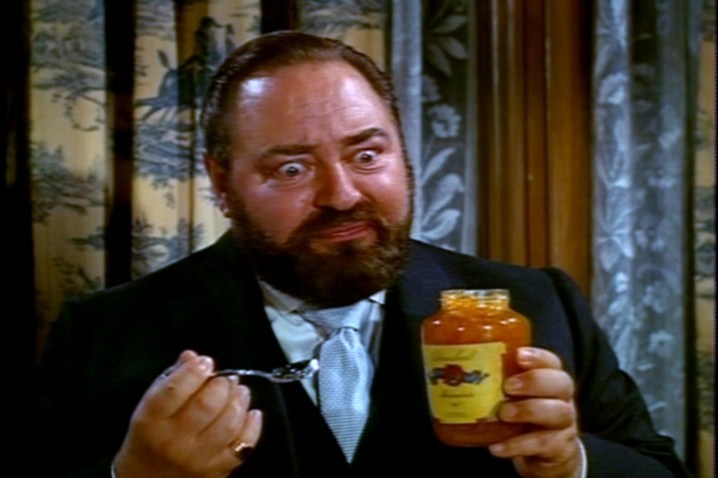
He readily agrees to a five-week national promotional tour–until he actually tastes the marmalade.
The taste
Random Thoughts
Sebastian Cabot is very funny as he runs the gamut from disdainful to enthusiastic and back in the world of advertising.
This script seems to have more funny lines than most.
The kids react to the ad: Buffy: “He’s pretty.” Jody: “Maybe he’s smiling ‘cause we weren’t there.”
Notable Quotes
“We are not a male model, sir.”—French
“Never let it be said that Bill Davis didn’t do his best to promote a pretty girl.”—Uncle Bill
“It might have been easier with Laurence Olivier”—Uncle Bill
Guest Cast
Ellen Latimer: Mary Murphy. Mr. Hayden: Woodrow Parfrey. Withers: Richard Peel. Miss Reynolds: Nora Marlowe. Miss Peters: Peggy Rea. Miss Howard: Pauline Drake. Woman: Kathryn Minner. Photographer: Lou Krugman. Mary Murphy’s other TV credits from the ’60s include Perry Mason, Outer Limits, Honey West and The Fugitive. She had a memorable movie appearance with Marlon Brando in The Wild One.
Random fashion note–I like hats.
Woodrow Parfrey appeared in many TV shows and movies. Of note are roles in Planet of the Apes and Back to the Planet of the Apes. He also played Ike Godsey in The Homecoming, the original Waltons special that preceded the series.
Woodrow Parfrey plays Miss Latimer’s boss. Hmm, his office sports the same green paint that pervades the Davis apartment and Bill’s office.
Nora Marlowe also had a Waltons connection—she played the recurring role of Mrs. Flossie Brimmer. And Peggy Rea played Rose on The Waltons. Her other TV credits included the role of Lulu Hogg on The Dukes of Hazzard and regular roles in Step by Step and Grace Under Fire. Both Murphy and Rea died last year.
Fun Facts
WXOY is having a Velvet Vultures festival. Mr. French reads Punch.
Continuity Notes
This is the first appearance of the snooty Withers.
“Above all, don’t arrive at the breakfast or dinner table, or go downtown shopping, with hair up and guard down. Boys (including fathers and brothers) should think that beauties are born, not made—even though all girls know better!”
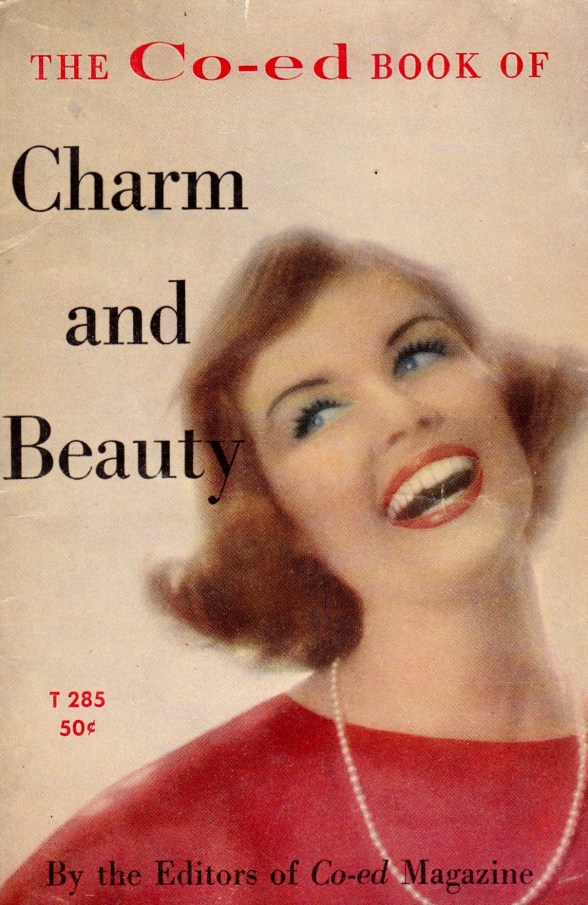
The Co-Ed Book of Charm and Beauty, 1962 (1963 printing)
By the Editors of Co-Ed Magazine
About the Book: For the latest entry in my series on vintage advice books for teens, we turn to this Scholastic book club offering, chock full of advice for improving every aspect of a girl’s looks and personality. The fashion section makes me sad that I was born too late for hats and little white gloves, though I’m happy to live without girdles and curlers.
About the Authors: Scholastic published Co-Ed Magazine from 1957 to 1985. According to the New York Times, Co-Ed targeted girls in the home economics field. (Scholastic replaced the magazine with Choices, a classroom magazine for teens of both sexes, which still exists.) As we have seen in the past, Margaret Hauser edited Co-Ed Magazine for many years, and she and other Scholastic personnel often wrote advice books under the pseudonym Gay Head. It’s a shame they didn’t do so with this one—that name would make a lovely complement with the cover image.
Hair setting techniques, The Co-Ed Book of Charm and Beauty
Recommended Amount of Time to Devote to Bathing and Beauty Treatments: An hour each night, extended to two hours once a week and to three or four hours once a month for intensive maintenance.
Fashion Tips
“Short white gloves are never out of place, and there are many occasions when not to wear them would show a lack of good taste. Gloves are a ‘must’ at church, at weddings, and most really dress-up affairs.”
“A movie date, a stroll in the park, a casual gathering of your friends, or a shopping expedition should see you skirted casually, perhaps in the outfits you wear to school. A date that’s somewhat special, a church activity, concerts, the theater, and informal school dances call for a suit or that old stand-by, the basic dress…A basic dress takes to a hat, high heels, and crisp white gloves as well as to flat shoes and an all-purpose cardigan. It can go almost anywhere and be your Sunday best.”
“Special finery must be special all the way, from sparkling earrings and delicate bracelet to petite evening bag and satin, suede, or velvet slippers. Such grand occasions permit you to bare your neck and shoulders; to float in chiffon, taffeta, peau de soie, or fine cotton organdy; to wear a jeweled pin and stars in your eyes!”
“You’ll wear a hat to church, of course, but what’s the rule for other times? It’s good taste to wear a hat when traveling, on ‘downtown’ shopping trips, and whenever you know other women or girls will be wearing them.”
“When you’re within the walls of your home, don’t fall into the ‘nobody will see me’ rut. What about your family? What about the neighbors and store clerks who see you as you dash to the store on a last-minute errand for mother? They’ll view with horror, and remember with regret, the vision of you in pin curls, shirttail flying.”
Recommended at-home wear: Skirts or culottes, pants or Bermudas, with classic shirts or knit tops.
“On occasion, treat (your family) to the pleasure of seeing you in pretty separates or a dress at dinnertime—a ‘must’ if company is present.”
“Ankle socks or knee socks pair with sturdy school shoes, while you’ll want to wear nylons with soft ballet-type flats and little heels. Sneakers are for sports and after school.”
Make-up Tip: “A bit of petroleum jelly applied to eyelids, brows, and lashes, will make the eyes sparkle, lashes look longer, and brows stay neatly in place.” (I hate when my brows wander.)
Fragrance Recommendations by Personality Type
Single Floral: For girls who are “sweet, fragile, feminine.”
Floral Bouquet: For “the All-American girl, crazy for football and hi-fi, happy in the thick of things, always ready for fun.”
Spicy: For girls who are “alert, alive, mad for bright colors and songs with a beat.”
Woodsy-Mossy: For “the born athlete who lives in shorts and sweaters and delights in long walks in the rain.”
Oriental Blend: For “the intense, dramatic type of person who looks great in unusual jewelry, offbeat styles.”
Fruity: For “the quiet kind of girl who thinks more than she talks, enjoys soft music, serious books, daydreaming.” (I’m fruity, apparently.)
Modern Blend: Good if “you’re always on the go, always in the know, a clever girl with lots of zip and a wonderful sense of humor.”
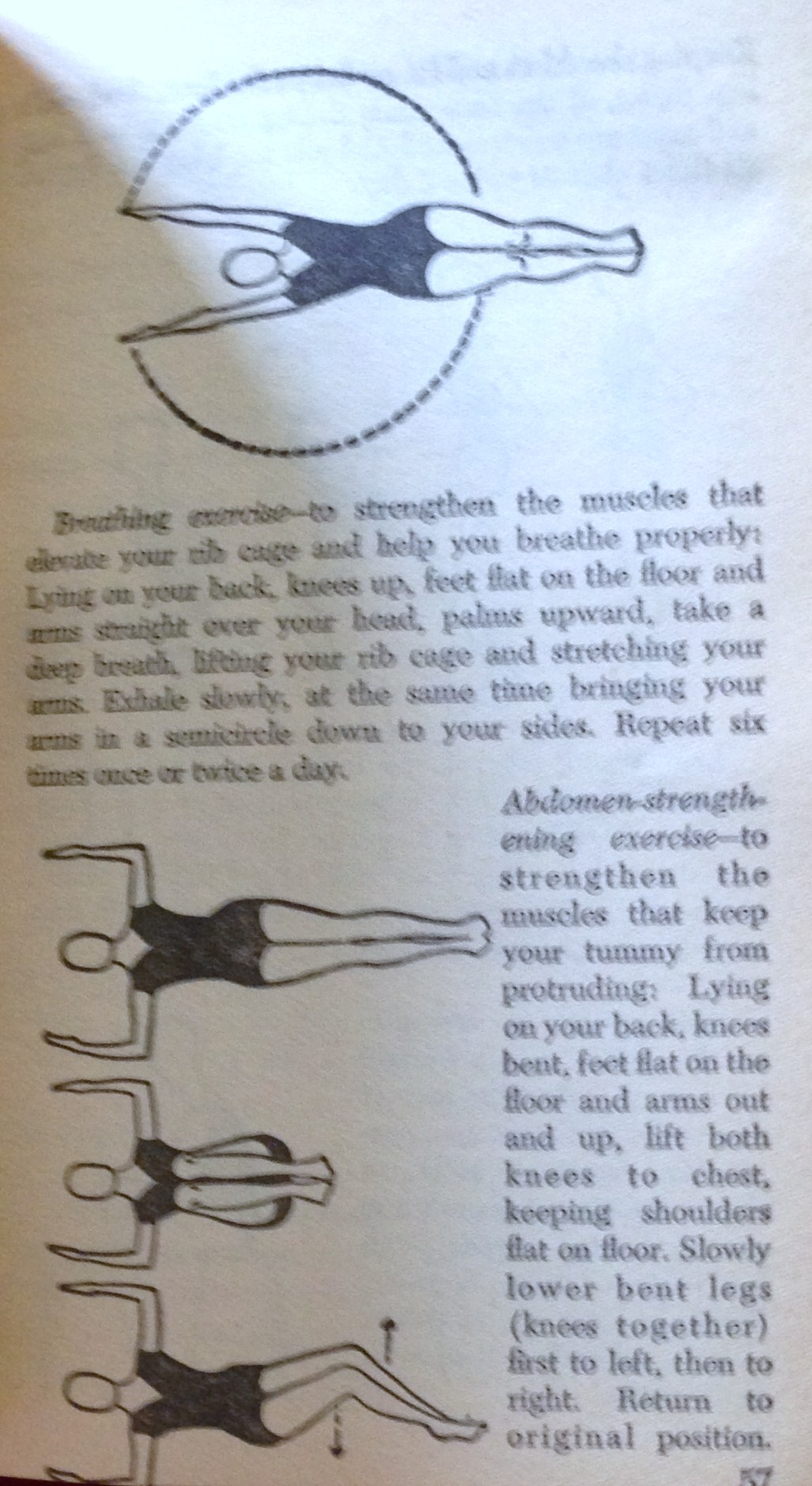
Sample exercises
Clothes and Body Type:
“If you’re over five feet six inches tall and weigh 125 pounds or less, lucky you! You have the fashion model’s ideal figure.”
DOs for this type: Shirt-waist dresses, bold prints (including “coin-size polka dots”), large accessories.
DON’Ts: Too slim skirts, deep V necklines, vertical stripes.
Girls 5’6” and over, weighing “135 or thereabouts” (Anything higher than this is too terrible to contemplate, I guess)
DOs: Vertical and diagonal stripes, middy collars, cardigan tops, three-quarter sleeves, straight or gently flared skirts.
DON’Ts: Princess dress lines, pleated skirts.
“If you’re pining for a print, pick the ‘teeny-weeny’ polka dot, a calico, or baby-check ginghams.”
Girls 5’3” and under, weighing 105 or less
DOs: “The princess line, with its snug-fitting bodice and flared skirt,” straight sheaths, softly tailored suits, delicate buttons and jewelry, knife-pleated skirts.
DON’Ts: Bold-patterned prints, “suitcase-sized handbags.”
Girl 5’3” and under, weighing 115 or more
DOs: Skirts with “gentle gores or center pleats,” narrow self-belts, cardigan-topped outfits.
DON’Ts: Pencil-slim sheaths, ballooning skirts, deep V-necks, box pleats, overlong jackets, “giant trimmings.”
Sitting, Standing, and Walking Attractively
Sitting: “Try the S curve. Knees together (always—even when wearing shorts or slacks), place your thighs diagonally across the seat of the chair, your legs in the opposite direction, and cross your feet at the ankles.”
Standing: “Stand with correct posture, feet parallel. Step back with one foot and point that toe out at a forty-five degree angle. Keep the front foot straight, the heel a couple of inches away from the instep of the back foot, and turn your hips slightly toward the back foot (so that they present a slim line).”
Walking: “Beware of arms swinging, taking too long (or short) a stride, letting your chin lead and your derriere follow as it may…Your ‘bounce’ should be less than two inches…If you consciously let your fingertips brush your skirt as you walk, you’ll avoid that ‘swinging out’ look.”
Fearless Charm Inventory: The book includes inventories to help girls assess their charm levels. To the authors’ credit, they include prejudice, along with shyness and laziness, as a barrier to charm. The original owner of my book was not prejudiced or lazy, just shy.
Goody! Quizzes!: The book also includes quizzes on humor, tact, family interactions, and dating etiquette. Quizzes were always my favorite part of teen magazines. I think the wrong answers on the tact quiz may be a wee bit too obvious, though:
“I should have known you were sick because…”
a.) You look so awful.
b.) I missed seeing you around.
c.) Sally’s been dating your boyfriend.
Final Fun Fact, Courtesy of the Authors: “The word grooming comes from gromet, an old French word meaning ‘servant’ or ‘assistant.’ Before you jump to the wrong conclusion, bridegroom comes from a combination of two Anglo-Saxon words: ‘bryd’ (bride) and ‘guma’ (man)!”
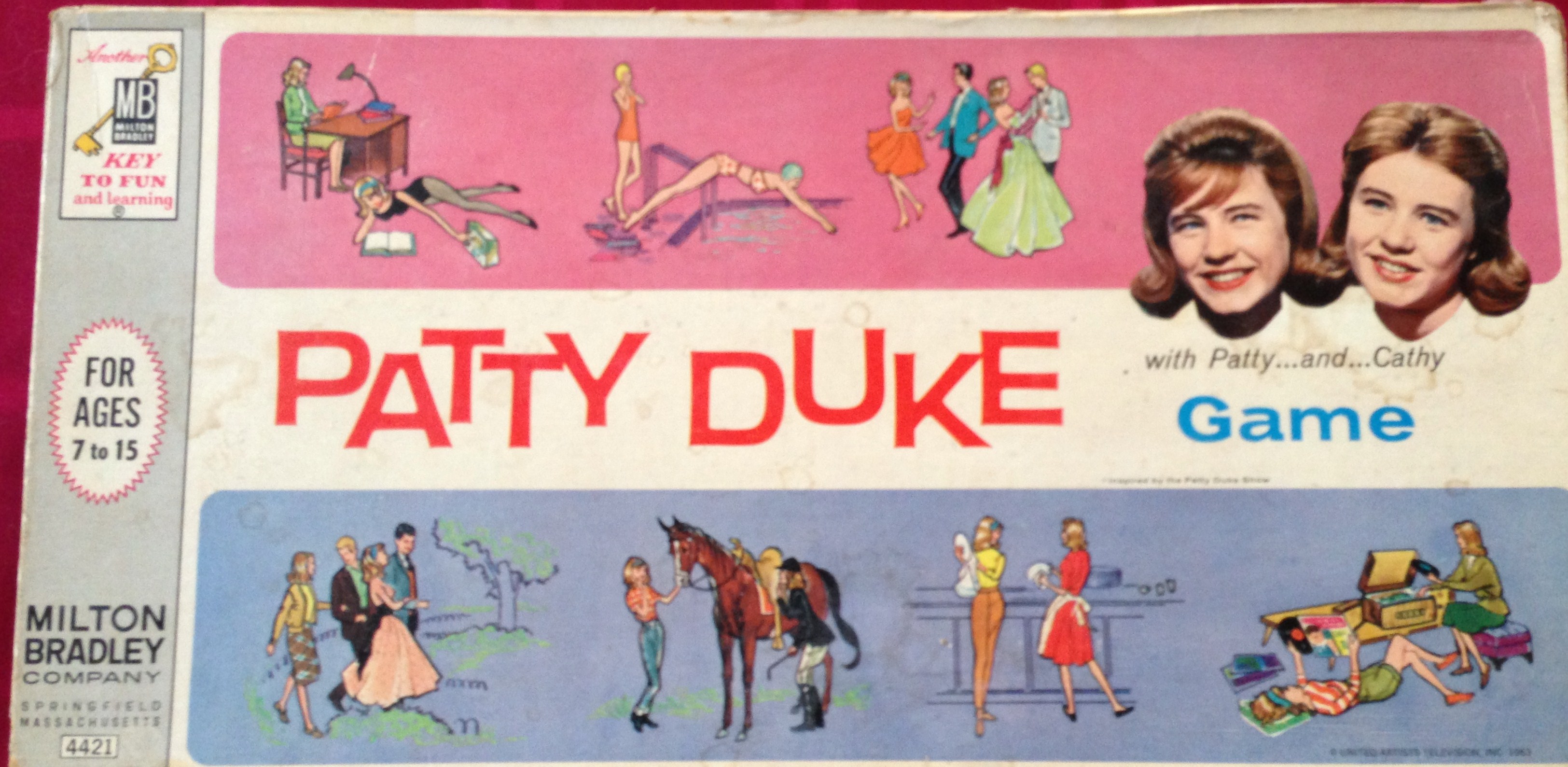
Would a girl lose her mind playing this game about cousins who are two of a kind? Probably not, but she might have fun.
Today’s Game: Patty Duke Game (Tiny print on the box reads, “Inspired by the Patty Duke Show.” That’s pretty obvious—the game revolves around the show’s characters, Patty and Cathy. I wonder why they didn’t call it the Patty Duke Show Game?)
Copyright Date: 1964.
Recommended Ages: 7 to 15.
Game Box: Cute, with its pink-and-blue color scheme and floating Patty and Cathy heads.
Game Pieces: Instead of regular plastic pieces, this game uses red, blue, yellow, and green teenagers, two girls and two boys. Nice!
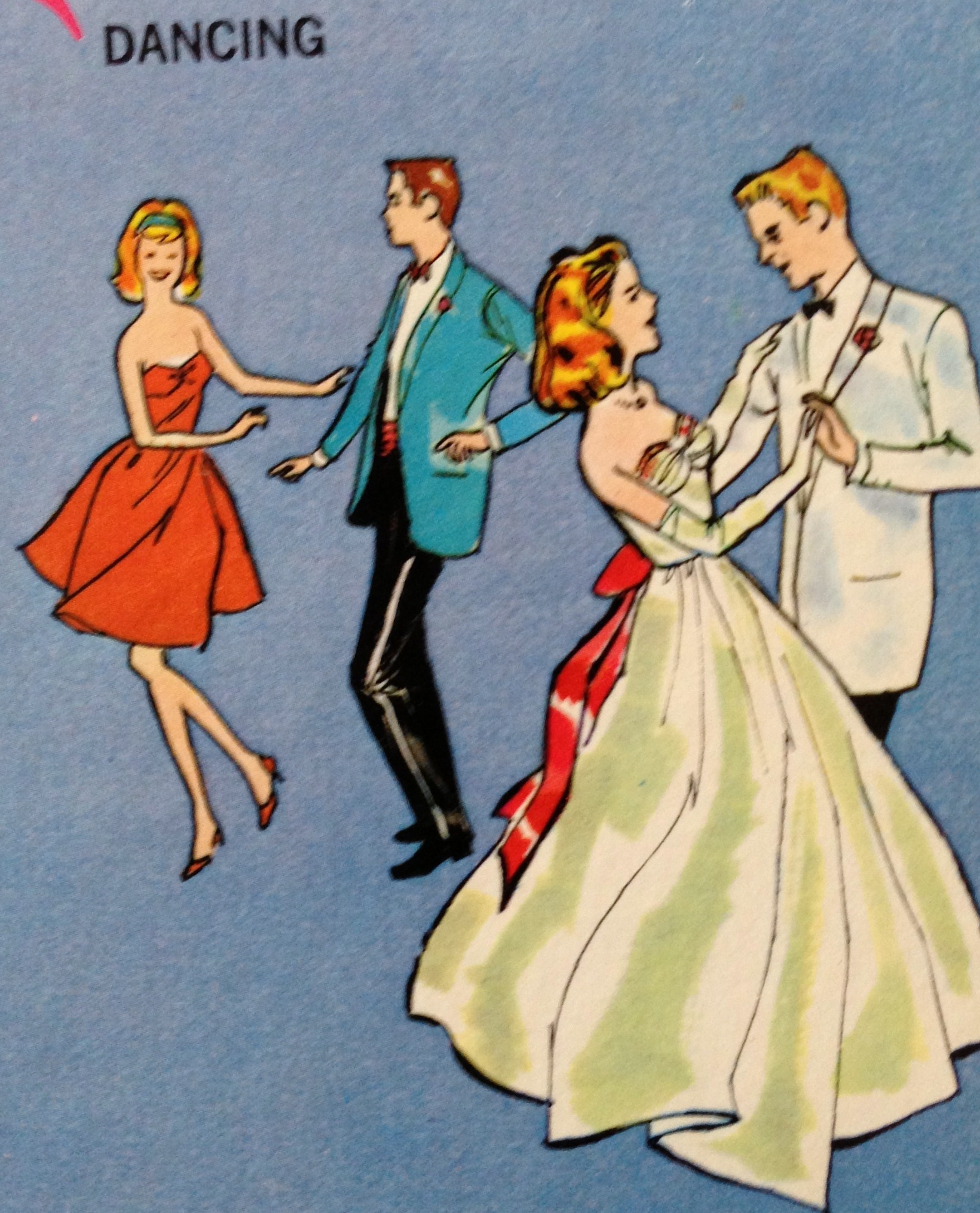
Game Board: Like the game box, the board features cartoon pictures of Patty and Cathy doing typical 1960s teenage activities—dancing, watching TV, dating, studying, helping with chores. Can you tell which girl is Patty and which one is Cathy? In case you forgot, their personalities are ever-so-slightly different.
Cathy hesitates. Patty wears a two-piece swimsuit and dives right in.
Cathy is actually studying. The radio is distracting Patty (who is wearing a leotard for no apparent reason).
Patty is “losing control.” Cathy is dancing like a girl who “adores a minuet.”
If you enjoyed this entry, please read my previous Spin Again Sunday posts.
This is part of my weekly series about the classic CBS sitcom Family Affair
Season 1, Episode 4, “The Matter of School,” 10/3/66
Written by: Henry Garson. Directed by: William D. Russell.
Synopsis
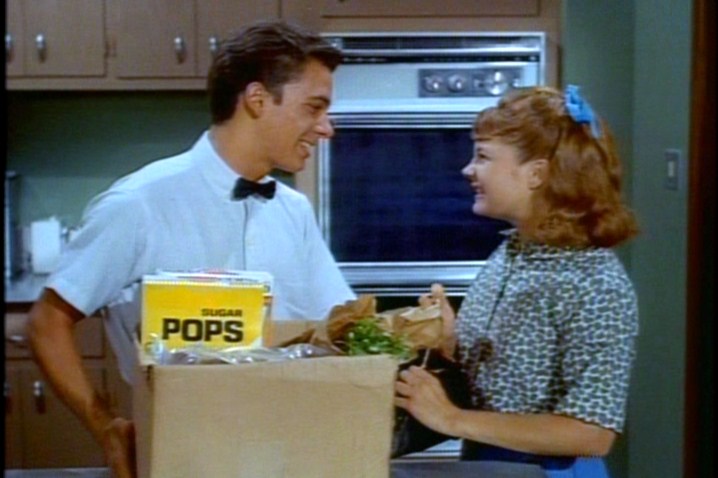
It’s time to enroll the kids in school. While it’s a simple matter to enroll Buffy and Jody in first grade, Uncle Bill is less certain about what’s best for Cissy. He rejects immediately French’s suggestion of Miss Haycroft’s School in London but reluctantly considers sending her to Bryerfield, a boarding school in Connecticut. Cissy really wants to go to Lexie High, a public school in the city, especially after grocery delivery boy Freddy sings the school’s praises.
Freddy wants to share more than Sugar Pops with Cissy.
But she misinterprets Uncle Bill’s mention of Bryerfield as a hint it would ease a burden on him if she lived at school. She chooses Bryerfield, and Uncle Bill promises her a big evening her first weekend home–dinner at 21, a musical, and a visit to a nightclub. Business makes him forget his promise, though, reinforcing Cissy’s idea that she should be “out of his hair.”
Cute dress. This is a good fashion episode for Cissy.
When she mentions this to Buffy and Jody, they decide to get out of Mr. French’s hair and attempt to take a cab to Connecticut. Talking to the kids, Bill uncovers Cissy’s misconception, and French reminds him about the plans he forgot with Cissy. Uncle Bill rushes to Connecticut to bring Cissy home, and later he finally escorts a lovely Cissy on that special date.
Cissy dressed for her evening out
Random Thoughts
The bonding between Cissy and Uncle Bill is touching, and the ending is sweet. Buffy and Jody provide comedic counterpoint to main story, especially in the scene in which exasperated Mr. French registers the twins for school. (First grade is taught in morning and afternoon sessions, and French asks if the kids can attend both!)
Buffy tries to show her principal exactly where she got vaccinated
This episode introduces a pervasive Family Affair idea that the children will be interacting with peers from many different backgrounds. Freddy tells Cissy and Uncle Bill that kids from penthouses and kids from basements attend Lexie High, and Buffy and Jody quickly make friends with a cabdriver’s son. The principal also notes that the twins will hear a variety of languages spoken in their class.
Uncle Bill’s clients from Afghanistan. The Davis world is a cosmopolitan one.
Guest Cast
Ted Gaynor: John Hubbard. Mrs. Brown: Sarah Selby. Mrs. Hedgemot: Gertrude Graner. Mr. Kabul: Aly Wassil. Freddy: Eugene Martin. Mr. Razini: Naji Gabbay. Mr. Chill: Reginald Lal Singh. Barbara: Liza Garson. Murray: Tony Campo. Sarah Selby had a recurring role for many years as Ma Smalley on Gunsmoke, and she was Aunt Polly in a 1974 TV version of Huckleberry Finn. She would appear in four more Family Affair episodes. Campo, who would return as a different character in season five, was the third Scotty Baldwin on General Hospital; Johnny Whitaker was the first. Gabbay and Wassil would both reappear in season two’s “The Beasley Story,” and Martin would appear once more as Freddy. Hubbard, who would reappear in several episodes as Uncle Bill’s partner, starred in many largely unmemorable films of the 1940s. I strongly suspect Liza Garson is a relative of producer and sometimes writer Henry Garson. Her character struck me as oddly superfluous in her scene even before I noticed the familiar last name.
Barbara’s job is to stand awkwardly behind the principal
Fun Facts
Buffy and Jody attended kindergarten in Terre Haute. In his reluctance to progress to first grade, Jody shows the first sign of being less academically minded than Buffy. The Davis’ apartment building is at 600 E. 62nd Street.
Continuity Notes
Cissy’s desire not to be a burden to Uncle Bill stems from her fear that she was “dumped” on him. We have Terre Haute references. Miss Faversham is mentioned.
Notable Quotes
“She’s like Cinderella, but tomorrow she’ll be our sister again.” Buffy, on Cissy
Today’s Bonus Feature
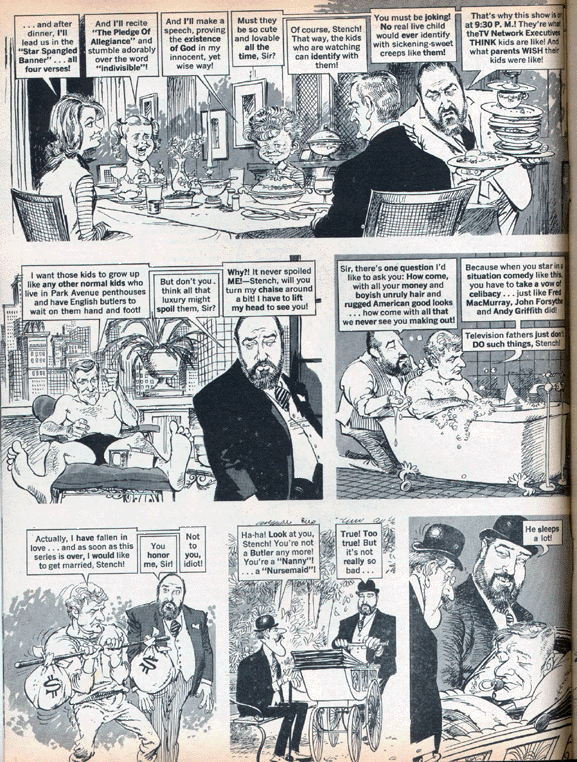
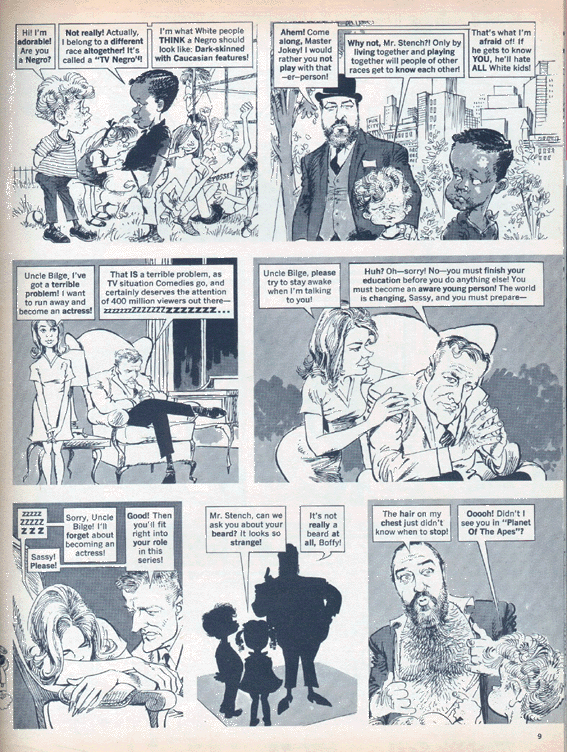
A Family Affair parody from Mad Magazine, April 1969
This is part of my weekly series about the classic CBS sitcom Family Affair
Season 1, Episode 3, A Gift Horse, 9/26/66.
Written by: John McGreevey. Directed by: William D. Russell.
Synopsis
Uncle Bill returns from East Africa with gifts for the kids, and Cissy gives him a hand-knit tie. With $1.07 between them, Buffy and Jody decide to find the perfect gift for Uncle Bill. Baffled by French’s suggestion of a gift certificate, they search in vain for something Bill needs. Soon they learn that their friend Mr. McGovern, who operates a hansom cab with a broken-down horse named Rosie, is giving up his cab and parting with Rosie. Of course, they decide a horse is the one thing Uncle Bill needs.
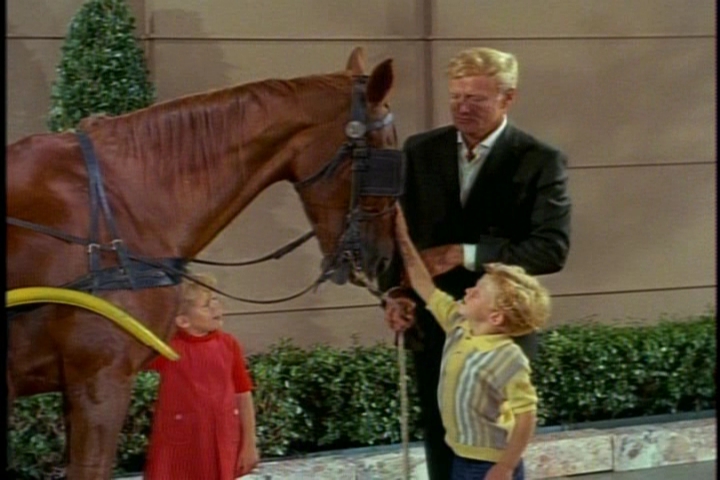
Rosie. She really does look broken down.
When French learns that McGovern sold the children the horse, he bawls the man out for taking advantage of children. Realizing what the gift means to the twins, however, Uncle Bill accepts it and makes arrangements to send “the Rose of Killarney” to live with friends near Danbury, Connecticut.
Mr. French sees the horse. I love Sebastian Cabot’s reactions!
Random Thoughts: Kids, horses–Uncle Bill’s apartment is becoming a real dumping ground. A cute episode. At first, I did think Mr. McGovern was unethical for allowing the kids to “buy” the horse, but he obviously wanted to make sure his friend had a good home.
One big happy family
Not a “Helicopter Butler,” Apparently: When French leaves to confront Mr. McGovern about the horse, no one is at home to supervise 6-year-old Buffy and Jody.
Gratuitous twin cuteness
Guest Cast: Emmet Parnell McGovern: Paul Hartman. Scotty: Karl Lukas. Hartman’s film career included Inherit the Wind and The Thrill of it All. He had a regular role as Bert Smedley, the barber, on Petticoat Junction, and as Emmet Clark in the 1967-68 season of The Andy Griffith Show and on its spin-off Mayberry R.F.D. Lukas would return as Scotty in quite a few Family Affair episodes.
A thaw in Anglo-Irish relations
Fun Facts: Scotty, the doorman, makes his first appearance.
Scotty. Gee, do you think that big sign will figure into the upcoming scene?
Notable Quotes: “It’s just what I wanted, if I knew there was stuff like this.” Jody, receiving an ant farm
Gratuitous Uncle Bill smile
“Mr. Davis is not running a home for superannuated horses.”—French
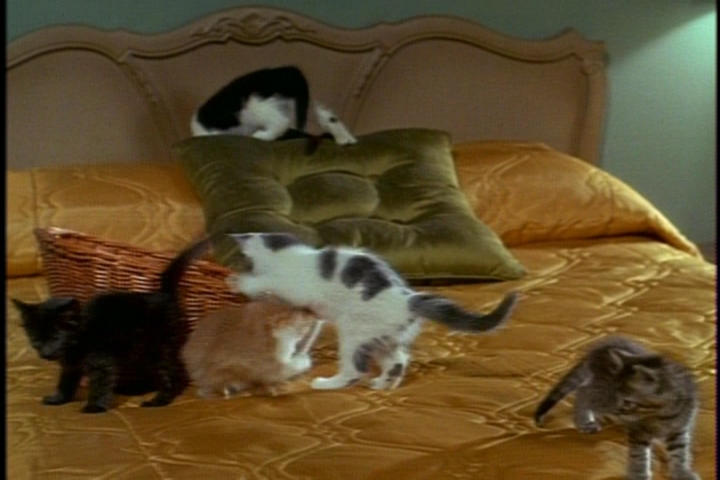
In the episode’s tag, the twins give Mr. French a gift–kittens!
Of course, he takes this turn of events in stride.
Another kitten shot because…well, I love kittens. And it’s my blog.
Today’s Bonus Feature
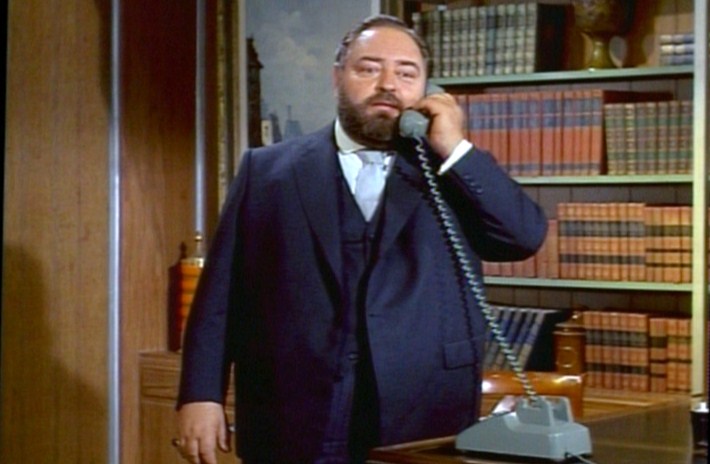
TV Guide, December 16, 1967, with a first-person Sebastian Cabot feature. Some things we learn:
* He thinks Michael Redgrave is a better actor than Laurence Olivier.
* Walt Disney doesn’t pay well.
* Brian Keith loves kids but doesn’t suffer foolish reporters gladly.
























 Embarrassing Treasures