Weird Words of Wisdom: Chaperoned Edition

“The question of chaperons will surely come up. It’s a fact that most teen-agers prefer to go to a party that’s chaperoned.”

Party Perfect by Gay Head, 1959 (3rd printing, 1962)

Yes, the author’s name is Gay Head. My “Top Searches” should be interesting this week.

About the Book: Dust off your records and start pressing your suit— we’re going to party like it’s 1959! This slim Scholastic volume is filled with party-planning tips, from entertainment (“No evening’s program of games is complete without a relay race”) to wardrobe (“Dress up in your best date dress and tell your girl friends to do the same. Jacket and tie for the boys. After all, part of the fun of a party is being dressed right for the occasion. You’ll all enjoy yourselves more if you do.”)

Sample Party Themes:

  • A United Nations get-together. You assign each guest a country, and they dress accordingly: “A girl can look like a Mexican senorita by wearing a colorful, full cotton skirt, a pretty blouse, and hoop earrings. To be a gaucho, a boy might wear dark trousers, a colorful shirt, and a cumberbund.”
  • A space party: “By Jupiter—be the first one in your crowd to give an out-of-this-world party! This is not as mad as it sounds. The day will come when travel to outer space will be as everyday as going for a spin in the family car.”

Sample Refreshments:

  • For New Year’s Eve, hot buttered soup, made with eight cans of condensed tomato soup and seasoned with lemon juice, cinnamon, and cloves. “Serve hot with a pat of butter floated on the top.”
  • For Valentine’s Day, tuna tomatoes. Combine two cans of chunk-style tuna with a can of cream of mushroom soup. Season with salt and pepper. Use mixture as filling for eight hollowed-out tomatoes, and bake at 350 degrees for 30 minutes.
  • For a space party, deviled ham missiles. Spread deviled ham on half a hot dog bun. Slice a cheese wedge in half lengthwise and insert it at one end of the bun. Insert two carrot sticks at the other end. Top with other half of bun.

Sample Party Games Titles That Sound More Interesting Than the Games Actually Are: Bottoms Up, Scrambled Anatomy, Elopement, Murder.

About the Author: I would love to share a complete biography of Gay Head that included her childhood at Newport, her lively debutante days, and her marriage to a shipping magnate. Alas, Miss Head never existed. The Library of Congress entry for this book suggests that Gay Head was a pseudonym for Margaret Hauser. I can’t find any information about Hauser, except that she edited Scholastic’s Co-Ed Magazine from the 1950s through at least 1970. She also wrote articles under the Gay Head pseudonym for Scholastic magazine in the late 1930s and early 1940s.

Interestingly, though, Hauser was not the only Gay Head. On October 21, 2002, USA Today published an interview with Ruth Imler Langhinrichs. “From 1948 to 1952,” the article states, “Langhinrichs used the pseudonym Gay Head to answer teens’ questions in a column in Scholastic magazine called ‘Boy Dates Girl.’”

It seems that Gay Head must have been a in-house pseudonym, used by various Scholastic writers. The occasion for Langhinrichs’ interview was the release of Steve Coulter’s short film The Etiquette Man, based on the book Boy Dates Girl, a compilation of Gay Head columns. Boy Dates Girl was first published in 1937, with updated printings through the mid-1960s.

Langhinrichs, at least, looks back fondly on her Gay Head days, according to USA Today: “Her years as Gay Head were happy times, she says. They helped her become an editor for teens at Ladies’ Home Journal, where she wrote a column titled Sub-Deb — as in not-quite-a-debutante. Langhinrichs still collects lore on social civility and manners. She works two days a week as a writing coach at Indiana’s Purdue University.”

To the delight of bloggers everywhere, “Gay Head” wrote several other teen advice books, including You’re Asking Me? and Hi There, High School.

We’ll be seeing more of her in future weeks.

Previous entries in this series

Weird Words of Wisdom: Prettily Bewildered Edition

Weird Words of Wisdom: Spanking New Edition
In Memory of Horshack

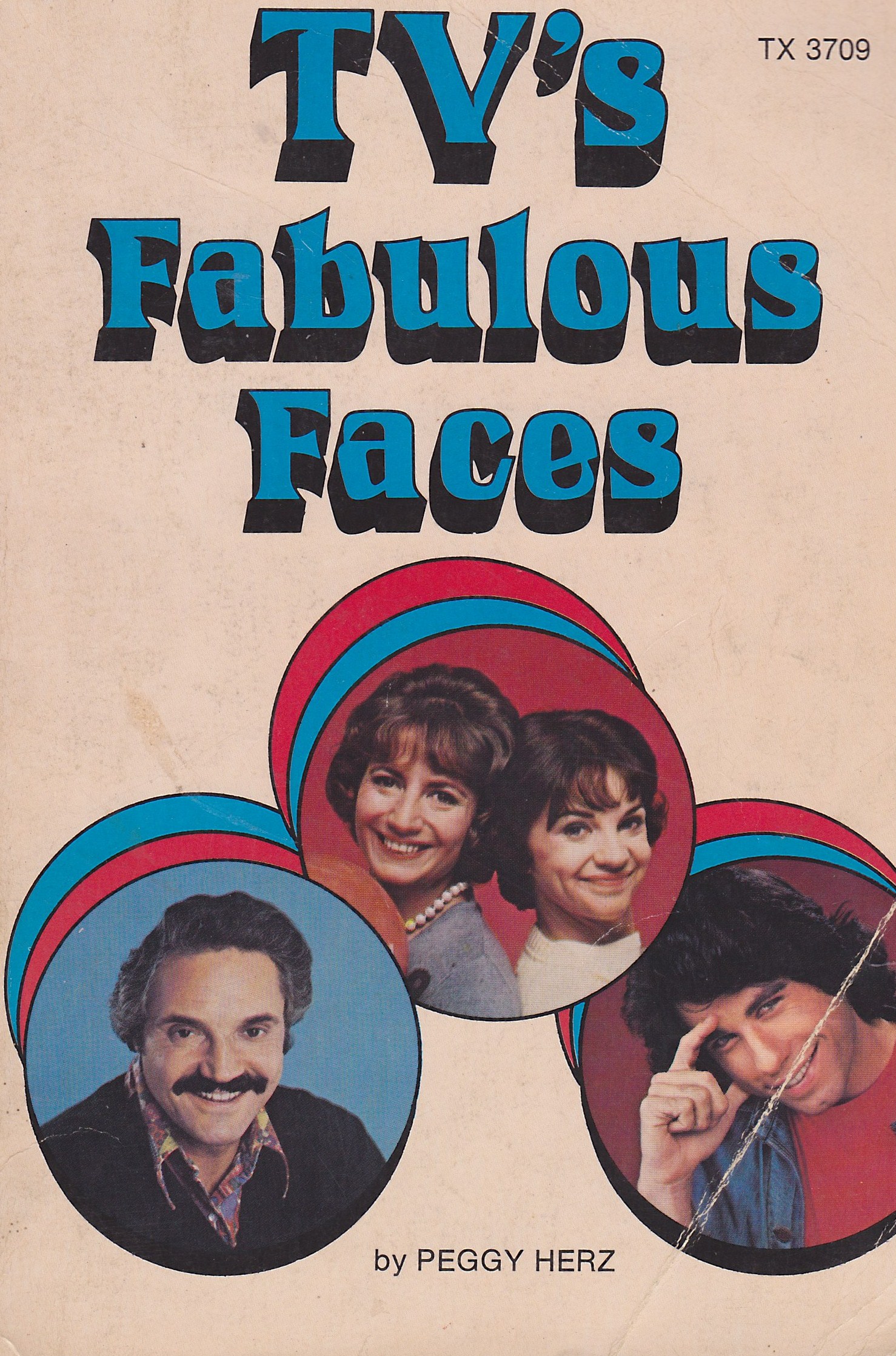
I wonder who decided to put Hal Linden on the cover of a kids’ book called TV’s Fabulous Faces. I mean, Donny and Marie have a chapter in here!

In tribute to Ron Palillo, who passed away August 14, I present this excerpt from TV’s Fabulous Faces, a 1977 Scholastic Book Club title:

“When the show first came on the air, some viewers thought Horshack was retarded. ‘That made me very angry,’ Ron said. ‘People pinned that label on Horshack because he is young. If you act that way when you’re older, they just say you’re a little slow.’

“Ron Shook his head in disgust. ‘At first, Horshack would only talk when Barbarino said, ‘You may talk now.’ That’s going on in schools today. It always has! Retarded? Go to schools and see the kids! Many of them are crying out for attention and that’s not because they are retarded! They are asking for help!’

Spin Again Sunday: Laverne & Shirley

Let us venture again into the world of vintage board games.

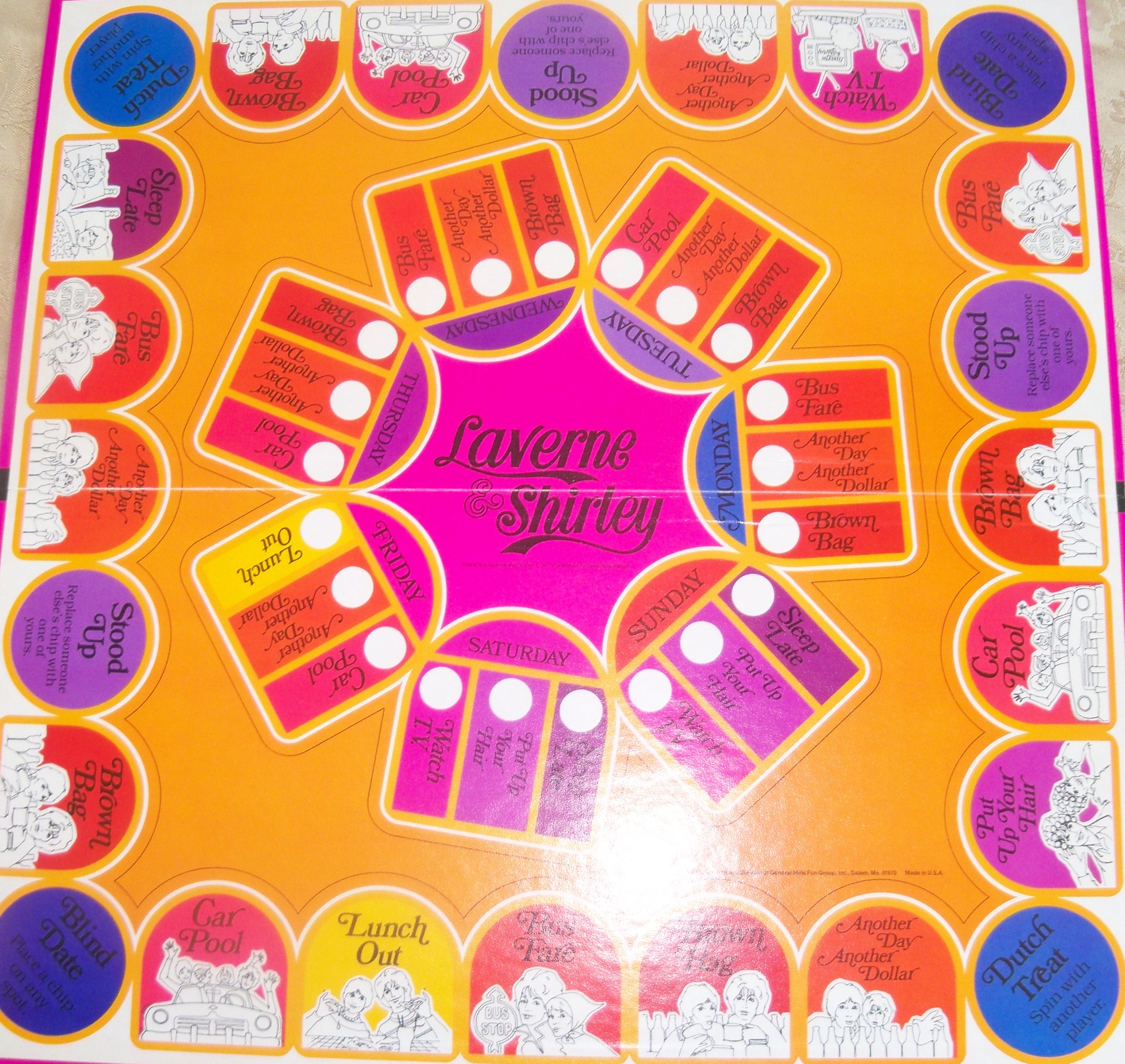
Today’s Game: Laverne & Shirley

Copyright Date: 1977

Object: “Make all your dreams come true.” (In this game, all your dreams must involve dating. She who dates the most, wins.)

Game Board: Colorful, but the Laverne and Shirley caricatures are drab. Perhaps they complement the drab vision of blue collar life this game portrays—an endless round of rent paying, hair washing, TV viewing, bus riding, and brown-bag lunching.

Game Pieces: Standard plastic pegs. The most interesting game element is your “diary,” which you strive to fill up with dating minutes.

Recommended Ages: 8-14. Manufacturers often put an upper age limit of 13 or 14 on these TV show games. I don’t what their reasoning was, but I can imagine parents using it to their advantage: “I’d love to play Laverne & Shirley with you, Lisa, but rules are rules.”

Personal Notes: Did you ever see something and know you’ve seen it before, long ago? That’s how I felt looking at this game board, though I’m pretty sure I never owned the game. I must have played it at a friend’s house.

About the Show: Laverne & Shirley premiered in January 1976. I remember watching the first episode and finding it hilarious. The rest of America agreed, quickly propelling the show to number one. I was 7; I don’t know what the rest of America’s excuse was.

Final Fun Fact: According to The Complete Directory to Prime Time Network and Cable Shows, “Critics called (the show) TV junk food; ABC program chief Fred Silverman responded by comparing it to the classic satire of the 17th century French playwright Moliere.”

Previous Entries in this Series

Charlie’s Angels

The Trapper Keeper’s Forgotten Older Sibling

Second grade–we had book bags, not backpacks

Blogging about lunch boxes yesterday got me thinking about school supplies and how they’ve changed through the years. My daughter’s school provides lengthy, specific supply lists to parents each summer. On the first day of school, her backpack contains a spine-disfiguring load of tissues, hand sanitizer, spiral notebooks, folders, loose-leaf paper, and glue sticks.

School-supply shopping was simpler in the 1970s. My teachers rarely required anything specific—as long as you had paper and pencils, you could organize your work any way you wanted. Once, in seventh grade, I tried a complicated system of color-coded folders and spiral notebooks for each class.  The more common organizational tool, however,  was a binder. (Strangely, this is one supply my daughter’s school bans.)

Many people have fond memories of their Trapper Keepers. You can find tributes to them across the web, and people snap up vintage ones on Ebay. The Trapper Keeper even inspired a South Park episode.

My first and favorite binder, however, was the Trapper Keeper’s forgotten older sibling: The Mead Data Center.

As far as I can tell, Mead introduced the Data Center in 1975, three years before they released the Trapper Keeper. Like that later binder, the Data Center came with a detailed measurement conversion chart. Other features, according to an Etsy listing for vintage 1975 one, were a planner, a place to record your class schedule, a telephone directory, a three-year calendar, a notepad that clipped onto the binder, and a pencil holder.

Now, when I had this model in third grade, almost all these features were useless to me. But I loved the idea of having them. These extras, and the name Data Center itself, suggested a grown-up, businesslike level of organization—a level of organization I’ve never been able to reach as an actual grown up.

This second part of this commercial shows that Data Center lasted into the 1980s.

Final Fun Facts: Mead corporate history is a complicated series of acquisitions and sales. Some trivia:

  • In 1968, Mead spent $6 million to buy an information technology company; this company went on to develop the Lexis Nexis electronic research system, which Mead sold in 1994 for $1.5 billion.
  • In the 1960s, Mead also acquired Westab, the company that invented the spiral notebook and produced Big Chief tablets, a back-to-school staple for mid-century kids.
  • In 1992, Mead sold American Pad and Paper—Ampad—to Bain Capital. Ampad’s subsequent bankruptcy is controversial. But this transaction does allow you to connect Mitt Romney to a Trapper Keeper with only two degrees of separation.

Let’s Do Lunch Boxes

As an adult, you have many ways to express your tastes—you do it with the clothes you wear, the cars you drive, the home décor you choose, and the statements you spew across social media platforms.

But as child anticipating the first day of school and wanting to make a strong impression, your options were limited. Your mom was still buying your clothes. School supplies were mostly bland. Only one back-to-school purchase was both an expression of your individuality and a totem connecting you to your peers: The lunch box.

The National Museum of American History is hosting a small exhibit of vintage lunchboxes. (To celebrate the exhibit’s opening, the Museum enticed ancient celebrities to pose with their younger, immortalized-in-tin representations.) 

The Lunch Box Museum in Columbus, Georgia, displays a much larger selection (and has now earned a spot on my bucket list). Lunch box collecting is a bustling business online, and many web sites offer photo galleries of the best and worst lunch box specimens. (I’m pretty sure one of my schoolmates had that Exciting World of Metrics box.)

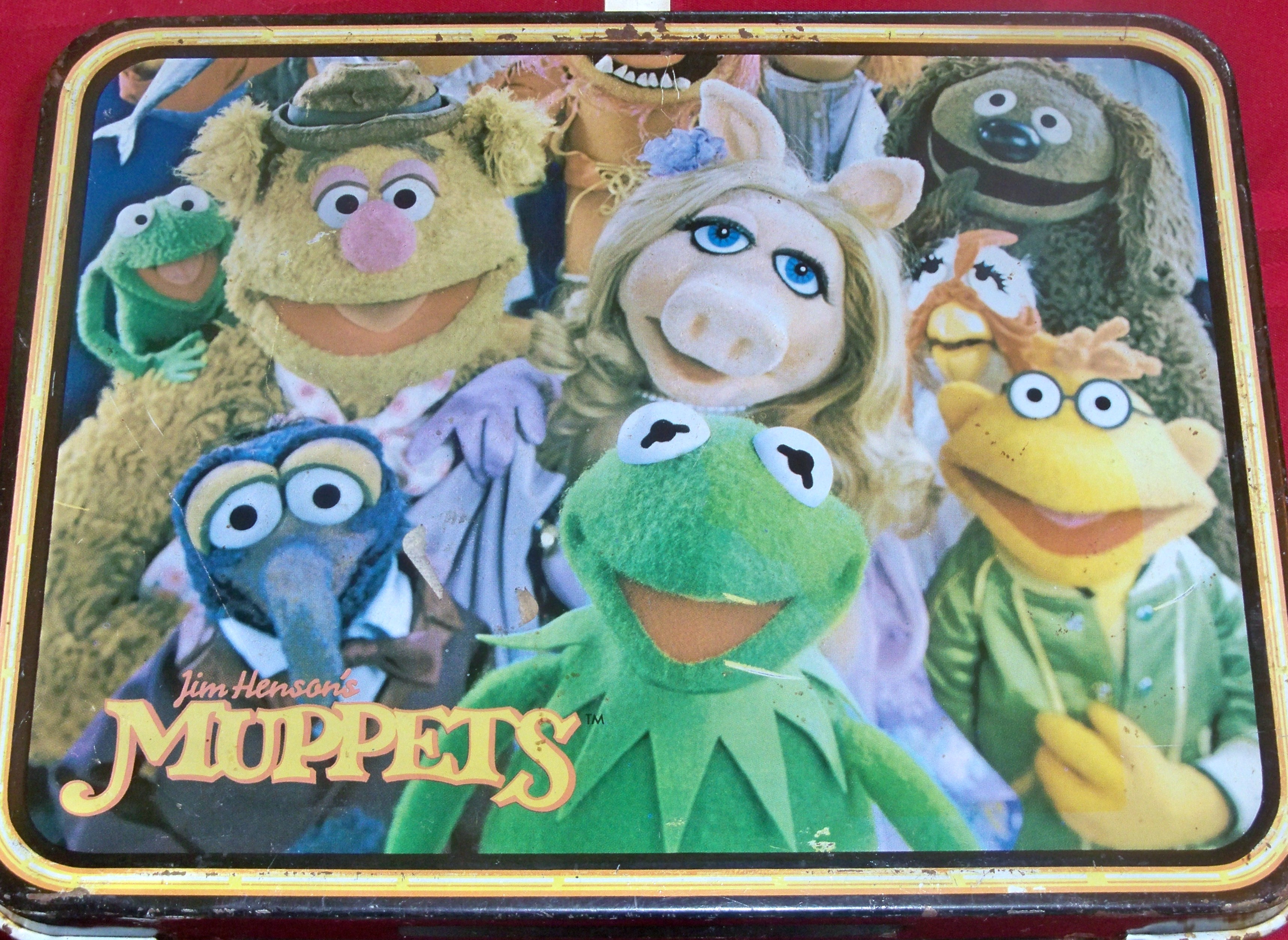
I grew up in the 1970s, the pinnacle of lunch box history. I remember my male classmates toting NFL, superhero, Six Million Dollar Man, and Star Wars boxes. Girls’ boxes offered the full gamut of 1970s female images, from Holly Hobbie to Charlie’s Angels. Disney, the Muppets, and Peanuts were always popular. All these boxes were metal, of course, with lithographed designs on every side. (This interview with a graphic designer who collects vintage lunch boxes provides some interesting insights on the design process.)

Though I remember other people’s lunchboxes, I can’t remember having one of my own in either first or second grade. I must have eaten hot lunch every day.

I do remember my third grade lunchbox—a yellow plastic dome-shaped Snoopy box. To my best friend and me, this box seemed innovative and different. Plastic! Domed, with a Thermos that fit in the top! We both bought them; I think hers was red.

That innovative plastic, sadly, signaled the beginning of the end for the lunch box heyday. Today, my daughter takes a cloth Vera Bradley lunch bag to school. It’s pretty and easy to carry, but I don’t think it will ever grace the Smithsonian.

Old-Time Radio Playlist: London Calling, Part 1

As a fan of old-time radio, I like to organize shows into topical playlists. The recent Olympic games inspired this list of London-themed episodes. (Part 2 of this playlist.)

“Journey for Margaret”


Screen Guild Theater, April 5, 1943
“A man can’t go on feeling forever. There’s a limit. By and by, he finds himself dead. That’s why I can’t get mad; I’m dead.”
Notable Cast Members: Robert Young, who shows off his fatherly side well before Father Knows Best appeared on radio and then TV, and 6-year-old Margaret O’Brien, recreating the movie role in which she made a name for herself, literally and figuratively. Four-year-old actor Billy Severn also appeared—it must have been terrifying for the director to rely upon such young children in a live radio drama. O’Brien does a great job, and Severn is adorable.
About Screen Guild Theater: This was one of several shows that condensed popular movies for radio audiences. At least the better-known Lux Radio Theater had 60 minutes to work with; 30 minute shows like Screen Guild Theater often leave only a sketchy outline of the movie plot. As John Dunning put it in The Encyclopedia of Old Time Radio, “Screen Guild always seemed like the quick economy tour, jerky and uneven, scenes knit together by thin thread and taxing a modern listener’s willingness to suspend disbelief.”
Story: A war-weary American journalist and his wife, in London during the Blitz, lose their unborn child and decide to adopt a traumatized war orphan.
Based Upon: The successful 1942 movie of the same name, in which Young and O’Brien also starred. The movie, in turn, was based upon the novel by journalist William L. White, and that was based on his true story of adopting a British war orphan. Life ran an interesting story on the “real Margaret” (not revealing that her name was actually Barbara), who would grow up to carry on her family’s journalistic legacy.
Google-worthy References: Ack-ack—Anti-aircraft guns.
Also, when the pregnant wife and her husband share a toast, she drinks milk. This surprised me and got me wondering how long doctors have been advising pregnant women to avoid alcohol. I didn’t find a definitive answer, but this history suggests alcohol’s potential harm has long been common knowledge.
My Verdict: These short movie adaptations work best when you haven’t seen the movie, which I haven’t in this case (although I want to now). As a radio story, it feels complete, and Robert Young and the children give enjoyable performances.

“Berkeley Square”
Everything for the Boys, February 8, 1944


Dangerously Yours, September 24, 1944


Hallmark Playhouse, March 3, 1949


“Out of what’s wrong with this world came a better time, and somehow the same will happen out of the struggles of my world.”
Based Upon
: The John L. Balderson play Berkeley Square, which was a hit when it opened in 1929. This time-travel romance was also a hit with old-time radio audiences, if you can judge by the number of shows that adapted it.
Story: Peter Standish longs to leave the 20th century behind. Obsessed with the diaries of an 18th century ancestor, he soon finds himself living his ancestor’s life. Complications arise when he falls in love with the sister of the woman his ancestor married.
Setting: Berkeley Square, a perennially fashionable London neighborhood.
Notable Cast Members: Ronald Colman plays Peter on Everything for the Boys, a wartime dramatic anthology. Greer Garson plays his love interest, Helen. Victor Jory stars in the Dangerously Yours episode. David Niven stars in the Hallmark Playhouse version.
About the Programs: Everything for the Boys ran for 21 weeks, with Colman hosting and starring in each episode and the legendary Arch Oboler writing and directing. Each episode ended with a short-wave call to fighting men overseas—this was a major technical challenge then and didn’t always work. The romantic anthology Dangerously Yours was also a short-lived 1944 show with a regular leading man—Victor Jory. After 16 episodes, it morphed into Vicks Matinee Theater. The high-toned Hallmark Playhouse presented Hollywood stars in literary adaptations.
My Verdict: Without having seen or read the play, I can’t say which version adapts it most faithfully. In all three versions, the time travel is abrupt and unexplained. The Everything for the Boys script adds an extra layer of resonance to the play by giving it an explicit World-War-II context. This makes it easier to see why Peter wants to escape the 20th century, why Helen is so horrified by her vision of the future (she sees men, women, and children being herded into open graves), and why Peter feels he must return to his own time and address its challenges.
Final Fun Facts: Oboler and Colman did not enjoy their collaboration. In fact, Dunning quotes Oboler as saying, “We hated each other’s guts.”
Also, Leslie Howard starred in the original Berkeley Square play and the 1933 movie version.

“It’s Always Tomorrow”


Words at War, January 2, 1945
“I’m gonna keep an eye on certain people here in England…and if they try to cheat us out of anything we’ve won in this war, then we’ll see if we can arrange another direct hit, especially for their benefit.”
Based Upon: It’s Always Tomorrow by Robert St. John, a journalist whose life spanned the 20th century and whose adventures spanned the globe. (He reminisces about his career in Studs Terkel’s Coming of Age—thanks, old-time radio, for making my to-be-read list even longer.)
Story: An American journalist assigned to London finds himself disgusted by out-of-touch, imperialist aristocrats. He falls in love with Polly, a bitter working-class woman, who refuses to support a war she thinks will benefit only the rich.
Notable Cast Members: Cathleen Cordell, who plays Polly, went on to have a long career as a character actress in television. I think William Quinn, who plays Dave, may be the same person as Bill Quinn, another prolific TV character actor.
About the Program: Words at War was a dramatic anthology that told timely stories from the world’s literal and figurative battlefronts. The New York Times called it “the boldest, hardest-hitting program” on the air.
My Verdict: Once you get past some heavy-handed British stereotypes, this is an interesting, nuanced story. Polly is a shockingly unpatriotic character by wartime radio standards. At one point, she even cries, “Let Germany win! Let Germany win!” Dave, playing devil’s advocate, tries to convince her that World War II is a “people’s war.” He interviews working people who are glad to make sacrifices and an aristocrat who is paying 97.5 percent of his income in taxes, but Polly remains unconvinced. When Dave loses his leg in a bombing, I thought sure the writers would give Polly a quick attitude change. She does agree to take Dave’s place in a war plant (where he’s begun working because his newspaper superiors banned him from writing about war’s effect on “the little people”). She stresses, however, that she’s making this choice based on love, not patriotism. A reviewer of St. John’s novel noted favorably that the book “makes a passionate plea for general understanding of the bitter hatred the common people in war-torn countries feel toward rulers who quit them ingloriously, shamefully, taking with them their loot and their foolish hides.” In the 1950s, author Robert St. John was blacklisted as a Communist, a label he disavowed. It’s sad but not surprising that his concern for the world’s common people would suggest Communism to 1950s red hunters.
Final Fun Fact: At one point, Dave and Polly visit a pub, where the crowd sings this song.

Weird Words of Wisdom: Spanking New Edition

“Kissing for fun is like playing with a beautiful candle in a room full of dynamite!”

‘Twixt Twelve and Twenty by Pat Boone, 1958

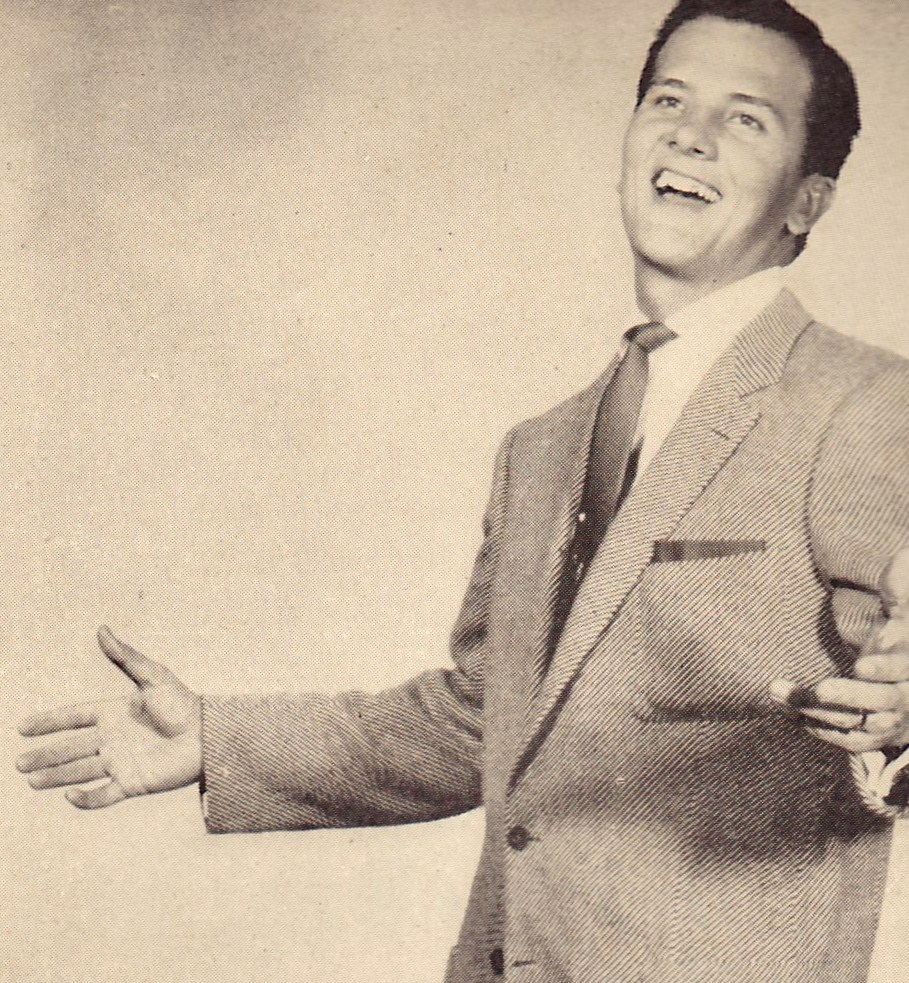
Would you let your teenage daughter take advice from this man?

About the Author: If you’re like me, and you know little about Pat Boone besides the fact that he’s Debby’s father, you may be surprised to learn just how popular he was in the 1950s. With 38 Top 40 hits, he was second only to Elvis in chart dominance. He also had his own TV show, The Pat Boone-Chevy Showroom, and starred in 15 feature films.

Boone has put his conservative Christian beliefs into practice throughout his career, avoiding sponsors and material that he considered offensive. His most controversial career move came in 1997, with his tongue-in-cheek foray into heavy metal.

Considering his conservative background, one shouldn’t find it surprising that Boone is a Republican political activist today—but it is disappointing to see he is a birther.

When ‘Twixt Twelve and Twenty was published, Boone and his wife Shirley had been married for five years and were raising four daughters.  

About the Book: If it seems strange today that teens would turn to a young married celebrity for advice on surviving adolescence, the phenomenon was common in the 1950s. ‘Twixt Twelve and Twenty was one of the most popular books of its kind—in fact, according to the Washington Post, it was 1958’s second-highest selling nonfiction book.

While a ghostwriter probably contributed to this book, it displays a convincingly folksy Booneishness. Words and phrases like “chillun,” “’taint true,” and “lil ol’ teenager” appear frequently. Boone’s evangelical Christian beliefs pervade the book, which according to Time, he promoted at Church of Christ congregations nationwide. Parents who share his beliefs would probably find much to like in this book, even today.

While he avoids details on sex, Boone urges teens to stick to innocent “April love,” until they are truly ready for “May” (a serious, steady relationship) and “June” (marriage). He doesn’t go the full Duggar by condemning teen dating and kissing entirely.

Basically, Boone recommends being yourself, developing good habits, practicing the Golden Rule, and resisting the urge to grow up too fast—things that even a secular-minded, liberal parent like myself can get behind.

The Boone Family Spanking Situation: The book hits its one really weird note on the issue of corporal punishment:

“And of course there are spankings—and spankings. There is the delayed spanking that sets in when you’re too old to go across Mama’s knee and have to wait until you get home and lean over the bathtub. There is the angry spanking and the loving spanking. My mother never gave ‘loving’ spankings. I wouldn’t know what they were. But hers weren’t angry either; they were intelligent and they were just.”

Boone informs readers that his mother delivered these spankings with a sewing machine belt, and didn’t stop her “lean over the bathtub” spankings until he was seventeen (and only then, apparently, because her inability to make him cry frustrated her).

Now, I don’t believe in spanking at all, but surely even most spanking advocates would find that a bit excessive. Even more shocking is the way this carried over into the next generation, as the Washington Post described in a 1978 Debby Boone profile:

Perhaps the man she is still closest to is her father. Both say that their stormy battles during Debby’s teens have made them even closer now. For Debby the turning point was in Japan; for Pat it was in Columbus, Ohio, two years ago when the family appeared at the state fair. They all thought it was going to be their last show together.

“We all were in an emotional state,” he recalls. “Debby (who was 19 then) had left the room to go and get candy; and was gone for a half-hour. I was worried about her and went to find her. She was in the lobby talking to some musicians, but was upset that I embarrassed her in front of them. It was a trivial matter really, but when we got back to the room I thought she was pretty sassy. One thing led to another and suddenly I threw her over on the bed and spanked her in front of her mother and her sisters.”

Afterwards, feeling chagrined and guilty, the father apologized to his family and led them all in prayer. “But there were no hugs and kisses that night,” he remembers. The next day on the plane, he heard Debby laughingly tell the girls about the black and blue marks on her bottom. “I found there were tears in my eyes,” he says, “for I realize Debby had let me off the hook. Overnight, she had forgiven me for being out of line.”

Spanking your 19-year-old daughter? At the risk of Pat Boone considering me unladylike: WTF?

Original Owner: My copy belonged to a girl named Carol Sue, whose parents inscribed it to her and gave it to her as a 12th birthday gift.

Final Fun Fact: Twixt Twelve and Twenty is also the name of a 1959 Pat Boone hit.

Other Quotes from ‘Twixt Twelve and Twenty:

“Popularity—‘manifest approval of the people in general’—can be a good, sound thing, but it can also be a personality freak or a snow job. Adolf Hitler was the most popular man in Germany for quite a spell.”

“It doesn’t make sense to me that girls who want to be as pretty as possible, who intend to be feeding and caring for a whole family day after tomorrow, don’t know how to feed and care for themselves today. Yet magazine articles, dietitians, beauticians, high school principals, all sigh over the high percentage of poor physical care and poor nutrition among teenagers, even in top economic areas.”

 “Take my first steady…She was a very pretty girl, a wonderful singer, much in demand. But she put too much strain on young love. She let me see her in her curlers.”

“(Shirley) has the kind of beauty I admire. A neatness, a freshness and cleanness, as well as pretty features. Her physical attractiveness is the quiet, decent kind that a man looks for in a wife.”

“Sometimes, girls, if you let your husband boss the project a little, he’ll wind up doing the work quite efficiently. Because, you see, it’s his corporation.”

“Bad language is a dead giveaway that the user is covering up ignorance (he doesn’t know what he’s talking about) or is pretty lazy (he knows, but he won’t take the trouble to say it). Or, worst of all, that he thinks it’s smart!”

Also on swearing—“We’ll assume ladies never develop the above mentioned habit—I hope—I hope!!”

Previous Entries in this Series

 Weird Words of Wisdom: Prettily Bewildered Edition