Spin Again Sunday: Patty Duke Game

Would a girl lose her mind playing this game about cousins who are two of a kind? Probably not, but she might have fun.

Today’s Game: Patty Duke Game (Tiny print on the box reads, “Inspired by the Patty Duke Show.” That’s pretty obvious—the game revolves around the show’s characters, Patty and Cathy. I wonder why they didn’t call it the Patty Duke Show Game?)

Copyright Date: 1964.

Recommended Ages: 7 to 15.
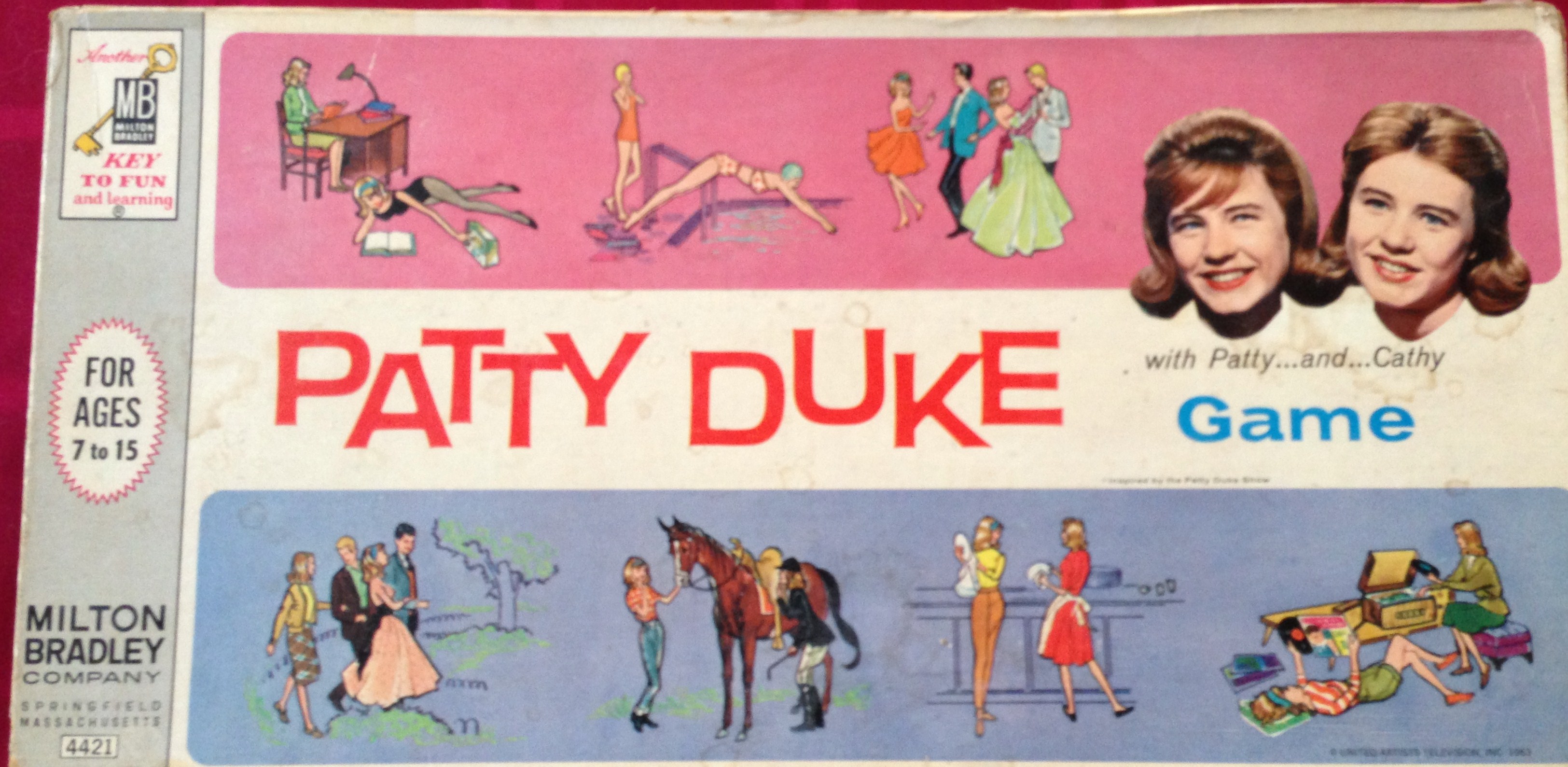
Game Box: Cute, with its pink-and-blue color scheme and floating Patty and Cathy heads.

Game Pieces: Instead of regular plastic pieces, this game uses red, blue, yellow, and green teenagers, two girls and two boys. Nice!

Game Board: Like the game box, the board features cartoon pictures of Patty and Cathy doing typical 1960s teenage activities—dancing, watching TV, dating, studying, helping with chores. Can you tell which girl is Patty and which one is Cathy? In case you forgot, their personalities are ever-so-slightly different.

Cathy hesitates. Patty wears a two-piece swimsuit and dives right in.

Cathy is actually studying. The radio is distracting Patty (who is wearing a leotard for no apparent reason).
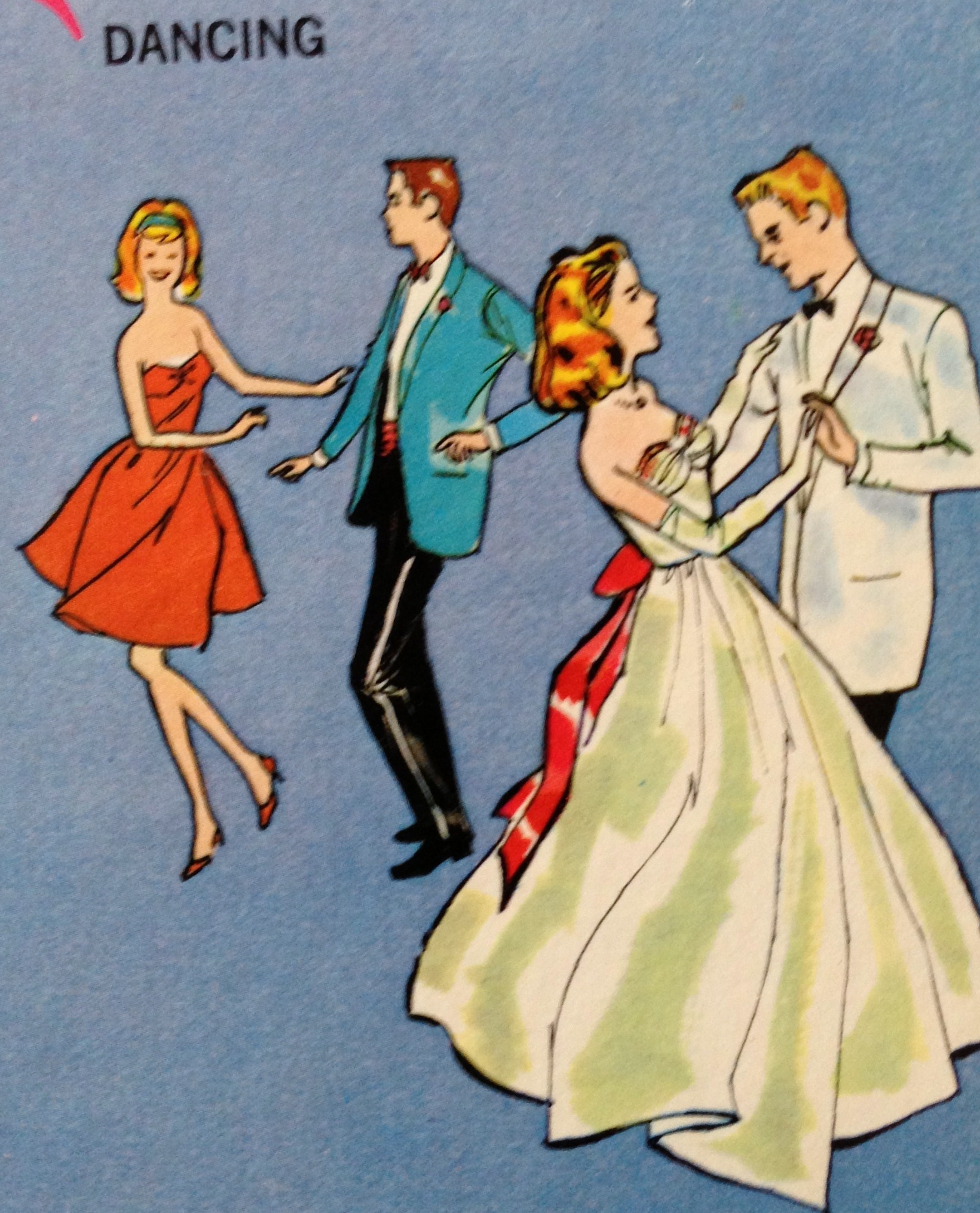
Patty is “losing control.” Cathy is dancing like a girl who “adores a minuet.”

If you enjoyed this entry, please read my previous Spin Again Sunday posts.

Spin Again Sunday: The Muppet Show (Le Jeu des Vedettes)

Because tomorrow is Jim Henson’s birthday, my weekly series on vintage board games has a Muppety flavor this week.

Today’s Game: The Muppet Show (Parker Brothers Board Game of the Stars, AKA Le Jeu des Vedettes, par Parker Brothers)

Copyright Date: 1979

Game Box: A colorful cartoon rendering of every Muppet imaginable. That’s why I bought this game for my daughter. She loves Janice, the Electric Mayhem’s female member, and it’s rare to find merchandise that includes Janice’s picture. Not only does this box feature Janice, but the game board does as well!

Most Interesting Feature: What I didn’t realize when I bought this game is that it was made in Canada and has a bilingual board–one side in French, one side in English. I actually felt a little peeved when I opened the box and found a French board. I only speak un peu de French and didn’t know how I would manage to play this with my daughter. When I flipped the board over and found the English side, I no longer felt peeved—just stupid for not noticing the French writing on the box.

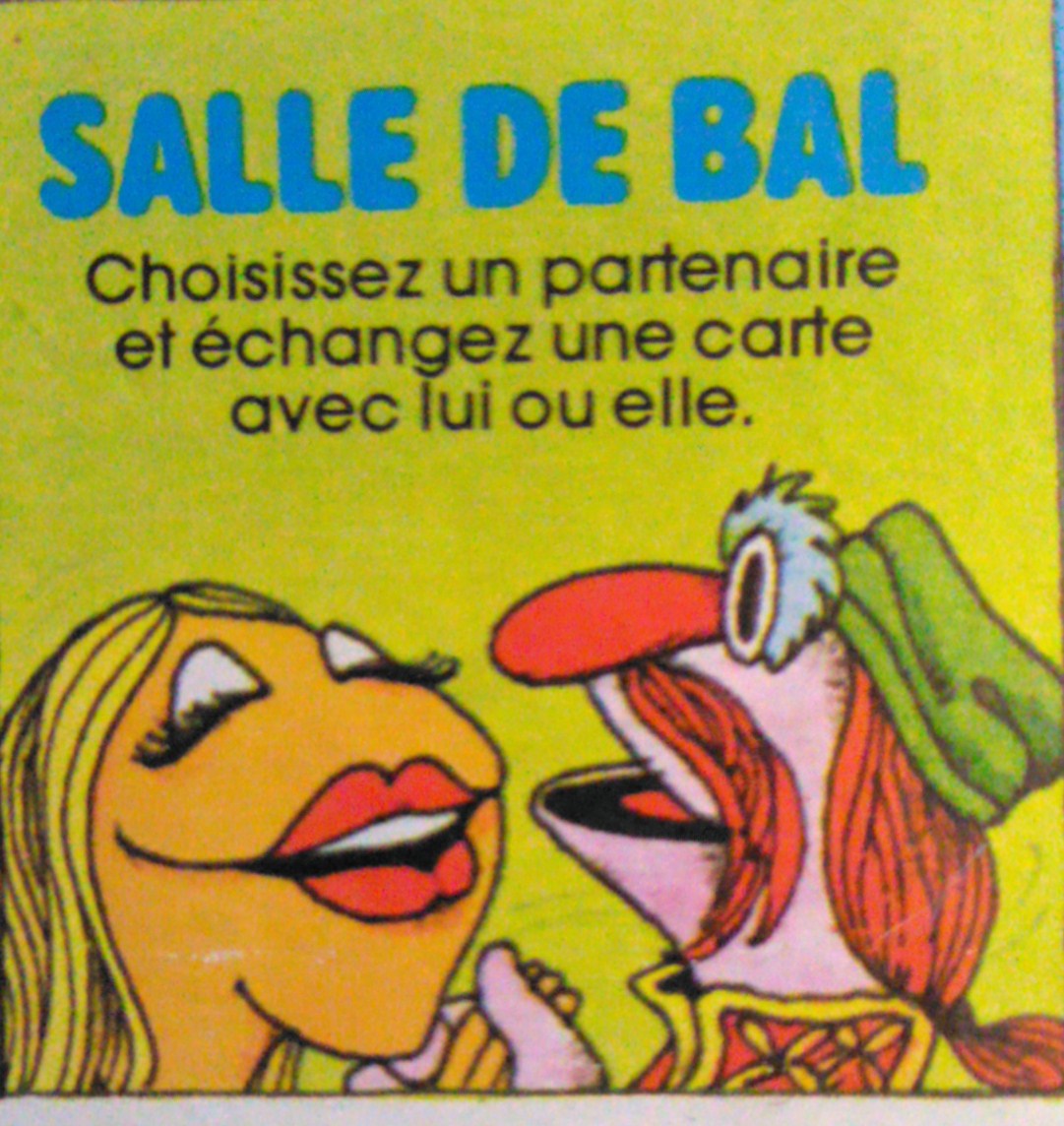
French game instructions.

Game Pieces: Rather lame. You know how some game pieces have a plastic base, into which you slide a cardboard picture? Well, that’s what this game has, but the cardboard pieces don’t display characters—just colors. There’s a yellow one, a red one, a green one, and a blue one. Why not just use regular colored-plastic markers?

Janice, yay!

Recommended Ages: 7 to 14.

Game Play: The game designers came up with a concept relates well to The Muppet Show and its characters. Players move around the board and try to collect cards representing three judges—Miss Piggy, Sweetums, and Fozzie. Once you have all three, you can “perform” for the judges. That involves picking one of six Sam the Eagle cards and hoping that it doesn’t match the number your opponent rolls on the die. If you don’t match Sam, you receive a star; seven stars win the game. The rules have a few wrinkles—such as allowing players to “upstage” each other—that keep it from getting too repetitive. Sam is one of my favorite Muppets, so I enjoy his role as censor here.

My Thoughts: I owned a different Muppet Show game when I was little, one that dated from 1977. I don’t remember much about that game, but I can endorse this one as fun for young Muppet fans.

Spin Again Sunday: Gomer Pyle

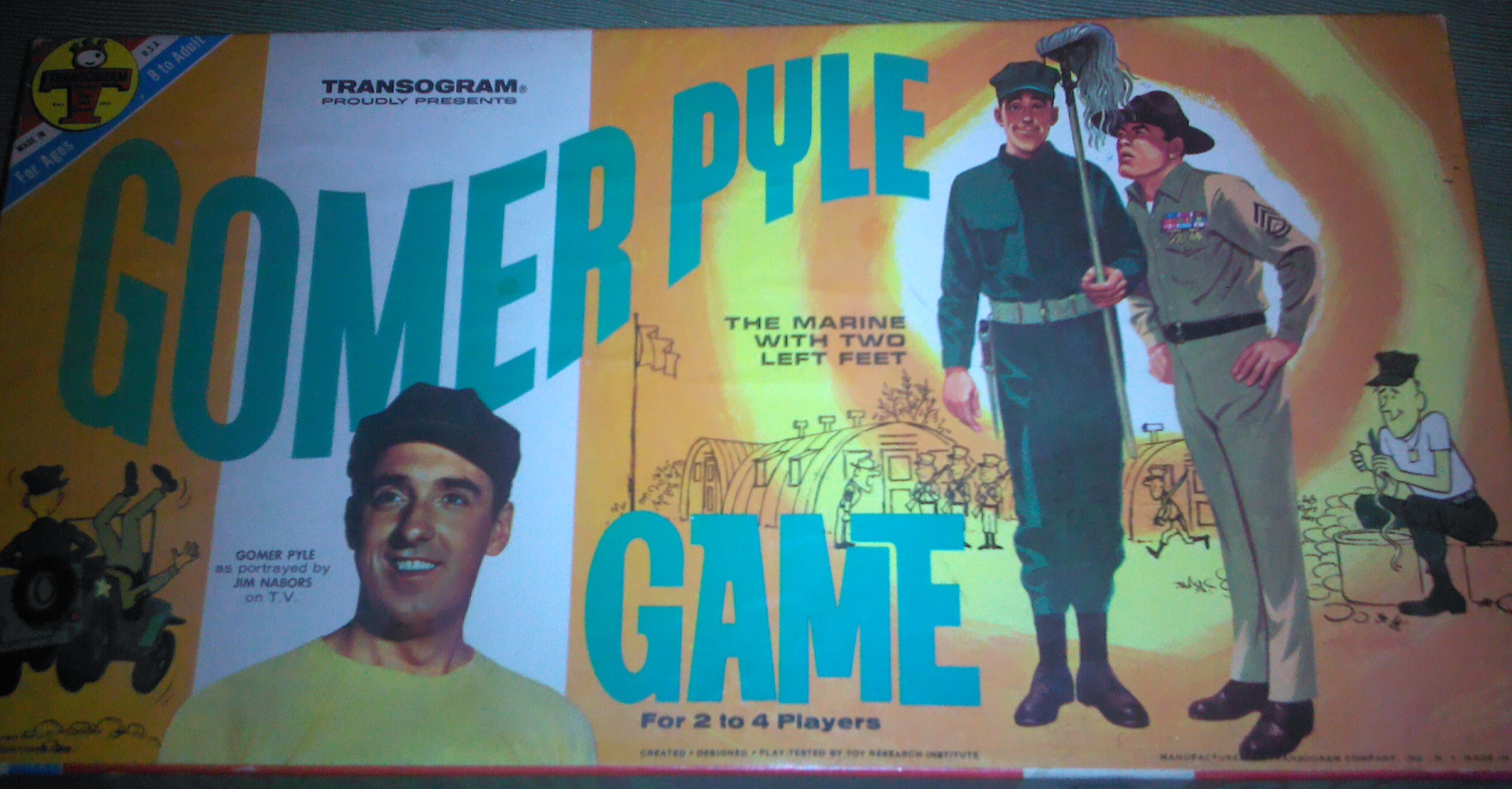
Gomer Pyle Game, 1964

Today’s Game: Gomer Pyle

Copyright Date: 1964 (I got that date from the book Spin Again by Rick Polizzi and Fred Schaefer. The box is undated.)

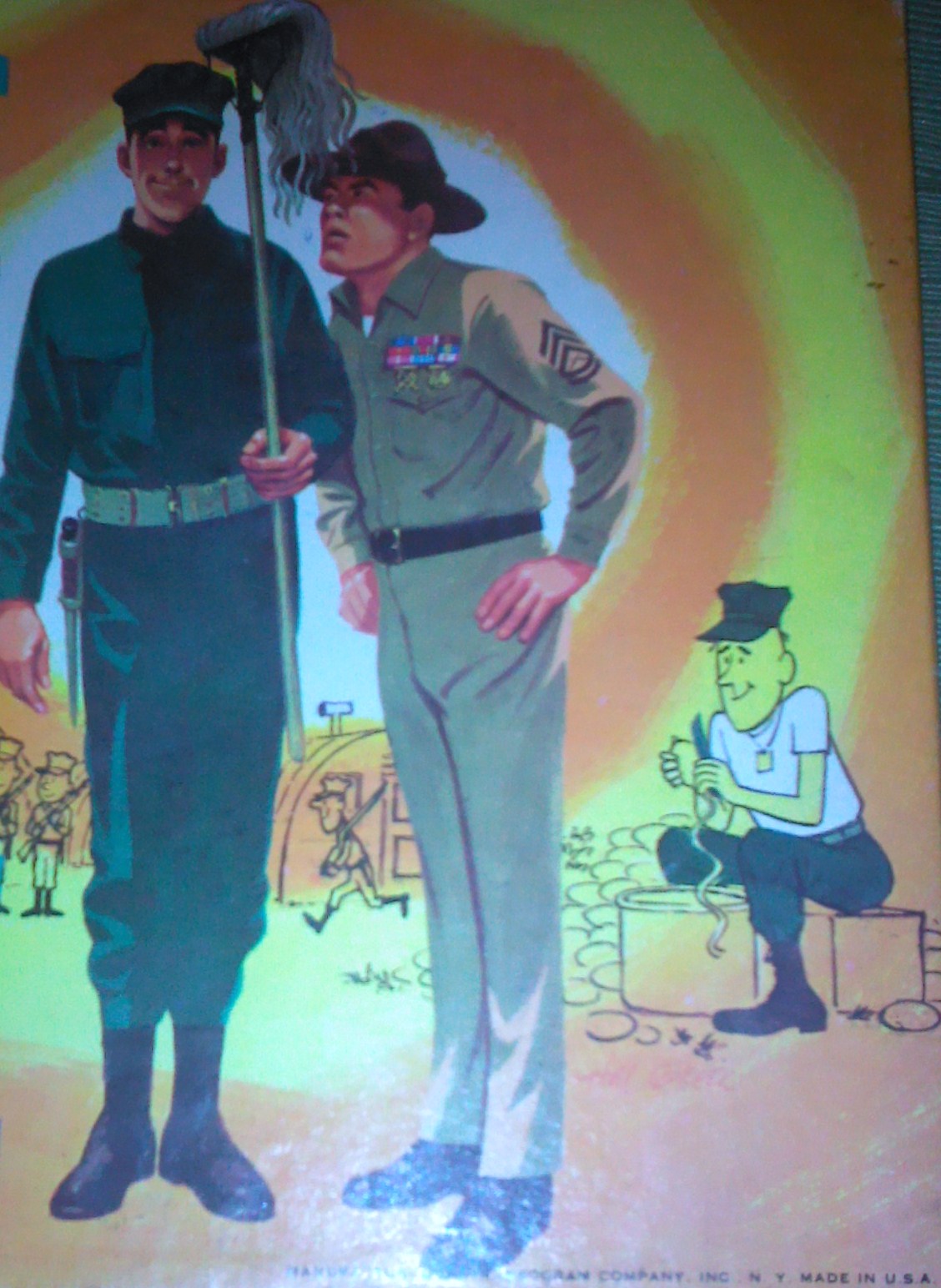
Game Board: Visually striking, with the marching Marines cutting a green swath across the mustard-yellow background, and red Sergeant Carter squares popping up regularly. The guy peeling potatoes seems to be smoking—that’s something you wouldn’t see on kids’ game today.

Game Board

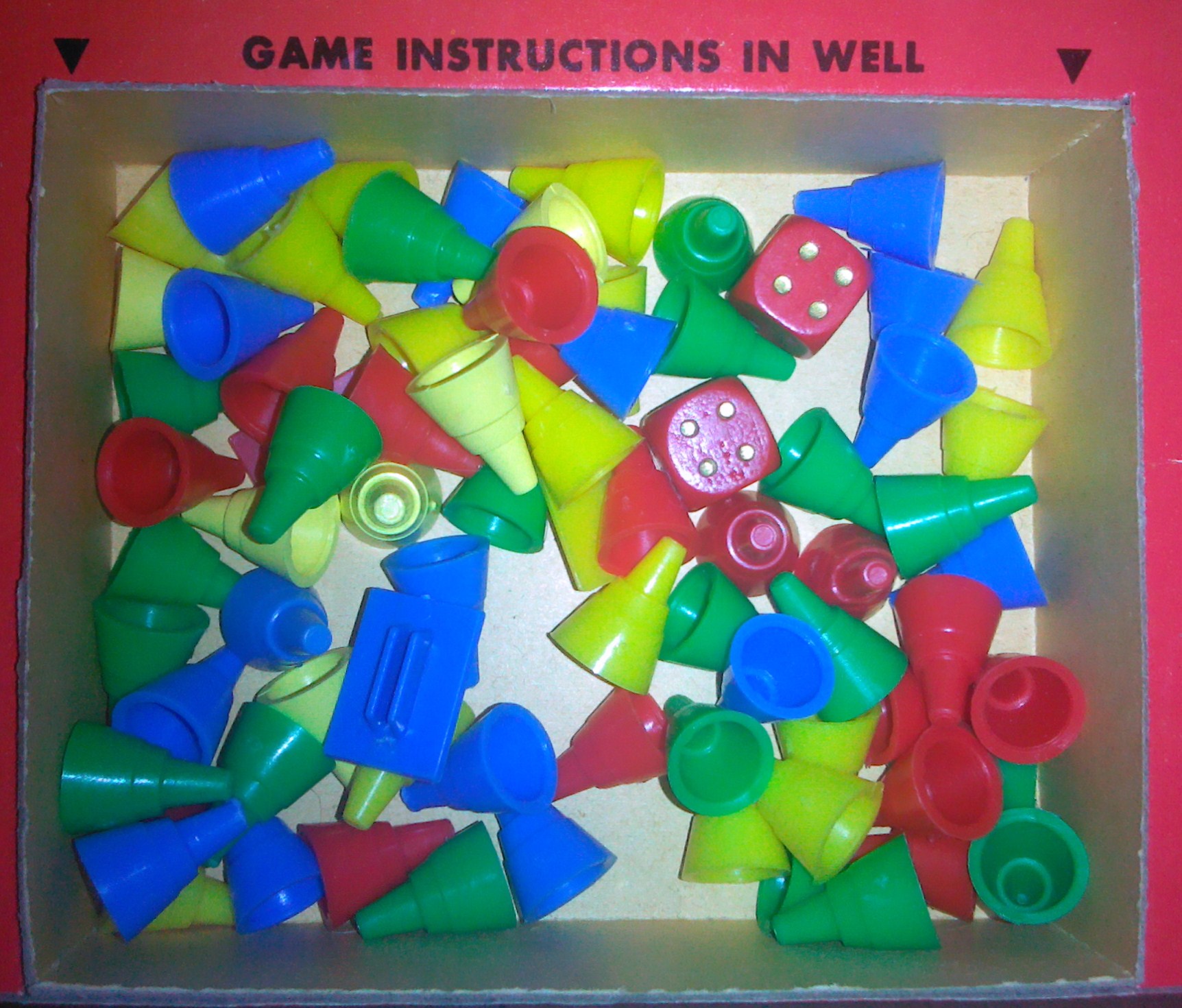
Game Pieces: Brightly colored plastic pieces and cartoon cutouts of Pyle.

Recommended Ages: 8 to Adult.

Game Play: No clue. See the well that holds the plastic pieces? See the words that say “Game instructions in well”? Well…not in my well. That’s one of the dangers of buying of vintage games—they’re often incomplete. Dice are included, so obviously Pyle has to move around the board. I’m going to assume that landing on Sergeant Carter’s head is a bad thing.

Game Designer: The box artwork is signed “Hal Greer.” I haven’t been able to find out anything about this artist. I’m guessing he’s not the same person as this Hal Greer.

A close up from the box lid–pretty nice artwork

About Transogram: Game manufacturer Transogram offered many games based on TV shows. As the Polizzi and Schaefer book says: “Transogram personified the close relationship that had developed between television and the toy industry, doing so with imaginative designs that were some of the best of the period.”

My Thoughts: I bought this game a few years ago for my husband, who was a big Gomer Pyle fan as a kid. It was never a

A close up from the game board. Is that Marine smoking?

favorite show of mine, but I would watch it occasionally when nothing else was on.  In fourth grade, our teachers would let us watch TV in the cold lunch room, and Gomer Pyle was our usual lunchtime fare. For that reason, I associate the show with salami and snack cakes.

Previous Entries in this Series:

Charlie’s Angels

Laverne & Shirley

H.R. Pufnstuf

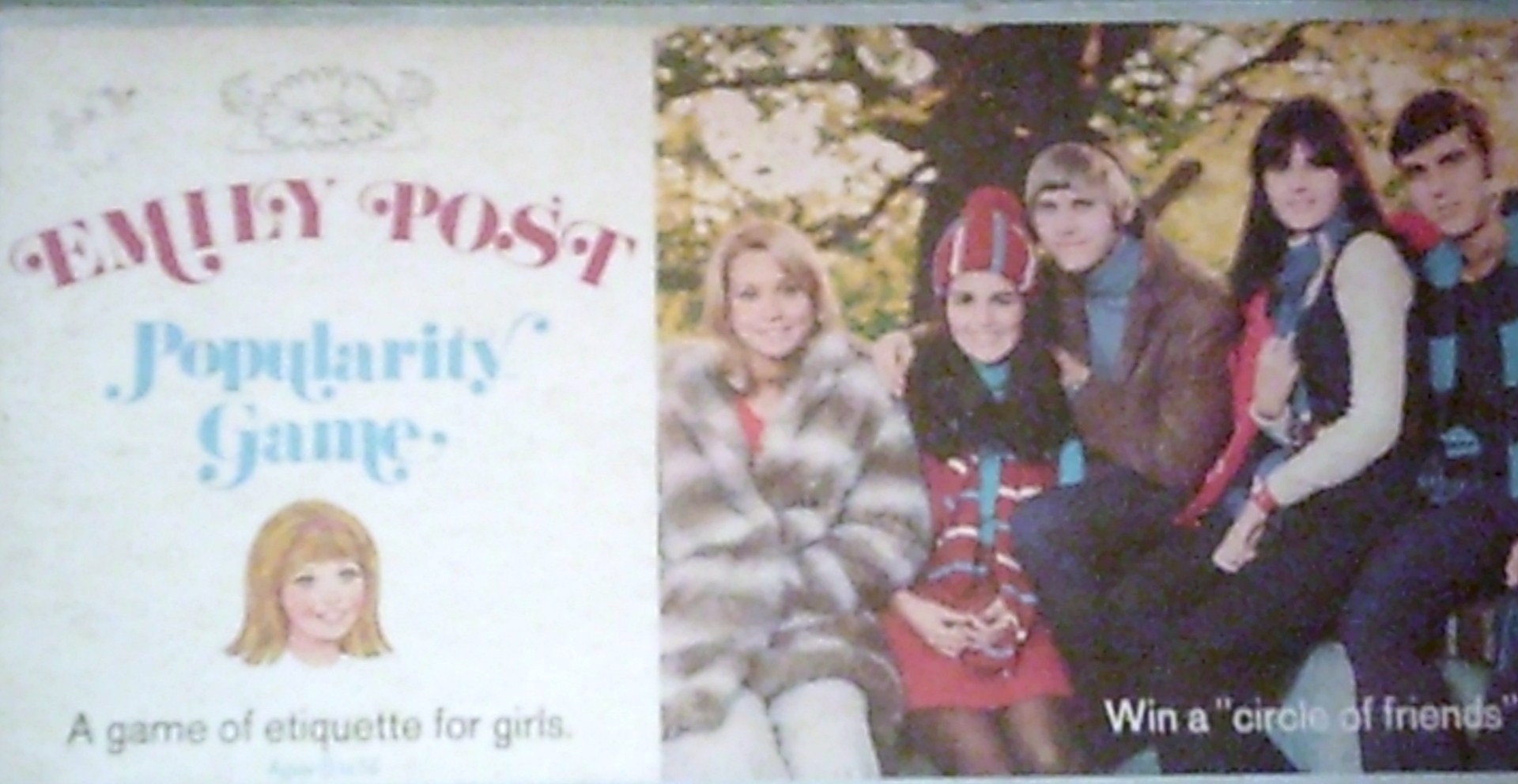
Emily Post Popularity Game

Spin Again Sunday: Emily Post Popularity Game

Today’s Game: Emily Post Popularity Game

Copyright Date: 1970

Object: “Players learn of the rewards that come from good manners while going to parties, sports events, dinners and other activities with their friends.”

Game Board: Wispy cartoons show wholesome scenes of teenage life.

An all-too-typical teen problem

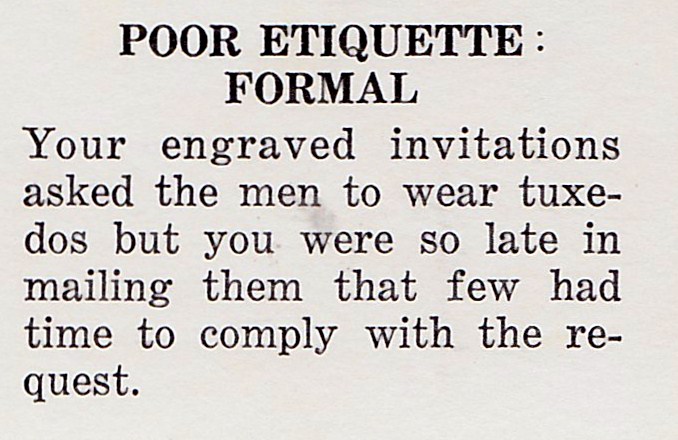
Game Pieces: Players move regular colored pegs and draw “Emily Post says…” cards that give points for good manners and issue penalties for etiquette violations.

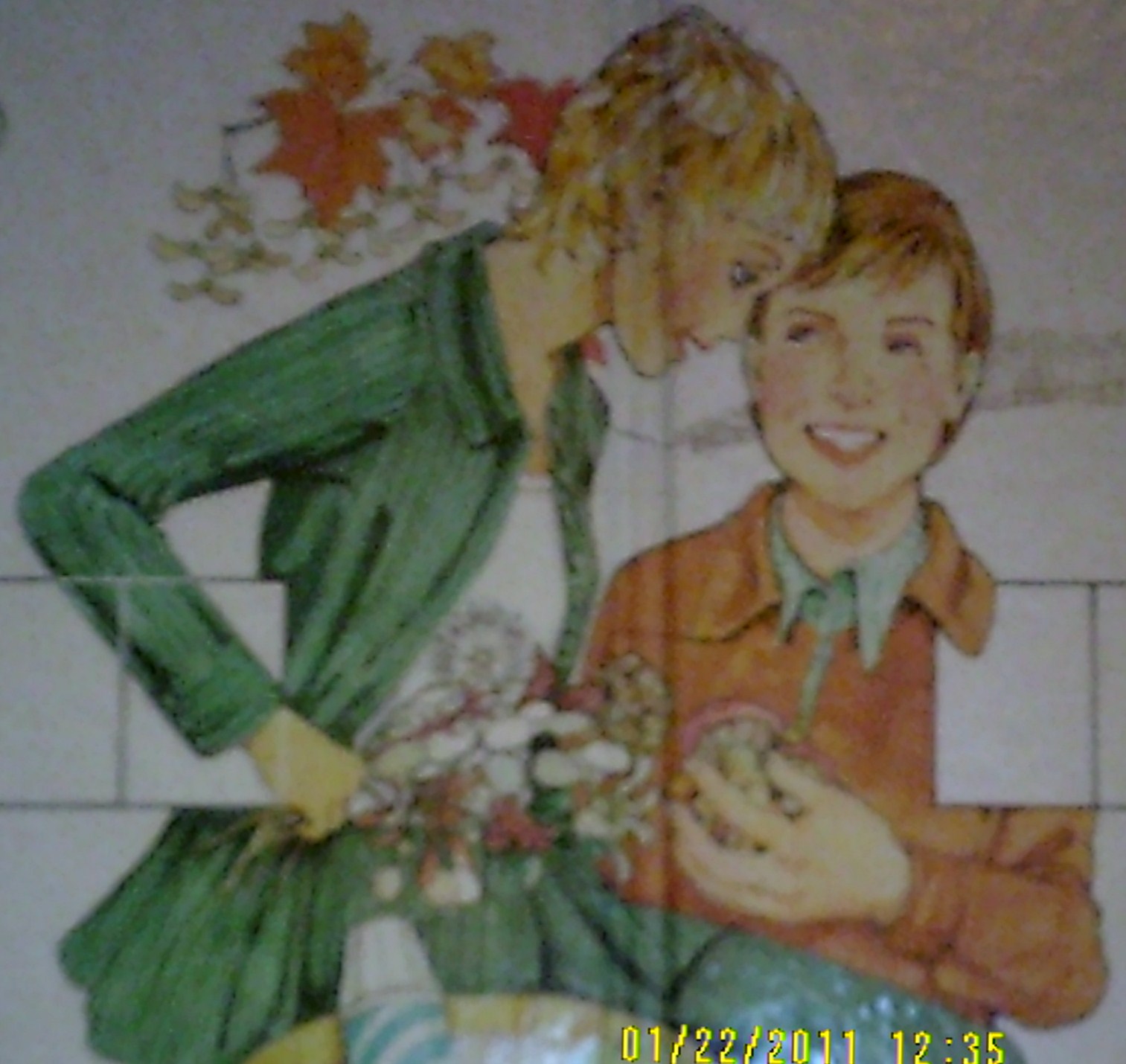
This nice young lesbian couple uses good manners while gathering psychedelic mushrooms.

Recommended Ages: “For girls 8 to 14.” I guess boys don’t need “the rewards that come from good manners.”

Game Play: Players compete to attract the largest circle of friends. You can’t

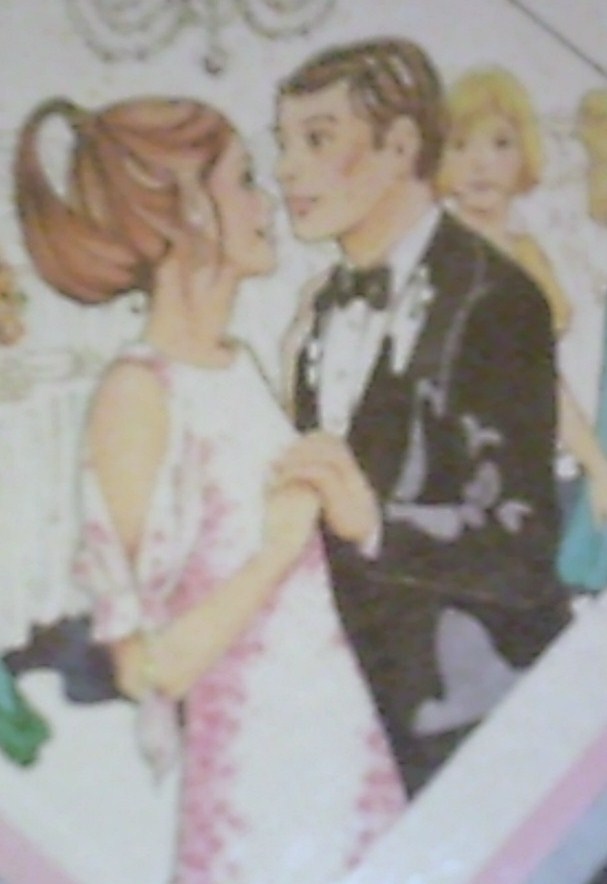
win if you’re holding the dog card in your hand. Personally, I’d rather befriend the dog than these humans. I mean, Cathy looks like a smug know-it-all, and Tony is clearly up to no good.

I hope this boy and girl can find a polite way to deal with the blonde girl who’s stalking them.

Final Fun Facts: Elizabeth Post, addressing players from the inside of the box lid, makes no pretense that fine inner qualities create social success. “What is it that makes a person popular?” she asks. “Is it good looks, smart clothes, or attractive manners? It is, of course, a combination of all three, but the last is surely the most important.”

The dog is the undesirable one? Really?

Elizabeth Post, the wife of Emily Post’s only grandson, assumed leadership of the Emily Post Institute after the original etiquette maven died. Several Post descendants still write about etiquette, including her great-great-grandaughter Lizzie Post.

Previous Entries in this Series:

Charlie’s Angels

Laverne & Shirley

H.R. Pufnstuf

Spin Again Sunday: H.R. Pufnstuf

Another week, another cardboard-and-plastic journey to the past.

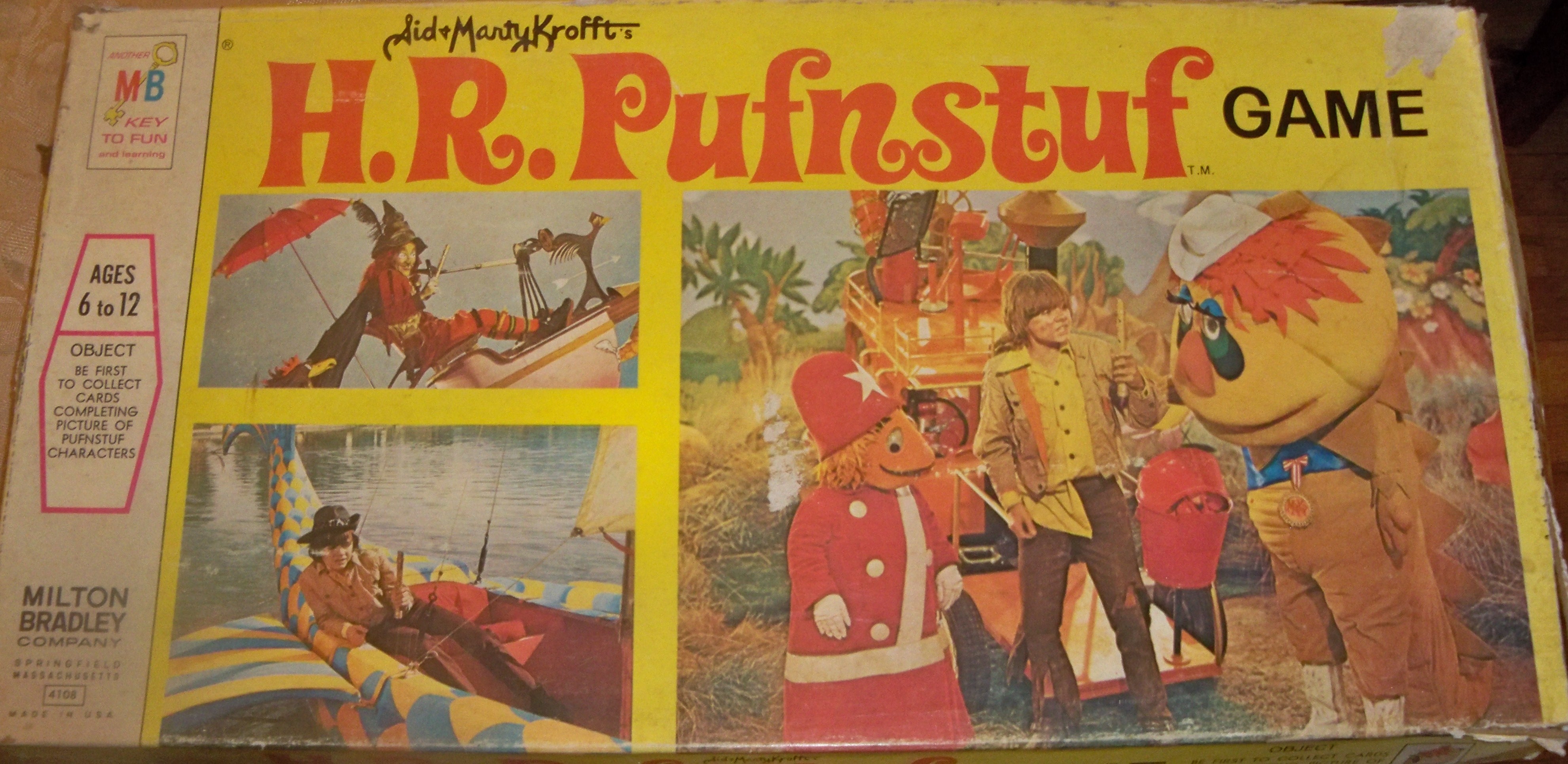
Today’s Game: H.R. Pufnstuf Game

Copyright Date: 1971

Object: Be first to collect cards completing picture of PufnStuf characters.

Game Board: Colorful and cartoony, though the cartoon likenesses leave a lot to be desired.

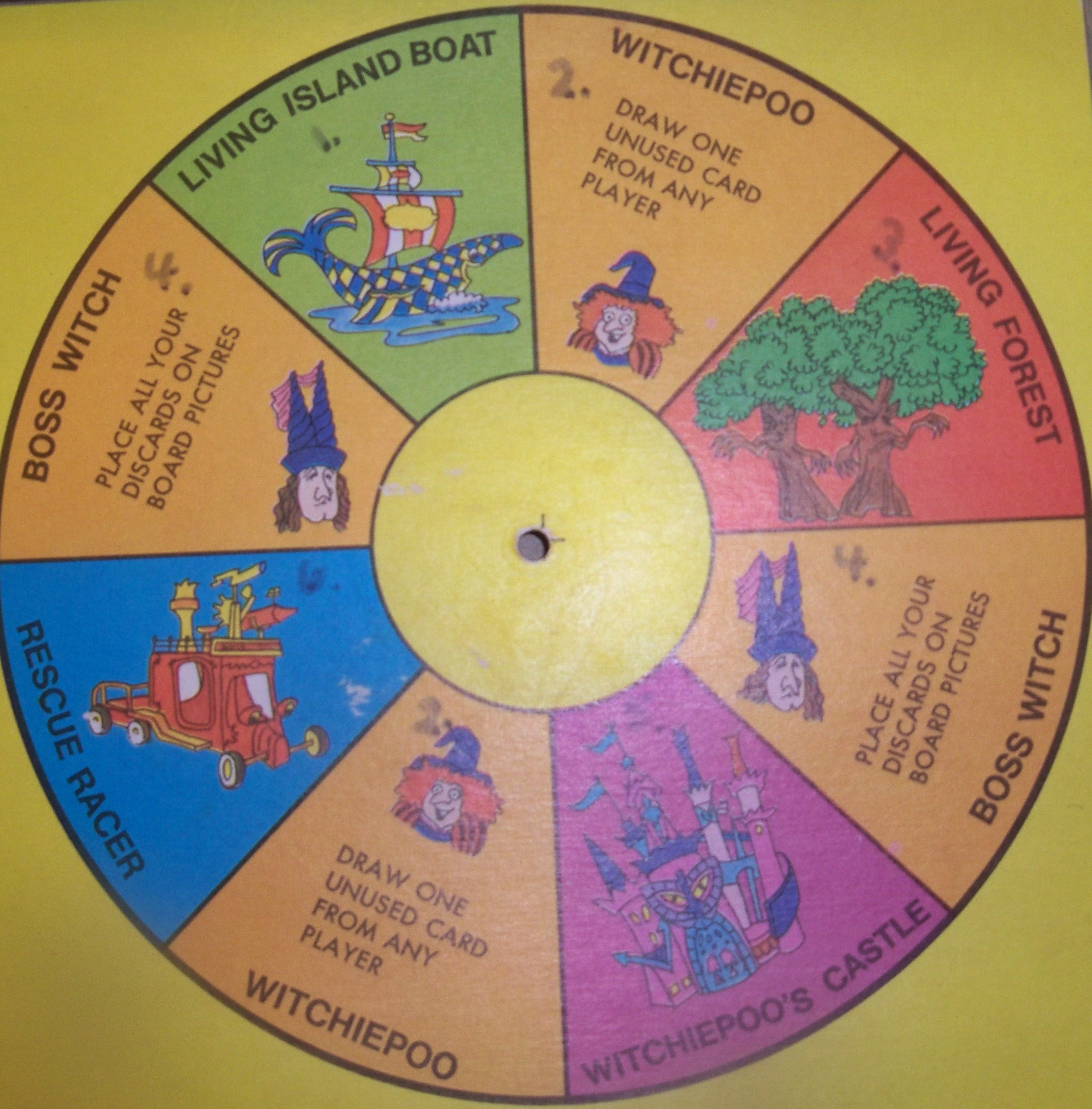
Game Pieces: None. Cards and a spinner are all you need to play this game.

Recommended Ages: 6-12. The game box, with its full-color photos, might have attracted kids throughout that age range, but the graphics inside scream little kid.

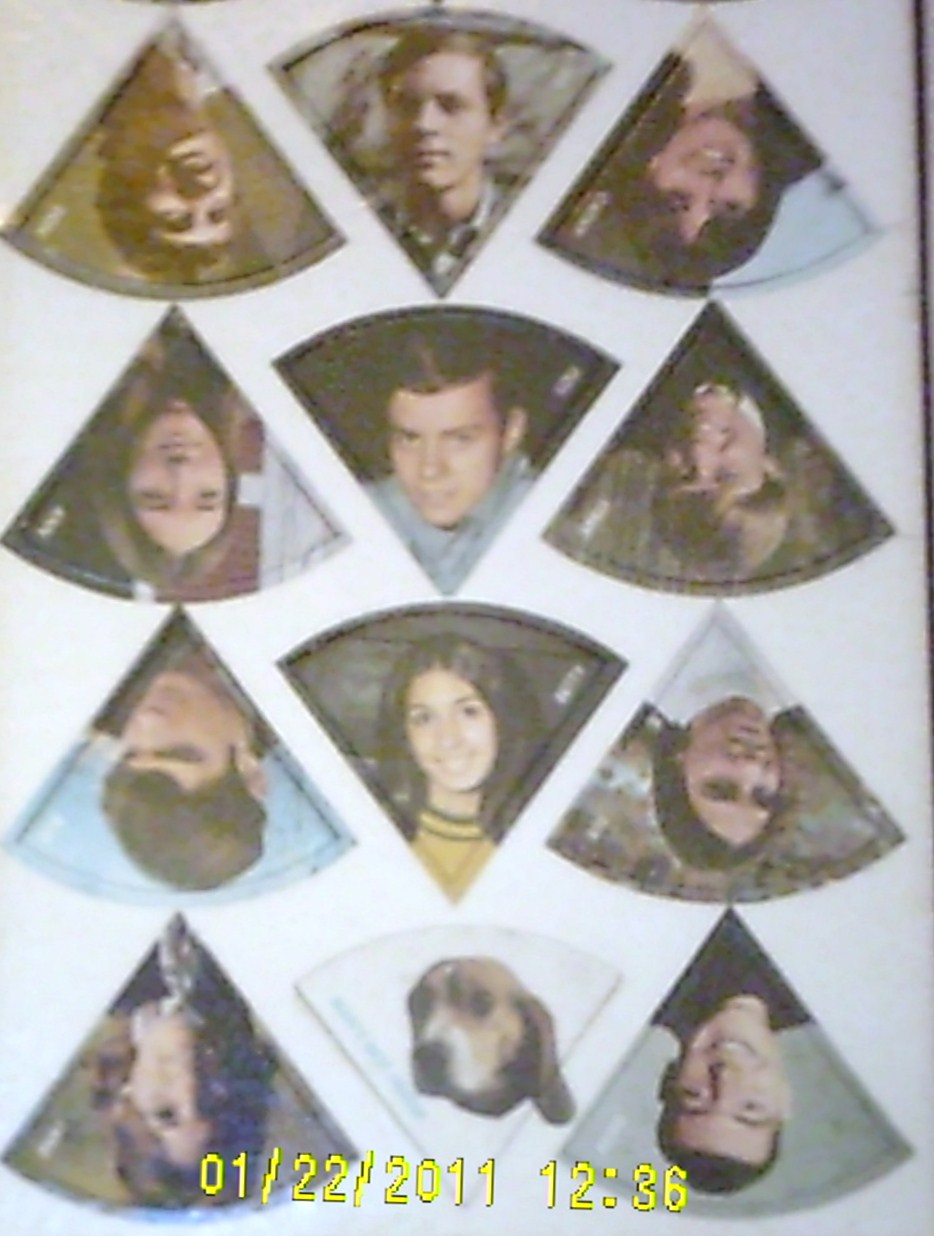
Game Play: The board is really superfluous in this game; players don’t move around it. They just spin and collect cards and try to complete a puzzle. (It’s nice that Freddy the Flute gets his own puzzle; on the show, he just squeaked “Jimmy” and got stolen a lot.

Personal Notes: I never had this game as a child—I would’ve been too young to play it in 1971. I did watch H.R. Pufnstuf, though, and still have the disturbing, hallucinatory memories to prove it.

About the Show: H.R. Pufnstuf premiered on September 6, 1969, as part of NBC’s Saturday morning lineup. Popular with kids, it aired for two years on NBC, one year on ABC, and two and a half years in widespread syndication—an amazing feat considering that Sid and Marty Krofft only produced 17 episodes.

Final Fun Fact: Jack Wild, who starred as Jimmy, got to keep one of the original Freddy the Flutes as a souvenir after the show wrapped, according to the book Pufnstuf and Other Stuff.

Previous Entries in this Series:

Charlie’s Angels

Laverne & Shirley

Spin Again Sunday: Laverne & Shirley

Let us venture again into the world of vintage board games.

Today’s Game: Laverne & Shirley

Copyright Date: 1977

Object: “Make all your dreams come true.” (In this game, all your dreams must involve dating. She who dates the most, wins.)

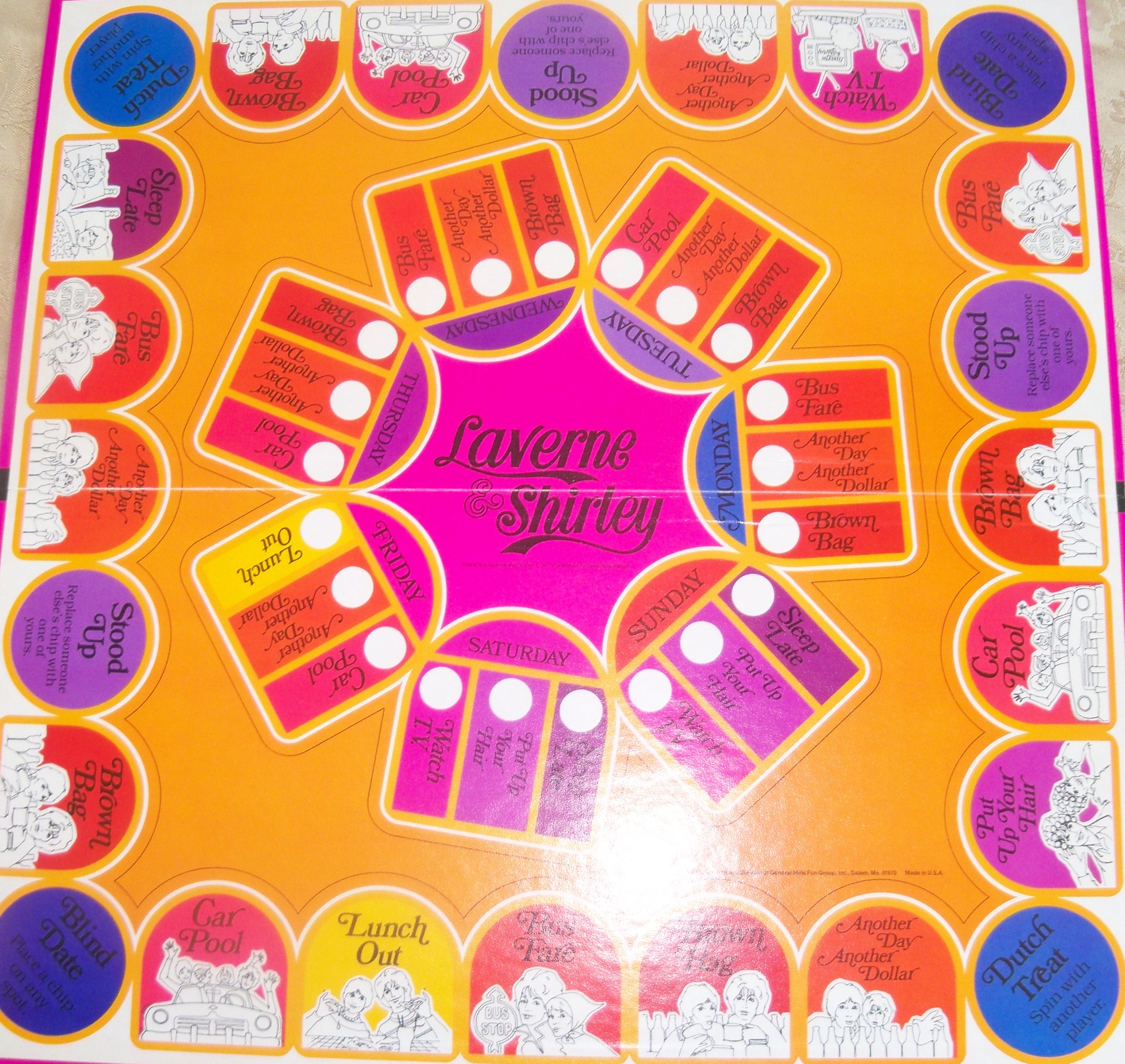
Game Board: Colorful, but the Laverne and Shirley caricatures are drab. Perhaps they complement the drab vision of blue collar life this game portrays—an endless round of rent paying, hair washing, TV viewing, bus riding, and brown-bag lunching.

Game Pieces: Standard plastic pegs. The most interesting game element is your “diary,” which you strive to fill up with dating minutes.

Recommended Ages: 8-14. Manufacturers often put an upper age limit of 13 or 14 on these TV show games. I don’t what their reasoning was, but I can imagine parents using it to their advantage: “I’d love to play Laverne & Shirley with you, Lisa, but rules are rules.”

Personal Notes: Did you ever see something and know you’ve seen it before, long ago? That’s how I felt looking at this game board, though I’m pretty sure I never owned the game. I must have played it at a friend’s house.

About the Show: Laverne & Shirley premiered in January 1976. I remember watching the first episode and finding it hilarious. The rest of America agreed, quickly propelling the show to number one. I was 7; I don’t know what the rest of America’s excuse was.

Final Fun Fact: According to The Complete Directory to Prime Time Network and Cable Shows, “Critics called (the show) TV junk food; ABC program chief Fred Silverman responded by comparing it to the classic satire of the 17th century French playwright Moliere.”

Previous Entries in this Series

Charlie’s Angels

Spin Again Sunday: Charlie’s Angels

Each weekend, I will forage into my vintage board game collection to show you a truly embarrassing treasure.

Today’s Game: Charlie’s Angels Game (“Based on the television series,” the box announces helpfully, so you know it’s not based on a Chekhov play of the same name or something.)

Copyright Date: 1978

Object: “Be the first to capture the culprit with your team”

Recommended Ages: 8-14. Realistically, this game probably appealed to girls age 8-10, while the Jaclyn-Smith-in-a-bikini game piece appealed to boys ages 12 and up.

Game Board: Better than most TV board games, since it featured real cast photos instead of vaguely related cartoon drawings.

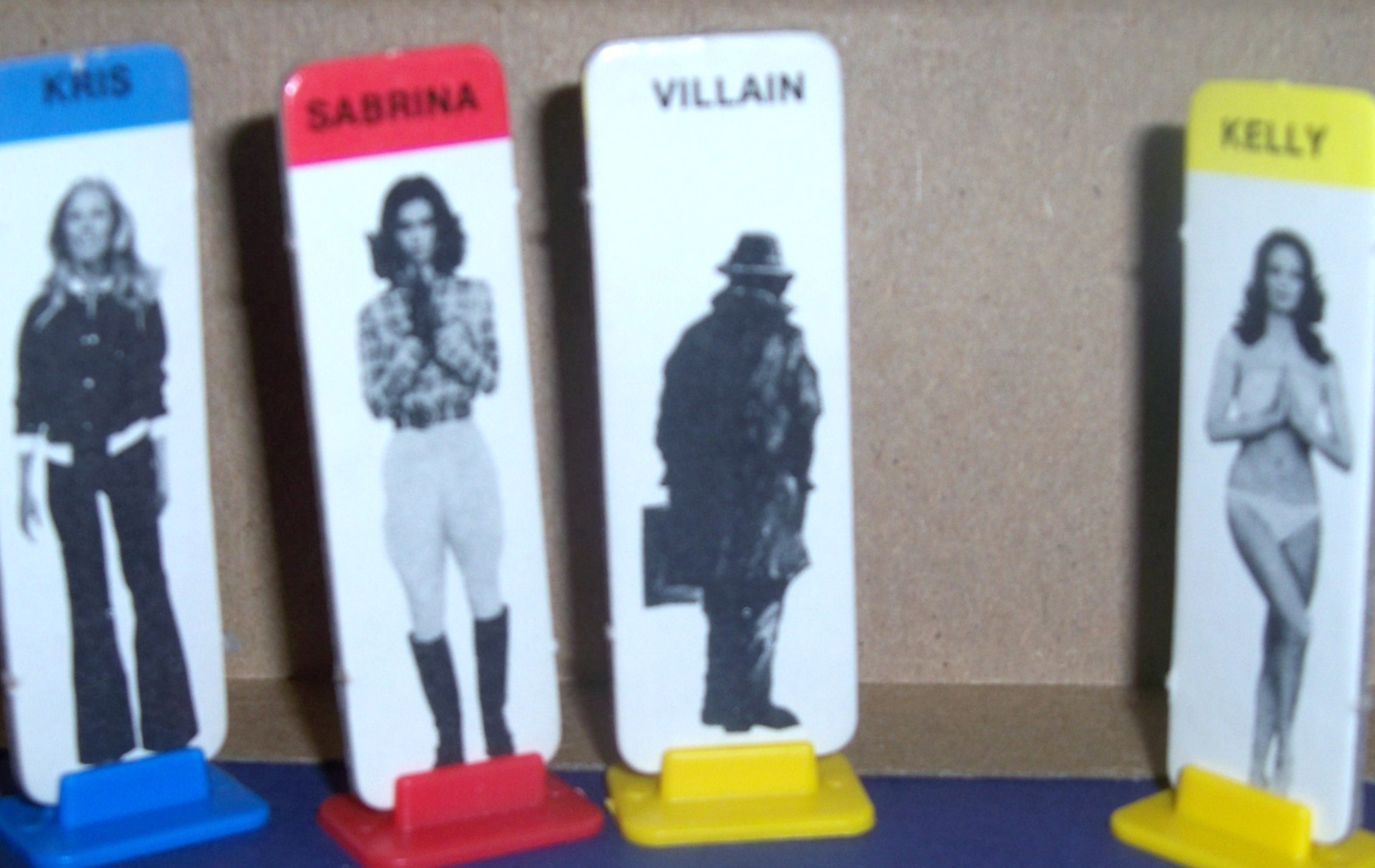
Game Pieces: Cool! A team of actual Angels and a creepy villain beats colored plastic pegs any day.

Personal Notes: I never owned this game as a child, but it was my go-to birthday party gift in third grade. Board games always made a respectable gift, and if a TV show was popular, its board game would produce a satisfying response from the birthday girl and her guests.

Kelly mesmerizes the villain while Kris and Sabrina sneak up on him

Game Play: Whether the birthday girl would ever play the game was another matter. TV show games generally put the “bored” in board games, with simple “move 2 spaces forward,” “move 1 space back” instructions. At least in the Charlie’s Angels Game, the object relates to the show’s crime-fighting concept. To win the game, however, you have to trap the villain THREE times. I forced my daughter to play this with me, but we gave up before trapping him even once.