“As mother used to say, ‘Be pretty if you can, witty if you must—and pleasant if it kills you!’”
Your Manners are Showing: The Handbook of Teen-Age Know-How, 1946
By Betty Betz
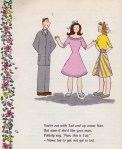
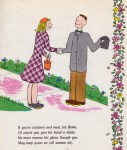
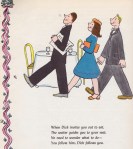
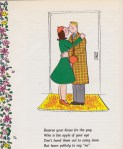
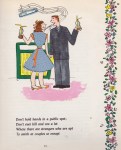
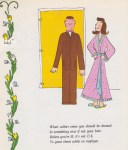
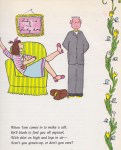
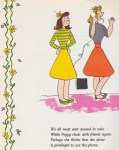
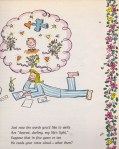
About This Book: Your Manners are Showing differs from most vintage teenage advice books in one key way—it shows teens how to behave with copious illustrations by Betty Betz. Verses by Anne Clark accompany the pictures; in between the illustrations, Betz provides short chapters on topics ranging from money to “vice” (drinking and smoking). Etiquette in verse actually strikes me as a pretty handy aid for mastering tricky concepts, like who gets introduced to whom.
About the Author: Where do I begin? Betty Betz journeyed from Hammond, Indiana, prom queen to 1940s and ’50s queen of all media. She was a Midwestern swimming champion, and her high school classmates named her Most Popular Girl in their school of 1,800. She attended Sarah Lawrence College and earned a guest editorship at Mademoiselle, which became the first magazine to publish her drawings. She went on to work for Esquire and Harper’s Bazaar. Eventually, she began to specialize in teenagers, writing a syndicated advice column for them and publishing several books. Her illustrations of teenage life turned up on everything from stationery to scrapbooks to jewelry boxes.
She was married briefly to Josef Lanz, the Austrian fashion designer who popularized the dirndl dress, a 1940s teen wardrobe staple. His family owned Lanz of Salzburg, which still exists, producing mostly nightgowns.
In 1956, she married her second husband, Frank McMahon, whom Time described as an “oil-rich Calgary wheeler-dealer.” She raised two daughters and settled down into a life of charity work and Palm Beach socializing. Betz died in 2010.
Among the other highlights of her brief career:
She published comic book stories featuring “Dollface and Her Gang.” (Dollface’s best friend was named Bun Brain. Really.)
She marketed a line of teenage clothing that included a hideous but creative item called a blouse-slip. As a slip, you could lounge around in it at home. If company stopped by, you could wrap a skirt around yourself and be good to go.
She hosted a TV talk show that Billboard called “a routine and lifeless concoction, devoid of warmth or sincerity.”
She founded the Betty Betz Angels Club for her fans, who pledged “to show respect and consideration to everyone, regardless of race or color.”
She served as a Hearst correspondent during the Korean War, providing readers with insights like this one from July 29, 1951: “…what baffles me most of all is the fact that communist ‘wacs’ don’t care for perfume or lipstick.”
She published Manners for Moppets, an etiquette book for children, in 1962. At the time, her family shuttled among homes in Vancouver, New York City, and Palm Beach. “An English nanny and a private plane make commuting painless,” The Calgary Herald wrote. “Having complete wardrobes in each house so she doesn’t have to pack and unpack all the time and hiring temporary help for each house as she gets there are other time and trouble savers.” I’ll bet.
Weird Words of Wisdom from Betty Betz
For the most part, I’ll let Betz’ illustrations (and Clark’s verse) speak for themselves. I can’t resist including a few quotes, though.
On tipping: “At least ten percent of the total bill is a sufficient tip, but never leave less than ten cents per person.”
On saying goodnight: “There’s no excuse for a couple to stay out past midnight except for special parties, so make those good-nights short and sweet. Dawdling on the doorstep doesn’t get you anything but a razzing from the neighbors, and a black mark from the girl’s folks.”
On fashion for boys: “You’re no Percypants if you are particularly particular about which tie you wear with what suit, so give your clothes combos a little more thought…The best clothes for men are the traditional ones which never go out of style, so if (a salesman) tries to sell you Seabiscuit’s blanket for a sports jacket, tell him to give it back to the Indians.”
On shoes for boys: “If they’re scuffed with run down heels they label you right in the jerk department, so keep your booties laced and polished. When you buy shoes, get the strong and sturdy type which look more manly and last longer than the ‘cute and fancy’ styles. If it’s a dressup party, don’t wear your saddle shoes or moccasins, and never wear rubber soles for dancing.”
On fashion for girls: “If you think you can wear that dress three years from now and still adore it, it’s a good buy. But if it’s a poorly made ‘gag-rag,’ then don’t waste your money.”
On shoes for girls: “Exaggerated heelless or toeless siren sandals are downright unattractive on young legs, so avoid them.”
On girls’ accessories: “A neat purse, immaculate gloves, fresh handkerchiefs and simple, becoming hats are the classic equipment of fastidious and fascinating femmes.”
On where girls should turn for dating advice: “Say, your mother should know a little bit about it, since she managed to snare herself a pretty nice husband, and probably over some pretty high competition, too.”
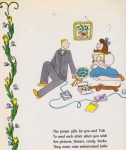
Acceptable gifts for boys to give girls: Books, records, candy, flowers, a compact, or “your best photograph (unautographed, please).”
Acceptable gifts for girls to give boys: wallets, key chains, books, records, hand-knit socks, or “your prettiest picture.”
Traffic advice that cracks me up: When crossing streets, boys should walk on the side closest to traffic, “so that if there’s any mishap, he gets hit first.”
Wow! A Password?!: “There’s a password, ‘cabbage,’ which is used every time a boy doesn’t take the curb side of the sidewalk when he’s walking with one or more girls. Actually, there’s no need for a password, because every young man should automatically take the outside place without even thinking twice.”
On smoking: “If you like the taste of tobacco and your parents approve, there’s nothing harmful about smoking in moderation.
On drinking: “Light wines and beer are your best bet if you must drink something alcoholic. My favorite is a ‘Sherry Cobbler,” which sounds like a grownup drink, but actually is a plain lemonade with a little wine added.”
Recommended non-alcoholic drink if you want to appear to be drinking alcohol: A “Horse’s Neck”—ginger ale, with a slice of lemon peel.
On conversation: “My Mommy done told me that as long as I wasn’t really a brain-box, I should develop my ear for listening.”
And a final thought: “The trouble with etiquette books is that they’re like dentists…you never pay any attention to them until you’re in agony, and then often it’s too late.”
“Never wear slacks on a date, unless it’s a rugged outdoor picnic or an evening at an amusement park. Otherwise, I think slacks are an insult to a boy.”
For Every Young Heart, 1963
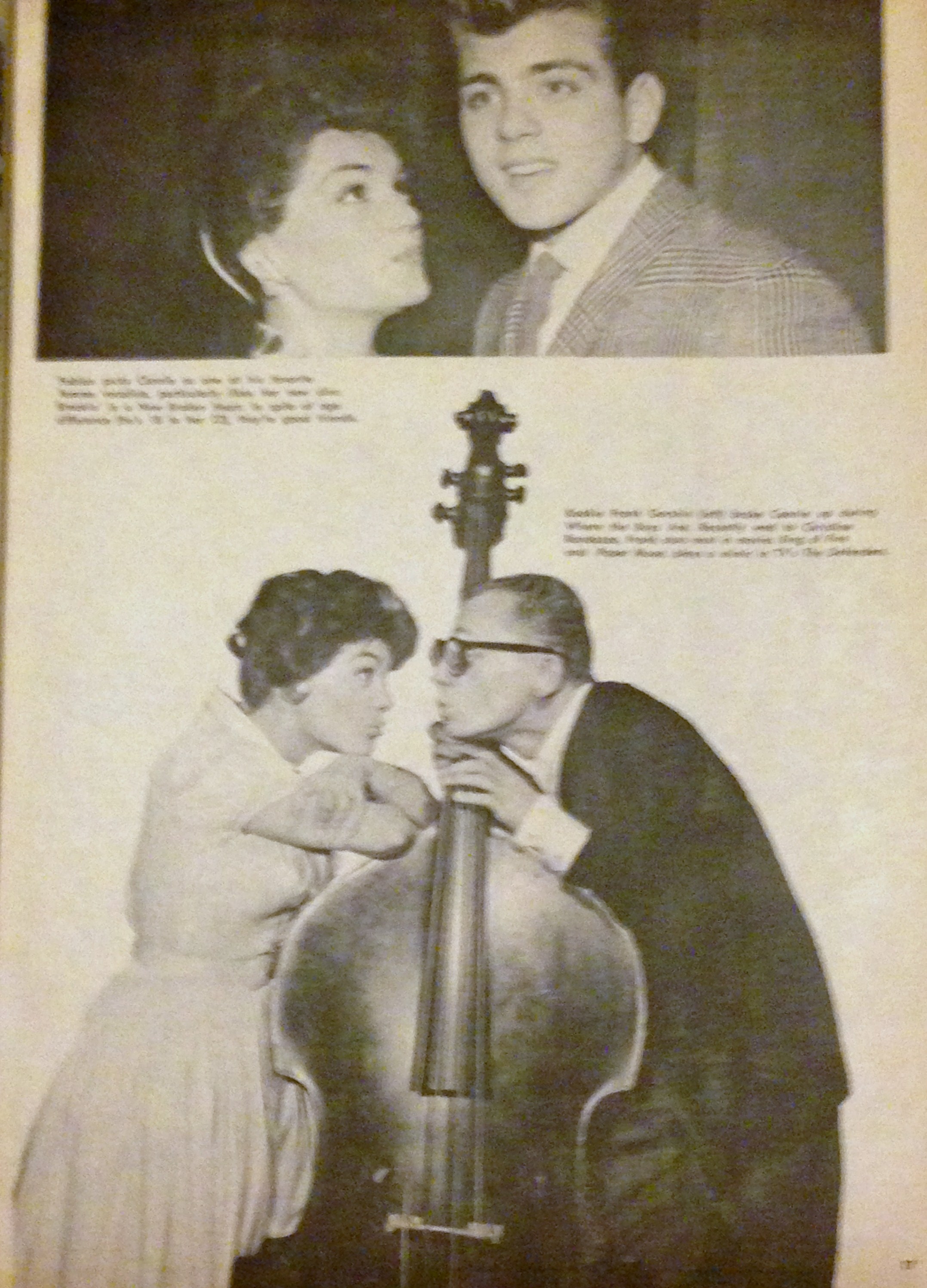
By Connie Francis
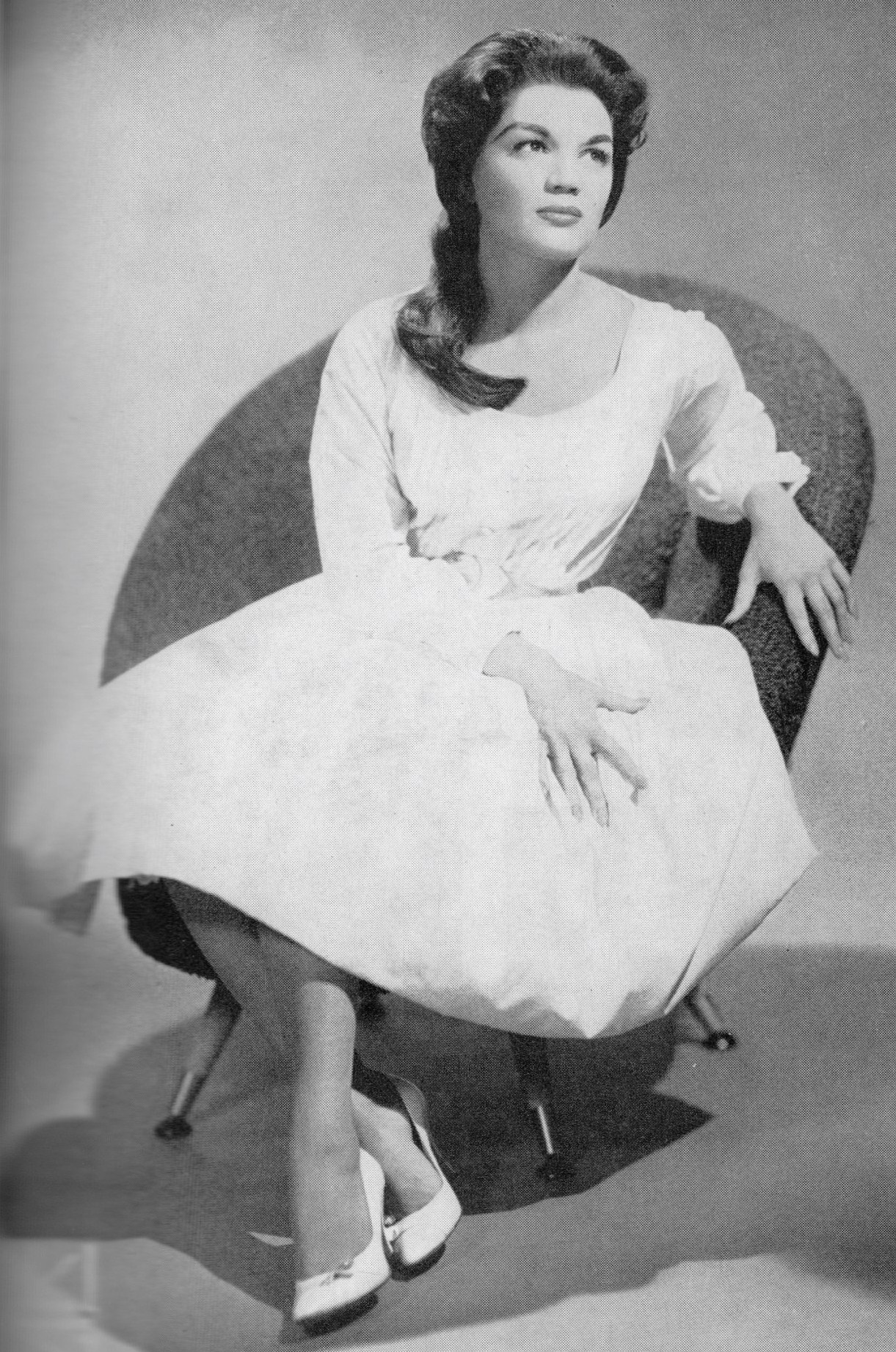
About the Book: We’ve encountered celebrity advice books before in this series, but Connie Francis is both our first female celebrity author. Of course, one always has to wonder how much “authoring” these celebrities did. Francis’ book feels more authentic than most. Her advice—both the good stuff and the weird stuff—feels specific and individual. Knowing little about Francis when I picked up this book, I quickly formed a clear mental image of her—tough, smart, moody, romantic, and ambivalent about her parents’ influence in her life.
About the Author: I’m always happy to write about an author who’s still alive. Connie Francis is a survivor, in every sense of the word. As a teenager, she appeared on a TV variety show called Startime Kids, and she received much criticism about her looks and weight during those years. Her recording career was slow to take off, and she was on the verge of giving up when American Bandstand made Who’s Sorry Now? her first hit in 1958. (She had brains to fall back on—she received a scholarship to New York University and was planning to study medicine.) And as an adult, she would endure many tragedies (which I don’t want to write about here, lest it ruin the mood for laughing at her fashion, beauty, and dating tips.)
Okay, Then—Let’s Start With Hair Care: “Going to the beauty parlor is an art in itself. Some ladies lean back, close their eyes, and snooze. Others read movie magazines or daydream. This is okay if you’re over forty and have money. But it’s not for you…Sit up and take notice.”
“Wash your hair with regular shampoo, rinse thoroughly, then soak with beer just before setting. It adds tremendous body to fine or limp hair.” (Note: You have to leave the beer, open, outside the refrigerator for two or three days prior to use.)
On Teasing Your Hair: “This is one of the most useful tricks a girl can learn. It involves back-combing the hair from underneath, which adds body, so that with very little curl you can make your hair look like something special. Right this minute, my hair needs setting, but if I had to go out unexpectedly I could whip it into a definite bouffant style by teasing, hold it with hair spray and breeze out for the evening with perfect confidence.”
On Washing Your Hair, Um, Frequently?: “My hair is very oily, so every three days it gets washed.”
On Fashion: “The little black dress or navy suit is the backbone of my wardrobe. I have five or six basic outfits that can go anywhere, from the office in the morning to dinner at the Stork Club and dancing at the Peppermint Lounge at night. The only change I need is a scarf or a piece of jewelry.
On Fashion for Petite Girls: “So instead of buying three strands, you buy one. Instead of the big chalk beads, you buy little ones. And if everything you wear is small, like you, you’ll have a larger overall appearance. Stay away from medium or heavy patterns, circular designs, and two-tone outfits. Verticals give you height. Solid colors, small all-over patterns, and lightweight, clingy fabrics are most flattering.”
On Makeup: “Dark minimizes, light accentuates…For instance, my nose is too wide, so I always use a darker makeup on its sides than on the rest of my face.”
On Lipstick: “For most women, this is a good rule: Darker by night, lighter by day, and always coordinated with the color of your outfit.”
On Brows: “The outer line of the eyebrow should end a 45-degree angle from the tip of your nose.”
On Eyeliner: “This is the most valuable cosmetic I ever found. After experimenting with many kinds, I think black pancake makeup is ideal.”
Getting Along with Boys
“…from the age of nine or ten, (a girl is) more alive, happier, and more of a person with a male around. It doesn’t matter how old he is—nine or ten like herself, twenty-two or eight-five, married or single. All he has to be is male.”
How 11-Year-Old Connie Learned “a New, Improved Formula for Getting Along with Men”: At a Halloween party, she encountered a boy named Eugene who had been picking on her at school:
“And then—whether it was the costume or the lipstick or the fact that I really did feel like a gypsy princess for one wonderful night—a strange thing happened. A lovely, soft, feminine feeling crept over me, transforming the glare to an angel’s smile. Instinctively, I minced forward, lowered my eyes shyly and cooed, “Hel-loo…”
“G-g-gosh!” Eugene breathed, “you look pretty!” “Oh,” I said coyly, “do you really think so?” Half an hour later, there I sat, perched on a cold radiator, collecting kisses from the stag line—and now it was the other girls turn to glare!”
Connie’s First Real Date: A showing of should It Should Happen to You with Judy Holliday and Jack Lemmon, and a second feature of Francis Joins the WACS with Donald O’Connor. (She got so disgusted with her date’s loud guffaws that she stormed out of the theater and went home. If he was laughing at Francis Joins the WACS, I can understand her reaction.)
Telling Tales on Herself: That is one of several unflattering stories Connie tells about herself. Others include the times Connie:
• Beat up a fellow seventh-grade girl
• Got into a shoving match with an overweight male classmate on her first day of high school
• Threw a cup of coffee across the room and stormed out the studio after recording Who’s Sorry Now?
Dating Don’ts
“There are certain places a girl should never go alone, or even with another girl—certain hangouts, bowling alleys, bars, and other places where boys tend to gather and girls don’t.”
“Don’t ever stand near a bar and talk. Never drink at a bar, even if you’re drinking ginger ale.”
“Most people can tell right away who’s a lady, just by the way she talks. And the quickest way to lower yourself in the eyes of anyone—a boy, especially, is to use even one unladylike word.”
“Every man likes a woman to allow him to be a man. Unfortunately, some women, especially in the United States, don’t allow men to be men. They do everything for themselves, because they’re always trying to prove how independent they are.”
“A woman who doesn’t expect the little courtesies isn’t a lady, and a man who doesn’t perform them isn’t a gentleman…I think an unmannerly man is 95 percent the woman’s fault.”
On Sharing Expenses on a Date: “Out. Not under any circumstances should a woman touch one nickel of her own money on a date, unless she’s stranded 50 miles from home and her date needs 15 cents for a subway token. But why get in such a silly fix, anyway?”
“A girl who goes out deliberately to get picked up lives dangerously. And most boys will assume that she’s what she probably is.”
Dating Dos
“Of course, the best way for a girl to be interesting to a boy is to be interested in him. I’ve sat through many an evening not knowing what on earth my date was talking about, but just nodding and smiling and looking at him very, very intently, and occasionally putting in a word of my own like ‘Really!’ or ‘My goodness!’—and he’s walked away thinking ‘Gee, what a brilliant conversation we had!’”
“Anyhow, not only does a kiss on the first date not compromise a girl’s reputation, but nowadays a boy expects it. That doesn’t make it right, of course, but it doesn’t make it wrong, either. A girl knows instinctively the kind of boy she can trust and the kind she can’t. She can sense when a boy respects her, and if a date doesn’t have any real feeling of warmth and friendship for you, he doesn’t deserve a kiss—or a second date, either.”
“The one unfailing way to let a boy know you like him is this: Tell him. I believe letting a boy know in a very lighthearted, casual way that won’t embarrass either of us…When we’re standing in line for a movie or waiting to get into a restaurant, I’ll say: ‘Know something? I like you,’ very casually, then change the subject.”
“As far as necking is concerned, there’s nothing wrong with it in moderation, if there’s a warm, respectful feeling between two people.”
Suggested questions to get dates to open up: “Are you a lonely person? Are you Happy? If you had 48 hours to yourself, what would you like to do most?”
Putting on the Brakes
“If a boy really loves you as much as he says, he’ll want to put a ring on your finger.”
“A girl can become sexually aroused just as quickly and irrationally as any boy. She wasn’t born with any handy ‘monitor’ that automatically helps her put on the brakes, but she has to develop one in her mind in order to protect her self-respect and reputation.”
(Connie wasn’t just talking the talk about chastity. In 1984, she told People Magazine that when she married her first husband, at age 26, it was because “because I wanted to have sex.” That marriage only lasted three months.)
With the Above Said, the Most Racy-Sounding Passage in the Book, if Taken Out of Context: “I finally had to force myself to have fun. I went to Europe and Las Vegas and forced myself to date one boy after another. I kept dating until I found the feelings I had for one or two boys weren’t so fantastic after all. I found, in fact, that I could feel just as happy and have just as good a time with 25 others.”
Connie’s First Real Love (Bobby Darin?): “I was in love in my teens, and at the time it was the most important thing in the world to me. Every day, because I was in love and my parents didn’t approve, there was an argument at home. School became secondary. My singing became unimportant compared to my feelings for this boy. The day was happy or sad depending on what he said to me or what I said to him, or what my parents said or didn’t say about him or me or us. Then, when we did break up, it took me just as long or longer to get over it.”
(Connie): He wasn’t just strict — he was a vigilante with every boy I had a milkshake with. I was not allowed to date in high school or go to the prom, and even in college he had a problem.
(Musto): Is it true he broke up you and Bobby Darin?
Connie: With a gun. He learned Bobby and I were starting to elope one night. We were 18, 19. I was doing the Jackie Gleason show and Bobby and I were cuddling in a corner. He barged through the rehearsal room of the Sullivan Theater with a gun in his pocket and a fierce determination to obliterate Bobby once and for all. One of the biggest regrets of my life is I didn’t marry Bobby.
In For Every Young Heart, some of Francis’ ambivalence toward her parents comes through. She describes how she taught herself shorthand because her mother was always snooping in her diary. She also talks about how she learned a confusing version of “the facts of life” in a whispered conversation with a girlfriend because her parents never told her anything.
“Every child has a right to know about life,” she asserts. “The day a youngster asks his first question about sex is the day he deserves an answer.”
Connie’s Ideal Husband: “He shouldn’t be overemotional, yet he must be very affectionate, responsive and warm. His laugh shouldn’t be so loud that everybody turns around to look, but he has to have a wonderful sense of humor. He has to be subtle and self-contained—the type who can say two words and I’ll understand; a man who can look at me across the room, and every look will mean something. Oh, yes, and he has to be very smart, alert, witty. He has to know he’s the boss without saying, ‘Listen here, I’m the boss.’ He can’t shout at me, but he’ll know just how to tell me what to do, because every woman loves to be ordered around the right way.”
Hmm. You start to get an inkling about why none of her four marriages lasted longer than five years.
More Wisdom from For Every Young Heart:
“The opinion that smoking is a drag—on your health, most of all—is pretty modern these days. Every day, new data piles up pointing to possible links between cigarettes and lung cancer.”
“If a boy has never been in a bar or never tried to drink or smoke by the time he’s out of his teens, he would be very unusual. These are things most boys have to experience in order to feel grown up and manly.”
“The only time a boy may have a feeling of responsibility for himself and girl is when he’s deeply in love, when he has a true feeling of respect for her, and when he’s far-sighted enough to think of the future, including the day they’ll want to get married with a fresh, wholesome start toward life together. But 99 percent of the time, the boy doesn’t feel this way, and that means the girl has to.”
“A girl must always have the kind of reputation that will make a boy very, very proud to take her home and introduce her to his mother.”
“…there’s just one reason for going steady, and that’s as a prelude to engagement.”
“Not only does a wife have to be a mother, friend, advisor, and scrubwoman—she must also never let her husband feel that it’s a great burden for her.”
“In my teens, I used to think it was the most important thing in the world for a woman to be tremendously independent. But I know now that no matter how independent you are, if you really love a man, nine times out of ten his wishes are more important than yours.”
“I will want nothing less than a big wedding, in a pretty church, with all my family and all my friends there to share it. That’s a girl’s one big day, and anybody who says you’re not entitled to it because it’s corny is not going to make the greatest or most understanding husband.”
“Above all, don’t arrive at the breakfast or dinner table, or go downtown shopping, with hair up and guard down. Boys (including fathers and brothers) should think that beauties are born, not made—even though all girls know better!”
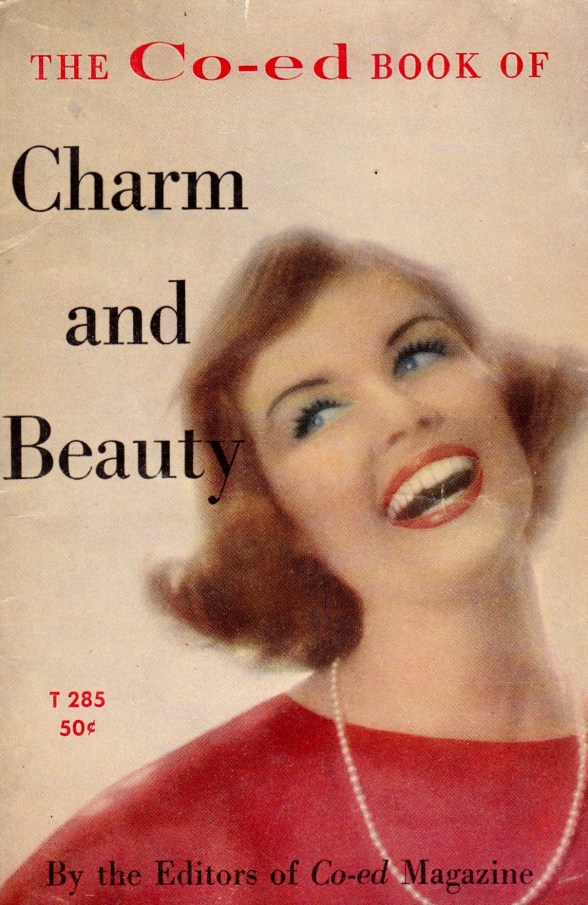
The Co-Ed Book of Charm and Beauty, 1962 (1963 printing)
By the Editors of Co-Ed Magazine
About the Book: For the latest entry in my series on vintage advice books for teens, we turn to this Scholastic book club offering, chock full of advice for improving every aspect of a girl’s looks and personality. The fashion section makes me sad that I was born too late for hats and little white gloves, though I’m happy to live without girdles and curlers.
About the Authors: Scholastic published Co-Ed Magazine from 1957 to 1985. According to the New York Times, Co-Ed targeted girls in the home economics field. (Scholastic replaced the magazine with Choices, a classroom magazine for teens of both sexes, which still exists.) As we have seen in the past, Margaret Hauser edited Co-Ed Magazine for many years, and she and other Scholastic personnel often wrote advice books under the pseudonym Gay Head. It’s a shame they didn’t do so with this one—that name would make a lovely complement with the cover image.
Hair setting techniques, The Co-Ed Book of Charm and Beauty
Recommended Amount of Time to Devote to Bathing and Beauty Treatments: An hour each night, extended to two hours once a week and to three or four hours once a month for intensive maintenance.
Fashion Tips
“Short white gloves are never out of place, and there are many occasions when not to wear them would show a lack of good taste. Gloves are a ‘must’ at church, at weddings, and most really dress-up affairs.”
“A movie date, a stroll in the park, a casual gathering of your friends, or a shopping expedition should see you skirted casually, perhaps in the outfits you wear to school. A date that’s somewhat special, a church activity, concerts, the theater, and informal school dances call for a suit or that old stand-by, the basic dress…A basic dress takes to a hat, high heels, and crisp white gloves as well as to flat shoes and an all-purpose cardigan. It can go almost anywhere and be your Sunday best.”
“Special finery must be special all the way, from sparkling earrings and delicate bracelet to petite evening bag and satin, suede, or velvet slippers. Such grand occasions permit you to bare your neck and shoulders; to float in chiffon, taffeta, peau de soie, or fine cotton organdy; to wear a jeweled pin and stars in your eyes!”
“You’ll wear a hat to church, of course, but what’s the rule for other times? It’s good taste to wear a hat when traveling, on ‘downtown’ shopping trips, and whenever you know other women or girls will be wearing them.”
“When you’re within the walls of your home, don’t fall into the ‘nobody will see me’ rut. What about your family? What about the neighbors and store clerks who see you as you dash to the store on a last-minute errand for mother? They’ll view with horror, and remember with regret, the vision of you in pin curls, shirttail flying.”
Recommended at-home wear: Skirts or culottes, pants or Bermudas, with classic shirts or knit tops.
“On occasion, treat (your family) to the pleasure of seeing you in pretty separates or a dress at dinnertime—a ‘must’ if company is present.”
“Ankle socks or knee socks pair with sturdy school shoes, while you’ll want to wear nylons with soft ballet-type flats and little heels. Sneakers are for sports and after school.”
Make-up Tip: “A bit of petroleum jelly applied to eyelids, brows, and lashes, will make the eyes sparkle, lashes look longer, and brows stay neatly in place.” (I hate when my brows wander.)
Fragrance Recommendations by Personality Type
Single Floral: For girls who are “sweet, fragile, feminine.”
Floral Bouquet: For “the All-American girl, crazy for football and hi-fi, happy in the thick of things, always ready for fun.”
Spicy: For girls who are “alert, alive, mad for bright colors and songs with a beat.”
Woodsy-Mossy: For “the born athlete who lives in shorts and sweaters and delights in long walks in the rain.”
Oriental Blend: For “the intense, dramatic type of person who looks great in unusual jewelry, offbeat styles.”
Fruity: For “the quiet kind of girl who thinks more than she talks, enjoys soft music, serious books, daydreaming.” (I’m fruity, apparently.)
Modern Blend: Good if “you’re always on the go, always in the know, a clever girl with lots of zip and a wonderful sense of humor.”
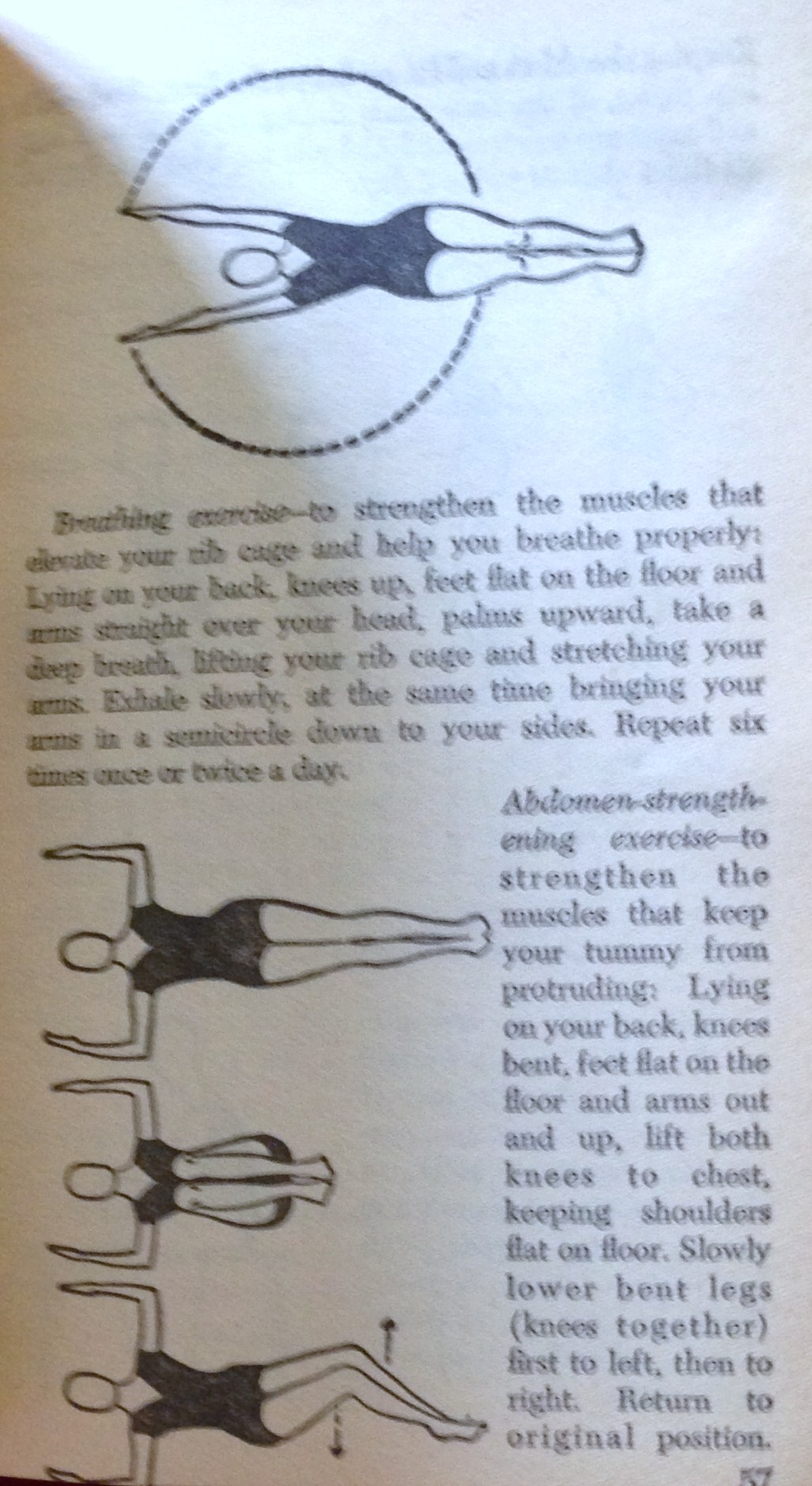
Sample exercises
Clothes and Body Type:
“If you’re over five feet six inches tall and weigh 125 pounds or less, lucky you! You have the fashion model’s ideal figure.”
DOs for this type: Shirt-waist dresses, bold prints (including “coin-size polka dots”), large accessories.
DON’Ts: Too slim skirts, deep V necklines, vertical stripes.
Girls 5’6” and over, weighing “135 or thereabouts” (Anything higher than this is too terrible to contemplate, I guess)
DOs: Vertical and diagonal stripes, middy collars, cardigan tops, three-quarter sleeves, straight or gently flared skirts.
DON’Ts: Princess dress lines, pleated skirts.
“If you’re pining for a print, pick the ‘teeny-weeny’ polka dot, a calico, or baby-check ginghams.”
Girls 5’3” and under, weighing 105 or less
DOs: “The princess line, with its snug-fitting bodice and flared skirt,” straight sheaths, softly tailored suits, delicate buttons and jewelry, knife-pleated skirts.
DON’Ts: Bold-patterned prints, “suitcase-sized handbags.”
Girl 5’3” and under, weighing 115 or more
DOs: Skirts with “gentle gores or center pleats,” narrow self-belts, cardigan-topped outfits.
DON’Ts: Pencil-slim sheaths, ballooning skirts, deep V-necks, box pleats, overlong jackets, “giant trimmings.”
Sitting, Standing, and Walking Attractively
Sitting: “Try the S curve. Knees together (always—even when wearing shorts or slacks), place your thighs diagonally across the seat of the chair, your legs in the opposite direction, and cross your feet at the ankles.”
Standing: “Stand with correct posture, feet parallel. Step back with one foot and point that toe out at a forty-five degree angle. Keep the front foot straight, the heel a couple of inches away from the instep of the back foot, and turn your hips slightly toward the back foot (so that they present a slim line).”
Walking: “Beware of arms swinging, taking too long (or short) a stride, letting your chin lead and your derriere follow as it may…Your ‘bounce’ should be less than two inches…If you consciously let your fingertips brush your skirt as you walk, you’ll avoid that ‘swinging out’ look.”
Fearless Charm Inventory: The book includes inventories to help girls assess their charm levels. To the authors’ credit, they include prejudice, along with shyness and laziness, as a barrier to charm. The original owner of my book was not prejudiced or lazy, just shy.
Goody! Quizzes!: The book also includes quizzes on humor, tact, family interactions, and dating etiquette. Quizzes were always my favorite part of teen magazines. I think the wrong answers on the tact quiz may be a wee bit too obvious, though:
“I should have known you were sick because…”
a.) You look so awful.
b.) I missed seeing you around.
c.) Sally’s been dating your boyfriend.
Final Fun Fact, Courtesy of the Authors: “The word grooming comes from gromet, an old French word meaning ‘servant’ or ‘assistant.’ Before you jump to the wrong conclusion, bridegroom comes from a combination of two Anglo-Saxon words: ‘bryd’ (bride) and ‘guma’ (man)!”
“There are many silly, flashy, worthless, and even evil girls who think the boys they desire are their legitimate prey. Often such girls appear to be superficially the most fascinating. They know the art and trick of making the most of their charms. Nothing will so definitely put a boy in a wrong light before a whole school or community, as friendships and associations with ‘fast’ girls. Give them all a wide berth.”
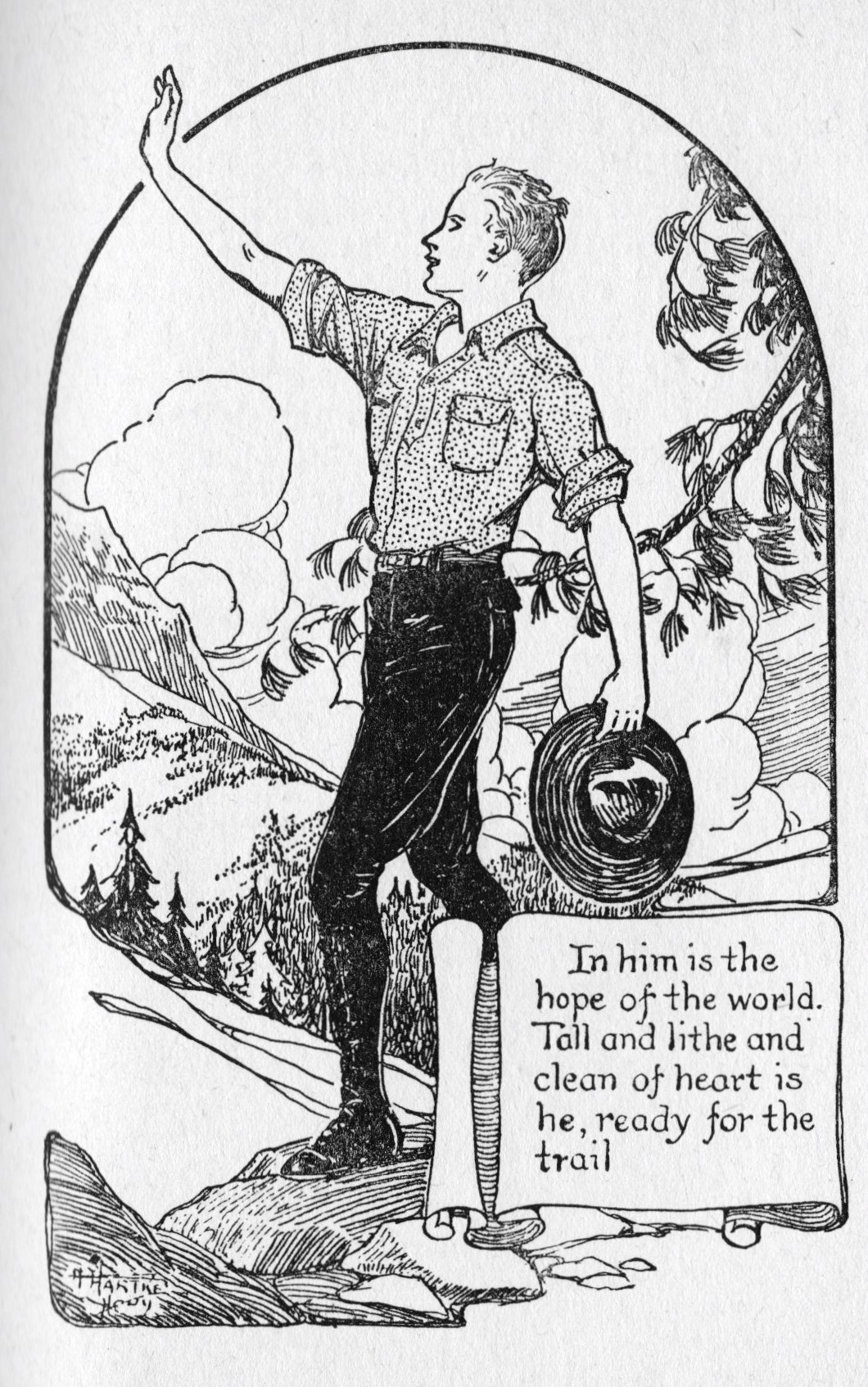
Marked Trails for Boys by Frank H. Cheley, 1931
About the Book: We’ve looked at several books for girls in my weekly series on advice manuals for teenagers, and we’ve seen the double standards and mixed messages girls have received about growing up. Well, this book proves that boys sometimes traveled a confusing path as well. Author Frank H. Cheley doesn’t want his young readers to be wishy-washy, namby-pamby, weak-willed sissy boys, but he does want them to be perfect gentlemen at all times.
About the Author: Frank H. Cheley was an outdoors enthusiast who believed that camping, hiking, and other outdoor experiences helped young people develop good character. After working with boys through the YMCA, he founded his own boys’ summer camp in the Colorado mountains in 1921. He added camp activities for girls in 1926. His many books for young people often used hiking and exploring as metaphors for life’s struggles. More than 90 years later, the Cheley family still runs Cheley Colorado Camps. Frank H. Cheley left behind a wonderful legacy.
(Of course, I’m still going to cherry-pick the most dated and silly-sounding quotes in his book for cheap laughs. Maybe if I’d gone to a better summer camp, I’d be above this sort of thing.)
Most unintentionally dirty-sounding passage this book: When a boy waits for true love, he will find himself “ready with a big splendid manhood to offer in return for the devotion and companionship of a splendid girl.”
Second most unintentionally dirty-sounding tidbit: “Then there is Sister…Some other boy will be discovering, almost before you know it, that ‘she is one girl in a thousand.’ Why not beat him to it? A fellow who is half alive can learn many, many things from his sister, if they are on right terms.”
Something you wouldn’t want to hear from a summer camp director nowadays: “One of the very finest things in all the world is a fresh, clean-cut, upstanding, eager-eyed boy, filled to overflowing with physical power and nervous energy, seeking a suitable world to conquer.”
Some of Cheley’s favorite adjectives for describing the ideal boy: Vigorous, lithe, red-blooded, clean (morally, although he does make the usual advice-book pitch for deodorant and shampoo), splendid, pure, fine-spirited.
Cheley’s favorite names for a less-than-ideal boy: Molly-coddle, jelly bean, lounge lizard, coward, do-nothing.
Most depressing way to urge kindness toward friends: Be generous in your praise…Your friends will be a long time dead.
Cheley’s favorite role model for boys: Teddy Roosevelt.
The two kinds of boys (or maybe dogs—this part is kind of confusing): “The thoroughbred leads the party to the top; head high, eyes shining, teeth set, muscles quivering from giving their best; a true fighter who loves the battle. The house pet snuggles into an overstuffed davenport by the radiator and asks mildly for toast and tea.”
Cheley’s recommendations for good health:
• Simple, plain food
• Vigorous outdoor work and play
• “Keeping digestion active”
• Sleeping regularly in the open air
• Avoiding patent medicines
Other quotes from Marked Trails for Boys
“A loud, noisy, boisterous boy who is inclined to be a bit smart is very tiresome. No one likes a ‘cutie.’”
“Of course, a worthy person never tells a ‘dirty story.’ It simply cannot be done without the loss of your self-respect…The boy that tells such is advertising that he is rotten at the heart, the boy who listens to one is yellow; he has no convictions worthy of a gentleman.”
“There is no finer little thoughtfulness that a boy can show for his mother than to early form the habit of taking her often, even one flower.”
“A boy, to enjoy fine girl friendships, must always and at all times be a gentleman, courteous, chivalrous, not a long-faced, pious goody-good. Girls admire real vigorous, masculine men, but gentlemen. To forget for a moment the fine properties is to coarsen and spoil a beautiful relationship.”
“Real folks have nothing but scorn for a spooney boy, and fine girls invariably resent being pawed over. Only cheap, undesirable girls tolerate it.”
“Have always a grand, good, glorious time; be a regular boy. Everyone despises a sissy.”
“Fine boys everywhere have a real responsibility for influencing girls in their crowds to fine, womanly conduct.”
“Take a good disposition to the study table. Say, ‘Come now, Mr. Algebra and Madame Latin, I’m ready to lick the tar out of both of you.’”
“A gal can’t find out what makes the world go round unless she gets around a bit herself!”
Personality Plus by Sheila John Daly, 1946
About the Book: We’re going back a bit further into teenage-advice-manual history today, back to the very birth of the American teenager. Jon Savage, author of Teenage: The Creation of Youth Culture, says the word teenager came into common use in 1944.
“From the very start,” Savage writes, “it was a marketing term that recognized the spending power of adolescents…the fact that youth had become a market also meant that it had become a discrete, separate age group with its own peer-generated rituals, rights and demands.”
Personality Plus was written for teenagers, by a teenager, who opens the book by arguing that her peers’ spending habits and rituals do not define them:
“According to the popular conception, a gal just isn’t on the ball unless she drinks a couple of cokes a day, is mad for Van Johnson and Robert Walker and is swayed pro and con by Frank Sinatra. And the average Joe has missed the train by a mile unless he knows which band leaders play which instruments, wears bright reindeer sweaters, has lengthy phone conversations each evening and rides around after school in an old, violently painted jalopy.”
Daly knows, however, that teenage preferences are powerful—she sprinkles liberal pop cultural references throughout her book.
Number of Van Johnson References in Personality Plus: Eight. Van Johnson tied with Bing Crosby as the top box office draw in 1945. He was a bobby-soxer favorite; as his New York Times obituary said, “The numbers of screaming teenage girls who swooned for Mr. Johnson were second only to those who threw themselves at Frank Sinatra.”
Other Celebrities Mentioned in Personality Plus:
Vaughn Monroe
Gene Kelly (twice)
Robert Walker (twice)
Frank Sinatra (twice)
Betty Grable
Ingrid Bergman
Fred MacMurray
June Allyson
Harry James (four times)
Walter Pidgeon
Lana Turner
Humphrey Bogart
Woody Herman
Perry Como
Joan Leslie
Johnny Mercer
Johnny Weissmuller
About the Author: I think I kinda love Sheila John Daly, an ambitious and talented woman from a family of ambitious and talented women. One of her three older sisters, Maureen Daly, wrote the classic teenage romance Seventeenth Summer. Maureen also wrote a teenage advice column for the Chicago Tribune, which Sheila took over when Maureen went to work for Ladies Home Journal. By the time Sheila was 21, her column was reaching 10 million readers in 36 newspapers, and she had authored four books.
As a teenager herself, Daly avoided a preachy tone in Personality Plus. Instead of railing against “necking,” she reminded readers that getting too affectionate on double dates could make the other couple uncomfortable. Instead of banning smoking and drinking, she warned party guests against “dumping cigarette ashes between the davenport cushions” or raiding the hosts’ wine cellar.
Not much of her advice actually qualifies as weird. It’s entertaining, though, in the vivid picture it creates of 1940s teenage life. (The book’s glossy illustrations are also charming.) Consider this comment about teenage slang:
“‘Smooth’ is an interesting adjective which came into the high school vocabulary about five years ago, and when it did, about a dozen other words dropped out of common use, for ‘smooth’ is an accepted synonym for them all…Smooth can mean anything from pretty, poised, attractive and full of personality to just plain intelligent; it can even take the place of a whole sentence, explaining that a fellow or girl is a good dancer, a sharp date, an interesting conversationalist, or a fine hunk of heartbreak—all in one word.”
At times, Daly has a nicely snarky tone, as in her rules for losing friends and alienating people:
“Make yourself the center of attraction always. Make money the principal topic of your conversation. Match every anecdote that someone tells you with one of your own—just a bit better, just a bit more king-sized.
“Get the habit of talking about your friends…Don’t put your thoughts in black and white, just drop the hint and leave the others to twist the remark around to exactly what you meant it to mean. Those catty girls—how could they.
“Speak up. Then give the excuse: ‘I can’t help it. I’m just frank, that’s all.’”
If she were a young woman today, Sheila John Daly would probably have a lively blog and a huge Twitter following.
My Favorite Sheila John Daly-isms: “Any fellow old enough to select his own shirts and ties is man enough to give his own best glen-plaid slacks a once-over-lightly with the iron or to sponge the coke stain off his red striped tie. So whip out the ironing board and iron, fellows, and get to work—your wardrobe is showing.”
“If the right boys don’t ask you to have fun, if you can’t find anyone to move into the hand-holding department with you, well—have fun without boys. And you can have more fun than you think! Find yourself several good girl friends; try enjoying a movie with them on a Saturday night. Develop a hobby, get interested in sports, read all the books you’ve wanted to read for so long, find an after-school job.”
Final Fun Facts: I couldn’t find much information on Sheila John Daly’s career any later than this 1959 Life article. I do know that her married name was Sheila Daly White and that (yay!) she’s still alive. And if, as seems certain, this blogger’s aunt is the same Sheila Daly White, she really is a very “smooth” lady.
Other Quotes from Personality Plus:
On ways to meet boys: “Putting in an appearance at school basketball games to do a little lung-and-tongue exercise to cheer the fellows on to a higher score isn’t a bad idea, either, because some of the smoothest characters play forward on the cage five and they get a kick out of being appreciated!”
On preparing for a date: “…plan your schedule far enough in advance so that you won’t be caught with an unpressed skirt and your hair still in curlers when the doorbell rings.”
On corsages: “Use originality in your choice. Remember there are other flowers besides gardenias! Try a camellia in season, a cluster of violets, or two long-stemmed red roses.”
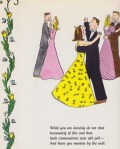
On the rules of dancing: “…a girl who is already dancing should never refuse to change partners when a boy cuts in…the partner who was first dancing with a girl must not cut back on the boy who took her from him, though he can cut in on a third fellow. Also (to avoid trouble!) he must not continue to cut in on the same fellow when the latter dances with other girls!”
“A formal dance calls for a certain dignity and even if you’re jitter-bugging at a sweater hop in the school gym, don’t claim more than your share of the floor.”
On curfews: “Another good reason for an earlier zero hour is the fact that the ‘healthiest’ part of the evening is always from about eight to twelve. The main event, the dance or the movie, is usually over by that time, a sandwich and a malt won’t take more than forty-five minutes, and after that–? A smart fellow and girl will start for home, and because you’re smart, too, you won’t have to ask why!”
“Many leading movie stars go to bed each night at nine when making a picture because they know you can’t win Oscars with circles under your eyes.”
A sign that he’s in love: “He has his class ring made smaller so that it’s just the right size for your third finger, right hand. (And that’s where all the gals are wearing them these days.)”
A party refreshment idea: “Heat hamburger buns in your oven until they are warm and toasty. Wrap one strip of bacon around a cube of American or pimento cheese and put it under the broiler of the oven until the bacon is crisp and cheese soft and toasted. Then pop the sizzling combination into the hot buns, serve with hot cocoa topped with marshmallow and you’ll soon see a quick disappearing act.”
On hair: “Whether you’re wearing your hair in a long bob, a fluffy feather cut, or in quaint pigtails with bright red bows, that old routine of ‘one hundred strokes a night, keep your hair healthy and bright,’ with frequent and thorough shampoos between, is the best way to give it that magazine ad slickness.”
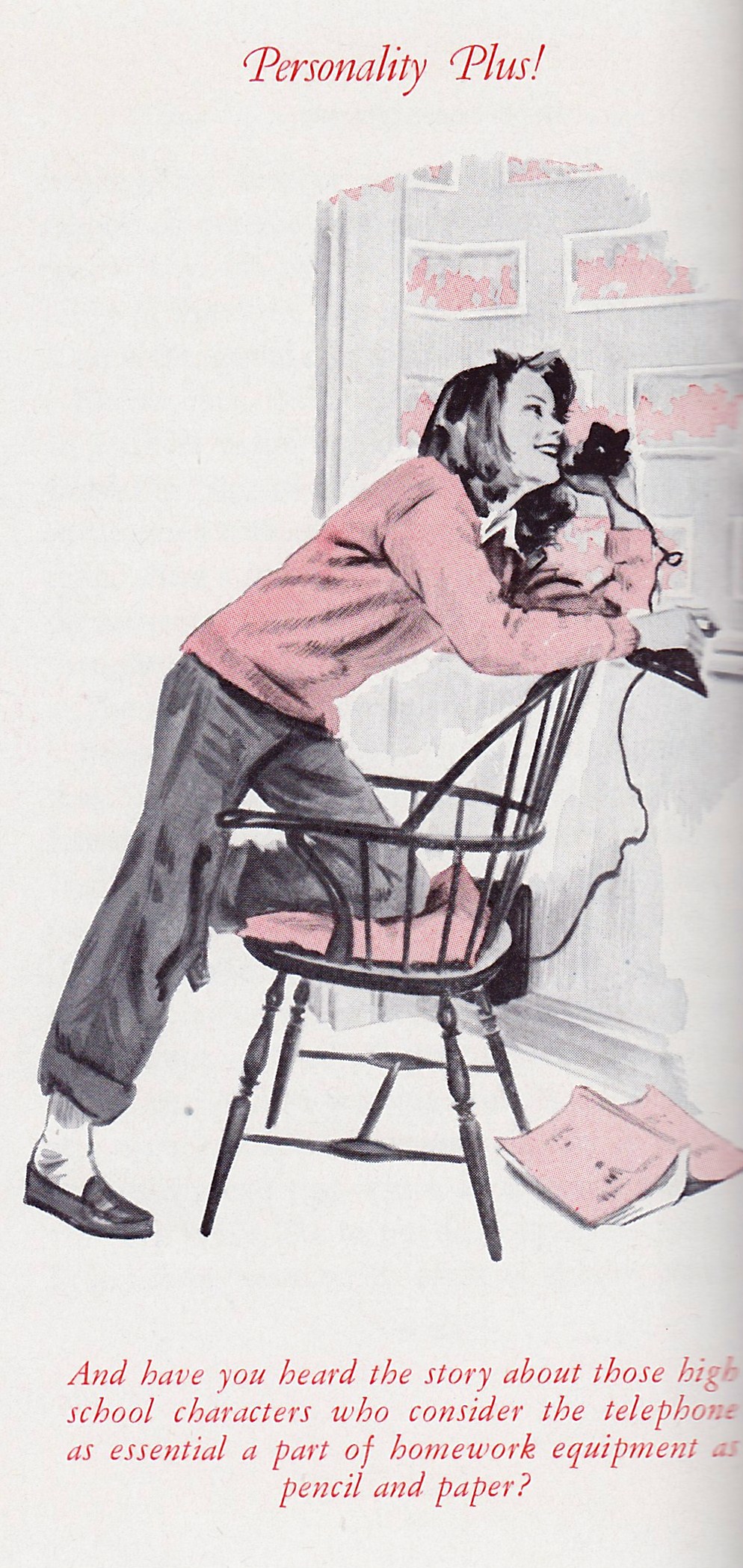
On telephone etiquette: “Whenever possible, wait for boys to call you. Even with a hundred poles and a lot of wire in between, a fellow can tell when your line is out for him. And a smooth boy won’t want to get tangled up in it.”
…or, Whose Vintage Advice to Teens is Weirder—Ann’s or Abby’s?
Dear Teen-Ager by Abigail Van Buren, 1959
Ann Landers Talks to Teen-Agers About Sex, 1963
“Just as ‘liquor is quiquor’ is a way to a neat little plot in the cemetery, it can also be a jet liner to sextra headaches.”—Abby
“You wouldn’t take a diamond and platinum brooch to try to pry open a jar of pickles with it, would you? Using sex in the wrong way adds up to the same thing.”—Ann
About the Authors: Identical twins Pauline and Esther Friedman, the children of Jewish immigrants, were inseparable as children. As Morningside College co-eds, they collaborated on an advice column for the school paper. They married in a double wedding. And they built matching careers—Esther became Ann Landers in 1955 at the Chicago Sun-Times; Pauline because the San Francisco Chronicle’s Dear Abby three months later. Both their columns were hits in syndication. Ann Landers eventually reached 90 million readers, and Abby reached 80 million by 1995. Pauline’s daughter Jeanne Phillips started co-writing Dear Abby with her mother in 1987 and took over all writing duties by 2002, after Pauline was diagnosed with Alzheimer’s disease. That was also the year Esther died, bringing the Ann Landers column an end.
The Ann-Abby Feud: Understandably, Esther resented Pauline’s decision to start a rival advice column. The sisters went through a period of estrangement that included the publication dates for both these books. In 2005, Esther’s daughter, Margo Howard, published a collection of letters she’d received from her mother through the years. Complaints about “Popo” (Pauline’s family nickname) figure prominently. “I can’t cut her out of my life completely, no matter how loony she gets,” one letter from 1981 reads. “She is too much a part of me, but I must myself protect against her in some way. She is too unpredictable—and destructive.”
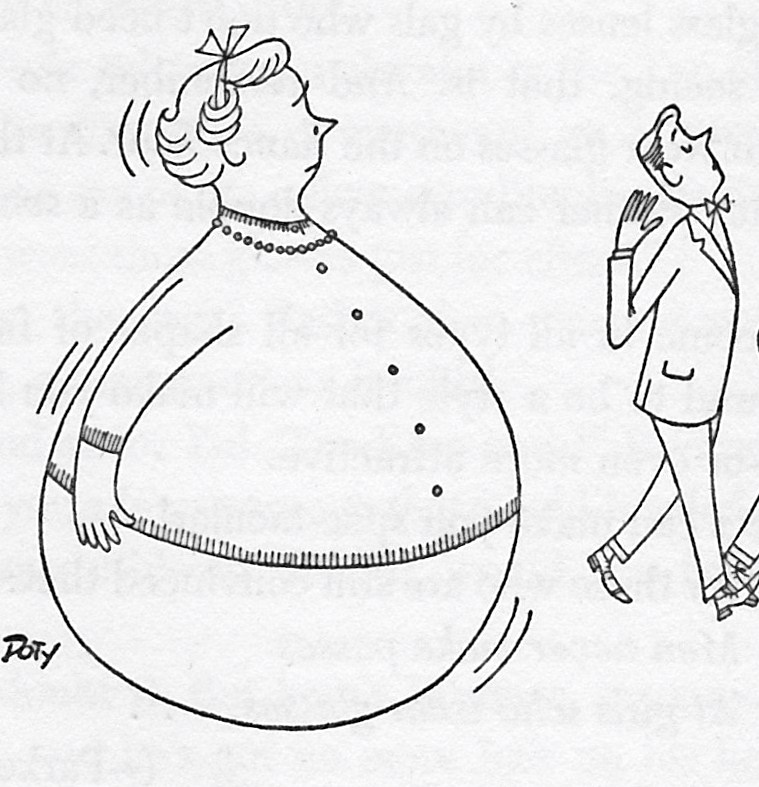
From Abby’s book, a sensitive illustration of the problems facing overweight teens
About the Books: The books’ titles reflect their differing focuses. Abby’s book covers various teen topics, from dating to dealing with teachers, from grooming to smoking. Ann’s book takes dead aim at the sex stuff. (That’s probably what most teens skipped to in comprehensive advice books, anyway.)
Changes in society probably influenced the difference in focus. Although only four years separated the books, those four years saw rapid changes in sexual mores. “The pill” became available for contraceptive use in 1960, and by 1963, America was on the cusp of sexual revolution. Of girls who turned 15 between 1954 and 1963, 48 percent had premarital sex before age 20. For girls who turned 15 between 1964 and 1973, the figure rose to 65 percent (Source: The Alan Guttmacher Institute).
Differences in Tone: Abby’s writing style is much cutesier, and her book includes cutesy illustrations, as well. Ann can get a bit sassy, but mostly adopts a down-to-earth style. This reflects a real difference in their early advice-giving styles. As Time wrote in 1957, “Abby’s replies are slicker, quicker, and flipper.”
Examples of this style in Dear Teen-Ager include:
“If you’re under 18 there are more reasons for not going steady than Elvis can shake a hip at.”
“Men who are older tend to be bolder.”
“Troubles are like photographs. They are developed in dark places.”
Contrast that with a typical piece of advice from Ann’s book:
“Housework, particularly floor-scrubbing, is not only great for the female figure, but it’s good for the soul. And it will help take the edge off your sex appetite. Cooking, baking, and sewing will prepare you for homemaking. Energy siphoned off into these constructive channels will leave less energy for preoccupation with erotic fantasies.”
Abby would have probably said, “Keep scrubbing the floor, and you’ll be lusty nevermore”….or something.
A Shared Moose Obsession? Abby’s book includes one of her most famous lines: “Girls need to ‘prove their love’ through illicit sex relations like a moose needs a hatrack.”
Ann’s book reprints a letter from a girl with a loser boyfriend, and Ann’s response concludes, “You need this infant like a moose needs a hat rack.”
I don’t know which sister used the expression first, but it didn’t originate with either of them. Jack Benny made the phrase a running joke on his radio show in 1947.
The Double Standard: Abby took the double standard for male and female behavior for granted in 1959, while Ann rejected it in 1963.
Abby: “When a decent boy gets serious about someone, and thinks of marrying someone…that someone will be someone he respects. All boys aren’t angels, but most of them are looking for one.”
Ann: “No man should insist on a white-flower girl unless he is able to bring to the marriage the same credentials of purity.”
Homosexuality: Abby doesn’t mention homosexuality at all, but Ann devotes a whole chapter to it. This distinguishes her book from the other teen advice books I have from this period—few go beyond advising teens to seek professional help if they don’t develop an attraction to the opposite sex.
Ann sounds genuinely distressed by the mail she receives from desperate gay young people. “About 70 percent of the letters come from boys,” she writes. “Most of the boys who write are tortured with guilt and self-hatred. They live on the razor’s edge, terrified that someone may learn they aren’t ‘like everybody else’…Many who write are so ashamed of their physical desires for members of their own sex that they speak of suicide.”
She accepts the psychiatric wisdom of the time that labeled homosexuality as a mental disorder, but she does encourage heterosexual teens to be understanding toward their gay peers, who are “twisted and sick, through no fault of their own.”
Abby’s and Ann’s approaches to homosexuality in their respective books carried over into their newspaper columns. Abby mostly ignored the subject, and Ann stuck by her belief that homosexuality was a disorder until 1992, nearly two decades after the American Psychiatric Association stopped labeling it as one.
Ann’s Most WTF Comment about Homosexuality: “Some Lesbians who despise men enjoy arousing a male’s sexual appetite and then punishing him with rejection.”
Abby’s Least Helpful Advice: “…if everybody picks on you—well—don’t look now, but maybe something’s wrong with you!” (During my many years as a bullying victim, this would have cut me like a knife.)
Abby’s Most Surprising Advice, Which Follows Many Chapters Stressing Inner Beauty and the Need for Self-Acceptance: “Now maybe you’re one of those girls who were slightly short-changed above the equator. Hundreds of girls have written to me asking if it’s dishonest to get a little outside help (okay, ‘falsies!’) to put them out in front. To this I say, ‘Buy all the attachments you need!’”
On Smoking and Drinking: Both sisters advise against teenage drinking. Ann describes the decision she made at a young age—and maintained throughout her life—to abstain from alcohol. Interestingly, her daughter Margo writes that “I was considered ‘sophisticated’ even as a high school girl. I smoke and I drank scotch on the rocks.”
Ann has little to say about smoking; Abby raises several objections, which don’t include health effects. She even pulls out another double standard: “Even when a fellow happens to be a smoker himself, he prefers a girl who doesn’t smoke. It cheapens her appearance. It clouds the illusion of sweetness.”
Abby’s Most Ironic-in-Hindsight Use of a Celebrity to Make a Temperance Point: “Did Mickey Mantle tell Casey Stengel it’s old-fashioned to forbid smoking, drinking or late hours during baseball season? Of course not.”
Other Abby Quotes:
“A nice girl does not hand out a kiss—or kisses—on the first date, no matter how much she digs the boy. If he’s worth liking, he’ll respect you for it. Boys, hold your fire.”
“The bobby-soxer herself, Miss Junior Miss…is endowed by a mysterious but obviously prudent Nature with more slowly excitable sex responses.”
On handling a “mad lover” (21st century translation: a potential date rapist): “In an extreme case, where physical duress is involved, meet force with force. A right uppercut is unladylike, so you’d best settle for a stereophonic slap in lover boy’s fresh face…When he recovers from his chagrin, your best line is a brusque “Home James!” He won’t trouble you again.”
Other Ann Quotes:
“A girl who is called a make-out by her friends would do well to take stock of herself.”
“What am I saying? That a girl can be nice even though she goes all the way? Yes. The girl can be nice—but the girl is not very bright.”
“At certain times each month you feel listless, bored or even completely knocked out. A physical change is making its presence known through menstruation. With the beginning of these days of monthly bleeding, some girls may be hit by attacks of cramps, headaches and even upset stomach. Strange, isn’t it? And frightening at first, until you begin to understand that this is part of life’s process for continuing itself. Your body will supply a son or daughter to build the world of the future.”
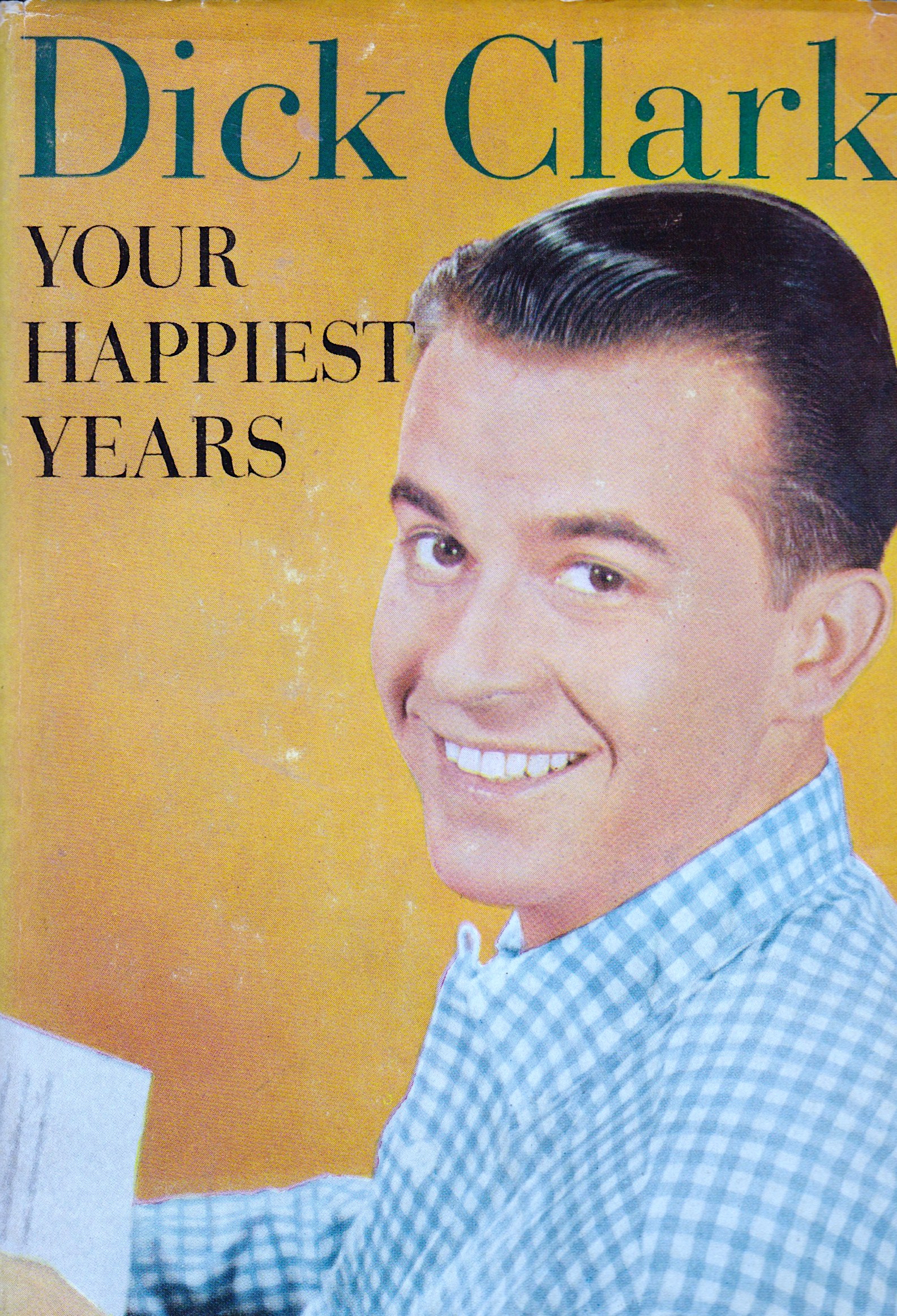
Your Happiest Years by Dick Clark, 1959
About the Book: Do any adults actually remember adolescence as their “happiest years?” This book by television personality Dick Clark, who would later be called “the world’s oldest teenager,” falls into that strange 1950s genre we have encountered here before—a volume of teenage advice authored by an adult celebrity. Can you imagine buying your young daughter a book in which Ryan Seacrest explains how her body will soon burst into womanhood?
Of course, when it comes to these celebrity books, it’s questionable who really authored them. Pat Boone’s book had a ring of authenticity, but this one is a pretty generic collection of 1950s wisdom for teenagers. It offers sensible advice on dealing with friends and family, while urging strict adherence to gender roles.
About the Author: American Bandstand premiered nationally in 1957. The show “did as much as anyone or anything to advance the influence of teenagers and rock ‘n’ roll on American culture,” according to the New York Times. An immediate hit, it would run until 1989. In its early years, the Times wrote, teenagers saw Clark as “their music-savvy older brother.”
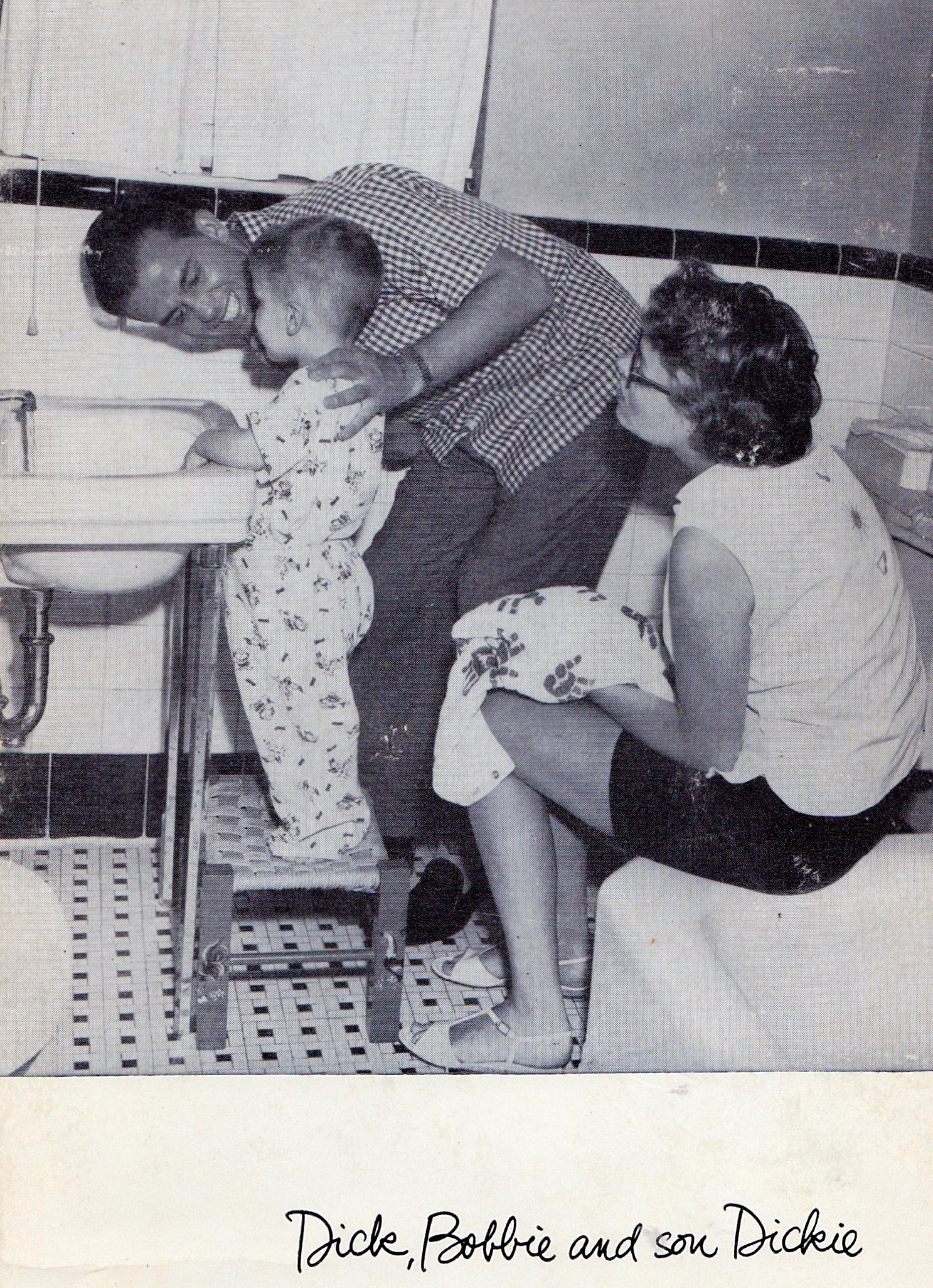
Dick’s marriage to high-school sweetheart Bobbie gave his teenage romance advice some credibility. Unfortunately, Dick and Bobbie divorced only two years after the publication of Your Happiest Years.
Clark was also a shrewd businessman, who never shied from a money-making opportunity.
”I get enormous pleasure and excitement sitting in on conferences with accountants, tax experts and lawyers,” he told the Times in 1961. It’s not surprising that he would lend at least his name to this book. Now, it is a bit surprising that he also “authored” a book for adults about bowling (scroll about 3/4 of the way down the page).
Clark wasn’t experiencing one of his happiest years in 1959. As the U.S. House Subcommittee on Legislative Oversight investigated payola in the music industry, Clark’s network bosses took pre-emptive action. As Time wrote on November 30, 1959, “ABC confronted him with a significant decision: he must get rid of his outside music interests or else quit TV…Faced with the ABC ultimatum, Clark decided to ‘divest’ himself of his interests in various music firms.” Clark denied any involvement in payola.
Celebrity Names This Book Drops: Connie Francis, Solly Hemus, Mickey Mantle, Dinah Shore.
Cautionary Tales Clark Offers:
A boy who failed to overcome his shyness with girls at the appropriate age and reached the age of 19 without ever being kissed.
A young ladies’ man who grew into a lonely adult when girls tired of his “gay-blade routine.”
A sickly boy who resisted his parents’ curfew and came down with tuberculosis.
A girl who stayed out all night, causing her worried father to head out looking for her. In his exhausted state, he crashed his car and emerged permanently crippled.
More Quotes from Your Happiest Years
“Once you’ve stepped out and found you can have a good time with girls, you are free to call any of them you know and ask for a date. They can say no, but at least you can ask. You don’t even have to feel self-conscious about it if one turns you down—you can dial another. A girl can’t do this—or certainly should not.”
“The sweaters and blouses that once flopped about you, to the despair of your mother and father, who wanted their little girl to look neat, are starting to fit snugly around your chest. Your breasts are undergoing a change as you grow into young womanhood. So are your hips, which broaden as they prepare for the function nature has marked out for you as a woman: the bearing of children.”
“It’s fine to be ‘one of the boys’ at certain ages. The teen age isn’t one of those times. The sports you played together when you were nine or ten belong only to him around thirteen or fourteen. You can know about them. In fact you should be able to talk about them—but let him star at them. You be there to cheer and he’ll notice and appreciate that.”
“A young woman should begin in her teens learning the things that keep a home running smoothly. She can watch how her mother cooks and bakes. There are also many opportunities for a daughter to observe how Mother handles Dad when he’s had a tough day at work. Mom can always use some help around the house, with dishes, cleaning, cooking, and a million other things a girl should know to qualify for that band of gold.”
On menstruation: “Accept it as you accept other signs of developing femininity and attractive womanhood. Although it may give you some discomfort and even embarrassment at first, it is a mark of special favor for you as a woman.”
Why teenage boys shouldn’t avoid dating in favor of hanging out with the guys: “A pinball machine may be a lot of fun when you’re seventeen, but at twenty-two it’s no date for a dance, and it won’t sew up those ripped shirts, when you’re thirty.”














 Embarrassing Treasures