Another week, another cardboard-and-plastic journey to the past.
Today’s Game: H.R. Pufnstuf Game
Copyright Date: 1971
Object: Be first to collect cards completing picture of PufnStuf characters.
Game Board: Colorful and cartoony, though the cartoon likenesses leave a lot to be desired.
Game Pieces: None. Cards and a spinner are all you need to play this game.
Recommended Ages: 6-12. The game box, with its full-color photos, might have attracted kids throughout that age range, but the graphics inside scream little kid.
Game Play: The board is really superfluous in this game; players don’t move around it. They just spin and collect cards and try to complete a puzzle. (It’s nice that Freddy the Flute gets his own puzzle; on the show, he just squeaked “Jimmy” and got stolen a lot.
Personal Notes: I never had this game as a child—I would’ve been too young to play it in 1971. I did watch H.R. Pufnstuf, though, and still have the disturbing, hallucinatory memories to prove it.
About the Show: H.R. Pufnstuf premiered on September 6, 1969, as part of NBC’s Saturday morning lineup. Popular with kids, it aired for two years on NBC, one year on ABC, and two and a half years in widespread syndication—an amazing feat considering that Sid and Marty Krofft only produced 17 episodes.
Final Fun Fact: Jack Wild, who starred as Jimmy, got to keep one of the original Freddy the Flutes as a souvenir after the show wrapped, according to the book Pufnstuf and Other Stuff.
Something I’d seen on TV as a child haunted my memory for years.
It involved a perky teenage girl beginning her service as a hospital volunteer. In her starched candy-striper uniform, she was the picture of efficiency. During her first day on the job, however, she made a terrible mistake. An old woman patient begged the girl for a glass of water, and the girl gave it to her. She didn’t know that the woman was on her way into surgery and barred from drinking food and water. The old woman’s doctor became furious with the girl because her mistake could have cost the old woman her life.
Many years later, I saw this show again. My husband, who watched with me, had never seen it before but had heard my description. Well, the show wasn’t quite the way I remembered it. The old woman’s begging and the doctor’s reaction weren’t nearly as dramatic on film as they were in my memory. My husband still teases me about this incident when I share other childhood memories.
In my defense, CBS showed Family Affair in daytime reruns from September 1970 to January 1973, so I was no more than four when I watched Cissy Davis’ stint as a candy striper.
But that scene and others made a vivid—if inaccurate—impression on my young mind, and gave Family Affair a special place in my heart.
Too young for the show’s 1966-1971 primetime run, I discovered it in those daytime reruns. After that, it pretty much disappeared until TV Land aired it in the 1990s.
Revisiting the show then was like encountering an old friend. I enjoyed it so much that in the late ‘90s and early aughts I ran a comprehensive Family Affair web site.
(Kathy Garver left an approving message on my guestbook!)
Since that site is lost in the mists of time and the wreckage of Geocities, I am declaring Fridays Family Affair days on Embarrassing Treasures. Starting next week, I’ll take a fresh look at one episode each week and share images from my large collection of Family Affair memorabilia.
Why do I like Family Affair so much?
1. A strange poignancy permeates the show and makes it stand out from similar shows. Unlike every other classic TV sitcom whose premise involved dead parents (My Three Sons, The Brady Bunch, The Partridge Family, and many more), Family Affair showed kids who remembered and missed their parents occasionally—not just in the first episode or even the first season.
2. Brian Keith is my favorite on-screen father figure ever. Whenever his paternal love radiates through his ruggedly masculine persona, I melt. This happens often in Family Affair, but my favorite Brian Keith dad moment comes in Disney’s 1961 The Parent Trap. Check out the scene that begins at 4:00, when he realizes he’s seeing his daughter Sharon for the first time since she was a baby.
When Keith died in 1997, Entertainment Weekly called him an underrated actor—I wholeheartedly agree.
3. Mrs. Beasley! What sitcom ever had a product tie-in like this one? Her old-lady look is unique in the world of dolls and straddles the line between cute and creepy. Episodes where Mrs. Beasley gets lost are always great.
4. The setting is exotic. Sure, it’s just New York City. But to small-town kids like me, a city childhood did seem exotic. Buffy and Jody lived in a high-rise apartment building and had a terrace. They played in Central Park. A British butler was their babysitter.
Buffy, Mr. French, and Jody
5. Mr. French! Sebastian Cabot’s chagrined portrayal of Mr. French, forced to take on a nanny role he never sought, cuts the show’s saccharine level and provides some genuine humor.
6. Buffy and Jody. The names alone are fun to say. (As a young child, I thought “Buffy and Jody” was the show’s title.) Anissa Jones and Johnnie Whitaker are genuinely adorable in the early seasons, although they later faced the curse common to sitcom kids—a mandate to continue being little and adorable long after it was possible or desirable.
7. That jaunty Frank De Vol theme song and the kaleidoscopic opening effect that mesmerized me as a child (and reminded me of my grandma’s bingo markers). My memory never failed me where that was concerned.
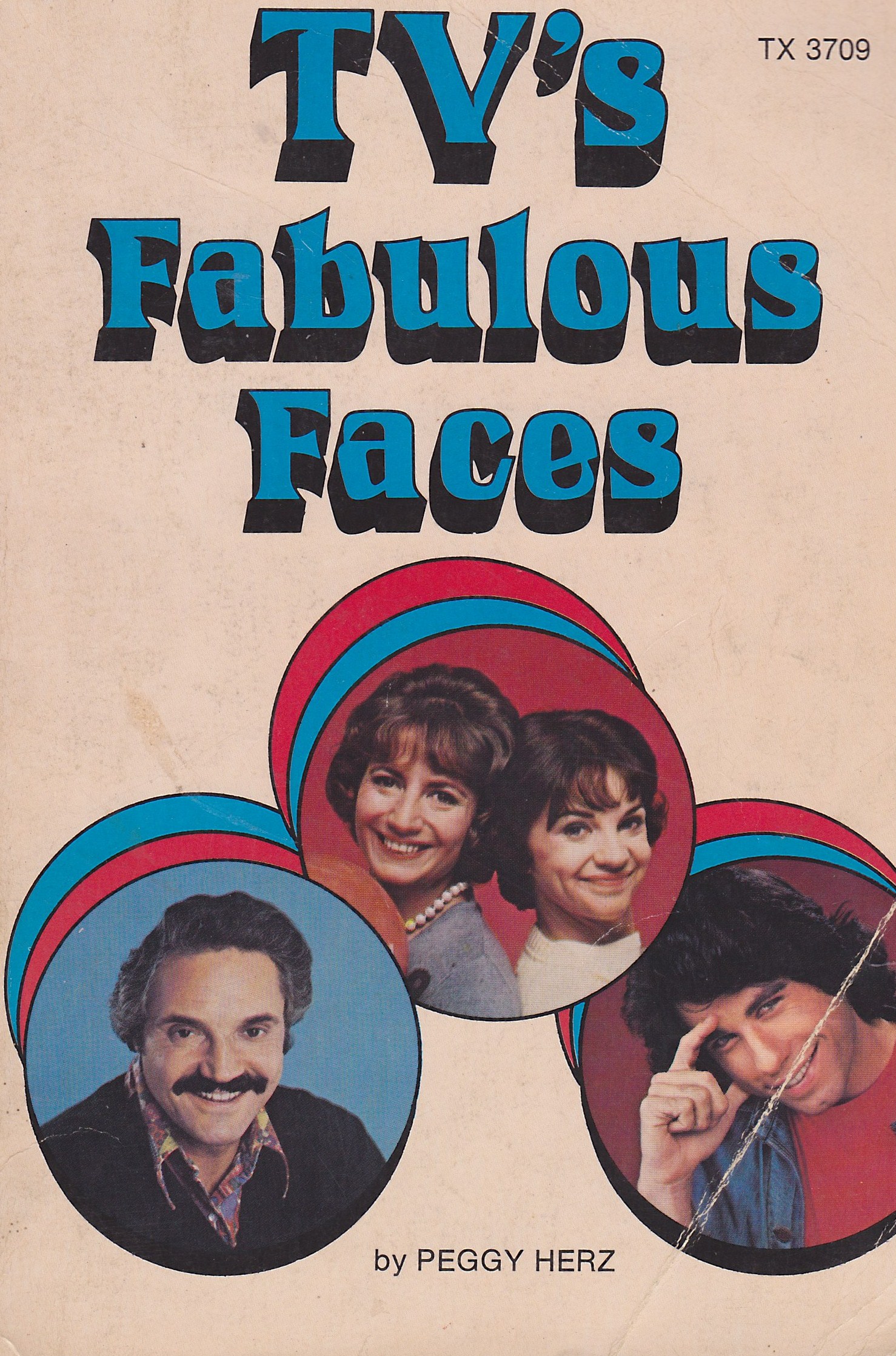
I wonder who decided to put Hal Linden on the cover of a kids’ book called TV’s Fabulous Faces. I mean, Donny and Marie have a chapter in here!
In tribute to Ron Palillo, who passed away August 14, I present this excerpt from TV’s Fabulous Faces, a 1977 Scholastic Book Club title:
“When the show first came on the air, some viewers thought Horshack was retarded. ‘That made me very angry,’ Ron said. ‘People pinned that label on Horshack because he is young. If you act that way when you’re older, they just say you’re a little slow.’
“Ron Shook his head in disgust. ‘At first, Horshack would only talk when Barbarino said, ‘You may talk now.’ That’s going on in schools today. It always has! Retarded? Go to schools and see the kids! Many of them are crying out for attention and that’s not because they are retarded! They are asking for help!’
Let us venture again into the world of vintage board games.
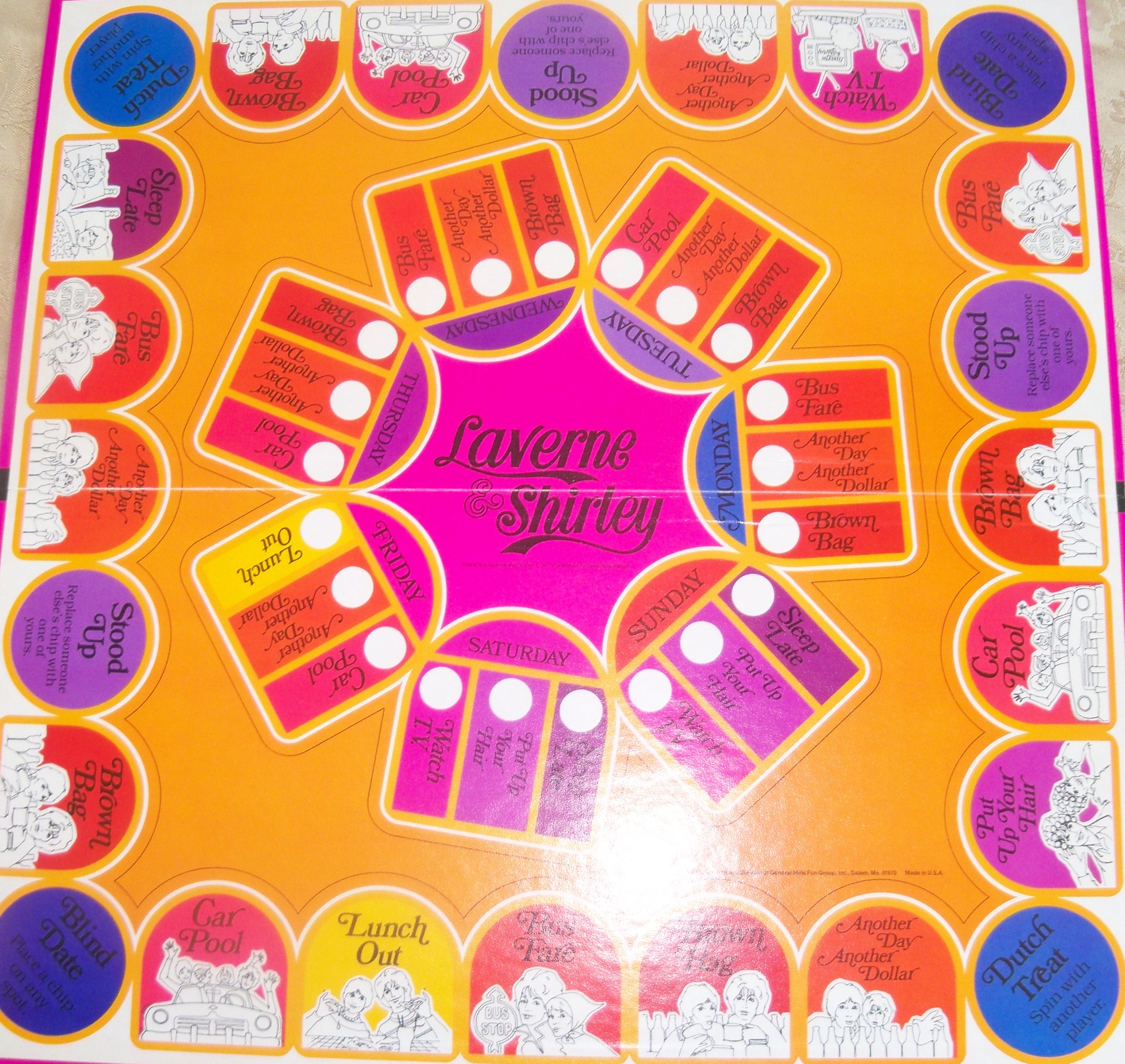
Today’s Game: Laverne & Shirley
Copyright Date: 1977
Object: “Make all your dreams come true.” (In this game, all your dreams must involve dating. She who dates the most, wins.)
Game Board: Colorful, but the Laverne and Shirley caricatures are drab. Perhaps they complement the drab vision of blue collar life this game portrays—an endless round of rent paying, hair washing, TV viewing, bus riding, and brown-bag lunching.
Game Pieces: Standard plastic pegs. The most interesting game element is your “diary,” which you strive to fill up with dating minutes.
Recommended Ages: 8-14. Manufacturers often put an upper age limit of 13 or 14 on these TV show games. I don’t what their reasoning was, but I can imagine parents using it to their advantage: “I’d love to play Laverne & Shirley with you, Lisa, but rules are rules.”
Personal Notes: Did you ever see something and know you’ve seen it before, long ago? That’s how I felt looking at this game board, though I’m pretty sure I never owned the game. I must have played it at a friend’s house.
About the Show: Laverne & Shirley premiered in January 1976. I remember watching the first episode and finding it hilarious. The rest of America agreed, quickly propelling the show to number one. I was 7; I don’t know what the rest of America’s excuse was.
Final Fun Fact: According to The Complete Directory to Prime Time Network and Cable Shows, “Critics called (the show) TV junk food; ABC program chief Fred Silverman responded by comparing it to the classic satire of the 17th century French playwright Moliere.”
Each weekend, I will forage into my vintage board game collection to show you a truly embarrassing treasure.
Today’s Game: Charlie’s Angels Game (“Based on the television series,” the box announces helpfully, so you know it’s not based on a Chekhov play of the same name or something.)
Copyright Date: 1978
Object: “Be the first to capture the culprit with your team”
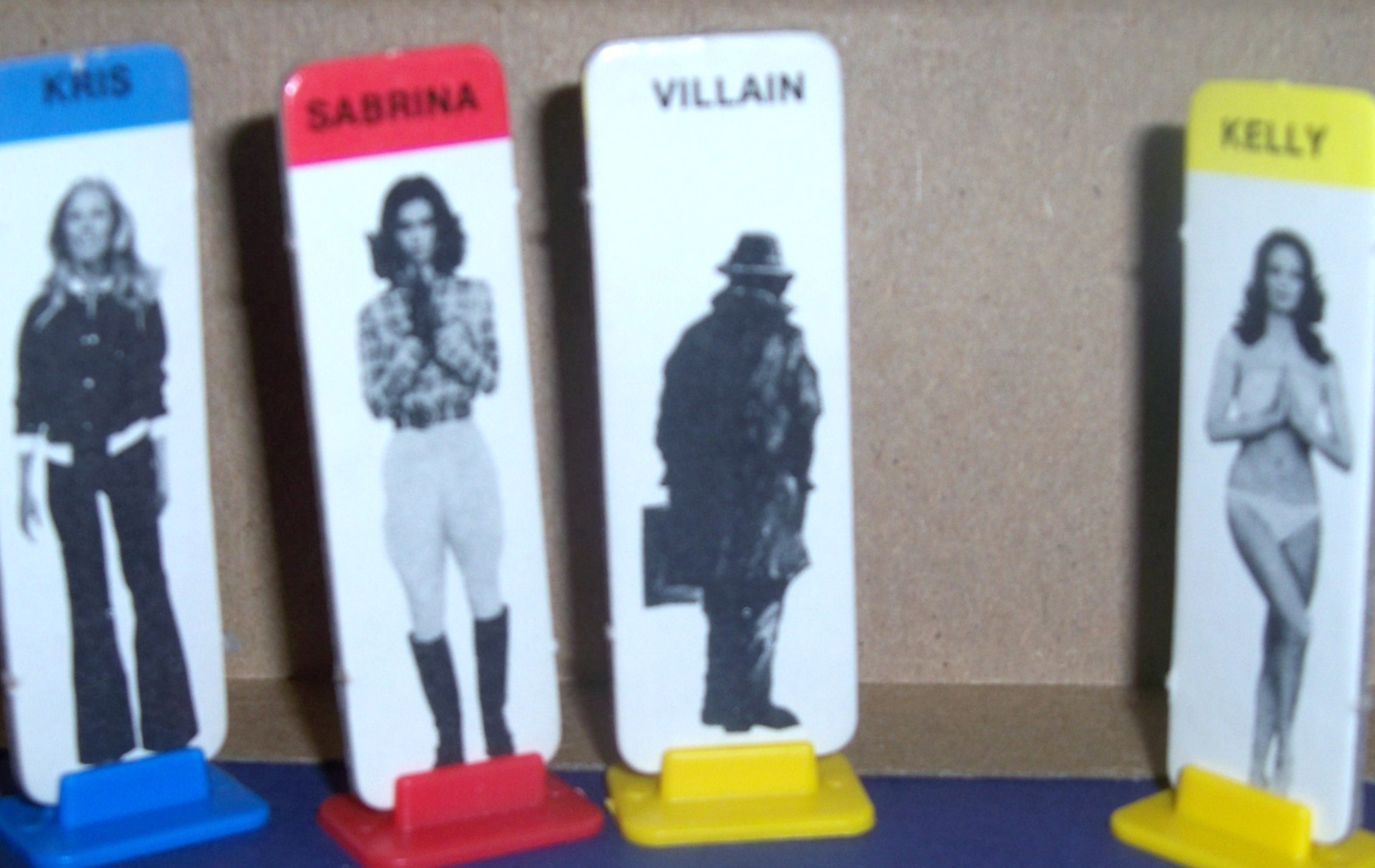
Recommended Ages: 8-14. Realistically, this game probably appealed to girls age 8-10, while the Jaclyn-Smith-in-a-bikini game piece appealed to boys ages 12 and up.
Game Board: Better than most TV board games, since it featured real cast photos instead of vaguely related cartoon drawings.
Game Pieces: Cool! A team of actual Angels and a creepy villain beats colored plastic pegs any day.
Personal Notes: I never owned this game as a child, but it was my go-to birthday party gift in third grade. Board games always made a respectable gift, and if a TV show was popular, its board game would produce a satisfying response from the birthday girl and her guests.
Kelly mesmerizes the villain while Kris and Sabrina sneak up on him
Game Play: Whether the birthday girl would ever play the game was another matter. TV show games generally put the “bored” in board games, with simple “move 2 spaces forward,” “move 1 space back” instructions. At least in the Charlie’s Angels Game, the object relates to the show’s crime-fighting concept. To win the game, however, you have to trap the villain THREE times. I forced my daughter to play this with me, but we gave up before trapping him even once.
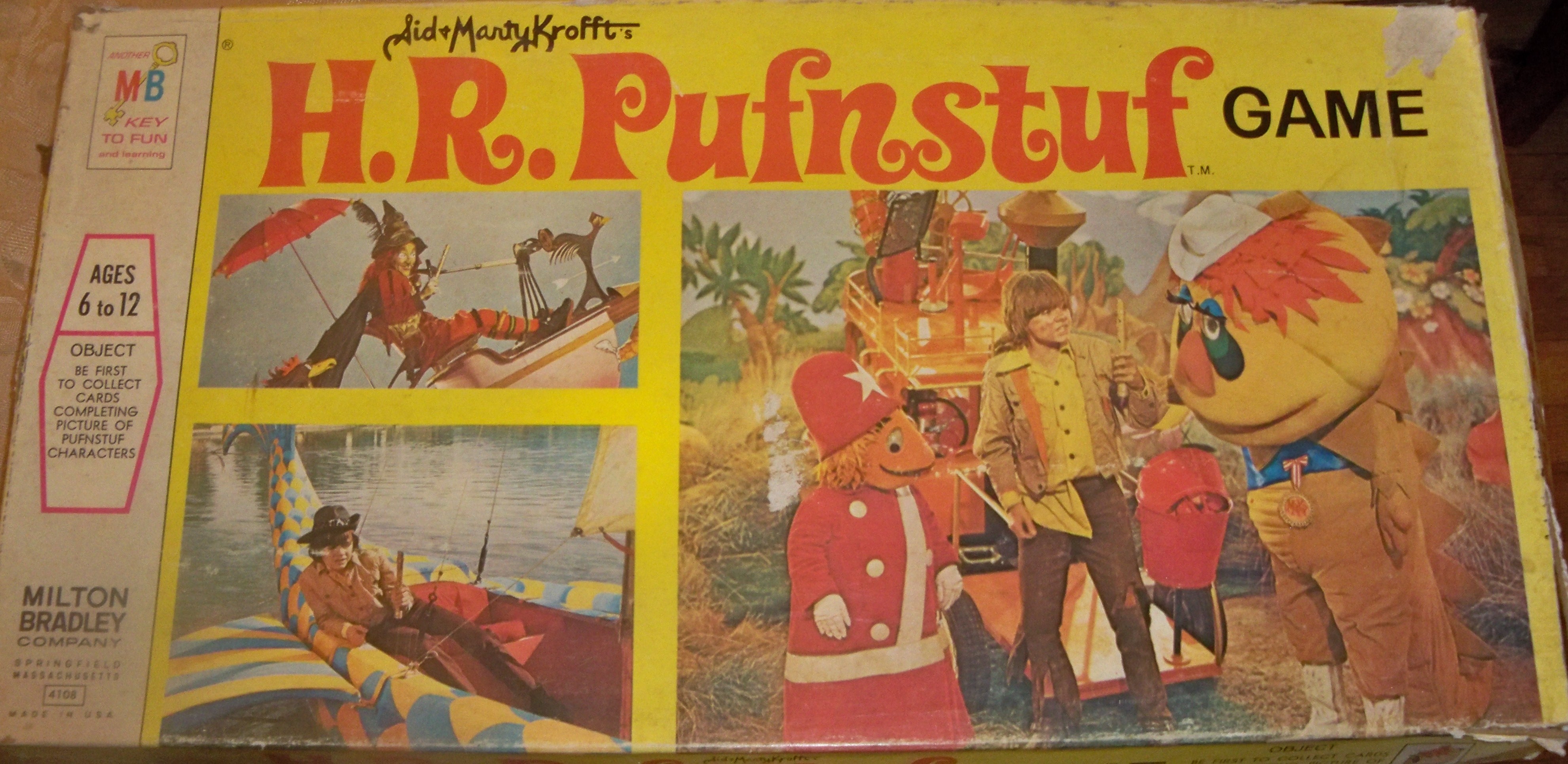 Today’s Game: H.R. Pufnstuf Game
 Game Board: Colorful and cartoony, though the cartoon likenesses leave a lot to be desired.
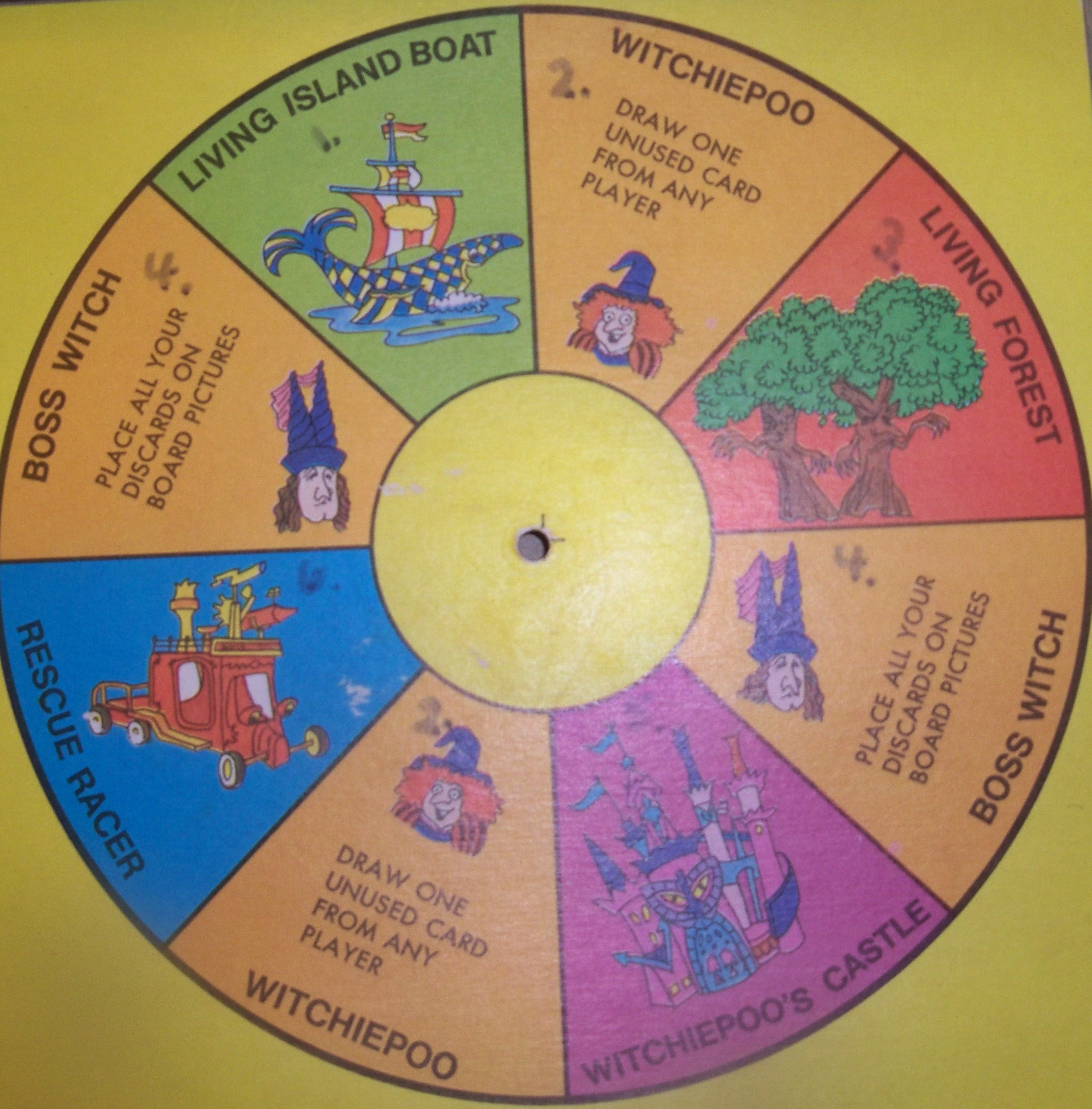 Personal Notes: I never had this game as a child—I would’ve been too young to play it in 1971. I did watch H.R. Pufnstuf, though, and still have the disturbing, hallucinatory memories to prove it.
 Final Fun Fact: Jack Wild, who starred as Jimmy, got to keep one of the original Freddy the Flutes as a souvenir after the show wrapped, according to the book Pufnstuf and Other Stuff.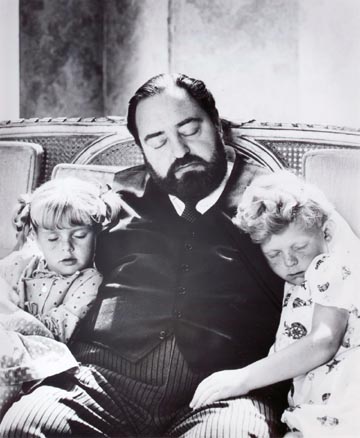




 Embarrassing Treasures