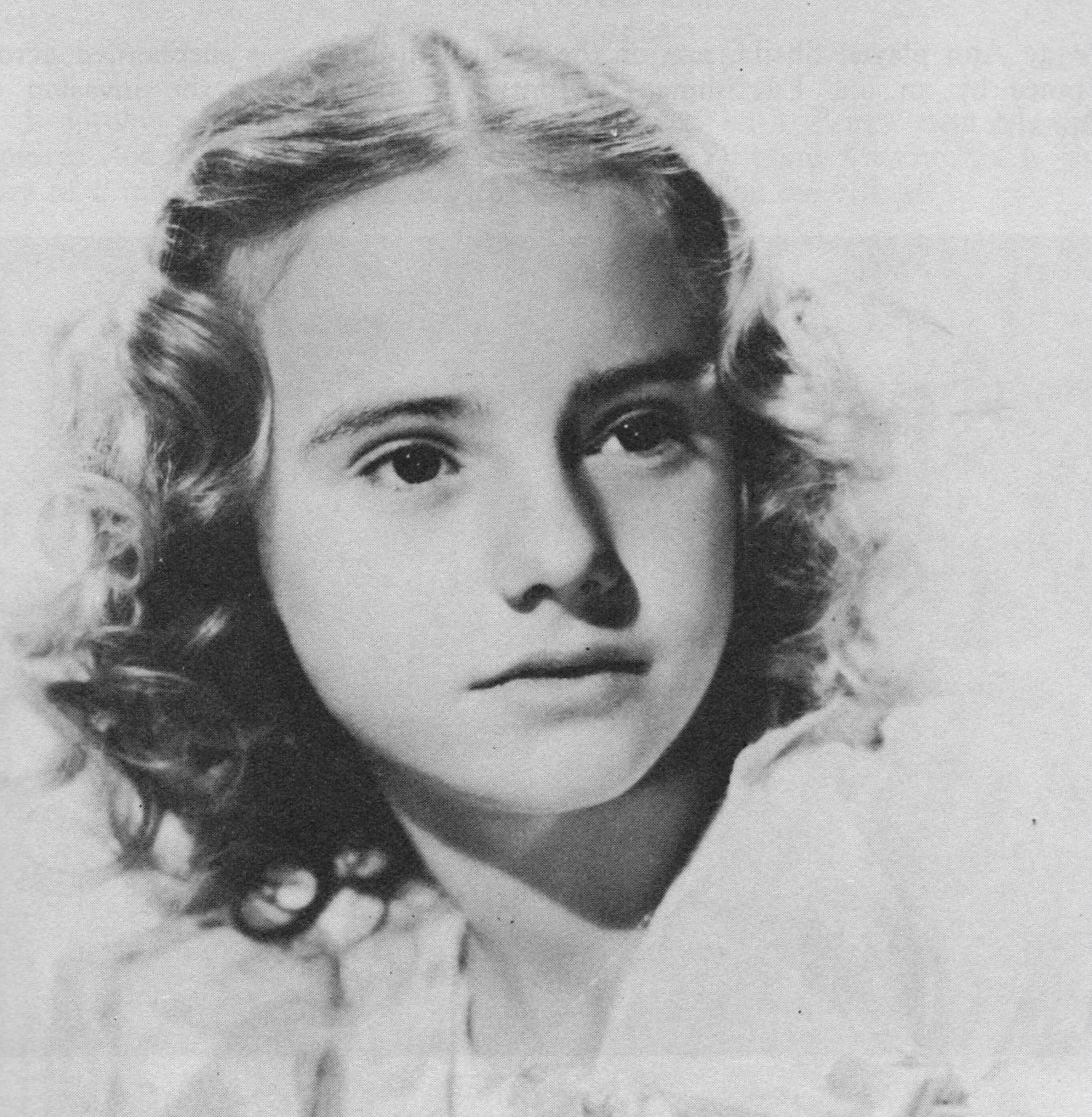
Carole Lombard, October 6, 1908-January 16, 1942

Carole Lombard was born on this date in 1908. I’ve always felt that, though she certainly had Golden-Age-Hollywood glamor, she also had a strangely modern quality–I can envision her as a 21st century movie star. Dell published this special magazine in 1942 after her death.

Old-Time Radio Playlist: Edgar Allan Poe

Edgar Allan Poe

October seems like a good time to enter the eerie world of Edgar Allan Poe. Not only is Halloween approaching, but so is the anniversary of Poe’s death. He died on October 7, 1849, at age 40, from unknown causes.

Radio programs presented Poe’s stories often, and it’s easy to see why. They make exciting listening experiences, painting vivid images in listeners’ imagination.

For this playlist, I have tried to gather the widest number of Poe stories from the widest number of radio programs.

Dim the lights, sit back, and lose yourself in the strange world of Edgar Allan Poe.

“And puzzle they did, these French police, and with them the rest of the world.”

“Rue Morgue Mysteries”
Unsolved Mysteries
1949
About this Series: A syndicated 15-minute show, Unsolved Mysteries aired ostensibly true stories and posited solutions to historical mysteries.
Thoughts on this EpisodeUnsolved Mysteries treats Poe’s “The Murders in the Rue Morgue” as a fictionalized account of a true crime, and the show comes up with a different solution to that crime. Poe’s story, history’s first detective story, didn’t have any basis in fact, however. (He did base a later story, “The Mystery of Marie Roget” on a real New York murder.)
Read “The Murders in the Rue Morgue”

“Even after two days at sea, death did not destroy that waxen beauty.”

“The Oblong Box”
The Weird Circle
February 18, 1945
About this Series: Many radio series explored horror and suspense. One thing that differentiated The Weird Circle was its source material; it frequently presented “literary” horror stories, including several of Poe’s tales.
Thoughts on this Episode: This show adds a murderous twist to make Poe’s story even more twisted. It’s an enjoyable adaptation, although the acting gets overwrought at times.
Read “The Oblong Box”

“I determined then to even the score, to revenge the desecration of my name, of my family honor.”

“The Cask of Amontillado”
Hall of Fantasy
January 19, 1953
About this Series: This was another radio show dedicated to tales of suspense and the supernatural.
Thoughts on this Episode: We have no big name stars here, but this is a satisfying dramatization of Poe’s tale of revenge.
Read “The Cask of Amontillado”
“And so it happened, that at the end of a dull, dark, and soundless day in the middle of October, I found myself as the shades of evening drew on, within view of the grim and melancholy House of Usher”


“The Fall of the House of Usher”
Escape
October 22, 1947
About this Series: Escape was “radio’s greatest series of high adventure,” according to John Dunning’s On the Air. It ran from 1947 to 1954, a sister series to the longer-running Suspense.
Thoughts on this Episode: Paul Frees, who plays the narrator, was one of the most prolific voice actors of the 20th century. People unfamiliar with his radio career may know him as Boris Badenov, Burgermeister Meisterburger, or the host ghost in Disney’s Haunted Mansion attraction. His powerful, deep voice brings the dread and decay in Poe’s story vividly to life.
Read “The Fall of the House of Usher”

“You scream with the terror of it! You scream, and scream, and scream!”

“The Premature Burial”
CBS Radio Mystery Theater
January 6, 1975
About this Series: Although not exactly “old-time radio,” CBS Radio Mystery Theater represented the last major gasp of radio drama. The show ran on weeknights from 1974 to 1982. E.G. Marshall hosted, and radio veteran Himan Brown produced the program.
Thoughts on this Episode: Poe’s story barely qualifies as a story at all—it is mostly a rumination on the horror of being buried alive. And Poe sure can ruminate:
It may be asserted, without hesitation, that no event is so terribly well adapted to inspire the supremeness of bodily and of mental distress, as is burial before death. The unendurable oppression of the lungs- the stifling fumes from the damp earth–the clinging to the death garments–the rigid embrace of the narrow house–the blackness of the absolute Night–the silence like a sea that overwhelms–the unseen but palpable presence of the Conqueror Worm–these things, with the thoughts of the air and grass above, with memory of dear friends who would fly to save us if but informed of our fate, and with consciousness that of this fate they can never be informed–that our hopeless portion is that of the really dead–these considerations, I say, carry into the heart, which still palpitates, a degree of appalling and intolerable horror from which the most daring imagination must recoil.

This episode creates a 45-minute story from an incident that is only briefly described in Poe’s story. It does so pretty well, although I found the third act a bit weak. Keir Dullea, best known for his role in 2001: A Space Odyssey, stars in this episode (and many others in the series).

Read “The Premature Burial”

Other Old-Time Radio Playlists

Old-Time Radio Episode Spotlight: Those Magnificent Cats in their Flying Machines

“Clipper Home,” An American in England
December 22, 1942

Norman Corwin was one of the most important creative forces in radio’s golden age. He wrote, produced, and directed several prestigious, poetic shows celebrating American values. In December 1942, TIME wrote, “CBS’s Norman Corwin, top-flight U.S. radio dramatist, went to England last summer to try something that U.S. radio had not done before. He wanted to explain England to Americans by short-waving his dramatized observations of the English.”

This was a huge technical challenge in 1942, and not all the broadcasts from England aired successfully in the United States. After Corwin returned home in the fall, he produced four more episodes, including this final one.

Pyro, of Helensburgh, Scotland, flew on experimental bombing test missions in World War II. Source: WIRRALNEWS.co.uk

Recently, while listening to it, I became fascinated by a short incident near the end. The narrator, slowly making his way home from Great Britain to the United States, meets a U.S. flier in Brazil. With him, the flier carries his “mascot,” a gray kitten name Tiger. The flier says he brought the kitten from his home in New Hampshire and carries him along on all his flying missions.

As a passionate cat lover, I wanted to find out more about Tiger. Unfortunately, my research didn’t unearth any information about him, but I did learn about a flying World War II cat named Pyro. British photographer Bob Bird was working at the Marine Aircraft Experimental Establishment base in Helensburgh, Scotland, when he adopted a stray kitten. Pyro didn’t like it when his owner left to accompany flight crews on experimental bomb tests. Bird started taking Pyro along on the missions; together they survived a crash landing, and Pyro once helped protect Bird from frostbite. Last year, Pyro received a posthumous award for bravery from the United Kingdom’s People’s Dispensary for Sick Animals charity.

At the time of the award, Bob Bird’s son Robin said, “’We are really very proud of Pyro. He was the only flying cat in the Second World War—and any other war as far as we know.”

Even if “Tiger” didn’t really exist, Pyro wasn’t the only flying cat in World War II. The web site Purr ‘n’ Fur has fascinating and comprehensive pages about cats in wartime. You can read about a few flying cats (and even see a picture of a cat of in a military aircraft in flight). You can also learn about ships’ cats, which were much more numerous than flying cats.

To be honest, my first reaction to hearing about Tiger was annoyance that someone had put an animal in such a dangerous situation. I can’t begrudge soldiers and sailors for seeking comfort from a pet, though, and the cats I’ve read about took their “service” in stride. (Why do my cats fuss so much about a car ride to the vet’s?)

The entire series An American in England makes interesting listening for history buffs and Anglophiles, even though it is wordy and rather unsubtle in its propaganda. (This episode also has an uncomfortable segment in which the narrator wonders what’s going through “the simple tribal mind” of a West African native. That segment concludes, however, with hypothetical soldiers expressing sentiments like this: “Listen, I like bread. So does the next guy. I’d like to see everybody in the world get a piece of bread and a quart of milk a day. And that goes for Indians and Eskimos and Hottentots, too.”)

Joseph Julian plays the narrator, who represents Corwin’s viewpoint.

Final Fun Fact: Corwin, who died last fall at 101, once said, “Cats are designated friends.”

Other Old-Time Radio Entries:

Playlist: Till Death Do Us Part

Episode Spotlight: A Snapped-Worthy 1920s True Story

Episode Spotlight: CSI, 1940s Styl

Playlist: London Calling, Part 

Playlist: London Calling, Part 2

Song Hits, May 1941, with Bing Crosby

“Correct Lyrics by Permission of Copyright Owners.” You certainly wouldn’t want to sing incorrect lyrics to “Abercrombie Had a Zombie,” “Melinda the Mousie,” or “Hey! Stop Kissin’ My Sister.”

Old-Time Radio Playlist: Till Death Do Us Part (And That Might be Sooner Than You Think)

I put this playlist together after noticing how many old-time radio mystery shows had presented episodes titled “Till Death Do Us Part.”

“Till Death Do Us Part”


Suspense, December 15, 1942
“Just remember, I shall be waiting…out, in the dark and cold, where there is neither marriage, nor giving in marriage…I’ll be waiting, for my little pet to come and join me.”
Story: A professor, jealous of his wife’s love for another man, comes up with a clever plan to eliminate both his problems.
Writer: John Dickson Carr, well known Golden-Age mystery writer, who wrote many Suspense episodes.
Notable Cast Members: Peter Lorre, whose voice oozes creepiness, plays the murderous husband. The same year this episode aired, Lorre played one of his most memorable film roles: Ugarte in Casablanca.
About Suspense: Suspense billed itself, with ample justification, as “radio’s outstanding theater of thrills.” Extremely popular, it ran for 22 years (1940-1962). For much of that time, it attracted top Hollywood stars, who often got the chance to play roles that contrasted with their on-screen image. William Spier produced Suspense in its best years and, according to Dunning, “personally guided every aspect of the show, molding story, voice, sound effects, and music into audio masterpieces.”
Weapon of Choice: Aconite, also known as monkshood, a poison.
My Verdict: An entertainingly over-the-top performance by Lorre and a script with several good twists make this a must-listen.

“Till Death Do Us Part”


The Sealed Book, July 8, 1945
“Oh, no, I’ll never leave you, darling. Never, never, never.”
Story: A man is determined to escape his smothering wife—and she is determined to keep him.
About The Sealed Book: A cheesy mystery-horror show with a very cheesy opening sequence, The Sealed Book was a syndicated show that ran for six months in 1945.
Weapon of Choice: The sea.

My Verdict
: A so-bad-it’s-good kind of entertainment. By a few minutes in, you’ll want to kill Blanche, too.

Till Death Do Us Part”


Murder at Midnight, December 9, 1946
“One life has already paid for yours. And, quart for quart, your blood is worth no more than my family’s.”
Story: A newlywed husband is tormented by fantasies of killing his bride.
About Murder at Midnight: Similar in some ways to The Sealed Book, this was a syndicated show with a cheesy opening and ample organ flourishes. The quality is much higher, though. As Digital Deli Too writes, “Anton Leader, later famous for his Television work, directed the series. The writing staff was also top-notch, with names such as Max Erlich, Joe Ruscoll and Robert Newman, among others.”
Weapons of Choice: Strangulation, a gun.
My verdict: This story is clever and complex, and it uses Oscar Wilde’s “The Ballad of Reading Gaol” to eerie effect as a recurring motif. The actress playing the bride gives a good performance.

“Till Death Do Us Part”


Inner Sanctum Mysteries, October 27, 1947
“Oh, baby, how did we ever get into a mess like this?”

Story: Newlyweds are witnesses when a man murders a woman, and their honeymoon just gets better from there.
About Inner Sanctum Mysteries: This was the father of all campy-mystery-horror-with-cheesy-opening shows. Famous for its creaking-door sound effect and its punning host, Inner Sanctum Mysteries ran from 1941 to 1952.
Notable Cast Members: Everett Sloane and Mercedes McCambridge, two prolific radio performers. Sloane was a member of Orson Welles’ Mercury Theater and appeared in the films Citizen Kane and The Lady from Shanghai. Two years after this episode aired, McCambridge would play an Academy-Award-winning supporting role in All the King’s Men. Her movie career would also include providing the voice for The Exorcist’s demon.
Weapons of Choice: A gun, smothering (sort of).
My Verdict: Inner Sanctum has its fans, but it consistently underwhelms me. My mind kept wandering during this one, and the ending didn’t satisfy me.

“Till Death Do Us Part”


The Whistler, April 14, 1948
“He made a mistake–a bad one.”
Story: A shady art dealer meets up with the equally shady young wife of an ailing art collector. This won’t end well for anyone.
About The Whistler: A popular mystery-crime show, The Whistler ran for 13 years. It has similarities to the shows above, except that the episode’s central character is usually the bad guy, whom the narrator addresses directly and tauntingly.
Notable Cast Members: Gerald Mohr was another prolific radio actor whose most memorable role was Philip Marlowe. Doris Singleton would go on to play the recurring role of Carolyn Appleby on TV’s I Love Lucy.
Weapon of Choice: Sleeping pills (sort of).
My Verdict: The Whistler can be hit or miss. This wasn’t an outstanding episode, but it did keep me guessing. I always enjoy Gerald Mohr’s sexy, hard-boiled voice.

“Until Death Do Us Part”


Private Files of Rex Saunders
“It worked. It worked real good.”
Story: A casino owner’s second wife becomes convinced that her husband killed his first wife–and that she is about to be his second victim.
About Private Files of Rex Saunders: This private investigator show was a starring vehicle for Rex Harrison that aired during the summer of 1951. Himan Brown directed the series.
Notable Cast Members: Rex Harrison is best remembered as My Fair Lady‘s Henry Higgins, of course. Leon Janney, who plays the assistant, began his long theatrical career when he was still a child.
Weapons of Choice: Guns.
My Verdict: It’s fun to hear Harrison play a private investigator, and the story has some nice twists.

Weird Words of Wisdom: Mad for Van Johnson Edition

“A gal can’t find out what makes the world go round unless she gets around a bit herself!”

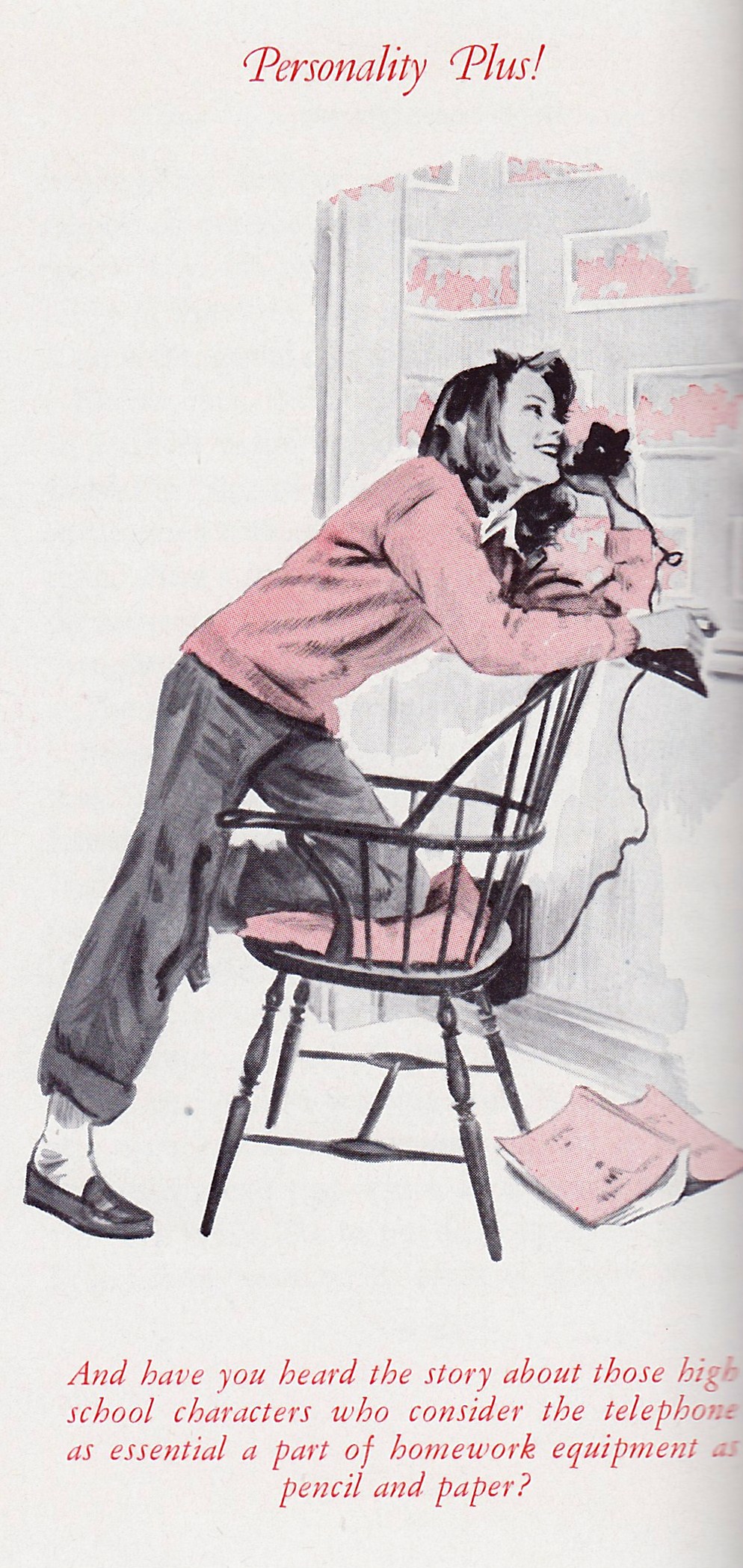
Personality Plus by Sheila John Daly, 1946

About the Book: We’re going back a bit further into teenage-advice-manual history today, back to the very birth of the American teenager. Jon Savage, author of Teenage: The Creation of Youth Culture, says the word teenager came into common use in 1944.

“From the very start,” Savage writes, “it was a marketing term that recognized the spending power of adolescents…the fact that youth had become a market also meant that it had become a discrete, separate age group with its own peer-generated rituals, rights and demands.”

Personality Plus was written for teenagers, by a teenager, who opens the book by arguing that her peers’ spending habits and rituals do not define them:

“According to the popular conception, a gal just isn’t on the ball unless she drinks a couple of cokes a day, is mad for Van Johnson and Robert Walker and is swayed pro and con by Frank Sinatra. And the average Joe has missed the train by a mile unless he knows which band leaders play which instruments, wears bright reindeer sweaters, has lengthy phone conversations each evening and rides around after school in an old, violently painted jalopy.”

Daly knows, however, that teenage preferences are powerful—she sprinkles liberal pop cultural references throughout her book.

Number of Van Johnson References in Personality Plus: Eight. Van Johnson tied with Bing Crosby as the top box office draw in 1945. He was a bobby-soxer favorite; as his New York Times obituary said, “The numbers of screaming teenage girls who swooned for Mr. Johnson were second only to those who threw themselves at Frank Sinatra.”

Other Celebrities Mentioned in Personality Plus:

Vaughn Monroe

Gene Kelly (twice)

Robert Walker (twice)

Frank Sinatra (twice)

Betty Grable

Ingrid Bergman

Fred MacMurray

June Allyson

Harry James (four times)

Walter Pidgeon

Lana Turner

Humphrey Bogart

Woody Herman

Perry Como

Joan Leslie

Johnny Mercer

Johnny Weissmuller

About the Author: I think I kinda love Sheila John Daly, an ambitious and talented woman from a family of ambitious and talented women. One of her three older sisters, Maureen Daly, wrote the classic teenage romance Seventeenth Summer. Maureen also wrote a teenage advice column for the Chicago Tribune, which Sheila took over when Maureen went to work for Ladies Home Journal. By the time Sheila was 21, her column was reaching 10 million readers in 36 newspapers, and she had authored four books.

As a teenager herself, Daly avoided a preachy tone in Personality Plus. Instead of railing against “necking,” she reminded readers that getting too affectionate on double dates could make the other couple uncomfortable. Instead of banning smoking and drinking, she warned party guests against “dumping cigarette ashes between the davenport cushions” or raiding the hosts’ wine cellar.

Not much of her advice actually qualifies as weird. It’s entertaining, though, in the vivid picture it creates of 1940s teenage life. (The book’s glossy illustrations are also charming.) Consider this comment about teenage slang:

“‘Smooth’ is an interesting adjective which came into the high school vocabulary about five years ago, and when it did, about a dozen other words dropped out of common use, for ‘smooth’ is an accepted synonym for them all…Smooth can mean anything from pretty, poised, attractive and full of personality to just plain intelligent; it can even take the place of a whole sentence, explaining that a fellow or girl is a good dancer, a sharp date, an interesting conversationalist, or a fine hunk of heartbreak—all in one word.”

At times, Daly has a nicely snarky tone, as in her rules for losing friends and alienating people:

  • “Make yourself the center of attraction always. Make money the principal topic of your conversation. Match every anecdote that someone tells you with one of your own—just a bit better, just a bit more king-sized.
  • “Get the habit of talking about your friends…Don’t put your thoughts in black and white, just drop the hint and leave the others to twist the remark around to exactly what you meant it to mean. Those catty girls—how could they.
  • “Speak up. Then give the excuse: ‘I can’t help it. I’m just frank, that’s all.’”

If she were a young woman today, Sheila John Daly would probably have a lively blog and a huge Twitter following.

My Favorite Sheila John Daly-isms: “Any fellow old enough to select his own shirts and ties is man enough to give his own best glen-plaid slacks a once-over-lightly with the iron or to sponge the coke stain off his red striped tie. So whip out the ironing board and iron, fellows, and get to work—your wardrobe is showing.”

“If the right boys don’t ask you to have fun, if you can’t find anyone to move into the hand-holding department with you, well—have fun without boys. And you can have more fun than you think! Find yourself several good girl friends; try enjoying a movie with them on a Saturday night. Develop a hobby, get interested in sports, read all the books you’ve wanted to read for so long, find an after-school job.”

Final Fun Facts: I couldn’t find much information on Sheila John Daly’s career any later than this 1959 Life article. I do know that her married name was Sheila Daly White and that (yay!) she’s still alive. And if, as seems certain, this blogger’s aunt is the same Sheila Daly White, she really is a very “smooth” lady.

Other Quotes from Personality Plus:

On ways to meet boys: “Putting in an appearance at school basketball games to do a little lung-and-tongue exercise to cheer the fellows on to a higher score isn’t a bad idea, either, because some of the smoothest characters play forward on the cage five and they get a kick out of being appreciated!”

On preparing for a date: “…plan your schedule far enough in advance so that you won’t be caught with an unpressed skirt and your hair still in curlers when the doorbell rings.”

On corsages: “Use originality in your choice. Remember there are other flowers besides gardenias! Try a camellia in season, a cluster of violets, or two long-stemmed red roses.”

On the rules of dancing: “…a girl who is already dancing should never refuse to change partners when a boy cuts in…the partner who was first dancing with a girl must not cut back on the boy who took her from him, though he can cut in on a third fellow. Also (to avoid trouble!) he must not continue to cut in on the same fellow when the latter dances with other girls!”

“A formal dance calls for a certain dignity and even if you’re jitter-bugging at a sweater hop in the school gym, don’t claim more than your share of the floor.”

On curfews: “Another good reason for an earlier zero hour is the fact that the ‘healthiest’ part of the evening is always from about eight to twelve. The main event, the dance or the movie, is usually over by that time, a sandwich and a malt won’t take more than forty-five minutes, and after that–? A smart fellow and girl will start for home, and because you’re smart, too, you won’t have to ask why!”

“Many leading movie stars go to bed each night at nine when making a picture because they know you can’t win Oscars with circles under your eyes.”

A sign that he’s in love: “He has his class ring made smaller so that it’s just the right size for your third finger, right hand. (And that’s where all the gals are wearing them these days.)”

A party refreshment idea: “Heat hamburger buns in your oven until they are warm and toasty. Wrap one strip of bacon around a cube of American or pimento cheese and put it under the broiler of the oven until the bacon is crisp and cheese soft and toasted. Then pop the sizzling combination into the hot buns, serve with hot cocoa topped with marshmallow and you’ll soon see a quick disappearing act.”

On hair: “Whether you’re wearing your hair in a long bob, a fluffy feather cut, or in quaint pigtails with bright red bows, that old routine of ‘one hundred strokes a night, keep your hair healthy and bright,’ with frequent and thorough shampoos between, is the best way to give it that magazine ad slickness.”

On telephone etiquette: “Whenever possible, wait for boys to call you. Even with a hundred poles and a lot of wire in between, a fellow can tell when your line is out for him. And a smooth boy won’t want to get tangled up in it.”

A Tree Grows in Brooklyn: “Real Sentiment is Good”

It took me a long time to finish watching A Tree Grows in Brooklyn this week.

The first time I sat down to watch, life interrupted after 90 minutes. In the days that followed, I found myself procrastinating about watching the rest. Having seen the film several times, I knew exactly what was waiting for me.

Both the 1945 film and the Betty Smith novel it’s based on have occasionally drawn charges of sentimentality. In 1943, Time called the book “an old-fashioned family pudding of well-baked corn.”

According to literary critics Gerald C. Cupchik and Janos Laszlo, “sentimentality often involves situations which evoke very intense feelings: love affairs, childbirth, death” but does so with “reduced intensity and duration of emotional experience…diluted to a safe strength by idealisation and simplification.”

A Tree Grows in Brooklyn’s final  45 minutes do include death and childbirth and the hint of a love affair, but I don’t believe the movie dilutes or simplifies the emotions it elicits.

As director Elia Kazan said when speaking about the film years later, “Real sentiment is good.”

Tree explores a real part of growing up—becoming aware of your parents as flawed human beings. After losing her beloved father, Francie has to learn to see both her parents in a new way—as imperfect people who have loved her as best they could.

The performers bring warmth and humanity to their roles and ground the movie in “real sentiment.”

Peggy Ann Garner as Francie and James Dunn as Johnny Nolan are excellent, especially in the pivotal scene on Christmas night. Kazan drew on issues in their personal lives—Dunn’s alcoholism and Garner’s worry about her father in the Air Force—to shape their performances:

I have a book about child actors that describes Peggy Ann Garner as “a plain but realistic looking young lady with straight blond hair and a ski-jump nose.” I don’t think that’s quite fair, but Tree accentuates her “plainness” to help make her believable as Francie.

“They were both like children. Jimmy Dunn was a beautiful child…I treated him and Peggy the same way. I also threw them together a lot. I would tell Jimmy about her father being away and how much she missed him. I got him concerned about her. And I would tell her she was important to Jimmy and got her to love Jimmy…there is a scene later where Johnny and Kathy (sic) decide he must tell Francie that she has to quit school and go to work. There is no other way to afford the baby that’s coming. Johnny goes in determined, but before he can get to it, she tells him how much she wants to be a writer and his resolve melts. I didn’t need to do a lot of schmoozing before we shot that seen, as important and emotional as it was. The values were obvious and by then Jimmy loved Peggy as his own. How could any feelingful person not want Peggy Ann Garner to be anything she wanted?”

The casting of Dorothy McGuire as Katie Nolan is the biggest weakness I find in the film. McGuire gives a decent performance, but her luminous movie-star looks seem out-of-place in the gritty environment Kazan creates.

The first time I read A Tree Grows in Brooklyn, at Francie’s age, I didn’t see what all the fuss was about. Only as looking backward, as an adult, could I feel the full pain of Francie’s awakening to “the way things really are.”

The older I get, I think, the harder it’s going to be to watch those final 45 minutes.