Flea Market Finds

For all of $3 at a local flea market on Sunday, I got two cute Whitman items from the 1970s.

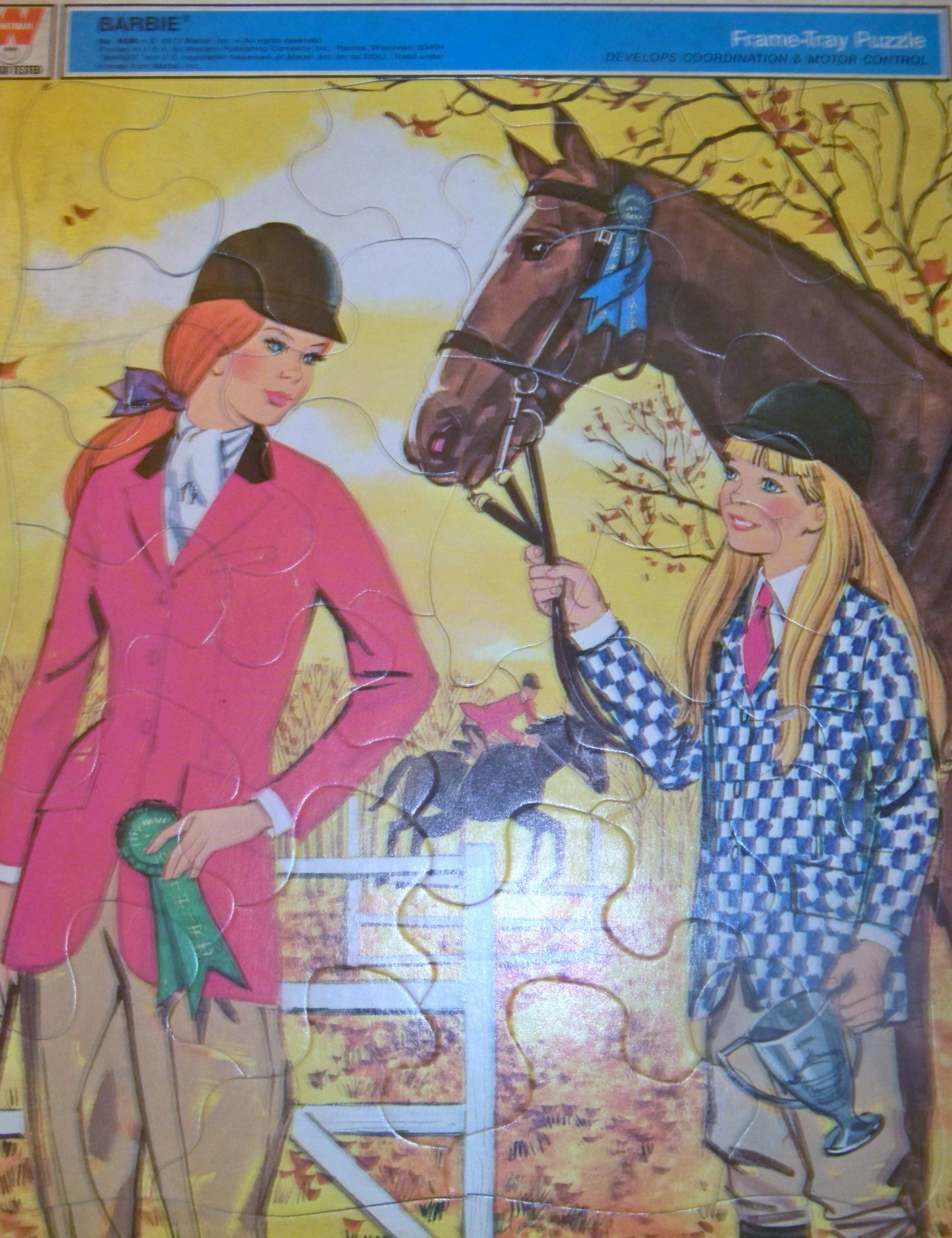
I like this Barbie frame-tray puzzle from 1972 because it includes Skipper and because Barbie is a redhead. In the two decades following the debut of Superstar Barbie in 1977, white Barbie dolls were almost invariably blond.

This puzzle also suggests an interesting story–Skipper’s horse is sporting a first-place ribbon, and Skipper is beaming with pride. Barbie, who’s clutching a third-place ribbon, is responding with a pretty cold stare.

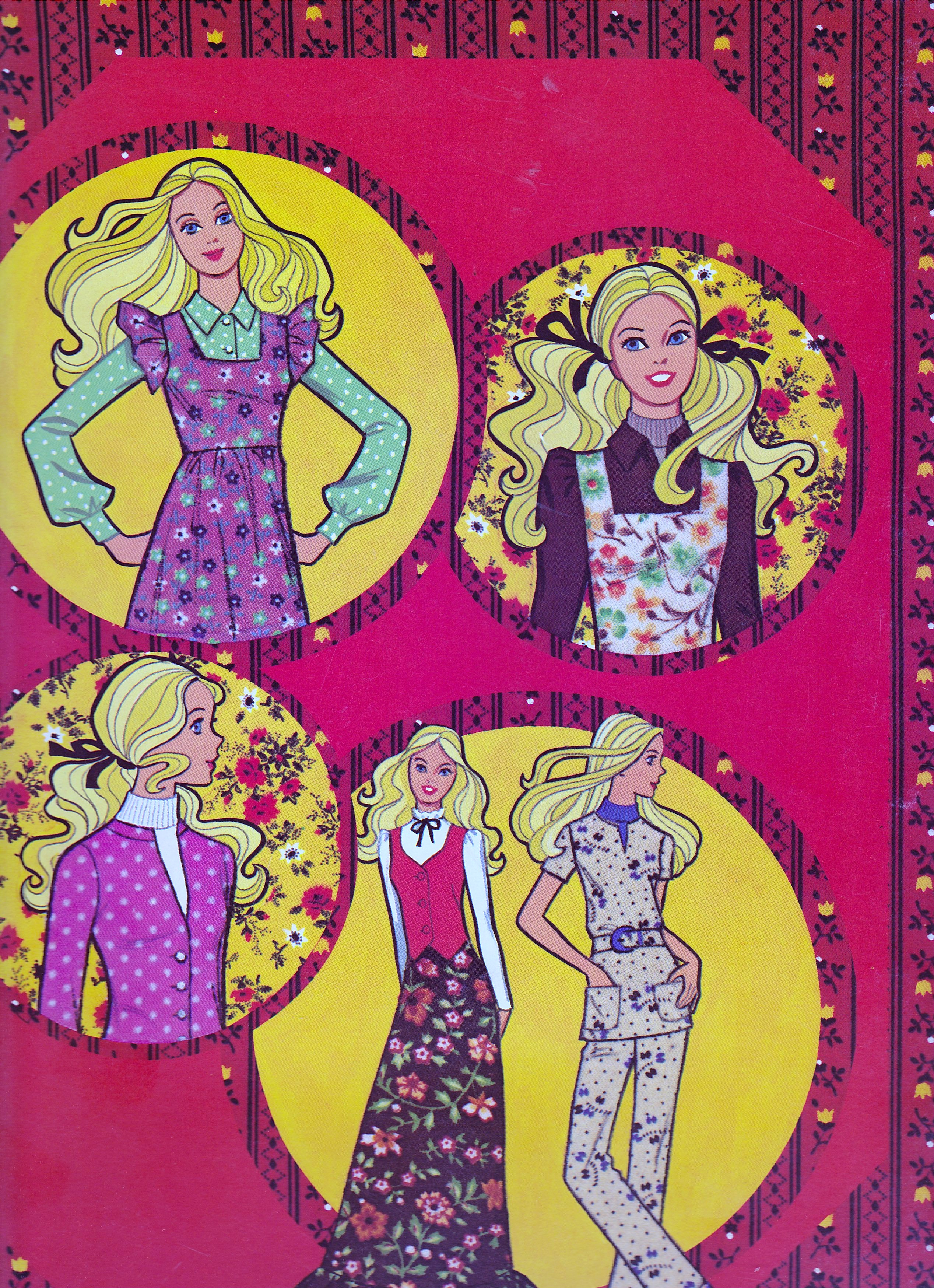
The Calico Cathy paper dolls are from 1976, the height of the “prairie” trend in 1970s fashion. I remember my fellow first-grade girls wearing sunbonnets and long skirts and Little-House braids around this time. Calico Cathy takes things further–even her pantsuits are calico. Well, I guess that’s how she earned the name Calico Cathy.

Spin Again Sunday: Charlie’s Angels

Each weekend, I will forage into my vintage board game collection to show you a truly embarrassing treasure.

Today’s Game: Charlie’s Angels Game (“Based on the television series,” the box announces helpfully, so you know it’s not based on a Chekhov play of the same name or something.)

Copyright Date: 1978

Object: “Be the first to capture the culprit with your team”

Recommended Ages: 8-14. Realistically, this game probably appealed to girls age 8-10, while the Jaclyn-Smith-in-a-bikini game piece appealed to boys ages 12 and up.

Game Board: Better than most TV board games, since it featured real cast photos instead of vaguely related cartoon drawings.

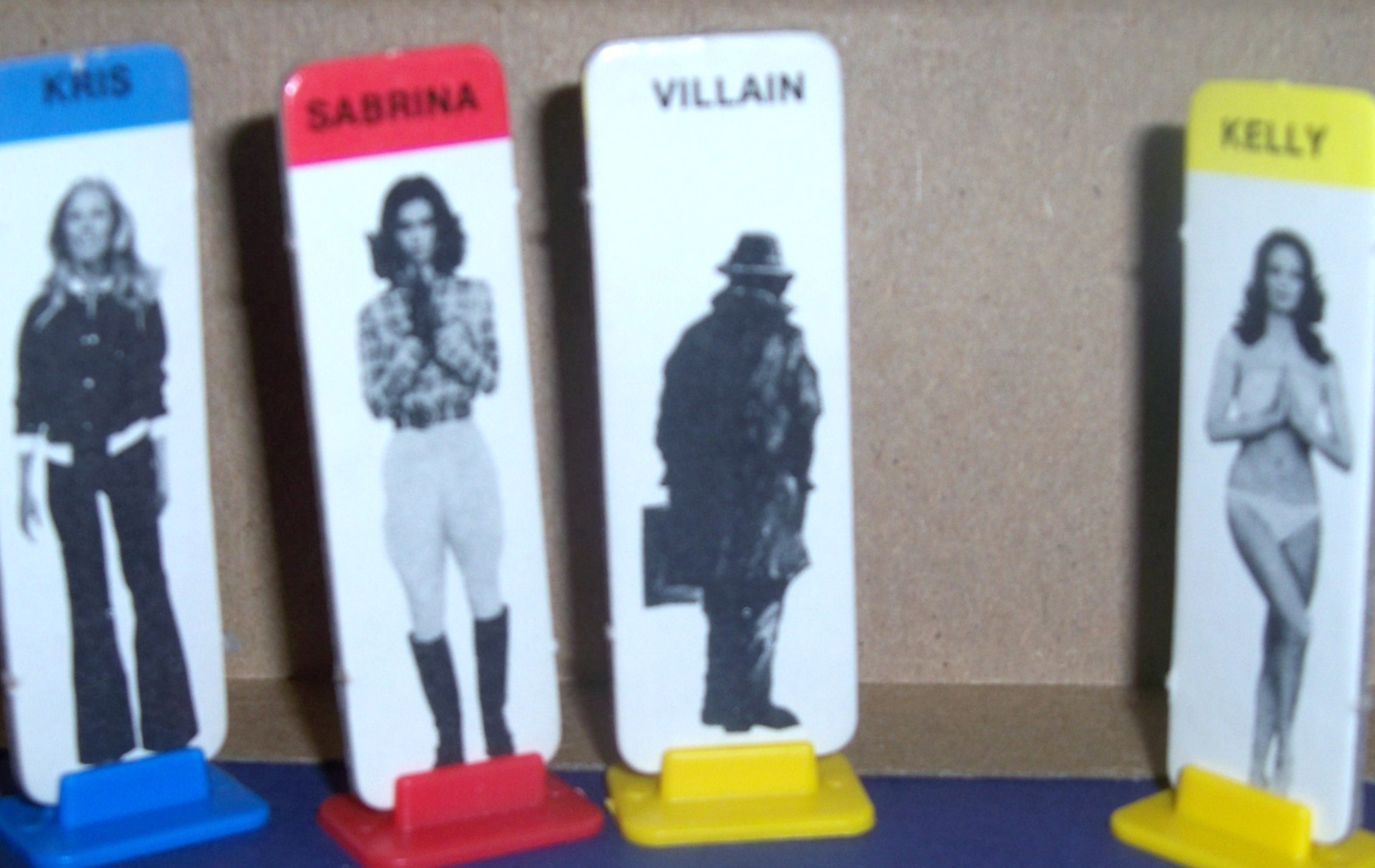
Game Pieces: Cool! A team of actual Angels and a creepy villain beats colored plastic pegs any day.

Personal Notes: I never owned this game as a child, but it was my go-to birthday party gift in third grade. Board games always made a respectable gift, and if a TV show was popular, its board game would produce a satisfying response from the birthday girl and her guests.

Kelly mesmerizes the villain while Kris and Sabrina sneak up on him

Game Play: Whether the birthday girl would ever play the game was another matter. TV show games generally put the “bored” in board games, with simple “move 2 spaces forward,” “move 1 space back” instructions. At least in the Charlie’s Angels Game, the object relates to the show’s crime-fighting concept. To win the game, however, you have to trap the villain THREE times. I forced my daughter to play this with me, but we gave up before trapping him even once.

A visit to Fairyland

1970

When I was a child, Fairyland was easy to reach. It was on State Highway 618 in Conneaut Lake, Pa.

Not exactly an enchanted land, this Fairyland offered encounters with fanciful fiberglass structures and a few live animals.

Fairyland Forest opened in 1960, just across the highway from Conneaut Lake Park. It was one of many story-book-themed parks that sprouted across the nation in the 1950s and 1960s to attract young baby boomers. According to Conneaut Lake Park: The First 100 Years of Fun by Lee O. Bush and Richard F. Hersey, Fairyland Forest drew enthusiastic crowds in its early years.

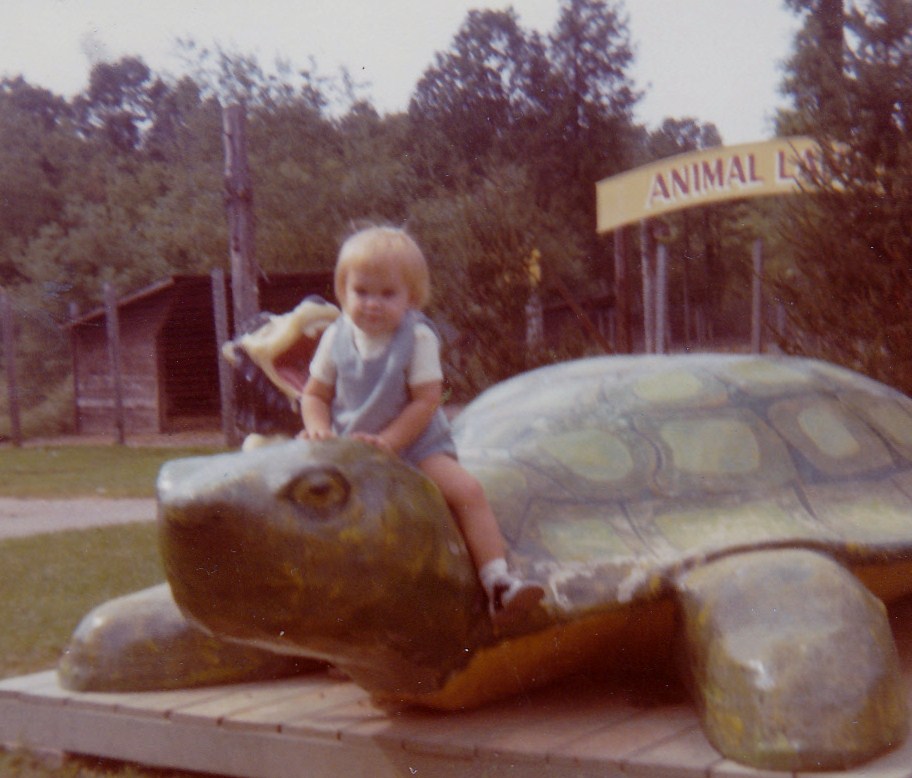
For my family, visiting Conneaut Lake was a summer tradition that started around 1970. We would travel with my maternal grandparents and rent a cottage or motel rooms near Conneaut Lake Park. And, every year, we spend a few hours strolling through Fairyland Forest.

1972

At some point, my grandfather took sole responsibility for this part of our vacation. I’m sure that gave my parents and my grandmother a nice break, and it also helped me and my brother create wonderful memories with our grandfather.

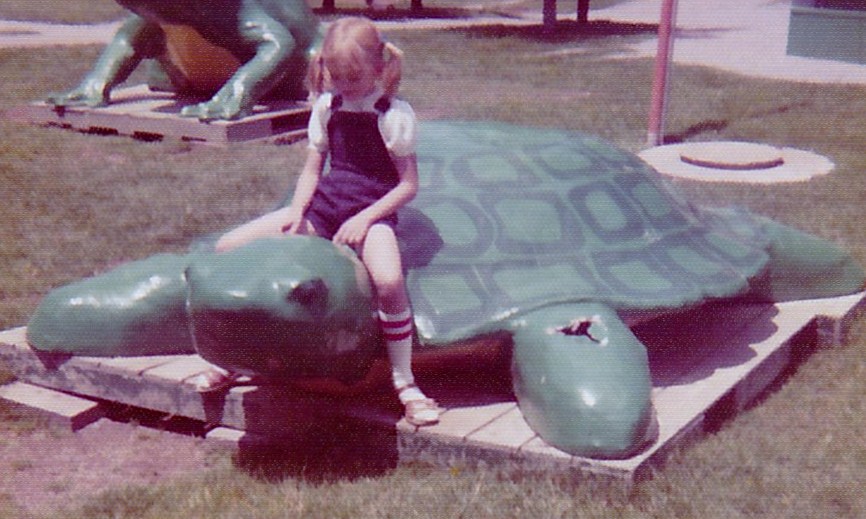
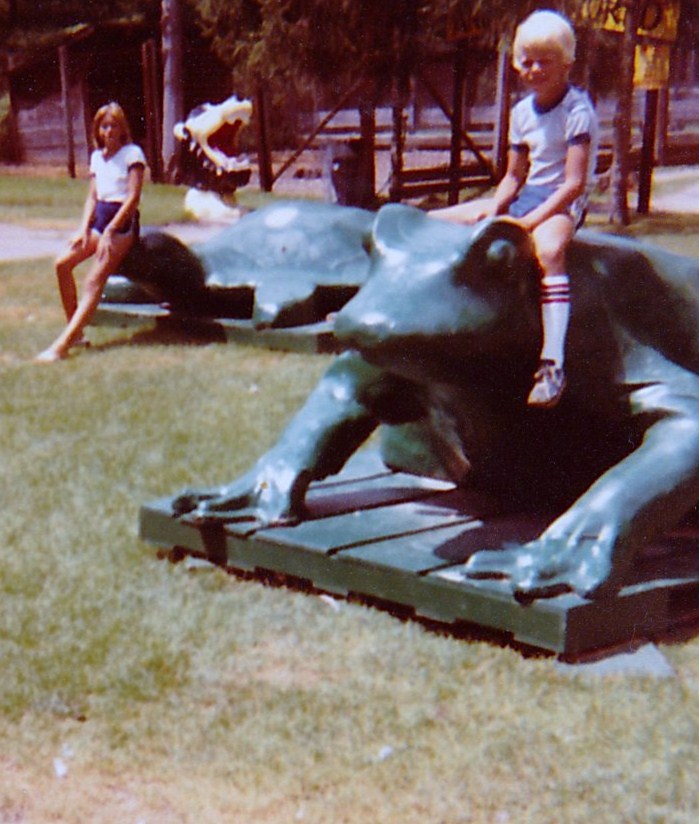
Fairyland Forest displayed scenes out of nursery rhymes (Humpty Dumpty, the Old Woman Who Lived in a Shoe), holidays (the Easter bunny), and Bible stories (Jonah and the whale, Noah’s ark), along with a few random touches (a big frog and turtle you could sit on—an irresistible photo op, at least for my family).

Past the displays, you found a petting zoo and a playground. Newspaper ads from the 1960s touted “over 100 little live animals that eat out of your hand.” I mostly remember deer and goats and some very aggressive geese.

Turtle has a boo-boo–and I’m wearing tube socks with sandals

You exited the park through a Windmill-shaped building that housed (surprise!) a gift shop.

I enjoyed our Fairyland Forest tradition so much that I never balked at going, even as I entered my teen years. Sentiment blinded me to the park’s deteriorating condition.

1982

We made our final trip in 1983, not knowing then that it would be our last. My grandfather died of lung cancer in 1984. Fairyland Forest closed in 1985, the victim of declining attendance.

A 1986 column in the Washington (Pa.) Observer-Reporter proclaimed: “The demise of Fairyland Forest won’t be considered a loss by anyone who visited there the last few years. In 1983, the attractions were sorely in need of a paint job, and the array of animals displayed there resembled a petting zoo too large for its own good.”

1977

It was a loss to me, though. For years after my grandfather died, I figured I would never return to Conneaut. I thought seeing the RV camping facility that replaced Fairyland Forest would hurt too much. By 1997, my feelings changed, and now I try to support the struggling Conneaut Lake Park with an annual visit.

I take my daughter to Idlewild’s Storybook Forest to give her the Mother Goose experience.

And I journey back to Fairyland in old photos and my memories.

Weird Words of Wisdom: Prettily Bewildered Edition

“We all say marriage is a partnership and, for the most part, we mean it in the sense of sharing the fun, the joys, the responsibilities, the highs and lows of any family’s life. But just as there can be only one skipper to a boat, one driver to a car, or one president of a company, so there can be only one head of a happy house—and that is, by law, by taxes, by census, and by woman’s intuition, the husband. It’s a pleasant thought to remember that if a man’s home is his castle, he must be the lord and master; and you, therefore, are the chatelaine, the mistress of the castle and keeper of the keys to a very happy existence as a wedded wife.”

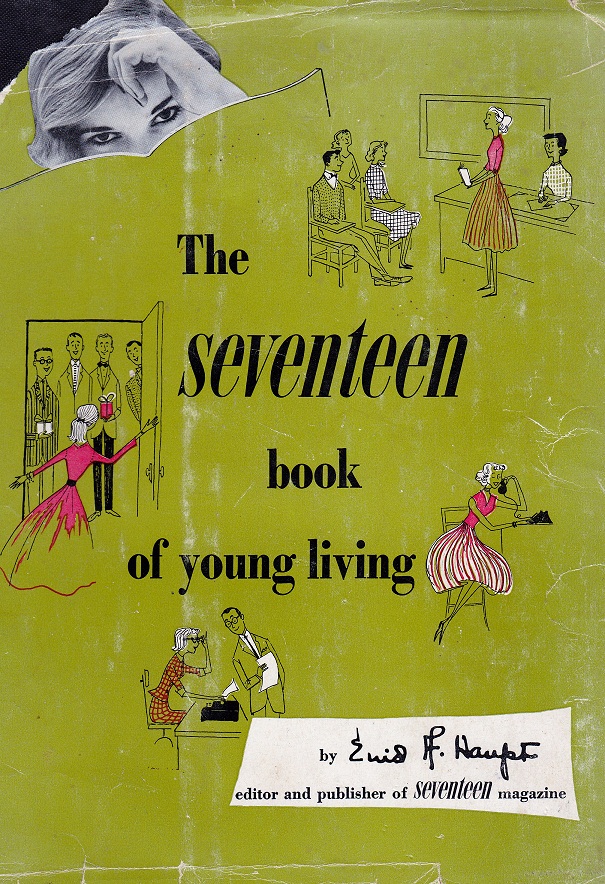
The Seventeen Book of Young Living by Enid Haupt, 1959

About the Book: This book, purchased at a library book sale two decades ago, started me collecting advice manuals aimed at teenagers. I wasn’t so far past my own teenage years then, and the book’s quaint advice on dating, friendship, fashion, and school amused and sometimes charmed me. As I added more advice books to my collection, I became fascinated by what the books reveal about the past. Reading what a given era’s adults felt young people should know tells you a lot what a society valued.

(Reading what previous owners wrote or left in these books can be interesting, too. The previous owner of my book recorded her first name as “Twinkle.” This suggests she was a careful student, indeed, of The Seventeen Book of Young Living.)

This book strives to introduce budding Betty Drapers to gracious living, mid-century style, from party planning to the art of conversation (“Books, plays, and movies are always welcome subjects”); from bedroom decorating to managing men (she recommends that a girl develop “a very feminine ability to look prettily bewildered and helpless while plotting and achieving a goal she thinks is really important.”)

More than many such books, this one encourages girls to develop their minds as well as their manners. The author recommends exploring the arts and expresses unusual ardor when the subject turns to books.

Haupt, who edited and published Seventeen for 15 years beginning in 1955, strove for an elevating tone. She accepted the editorship from her brother, legendary publisher Walter H. Annenberg.  “I knew nothing about running a magazine,” she told the New York Times in 1992, “but my brother said, ‘You can bring culture to the average working person who has not had your advantages.’ ”

I used to laugh at the back-cover photo of Haupt, all prim and pearled—and her Times obit’s revelation that she led Seventeen “from a pink swiveled throne in a large office dominated by pink curtains and pink flowers” supports my initial impression of her.

Actually, Haupt exuded true graciousness. She donated much of her publishing-dynasty fortune to worthwhile causes, including Memorial Sloan-Kettering Cancer Center, the New York Public Library, and the Metropolitan Museum of Art. Her love of gardening inspired her largest philanthropic gifts, including $34 million to the New York Botanical Garden in the Bronx.

(“Nature is my religion” was apparently one of her favorite sayings—and to that I say, “Amen!”)

“I suppose I have an exaggerated sense of the beauty of the world, rather than the ugliness,” Haupt told the Times.

In The Seventeen Book of Young Living, Haupt does avoid most controversial subjects. Even for the era, her treatment of sex is vague: “The major responsibility for any romance disintegrating into an affair—that can only lead to reproaches—is the girl’s. Your chances of causing the boy you love, or yourself, anything but unhappiness are fairly slim if you fail to conform to the generally approved standards of behavior.”

On at least one issue, however, she takes a firm stand—she spends an entire chapter trying to squelch prejudice in her young readers.

Final Fun Fact: Haupt, who died at age 99 in 2005, lived for many years in a penthouse at 740 Park Avenue. Author Michael Gross wrote an entire book about that address, home to what he calls the “world’s richest apartment building.”  Haupt’s penthouse, which she bought for $350,000 in 1967, sold for $27.5 million in 2006, according to the Times.

Other Quotes from The Seventeen Book of Young Living:

“In dealing with any male, the art of saving face is essential. Traditionally, he is the head of the family, the dominant partner, the man in the situation. Even on those occasions when you both know his decision is wrong, more often than not you will be wise to go along with his decision—temporarily—until you can find a face-saving solution.”

“If you’ve ever watched your brother’s grimaces when he’s been haunted by telephone calls from a love-smitten young lady, you would better understand the embarrassment the boy suffers and the blow you are dealing your relationship by being aggressive.”

“Flirting is probably inevitable at youth, because at this age it’s almost second nature for a bright pretty girl to sparkle at the men and boys she meets.”

“If you are going out with one boy on an exclusive basis, the temptation to offer to share expenses for movies, tennis balls, and so on will be very great. Resist it…trying to pay your way can only be awkward and damaging to you both.”

“Prejudice shows up in many ways, all indicating flaws in the structure of a personality. It indicates ignorance, fear of new things, inability to meet the challenge of the unknown.”

“You, the young in spirit and in years, have no place in your hearts for prejudice against anybody or anything. It’s a big world you’re going out into, and you need an open mind and an open heart to take advantage of the all the friendships, knowledge, and beauty that await you.”

“The better born and bred a person is, the less prejudiced he is.”

Welcome to Embarrassing Treasures


Pure plastic-fueled delight

Memory’s a freakish bank/
where embarrassing treasures/
still draw interest–
Marge Piercy

As I approached our tree on Christmas morning, 1978, I knew I wouldn’t be getting the toy I wanted most.

The Barbie Star Traveler motor home, in all its orange-upholstered-and-rainbow-striped glory, was easily two feet long.

http://www.youtube.com/watch?v=refwzLKOlZQ

Under the tree, it would have been unmistakable.

Its absence was a disappointment but not a shock. My parents had spent the past few weeks telling me the motor home was out of the question. It was too big, too expensive, and too likely to end up broken, since I didn’t take good care of my toys.

I don’t remember what presents I did open that morning, but I’m sure I liked them—I always seemed to get more presents than I deserved and more than I imagined my parents (those masters of tamping down expectations) could provide.

After admiring our presents for a while, we would start getting ready for the two-hour trip to my grandparents’ house. Both sets of grandparents, actually, lived in the same small Southwestern Pennsylvanian town, and so did nearly all our extended family. Christmas morning at our house was cozy, but the day would have felt empty without somewhere else to go, a reason to dress up, a big Grandma-prepared dinner that started with the passing of Oplatek, and a chance to see aunts, uncles, and various cousins.

Sitting in the back seat of the car, listening to Christmas carols on the radio, I looked forward to finding out what waited for me under my maternal grandparents’ artificial tree. It had been sitting there, wrapped, for several weeks; I had seen it and shook it on our last visit. It was shaped like a clothing box, but larger and surprisingly heavy, and it made only a dull thump. It didn’t correspond to anything I’d circled in the JC Penney Christmas catalog.

Present time at my grandparents’ house was orderly, with each person opening his or her present as the others looked on. My little brother probably went first, and then it was my turn. I remember sitting in the chair beside the tree as I tore into the red wrapping paper. The box inside was plain, so I had to open it too. I reached in and pulled out my present.

A frying pan?

As I held it up by the handle to show everyone, I’m sure I looked confused. It flitted through my mind that both my grandparents had suddenly gone senile, so I attempted a smile to spare their feelings.

“Oh, how silly!” My grandmother said. “That’s your mother’s present. Yours must be in the closet.”

I was relieved, but still perplexed, until she brought out the box that really belonged to me. It was easily two feet long.

I look terrible in the picture of me opening the Star Traveler—but my awkward toothy smile radiates joy.

My grandparents have passed away, and so has my little brother. My parents eventually divorced. The town all my relatives called home has decayed, and virtually no relatives live there anymore. My original Star Traveler disappeared at some point, after years of heavy play, but I bought another one at a country auction a few years ago for $7. Watching my daughter’s Barbies inhabit it, I can still feel a little of that original thrill.

True nostalgia-junkies like me can even experience a thrill from artifacts that pre-date our own past; that’s why everything from old-time radio shows to outdated advice books for teenagers bring me pleasure.

That’s the feeling I want to capture in this blog, which is devoted to bygone amusements, experiences, objects, and ideas.

I hope that, in time, you will share your own embarrassing treasures here.

P.S. This awesome blog post shows the real-life model for the Star Traveler.